Last year I got my ashes at the airport. As I sat in that airport chapel, I halfheartedly listened to a (mostly terrible) litany that was proclaimed in between announcements for gate changes. I was leaving for another campus interview after having been home for only 24 hours since the previous one. The Christian season of Lent came during a time of stress and chaos in my life. That year, when I contemplated what I might give up for Lent, I could think of nothing. So much had been taken away that I had nothing left to give.
The season of Lent is often linked with the idea of sacrifice. Some people fast, others give up a favorite vice or a favorite food. As a feminist theologian, I spend a great deal of time thinking about the idea of sacrifice. I wonder how women who consider themselves part of Christian churches can be asked to sacrifice when we have already given away too much. Too often, our labor is welcomed but our voices are silenced. As a Baptist theologian and ordained minister who has sojourned in Catholic universities, I’ve felt this in my own tradition and in traditions that are not my own. Continue reading “Ashes, Sacrifice, and Abundance by Melissa Browning”
I became aware of atDNA (autosomal) tests for ethnicity while watching the PBS American ancestry programs created by Harvard historian Henry Louis Gates. In considering ethnicity, it is important to remember that 99.9% of human DNA is shared. AtDNA testing focuses on the .1% that is not. This type of DNA testing can locate African DNA geographically, and it also can reveal Native American and Jewish ancestry. When the test recently became less expensive, I decided to try it. I was particularly interested to see if my 3x great-grandmother Gertrud Zimmerman might have been Jewish. Continue reading “Ancestor Connection and DNA Testing by Carol P. Christ”
According to their website, International Women’s Day (March 8) is a “global day celebrating the economic, political and social achievements of women past, present and future. In some places like China, Russia, Vietnam and Bulgaria, International Women’s Day is a national holiday.” The day was established to honor the work of the suffragettes who campaigned for women’s right to vote. (Note that the word “suffragette” is derived from “suffrage,” the right to vote. Today some women prefer to lose the “-ette” syllable, which diminishes any word it’s added to, and say “suffragist.”) “Great unrest and critical debate,” the website continues, “was occurring amongst women [at the beginning of the 20th century]. Women’s oppression and inequality was [sic.] spurring women to become more vocal and active in campaigning for change. Then in 1908, 15,000 women marched through New York City demanding shorter hours, better pay and voting rights.”
On March 19, 1911, the site continues, “more than one million women and men attended IWD rallies campaigning for women’s rights to work, vote, be trained, to hold public office and end discrimination. However less than a week later on 25 March, the tragic Triangle Fire in New York City took the lives of more than 140 working women, most of them Italian and Jewish immigrants. This disastrous event drew significant attention to working conditions and labour legislation in the United States that became a focus of subsequent International Women’s Day events.”
Two thousand years earlier in Rome, the month of March began with the Matronalia, or Festival of Women, when the Vestal Virgins entered a sacred grove and hung offerings of their hair on the oldest tree. Some historians say that Roman matrons served their female slaves at this feast. For every baby born in Rome, a coin was deposited in the temple of Juno Lucina, “Light,” to give thanks to the goddess for a safe birth. Continue reading “Today is International Women’s Day—Let’s celebrate! by Barbara Ardinger”
I usually share this myth as a storyteller and singer. After introducing each of the goddesses, I sing a verse pertaining to that goddess from Starhawk’s chant, “No End to the Circle.” When I’ve finished the tale, I sing the chorus one more time: “There is no end to the circle, no end. There is no end to life, there is no end.”
~~~~~~~
Before the very beginning were the Norns. Older than the oldest gods, they sat from the very beginning of time and even before at the root of the World Tree Yggdrasill. There they spun the web of life and watered the World Tree from their holy spring, the Urdarbrunnr.
This story, like all good stories, has a beginning, a middle and an end. But unlike most stories, the ending is not the end of the story, but a new beginning. The beginning, of course, is Urth, the first Norn, She who started the spindle turning and who spins the thread of life to this very day. You might guess from the sound of Her name that Urth was the Earth Mother. As the Earth Mother, She knew no temperance. She was a creator, so She created. She spun the thread of life, and spun and spun and spun some more. Soon there was thread everywhere. As far as the eye could see thread curled and tangled, twisted and twined, criss-crossed and matted itself into little balls. Thread coiled around Her feet, becoming knotted and dirty, then wound around the tree Yggdrasill, looping through its branches and getting caught in its leaves and on its tiniest twigs. Finally the thread began to clog the Urdarbrunnr, the holy well at the foot of the ash tree. Continue reading “Holy Well and Sacred Thread by Nancy Vedder-Shults”
Goddess Tara is one of the oldest goddesses who is still worshipped extensively in modern times. Tara originated as a Hindu goddess, a Great Goddess or Mother Creator, she who represents the eternal life force that fuels all life. In Sanskrit, the name Tara means Star, but she was also called The Great Compassionate Mother and The Great Protectress.
A version of the Goddess Tara exists in most cultures. It is believed that she will assume as many forms on earth as she is needed by the people.
Adopted by Buddhism in the third century BCE, Tara came to be the most widely revered deity in the Tibetan pantheon. Not only is she a Tibetan Goddess, but she is considered a female Buddha; an enlightened one was has attained the highest wisdom, capability and compassion. One who is able to take human form and remain at one with every living thing.
The Celts called their Great Goddess Tara. Her name is thought to be the root of the word Tor, which is a mound of earth or hill imbued with spiritual energy or connection to the other worlds.
Her name is also echoed in the Latin word Terra, meaning earth; yet another connection between Tara and the idea of a “Mother Earth”.
The Goddess Tara is also associated with Kuan Yin, the great Chinese goddess of mercy compassion who is also another manifestation of Divine Mother.
There are many embodiments of Tara, but the best known are the White and Green Tara.
Green Tara is known for the activity of compassion. She is the consort of the Dhyani Buddha Amogasiddhi, and is incarnated in all good women. White Tara is also known for compassion, long life, healing and serenity. Red Tara is the fierce aspect associated with magnetizing all good things. While Black Tara is associated with power and Yellow Tara with wealth and prosperity.
In her numerous incarnations the goddess Tara has many gifts to share with modern women. She is an embodiment of the feminine strengths of deep care and compassion. She can offer support during stressful moments, helps to overcome obstacles and is a constant source of sustenance and protection. She is here to remind us of our “oneness” with all of creation and the importance of nurturing the spirit within.
My following painting of Green Tara is embodied as “Mother Earth”, she holds the earth gently and compassionately in her hands. New growth in the form of a tea leaf sprouts from the earth with the sacred red thread extending from the roots and into her hair which flows to her garment becoming the ocean – source of life. For me, she is a reminder to BE compassion and at one with the earth. She also came as a guide of peace and love on my continuing journey of transformation.
Om Shanti
I send peace for all human kind, peace for all living and non living beings, peace for the universe, peace for each and every thing in this whole cosmic manifestation.
As an introvert, I do a lot of listening. However, I have noticed that when I am in a group and think I am listening, quite often I have tuned out and am lost in my own thoughts. That doesn’t happen nearly as often when I am with one person, sharing in conversation.
Clearly there are times when I am with someone who is a “talker” and our conversation is mostly a monologue. I find this need to talk comes either from being alone most of the time or from not being listened to by anyone. So when I care about someone, I simply listen as they rattle on. Pretty soon however, the pace slows down and the content of the conversation takes on substance and if we are lucky, a true conversation can begin. If it doesn’t, then at least the other person who needed to be heard got a chance. Continue reading “Connection by Deanne Quarrie”
As you read this, dear FAR community, it will be my 59th birthday. I was born February 27, 1956. I have one year to go before I turn 60. For this last year I desperately wanted to dye my hair blue, purple and green and let the roots go gray.
However in a long conversation with my hair stylist she helped me realize that I have spent so many years dying my hair various shades of brown, dark brown and burgundy that if I bleach the hair out to white (so that I can then go blue, purple and green) the hair will fry and fall out—ah, Ok. I will live with my brown, black and burgundy hair until I am ready to go completely gray and watch it grow out (my hairdresser tells me it will take three years). Or I will decide to live with the choice I made to dye my hair since I was 35 or so and let it be and keep dying it – and have that be the choice I made. Continue reading “On Not Being A Big Hollywood Film Director, and Other Life Choices by Marie Cartier”
WARNING: This article or pages it links to contain information about domestic abuse and sexual violence which may be triggering to survivors.
No matter what you call it abuse is abuse. This is highlighted in the popular book and now movie Fifty Shades of Grey. Because of the stir this book caused, I delved into the first book and my initial reaction was that of repulsion and wonderment. How could a woman let a man control her like that? Why would she let him do things like that to her and continue to come back to him? Why is this book so popular?
Are women sexually repressed in a way that their own sexual experiences are routine and boring (the book is full of BDSM) or they have never orgasmed (every time they have intercourse, Anastasia is guaranteed to orgasm)? Why do we find it okay to label body parts as “love boxes” or “considerable length” or the multitude of references to a man’s penis or woman’s vagina that is meant to sound sexy or romantic? Why does he announce “I am going to f*** you now” every single time they have intercourse? Can’t the reader figure out what is going on without making this announcement?
However, after I got beyond my initial reaction (or shock), I took a step back and became upset and outraged. In essence, the overall issue with the book can be summed up in one word: control. Some women argue that the awkward doe-eyed virgin journalist exercises control over the sexually deviant
Picture from fanpop.com
billionaire that keeps him coming back to her – I disagree. I see control exercised by the sexually deviant man over a woman enamored by him in such a way that is sexually, physically, and psychologically exploitative and abusive. Yes – I understand this is fiction, but this type of writing causes immense problems.
In a culture that embraces “Blurred Lines,” money and power, and “the bad boy persona,” this storyline fuels the fodders of the fire with a sensationalism that plays on sexual fantasies and/or those wishing prince charming will sweep them away. One needs to look no further than “The Bachelor” or Bret Michaels’ “Rock of Love” television shows that promote the exploitation of women’s desires to be with the rich handsome man at any cost to self and dignity. In fact, an article posted about the movie stated that if Christian Grey was not a billionaire and behaved in the same way, he would be arrested and labeled a sex offender. So again, is the message we want to send to our daughters, nieces, and friends is that the rich can do whatever they want and you should let him? I think not.
Credhe, also known as Creide or Cred is an Irish Faery Queen Goddess of Love and Spirit Contact. She is associated with Danu’s mountains, the Paps of Anu. These are two gently rounded high hills that were adorned by the ancients with earthen and rock mounds and cairns positioned on top to represent erect nipples. Her Sidhe was most likely located near the Paps of Anu. She is also associated with crystals, the color pink and rose oil.
Last week, Graeme Wood caused quite a stir with his article “What ISIS Really Wants.” It focused on the apocalyptic religious vision of the group and contended that ISIS was, as a scholar quoted in the article put it, “smack in the middle of the medieval tradition,” including on the things most shock and repulse observers, such as slavery.
Though Wood grants that most Muslims do not support ISIS, and acknowledges in passing the role of interpretation in formulating its doctrines, the overall impression conveyed by the article was that Muslims who deny that ISIS is a fair representation of Islam are either apologists or simply do not really know anything about Islam. Others have offered rebuttals of many of the points in the article, and Bernard Haykel, the scholar quoted, has offered a more nuanced articulation of his views. More than one commentator has pointed out that by treating ISIS as a legitimate representative of the Islamic tradition, seriously religious and dedicated to the texts “shared by all Sunni Muslims,” it fosters an unholy convergence of interests between extremist Muslims and Islamophobes. Continue reading “ISIS and Authority by Kecia Ali”


 Last year I got my ashes at the airport. As I sat in that airport chapel, I halfheartedly listened to a (mostly terrible) litany that was proclaimed in between announcements for gate changes. I was leaving for another campus interview after having been home for only 24 hours since the previous one. The Christian season of Lent came during a time of stress and chaos in my life. That year, when I contemplated what I might give up for Lent, I could think of nothing. So much had been taken away that I had nothing left to give.
 According to their website,


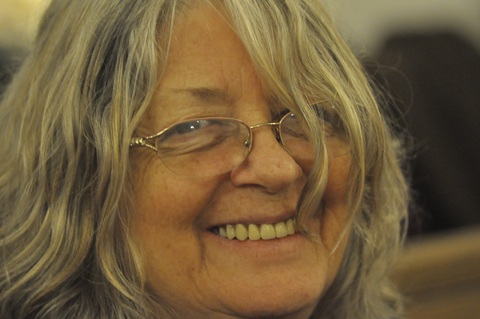
 As you read this, dear FAR community, it will be my 59th birthday. I was born February 27, 1956. I have one year to go before I turn 60. For this last year I desperately wanted to dye my hair blue, purple and green and let the roots go gray.
 live with my brown, black and burgundy hair until I am ready to go completely gray and watch it grow out (my hairdresser tells me it will take three years). Or I will decide to live with the choice I made to dye my hair since I was 35 or so and let it be and keep dying it – and have that be the choice I made.
  No matter what you call it abuse is abuse. This is highlighted in the popular book and now movie Fifty Shades of Grey. Because of the stir this book caused, I delved into the first book and my initial reaction was that of repulsion and wonderment. How could a woman let a man control her like that? Why would she let him do things like that to her and continue to come back to him? Why is this book so popular?

 Last week, Graeme Wood caused quite a stir with his article
  Feminism and Religion