Legacy of Carol P. Christ: A Daughter of the American Revolution and a Daughter of Quaker Slave Owners in Long Island, New York

This post was originally published on June 4th, 2012

I did not ever think that genealogical research would reveal that I am descended from slave owners.

My family’s early American roots are in New York and the upper Midwest—not in the American South. While watching genealogy programs that reveal slave-holding ancestors in the lines of white and black Americans with roots in the South, I have breathed a sigh of relief accompanied by the thought–not me!

I have not expended a great deal of energy researching Searing ancestors who settled in Hempstead, Long Island in the 1640s, because my Uncle Emery had already traced the family line. Bored one afternoon and wondering if my ancestor Samuel Searing had left the Hempstead Quaker community because he fought in the Revolutionary War, I entered the Searing family surname into a general internet search.

I found that my 4x great-grandfather Nathaniel Pearsall–whose daughter Sarah and her husband Samuel Searing are my 3x great-grandparents–is indeed listed for “patriotic service” in the Daughters of the American Revolution database.  As an anti-war activist, I wish there had never been a revolutionary war–we could all have been Canadians!  I would have been pleased to learn that my ancestors were all Quaker pacifists. Still, I must admit that I felt a twinge of pride to be able to trace my ancestry back to our country’s beginnings.

Continuing to follow up links to Searing ancestors, I stumbled upon the wills John and Elizabeth Searing. John was a brother of my 5x great-grandfather, Jonathan Searing.

In the name of God, Amen, April 22, 1746. I, John Searing, of Hempstead, in Queens County, being very sick. My executors are to pay all my debts. I order all my negroes to be sold, except the oldest negro boy; Also my wheat, except enough for family use. I leave to my wife Elizabeth, one bed and furniture and a side saddle, and the use of 1/2 my farm, until my children are brought up…

In the name of God, Amen, November 27, 1760. I,Elizabeth Searing, of Hempstead, of Queens County, being sick. I leave to my son, John Searing, my negro man and a bed and three blankets, etc. To my daughter, Mary Searing, a negro girl, and she is to have clothing and linen of mine so much as my other two daughters have had. …  I leave my granddaughter, Mary Searing, daughter of my son Jacob, a negro girl, and to my daughter Anne long cloak, and the rest of my apparell to my daughters.

If I am a daughter of the American revolution, I am also a daughter of Quaker slave-holders. It is well-known that the Quakers were among the most vociferous abolitionist voices in America.  Who would have thought that Quakers had also owned “negroes.” How did this come about? Continue reading “Legacy of Carol P. Christ: A Daughter of the American Revolution and a Daughter of Quaker Slave Owners in Long Island, New York”

Blue Raven and Murmurations by Margot Van Sluytman/Raven Speaks

Meandering
 Murmurations.
Myth and mystery
Beckon. We do not
[As yet]
Resist.
© Margot Van Sluytman

I have been fighting with myself to eradicate or somehow fit in the fact that I am in the throes of a profound transition. With “the new adventure’s” approach, death, roommates we have been for decades and decades, a new conversation between us is unfolding. Me and my compelling companion, daily and diligently, engage in what can sometimes feel a relentless row. Sculpting our symbiotic connection with meaning. Aligning dull and divine evocative evocations, as we share tea, toast, temerity, tempestuous alarm, sympathy, chagrin. Intermittent joy. Explorers we are. Searching out hope. Seeking sightings of simple strength. Seated at simple repasts. Inviting courage. Encouraging surrender. Crying out for creativity. Debating and discussing if Camus is correct in writing that suicide is disavowed because the meaningless of life, is, in fact, its very meaning.

Continue reading “Blue Raven and Murmurations by Margot Van Sluytman/Raven Speaks”

Samhain and the Waters of Hurricanes Helene and Milton, part 2 by Susan Foster

Part 1 was posted yesterday

On Samhain we are given the opportunity to come together in community to grieve our losses. We grieve for all those we have known personally who have passed over. But this year we also grieve for all those who lost their lives and homes in Hurricanes Helene and Milton and in the many other disasters around the world. We grieve as well for the other losses that occurred—of homes, of jobs, of community, of pets (many of whom also died or were separated from their owners). The losses are so enormous and overwhelming that we need the support that community provides to cope with them. We need to bind together in the strength of community to express our sorrow. Being aware of the death from so many natural disasters helps us to listen to the earth to see what She is telling us, to hear Her crying because She is weakened and out of balance, breaking apart under the strain.

 Feeling the earth’s grief from the hurts inflicted upon Her enables us to take stock of our policies, to change our course while we still can. As we float downstream on our raft, we can ignore what we see around us until we see the rapids ahead and say to ourselves, before we plunge over them, “Why didn’t we change course earlier?”

Continue reading “Samhain and the Waters of Hurricanes Helene and Milton, part 2 by Susan Foster”

Samhain and the Waters of Hurricanes Helene and Milton, part 1 by Susan Foster

Moderator’s note: While Samhain is past for this year, we are still in the section of the Celtic calendar which makes this blogpost, and its part 2 which will be posted tomorrow, relevant.

Samhain is an ancient Celtic festival, in fact the most sacred celebration in the Celtic year. Samhain is the New Year of the Celtic calendar. It is one of the eight holidays of the Celtic year—the solstices, equinoxes, and cross-quarter days—all of which mark the turnings of the seasons. Samhain is a time when the harvest had been completed; all the grains and late-maturing vegetables have been gathered in; the fields have been cleared, the old cast off, the fields lying fallow over the cold and dark of winter in order to make room for the eventual springing forth of new life. The New Year, begins in darkness at Samhain, is a reminder that all life emerges from the darkness, that death precedes rebirth. It is a time when the veil between the worlds of the dead and the living thinned, so that the presence of those who have gone before us is more clearly felt or even seen. It is a time to remember the ancestors as well as those newly departed—to grieve our losses, to let go so that we can move forward.

Samhain is the precursor of our Halloween. It was brought to this country by Irish immigrants during the potato famines in the 19th century. They brought their Celtic customs with them, but by that time Samhain was known as Hallows Eve, since the Irish were good Catholics. It struck a responsive chord with the American people, who called it Halloween. They adopted many of its customs, including lighting candles in gourds or pumpkins and dressing in costume. Today Halloween is celebrated as a spooky and fun time, observed with trick-or-treating and mischief-making, but originally it was a solemn holiday—a time to commune with the beloved dead, to honor the ancestors with food and drink, and to acknowledge death as part of a never-ending cycle of birth, death, and rebirth.

Continue reading “Samhain and the Waters of Hurricanes Helene and Milton, part 1 by Susan Foster”

Thanksgiving by Beth Bartlett

When I offered to write the FAR post for Thanksgiving a month ago, I had no idea how difficult I would find that task to be. I suppose I had a different vision of what these days would be like.  I had no idea how heartsick and wordless I would become in the wake of a second and even more bizarre and dangerous Trump presidency.  It hardly feels like a time for celebrating a national holiday. 

Thanksgiving in the United States and the colonies before has gone through several iterations – from the mythologized feast of the Puritan colonists in Plymouth, Massachusetts with the indigenous Wampanoag following the successful corn harvest – corn the Wampanoag had taught the Puritans how to plant after half of them had starved to death the previous winter; to George Washington’s Thanksgiving proclamation giving thanks for the successful ratification of the US Constitution; to Abraham Lincoln in 1863 acceding to Sarah Josepha Hale’s 36-year quest to establish Thanksgiving  as a national holiday — “to heal the wounds of the nation.” Goddess knows we could use that now, but it seems farther out of reach than ever.

Lesser known is the proclamation of a day of thanksgiving by the Massachusetts Bay Company to celebrate their defeat of the Pequot nation following the Pequot Wars of 1636-1638 in which most of the Pequot peoples were killed or enslaved, giving rise to many indigenous peoples observing Thanksgiving as a National Day of Mourning.

Continue reading “Thanksgiving by Beth Bartlett”

The Path to Light: Sovereignty and Resistance by Judith Shaw

During these transitional times, as the patriarchy struggles to maintain control, I turn to the wisdom of Medb, Celtic Sovereignty Goddess, who speaks to me in this difficult moment shaped by the MAGA movement.

Medb (pronounced maythv) ruled over war, fertility, and the earth. In ancient Ireland, a man could only become king of Connacht by undergoing a ritual of intoxication and entering into a sacred union with Medb at Connacht’s mystical center.

Medb, Celtic Sovereignty Goddess by Judith Shaw
Continue reading “The Path to Light: Sovereignty and Resistance by Judith Shaw”

Trees Scent and Sing for Life by Sara Wright

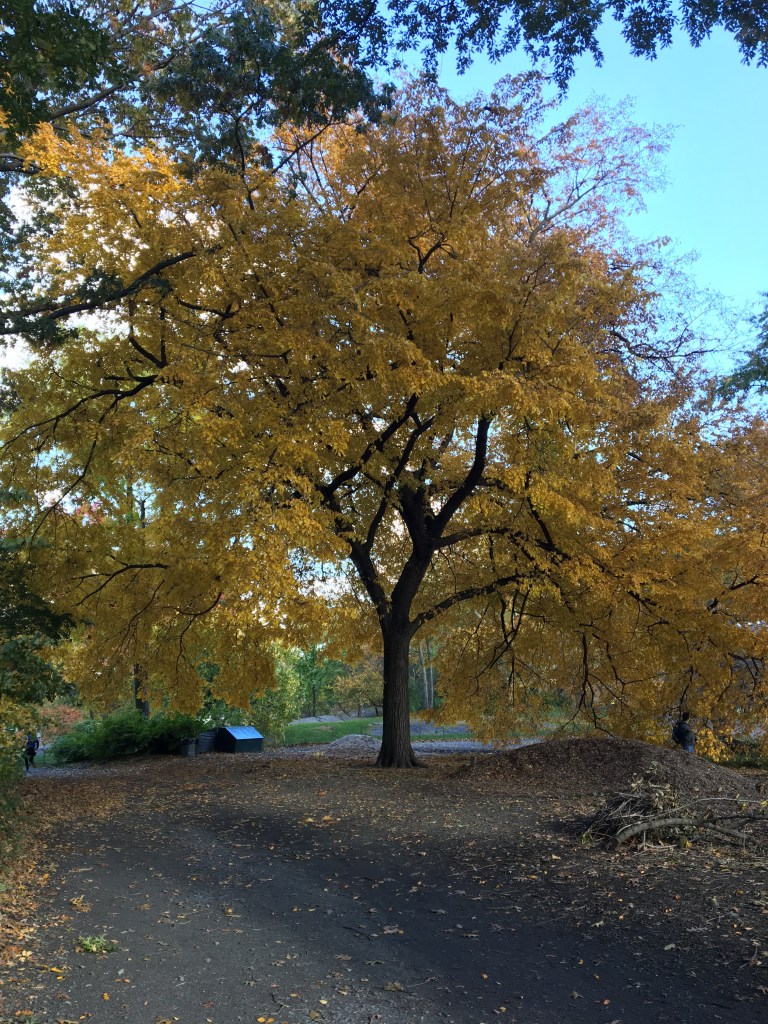
On November 6th, the day after the election in the middle of writing through my own anger/grief I suddenly stopped and got up – heeding that inner voice that often interrupted my train of thought. Picking up the lights I opened the door to adorn my young cedar for the very first time ever.

 I planted this twelve-inch-tall seedling in 2020 to replace my original Cedar Guardian Tree that had been decimated by deer during a year-long absence.  To my astonishment in four years, this seedling had become a seven-foot-high Guardian Tree. Of course, in the interim I have carefully tended this cedar, watering her, talking with her, touching her, loving her, calling her ‘my guardian’ but this species is very slow growing so even as I began to festoon the tree with lights, I experienced a sense of awe. I was of course talking with this tree as I adorned her… I told her that I would be lighting her as a Tree for Life.

When the air around the tree suddenly exploded with the scent of cedar, I experienced a powerful sense of relatedness with this cedar, and with all nature that is impossible to describe. That she was communicating with me using her own words moved me deeply. Although I have had these experiences before each one remains a revelation, especially when I have one during times of deep distress. When I plugged in the lights, I saw the unintentional spiral that I had created when I wound the strings so carefully around and across her delicate fronds. Just perfect I thought as a breeze rustled through her branches making the lights twinkle for a moment.

Continue reading “Trees Scent and Sing for Life by Sara Wright”

Legacy of Carol P. Christ: Green Solutions To The Greek Economic Crisis: We Are The 99%!

This post was originally published on May 28th, 2012

A green solution to the economic crisis insists that people and the environment can be saved together. We must dare to envision prosperity in conjunction with sustainability, social justice, nonviolence, and participatory democracy.

A rational analysis would make it clear that the Greek people did not “create” the economic crisis. Yet the poor and middle classes are being asked to “pay” for it. There is massive corruption in the public sector in Greece. But this should not blind us to the fact that the Greek people do not bear the major responsibility for creating the crisis. Those responsible include:

You Lied to Me About God, a memoir by Jamie Marich, PHD, book review by Janet Maika’i Rudolph

This was a hard book for me to review. Perhaps because she writes about such difficult issues and yet she does so in a compelling and at times even humous manner.  I feel a responsibility and yet find it hard to capture how she manages a breezy manner while discussing heavy material. Perhaps, even though our backgrounds are vastly different, I was also relating to so much of what she said. Jamie also covers so much ground; it is hard to pick out individual aspects to discuss.

As a child Jamie Marich was caught in the web of different religious systems, Catholicism from her mother and Evangelical from her father. They were at soul-hurting odds with each other (both parents and religions). Each one proclaimed they were the one true path so there was the ever-present threat of choosing the wrong one and facing a parent’s wrath along with that of eternal damnation. She labels this spiritual trauma. It cuts to the soul of a person being trapped into a no-win situation. It’s a conflict-driven, shame-filled, guilt-ridden way to grow up.

Continue reading “You Lied to Me About God, a memoir by Jamie Marich, PHD, book review by Janet Maika’i Rudolph”

As Above, So Below—A Cosmic Tale by Mary Gelfand

It was when I was studying to become a Witch that I first encountered the phrase ‘As Above, So Below,’ which I now know to be a paraphrase of a ninth century Hermetic text from an Arabic source.  I liked this phrase from the beginning as it expressed something I believed but had struggled to articulate so elegantly.  I believe that there is a sacred connection between our earthy human existence and the grandeur of the cosmos—our very bodies are composed of star dust.

Helix Nebula from the Hubble Telescope

I was delighted to discover a more specific description of that connection in the Journey of the Universe, by cosmologist Brian Swimme & Mary Tucker, founder of the Forum on Religion & Ecology at Yale. They discuss the creation of the universe in terms of natural cycles of expansion and contraction, which they also refer to as ‘attraction,’ or gravity. They write “All of space and time and mass and energy began as a ‘single point’ that was trillions of degrees hot and that instantly rushed apart. (p. 4)” That expansion is on-going, billions of years later. 

Continue reading “As Above, So Below—A Cosmic Tale by Mary Gelfand”