Legacy of Carol P. Christ: THE TWO AND THE ONE: CAN WE EMBRACE AND CELEBRATE SINGLENESS AS MUCH AS MARRIAGE?

This was originally posted on 7/22/13

Like many other readers of this blog, I have followed the progress of the Prop 8 and DOMA cases to the Supreme Court and waited with bated breath during the month of June to see how the cases would be decided. 

On June 26th I rejoiced in decisions that brought the United States several steps closer to affirming the full equality of all human beings.  I am happy that lesbian and gay couples can now get married in California, the state of my birth, the state where I still vote.  As one commentator remarked, “This story has a happy ending—it leads to marriage.”  I am also pleased that lesbian and gay couples will not be excluded from “marriage benefits” offered to heterosexual couples, simply on the basis of their sexual preference.

Still, the gay marriage victories raise other questions.  Much of the rhetoric surrounding the push for marriage equality assumed that “marriage” is or should be “the norm” for all people.  Those arguing for the right of gay people to marry often seemed to be saying: “We are just like everyone else.”

Continue reading “Legacy of Carol P. Christ: THE TWO AND THE ONE: CAN WE EMBRACE AND CELEBRATE SINGLENESS AS MUCH AS MARRIAGE?”
And Then Everything Changed: Part Two: Joy by Beth Bartlett

(part one was posted yesterday)

Author’s Note: I wrote this post shortly after Pres. Biden stepped down as the Democratic candidate for the presidency and endorsed Kamala Harris, long before the Kamala-Harris ticket adopted “joy” as their watchword. The reference to the “joy” of this campaign has now become so ubiquitous that I fear it will become trivialized and merely a slogan. I hope instead that they meaningfully embrace a politics of joy and the capacity of joy to heal divides, not just in this country, but throughout the world. 

* * *

. . . and then everything changed. 

What is this feeling that has been filling me of late? Ah, yes, I remember — hope, enthusiasm, excitement, optimism!  It’s been so long since I’ve felt this — on the political scene, for our country, for the world. But lately I’ve felt buoyant – something I haven’t felt at least since 2016. Rather than avoiding the news, now I am eager for it, seek it out. 

The energy, vitality, and yes, laughter that Kamala Harris has brought to the presidential campaign has infused myself and many others I know with a sense of joy, a welcome contrast from the doom and gloom that has been surrounding the campaign for so long. Her ability to laugh, to smile, to find the positives in people, in life, that has brought new life to this campaign. Yet for some reason, the opposing side has chosen to focus on Harris’s easy laughter as a target for derision. 

Continue reading “And Then Everything Changed: Part Two: Joy by Beth Bartlett”

And Then Everything Changed: Part One: Mourning by Beth Bartlett

At the end of June, in clear contradiction to the Founders’ intent,[i] the Supreme Court ruled, 6-3, that the President has “absolute immunity from criminal prosecution for  . . . all his official acts.”[ii] In other words, the President is above the law, or, as Justice Sotomayor said in her impassioned dissent: “The relationship between the President and the people he serves has shifted irrevocably. In every use of official power, the President is now a king above the law.” 

The ruling left many outraged. The people at large do not want a presidency unchecked by law. The ruling becomes even more chilling given the real possibility of Trump – a self-proclaimed admirer of autocrats — returning to the office of the President, and the specter of Project 2025, the blueprint by the Heritage Foundation that lays out the sweeping changes Trump and a faction of conservatives have planned to put in place if Trump is elected.

Continue reading “And Then Everything Changed: Part One: Mourning by Beth Bartlett”

I Am an American, Too by Marie Cartier

I am an American.
I am proud to be an American.
I am not proud of everything America does—
But I am proud of democracy—
of the idea of democracy.
And I do not want to waste my shot, either.

Continue reading “I Am an American, Too by Marie Cartier”

The Connection between Matilda Joslyn Gage’s Woman, Church and State and L. Frank Baum’s The Wonderful Wizard of Oz by Mark I. West

My introduction to Matilda Joslyn Gage (1826-1898) goes back to my long-standing interest in her son-in-law, L. Frank Baum. I regularly teach Baum’s The Wonderful Wizard of Oz in my children’s literature courses, and I always point out the book’s feminist qualities. I mention, for example, that Dorothy Gale, the central character in the novel, is one of the first female characters in American literature to go on a bona fide quest.  When I first started teaching this book, I wondered what caused Baum, a male writing in the late nineteenth century, to write such a feminist book. One day, while preparing for class, I came across a reference to Gage. This reference stated that Gage was a leading suffragette during the second half of the nineteenth century and that she lived with Baum and his family in Chicago when Baum was launching his career as a children’s author. After reading more about Baum’s life, I realized that Gage played a major role in shaping his nontraditional views on gender roles. However, I was still not sure what role she played in the development of women’s rights.

Continue reading “The Connection between Matilda Joslyn Gage’s Woman, Church and State and L. Frank Baum’s The Wonderful Wizard of Oz by Mark I. West”

Sailing For The Darkness by Mary Gelfand

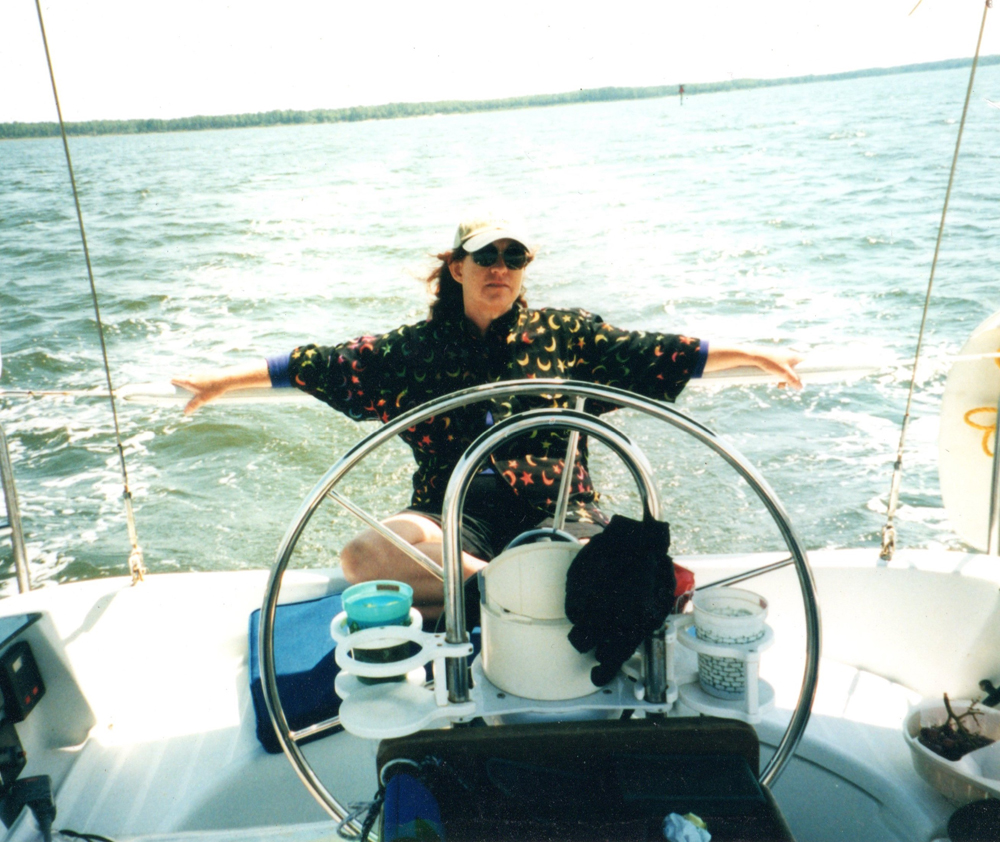
As I write this, it is August and very much high summer. This time of year always reminds me of my old life in New Orleans, before I moved to Maine.  David, my first husband, and I were sailors. I never planned on becoming a sailor, but once I mastered the basic skills I found I quite enjoyed it.  Furthermore it became an unexpected source of spiritual insight. I’m inspired to share a piece of that here.

One spring over 25 years ago, David and I and a group of sailing buddies made our usual summer passage in the Gulf of Mexico, from New Orleans, Louisiana to Pensacola, Florida.  By car this trip was 200 miles. By sail it took two to three days. Around midnight, as we were entering the last leg of this journey, I took the wheel.  We were exiting Mobile Bay, heading east, and this should have been a fairly simple passage. There was plenty of depth, adequate wind, the boat was sitting in the water well, and I had Barney, a dear and trusted friend, as my navigator. I’d been at the wheel for fifteen minutes or so when I noticed the many lights we were approaching and asked Barney what was going on.

Continue reading “Sailing For The Darkness by Mary Gelfand”

Lowlands: Who Will Answer the Call? by Sara Wright

I live under a steep craggy mountain that is gushing with the sweetest mineral rich water that pours out of an old spring. On this piece of land feeder brooks stream down the mountain feeding hemlock and cedar before silvery clear water slides into a rushing brook (miraculously) still filled with trout. Sadly, the main artery of my brook comes from another mountain that has been brutally logged, dammed up for someone’s pleasure and is currently running amok. Silt ridden water floods this lowland routinely not only changing the course of the stream now riddled with dying trees, (collapsing trees must have soil to stay upright) but creating unusual vernal pools that are beginning to mature. As a result, this has been the best frog and toad year that I have had since my first magical year spent on this land before all the surrounding areas were chopped into parcels. Once I roamed free up and down this mountain through unbroken forests fields and fens, marshes, seeps, bogs and springs. I have never lost that feeling of belonging to this land not just the area I ‘own’ (oxymoron) but all of her.

 It doesn’t surprise me that in most pre -christian traditions the Original Mother of Us All was and still is a mountain! When the other mountains all around me were first being raped by dirty yellow machines someone remarked to me quite sagely, “the bones of the mountains are still here”. And so they are, and so is She.

Continue reading “Lowlands: Who Will Answer the Call? by Sara Wright”

Legacy of Carol P. Christ: Coming Together to Honor the Mother

This was originally posted August 13, 2019

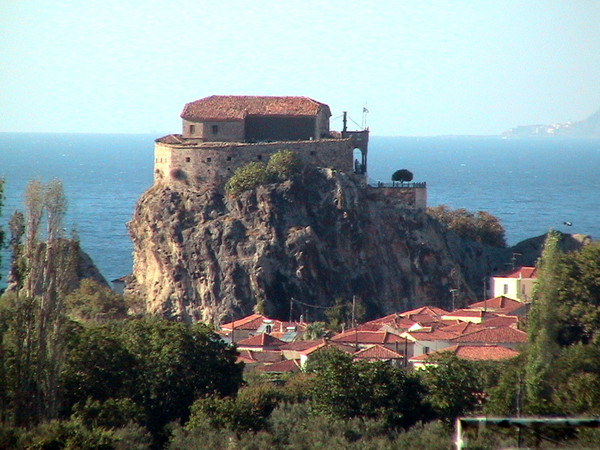
From the evening of the 14th through the day and night of the 15th of August, thousands of pilgrims ascended the Holy Rock of Petra to honor the Panagia—She Who Is All Holy. 

There is “something really beautiful”* in being among them.

Six of us set out from Molivos at 7:30 on the 14th to meet in the square of Petra to ascend to the church.  Petra was already full of so many pilgrims that police had forbidden traffic in the main square and were directing cars into a nearly full parking lot in a field.  When we got out of the car, the two others who came with me and I had a perfect view of the steady stream of pilgrims climbing the rock, which was already lit up in the twilight.

Continue reading “Legacy of Carol P. Christ: Coming Together to Honor the Mother”

A Healing Shrine by Joyce Zonana

From October 5, 2023. Joyce posted the blogpost which she titled: Nineteen months and Counting: Experiencing  the Web of Life

On February 28, 2022, I unknowingly drove into a deep snowbank, shortly after finding myself in  a strangely  unfamiliar landscape. Suspecting a TIA, my primary care physician  urged me to go to an emergency room for a possible CAT scan. There, a lesion in my right parietal lobe was quickly discovered.

Continue reading “A Healing Shrine by Joyce Zonana”

How the Nineteenth-Century Spiritualist Movement Gave Voice to American Women -Part 2 by Theresa Dintino

Moderator’s Note: This post is presented as part of FAR’s co-operation with The Nasty Women Writers Project, a site dedicated to highlighting and amplifying the voices and visions of powerful women. The site was founded by sisters Theresa and Maria Dintino. Part 1 was posted yesterday

Spiritualism began with two young girls, the Fox sisters, hearing knocking sounds in their home near Rochester, N.Y . They determined the knocking to be coming from a man who was murdered and buried under their home. The knocking was soon categorized into an alphabet out of which seances began. In seances groups of people gathered and put their hands on a table while asking questions of ancestors who made themselves known by rapping and knocking in response. Next, mediums in the form of young women speaking the answers of the dead as the bereaved asked them questions, emerged. Instructions were disseminated on how to be a medium and how to run a seance. The movement took off.

The movement was largely white, northern Protestants but other ethnicities were  involved. The Black population may have influenced the arising of these practices with traditions brought with them from West Africa.

Continue reading “How the Nineteenth-Century Spiritualist Movement Gave Voice to American Women -Part 2 by Theresa Dintino”