
Let Us Now Practice Her Presence by Barbara Ardinger

I’m giving you a twofer this month: a poem and a ritual. I’m writing this a few days after the latest mass shooting in Texas by a crazy white man and a few days before the next debate by Democratic candidates. But you know what? I’m getting real tired of politics and…well, what’s going on around us. Tweets. Bullets. Fires. I’m a liberal, but I’m deciding that there must be a better definition of “conservative,” one that has nothing to do with politics. The OED defines “conservation” as “the action of conserving; preservation from destructive influences, decay, or waste.” Further down: “conservative: a preserving agent or principle.”

Back in the late 80s and into the 90s, I taught a class I called Practicing the Presence of the Goddess, which evolved into a ritual circle. As far as I know, most of the women in the class are still spiritual feminists (though the term hadn’t been invented then), a couple have died (cancer is an awful thing), and one is fading into dementia (but she still remembers our class). Among other assignments, I asked them to read Carol Christ’s splendid book Laughter of Aphrodite (1987), and once we went as a group to hear Marija Gimbutas speak on her newest book The Civilization of the Goddess (1991).

Continue reading “Let Us Now Practice Her Presence by Barbara Ardinger”

Harriet Boyd Hawes, Marija Gimbutas, and the Religion of Ancient Crete by Carol P. Christ

One of the projects I am working on these days is an essay on the religion of ancient Crete for a series of books on various aspects of the Minoan site of Gournia.
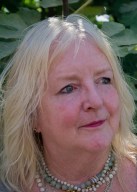
Harriet Boyd excavated the Minoan town of Gournia in 1901-1904. She was one of the first woman archaeologists and the first woman to run her own excavation in Crete, to be followed by Edith H. Hall whom she trained. She was also the first to excavate a Minoan town as opposed to a “palace,” providing the first evidence of daily life in Minoan Crete. Harriet Boyd might have continued to excavate in Crete, but her marriage in 1906, followed by the birth of her son soon thereafter, caused her to lose interest in a career as an excavator. Nonetheless, she published the results of her excavations in her book Gournia in 1908 and taught at Wellesley College until she reached retirement age.* Continue reading “Harriet Boyd Hawes, Marija Gimbutas, and the Religion of Ancient Crete by Carol P. Christ”

We Are Not Alone: Embodying and Re-enacting Ancient Wisdom by Carol P. Christ

A few nights ago, on the way to dinner, two friends and I passed by a small church near the old fortress in Ierapetra, Crete. The liturgy was broadcast via microphone and a crowd of people gathered outside the church. “Must be some kind of name day,” one of my friends commented, but I could not think of a saint celebrated on August 1.
We decided to light candles and make our prayers. I asked one of the Greek women the reason for the ceremony. “This is the first night of our celebrations for the Panagia,” she responded, referring to the Assumption of Mary that would occur on August 15. I looked around and saw that indeed many of the women were wearing black. “Of course,” I thought to myself. Continue reading “We Are Not Alone: Embodying and Re-enacting Ancient Wisdom by Carol P. Christ”

Happy Birthday Isis: Isis Isis…Ra! Ra! Ra! by Karen Tate

I wanted to pull myself away from the ugliness out there and take time to honor the Egyptian Goddess, Isis, as Her birthday is recognized to be in the latter part of July.  My husband, Roy, and I formed the Isis Ancient Cultures Society and the Iseum of Isis Navigatum, in Los Angeles, sometime ago and for more than a decade, in Her name, we sponsored Moon Circles to promote diversity, Salons to teach, and we put out a quarterly newsletter when you still had to fold and mail them – remember that?  But the premier events every  year were the Isis Birthday Tea and the Isis Navigatum or Festival of Isis, every March.    Our aim was to reconstruct Isis rituals in a modern context and make them relevant  for today.

We put on the Isis Tea in prestigious locations like aboard the Queen Mary and the Isis Navigatum in various public locations including The Japanese Gardens, in the San Fernando Valley, and on the beach on Point Dume, in Malibu, California.  So detailed were our events, sometimes the public joined us thinking we were a movie crew and our organization was written about by a anthropologist/folklorist citing the detail and depth of the material culture of contemporary Isian devotees.

Continue reading “Happy Birthday Isis: Isis Isis…Ra! Ra! Ra! by Karen Tate”

My Near-Death Experience, Or How I Met the Goddess Face to Face By Barbara Ardinger

Oh boy oh boy oh boy—another June 17 has passed (I’m writing this on June 18) and I’m still here. Every year, this is my day to be careful. And to keep breathing. I have two specific associations with June 17. The first, and lesser, is that it is (or was) the birthday of my last serious boyfriend. I really thought we were going to get married. That didn’t happen, and as we were breaking up, he gave me a (probably expensive) bottle of My Sin perfume. I hurled it against the wall behind the dumpster. So much for that. And him.

The real story: I began having asthma attacks in the late 80s. Nearly every night. A friend took me to every doctor we could think of, but none of them helped me. (At the time, my asthma was acute; now it’s merely chronic and under control.) In June 1992, I was very busy doing freelance writing when I could find an assignment, looking for a real job, serving as vice president of the Orange County chapter of Women In Management (which meant I booked the speaker every month)…and breathing. My second book, A Woman’s Book of Rituals and Celebrations, was being published, and I was teaching a weekly class called Practicing the Presence of the Goddess in my living room. Continue reading “My Near-Death Experience, Or How I Met the Goddess Face to Face By Barbara Ardinger”

Outtadeway-O: A Found Goddess of Public Transportation (well, you asked for Her last month) by Barbara Ardinger

Tall, hearty. sometimes pushy, and usually very loud, Outtadeway-O is easily able to propagate and multiply Herself so that we can find Her in crowded airport terminals, at bus and subway stops, and just about anywhere people are traveling from or to. She’s in charge of trains, planes, and taxi-cabs. She’s the One who, when we’re in a hurry to get somewhere on time, shouts, “Please, oh, please get out of the way!” Pilots, engineers, station masters, ticket agents, and ÜberAlles drivers all hear Her. You better bet they get out of Her way.

Although there are apocryphal reports that Outtadeway-O was present when Hannibal crossed the Alps (who do you think was in charge of those elephants?) and in the Roman Colosseum (She supercharged some of the chariots, horses, too), She’s most familiar as the gal in the New York subway system who kindly tells you which side of the tracks to stand on so you get on the train going in the right direction. Whether you’re lost in La Guardia, O’Hare, Hartsfield, or LAX (and in the smaller airports, too), She’s the gal in the uniform who explains how to use those dratted ticket machines on the curb and gives you a tidy map that shows where the gates are and how to find them without tripping over the people sleeping on the floor because their flights were delayed or canceled. She’s also the helpful agent who finds food for those people when they wake up and points them toward the bathrooms. Continue reading “Outtadeway-O: A Found Goddess of Public Transportation (well, you asked for Her last month) by Barbara Ardinger”

Advocating Respect for Goddess by Susan de Gaia

I served as general editor for the recently published Encyclopedia of Women in World Religions: Faith and Culture Across History (2018/19 ABC-CLIO). It was an honor and a pleasure to work with a hundred and thirty wonderful scholars, many with expertise in female divinities. In working with a publishing house on this project, I negotiated for the capitalization of Goddess and other terms for the Female Divine.  

‘I recommend not capitalizing “goddess”’ – was the first reply I got on this question. It came from Anne, the development editor assigned to the project. Negotiations ensued. Continue reading “Advocating Respect for Goddess by Susan de Gaia”

Birds, Their Song Stills My Heart by Deanne Quarrie

Bluejay

I see you perched on the tree
checking the perimeter for cats lurking.
The feeder below, inviting you down
but you, ever cautious,
make sure that none are about.

Suddenly the sparrows swarm in,
eagerly eating the seed offered.
They flit and flap, and fly about,
scattering seed as they cover the feeder.

Throwing caution to the wind,
down you fly,
eager for your share of the offerings.

You find treats on the ground,
seeds from the tallow above,
a seed so large,
from my window, I see it in your mouth.

I watch you prance, a friend joining you,
Your perky crest and colorful plumage,
your morning dance brings pleasure
as I ponder my coming day.
over my first cup of coffee.

Continue reading “Birds, Their Song Stills My Heart by Deanne Quarrie”

The Gift by Sara Wright

We drifted through

the green

hungrily absorbing

plant souls,

each twig, flower, and tree

has her own story to tell…


Such a joyful way

for me

to spend a

‘mother’s day.’

Being with him

when family

extends sharp claws

is an antidote to suffering.


“This is my church”

He said,

not for the first time.

I nodded.

He and I are almost

always in agreement

when it comes

to plants

and people.

Continue reading “The Gift by Sara Wright”

The Legend of Arawello, the Somali Goddess by MaryAnn Shank

Image of Arawello. Since there is no known portrait of Arawello, this is an artist’s interpretation.

I did not intend to find her.  In fact I wasn’t even looking.  But there she was, soaring before me, on my last night in Baidoa.  This majestic Somali woman reached high into the heavens, engulfed in a glorious wraparound garment that reflected the hues of the world around her: the azure of the Indian Ocean, white sparks of the splendiferous Milky Way, the orange of the clay soil beneath her feet.

The golden snake wrapped around her arm identified her immediately.  This was Arawello, the Somali Goddess.

I had only heard hints of this treasured goddess.  She was born of her people in the first century.  She took the beatings, the whips that scarred her as a child, and escaped to the aromatic fields of myrrh in the northern Somali mountains.  Female torture was rampant at that time, an outgrowth of the centuries-old clan wars.

In the fields of myrrh Arawello found many women like herself, women who ran to save their own lives, women who wanted to help their sisters, mothers, aunts and friends left behind.

And so she formed her plan.

Continue reading “The Legend of Arawello, the Somali Goddess by MaryAnn Shank”