

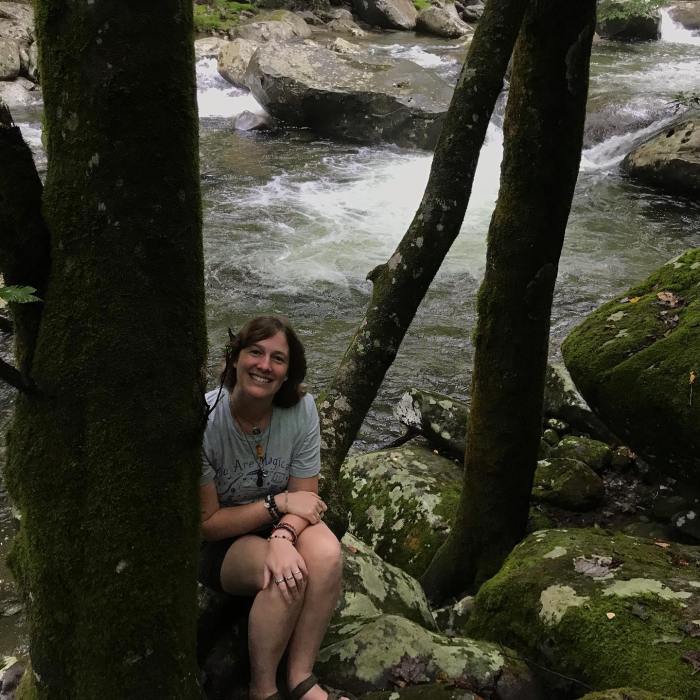
This morning,
I walked around the field
and discovered
three soft white breast feathers
of an unknown bird,
two earthstar mushrooms,
sinking quietly back into the soil,
one tiny snail shell,
curled in spiral perfection,
and the fire of my own spirit
burning in my belly,
rekindled by elemental magic
of the everyday kind,
the small and precious gifts
of an ordinary day.
Every January, we rent a house on Dauphin Island and spend the month at the beach with our kids. Usually, we pack our business along with us and work from the rental house, though this year my sister kept it running from our home studio in Missouri instead. My husband describes this month away as the “weekend of the year,” and this is, in fact, how it feels, except for unlike most normal weekends, we walk five miles by 8:30 a.m. each morning. We joke that this is one of the best ways to know we’re on “vacation.” During one month of walking, we will log more than 300,000 steps together, this time away from home allowing us to pare back the layers of to-dos that build up each year, to re-prioritize our goals, to re-sync ourselves with what we most value, and to breathe deeply back into ourselves again—our hearts, our hopes, our dreams—after the hectic holiday season. Since we are self-employed, we never wake to an alarm clock at home, but while on our sojourn away, always motivated by the prospect of finding good shells, we set the alarm for 5:00 a.m., rising to the voice of Kellianna singing “I Walk with the Goddess” as we set off in the darkness to the uninhabited beach down the road. This year, due to hurricane damage and the resultant road work and beach restoration work in progress, the only way to reach our favorite walking spot is to rise before the road crews do and get out and back before the access road is closed to traffic for the work day.
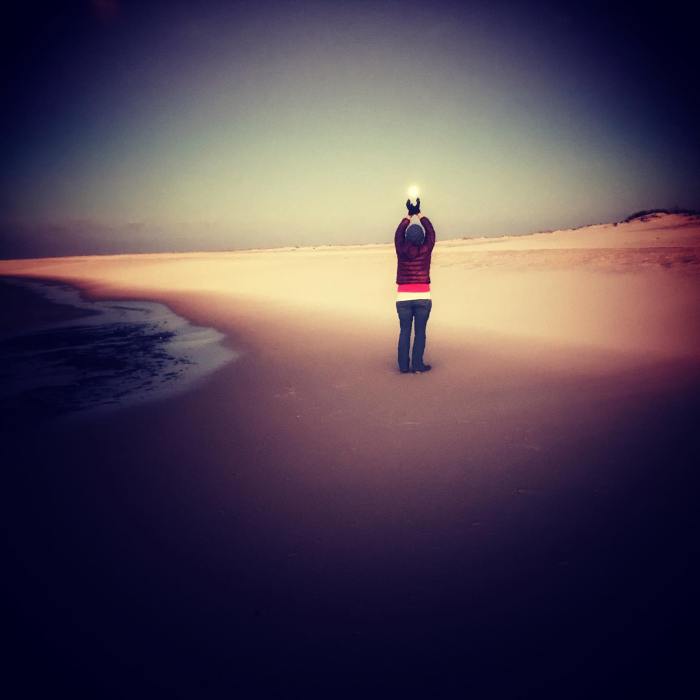
We walk before dawn, our faces glimmering palely beneath a full moon. Our shell finding has been slender on this trip, the beach often swept clean by waves, but on this day, lit only by full moonlight, I finally catch sight of a big brown moon snail shell, half-buried in the sand. My favorite type of shell and, discovered on a full moon, no less! My husband’s foot comes down upon it as I grab his arm to stop him, but then I seize it with glee, undamaged and smooth in my hand. Though I have previously written that I expect no reward for devotion, sometimes it is, in fact, delightful to receive a reward anyway, especially on a dark beach with only moonlight as my guide. We spot two glowing eyes a few feet away and a fox keeps pace with us, pausing to sit and watch as we make our steady way along the shore. The sky lightens to rainbow stripes as the first flares of dawn begin to glow with eastern fire. I stand with my arms extended, the fingertips of one hand reaching for the moon while the other hand reaches for the sun, the waves lapping at the shore, the wind at my back. I feel held, suspended in eternity, small and rapturous, balanced at a centerpoint of time, inhabiting the liminal, poised within a living strip of space between land and sea, earth and sky, wind and sand, dawn and dusk, motion and stillness. Behind me, the fox moves swiftly away across the sand under a rainbow sky.
I reflect as I continue to walk, murmuring the Charge of the Goddess below the moon, that these are my favorite kinds of rituals, the most powerful kinds of ceremonies, the truest expression of magic in my life and days.
On the winter solstice this past year, I carried a blanket out to the field in front of our house. I brought along my Womanrunes cards so I could do an annual oracle card layout for the year. I carried my journals and my planner and some of our small goddess figurines. Rather than sit on the blanket and dream about the year to come, busily scribbling notes and ideas in my planners as I had envisioned, instead I lie flat on my back on gazing at the sky. I became aware as I was lying there, breath slow in my belly, that I could see the moon on my right hand side and I could see the sun getting closer to setting on my left hand side. Then, I became aware that the birds were at my feet at our bird feeder by the studio building. Next, I became I aware of the cedar trees above my head, at the far side of the field. Lying there, feeling the earth beneath me, the sensation struck: I’m surrounded by the elements. I’m surrounded by all these aspects of magic, right now, no elaborate solstice ritual required. Though I made sun bread with my children and we held our traditional candle lit winter solstice ceremony and spiral walk, these moments lying on my back in the field were my ritual, my ceremony, the fullest expression of a living spirituality for me. Magic need not need to be fancier or more elaborate or more planned out than this, I think. It can mean lying on your back in a field and feeling the presence of the living elements around you, carrying you, holding you, supporting, nourishing, restoring, revitalizing, and, in a way, rebirthing you into awareness.

When I rose from my blanket to work on my plans, I noticed the way the rapidly setting sun was peeking through the trees and I decided to take a picture of one of my goddesses there with the last rays of the solstice sun shining behind her. As I squatted down to take the picture, I saw that one of the sunrays was extending through the trees in such a way that it was literally pointing exactly at my blanket, right at my little pile of books and my little plans, an affirmation of sorts: this is where you need to be, this is what you need to be doing. Since it was the Winter Solstice, of course this ray of light reminded me of light coming through Stonehenge and striking the exact right point, and it thrilled me to know that if I hadn’t decided to be outside exactly at this exact moment with the sun at this position, I never would have seen the ray of light illuminating my blanket. I’m not suggesting that the sun did that for me, it was rather that I allowed myself to witness what was already there, as if the ceremony was in place, it was unfolding, it was taking place, whether I was going to step into it or not, whether I was going to notice it or not, whether I was even aware of it or not. While this may not sound like a ceremony or a ritual in the way that many people describe ceremony and ritual, for me, it was one of the most powerful rituals I experienced that year.
Ceremonies of earth and being are unfolding around us all the time and we can either be present for them or not.
I could not have planned or designed that solstice or the full moon, fox-accompanied beach walk. I could not have planned or designed these rituals of living. I stepped out into the world instead and saw what ceremony was already underway, and then took part in it. Perhaps this sounds too simple or too small. There are many books with plans and outlines, ceremonies and correspondences, the right colors of candle and the right invocations to choose. And, those things are all wonderful too. I love setting up a fulfilling ritual space and creating a ritual atmosphere for people. I love candles and singing and choosing just the right words. I write today to remind us that there are many rituals of the everyday, there are many ceremonies of everyday magic, natural magic, that are already unfolding around you. I invite you to consider stepping into them and receiving them as a gift rather than trying to harness the elements or shape the setting to your own will. I encourage you to savor and see the unplanned, small magics of living unfold as they will. These elements of the holy, these sacred sites, can be alive, within you, beneath your feet, and around you every day, waiting (or not waiting) for you to notice that they’re here, carrying you along.
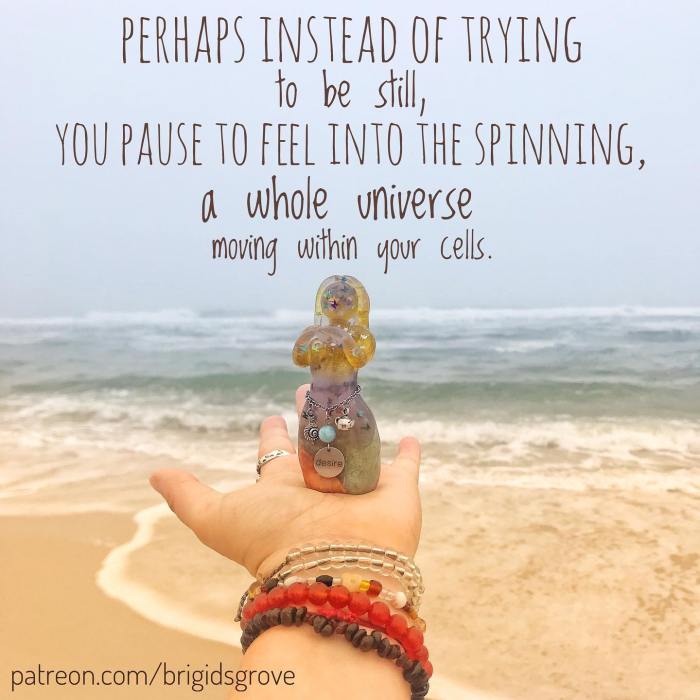
May you celebrate, savor, and sink into the magic of your life right where you are.
Sometimes,
the world creates
ceremonies for us
and we just have
to show up
for them.

 *This post includes a call for stories at the end.
 Though I have not been Christian for many years, I love to decorate my house for the holidays. I have many decorations that I have collected over the years, including a Hummel angel gazing at the Christ child that was my father’s mother’s and a small crocheted Christmas tree given to me by my mother. My Christmas tree is a living one in a pot, and I usually manage to keep it alive on the balcony or outside for several years. One of my hobbies is collecting ornaments for the tree. Among my favorites are glass icicles and snowflakes crocheted by my friend Alexis many decades ago. There are white doves and brown birds that land on the tree branches and glass balls that have come into the stores again in recent years.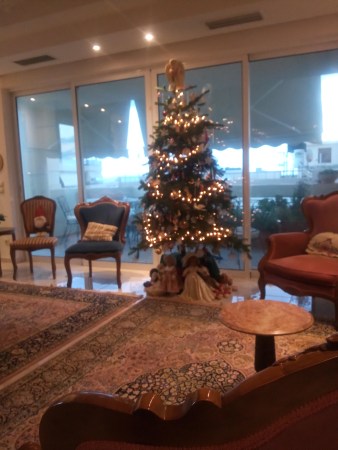
 Last Friday my oncologist gave me the best birthday present I could have imagined. (My birthday was 7:30 pm last night December 20, California time.) Without going into details, my latest CT scan was so much more positive than the last one that it feels like a miracle. I have reason to hope.
 Feminism and Religion