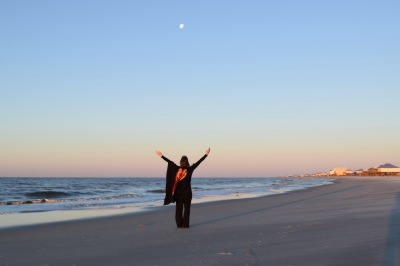
“When all is said and done I think every Witch should, at some time, face the moon alone, feet planted on the ground, with only his or her voice chanting in the starry night.”
–Laurie Cabot, Power of the Witch
I will never forget the first time I heard someone recite the Charge of the Goddess from memory. Bare-breasted, she strode around the fire in sacred circle at a large goddess festival in Kansas, delivering the words with power, grace, and confident resonance. I thought: I will do that someday.
In February of this year, we took a family trip to Dauphin Island. While there, the afternoon of the full moon, I 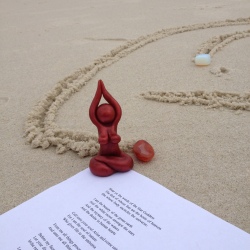
decided that the time had come. I was going to memorize the Charge of the Goddess. First, I thought I would only memorize it a piece at a time. It seemed “too big” to do in a single sitting. I had it printed out on a piece of paper that rapidly became damp with the salty sea air. I drew a labyrinth in the sand with my toes, set one of my goddess sculptures at its entrance, and drew a Womanrunes card.
One stanza at a time, slowly I began to repeat the poem* aloud:
hear ye, the words of the star goddess
the dust of whose feet are the hosts of heaven...
Over and over, I said the words, letting them twine around my tongue and in the air, experimenting with cadence and rhythm. After I could reliably repeat one section, I’d move to the next, letting it build in my memory until I could put the two together confidently and then moving to the next.
I am the beauty of the green earth
the white moon amongst the stars..
I stared into the waves, listening to them rise and fall along with my words. My three older children dug in the sand. 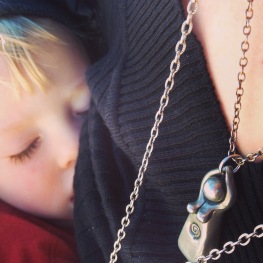
My husband fished. My toddler toddled around and then came to sit on my lap and nursed to sleep for nap time:
before my face
beloved of all…
I whispered into his damp hair. I felt in an altered state of consciousness. The words began to wind their way through me, becoming a part of me, embedded in me. I danced with them as I have never danced with another piece of writing. I felt them merging with me. I sang them aloud. I stated them fast and slow and I built, adding the next line and then the next…
for behold, all acts of love and pleasure
all my rituals.
I turned over hard thealogical questions as the words spun their magic through the air. What does it really mean that “all your learning and seeking shall avail you not, lest your know the mystery.” Do I really feel the goddess within? Do I find her within myself or is she only outside and if she is only outside, does she really exist at all? Tears came to my eyes: do I even like myself?
Two hours passed. My baby awoke and returned to digging in the sand. My husband packed up his fishing gear. The sky began to darken and spit rain. I stood and danced the words into the sand with my feet.
let your divine innermost self
be enfolded
in the rapture
of the infinite
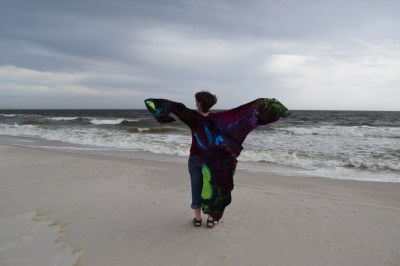
I felt rapturous. I felt triumphant. I had done it. Faster and faster my feet stamped the sand as I called the words into the waves. I spun in circles with my toddler chanting and laughing and offering my devotion before the sea, beneath the moon.
the mystery of the waters
the desire in human hearts…
*I used Shekhinah Mountainwater’s adaptation of the Charge, originally by Doreen Valiente, as included in the book Ariadne’s Thread. 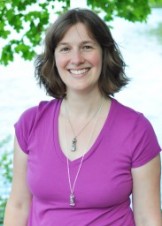
Molly has been “gathering the women” to circle, sing, celebrate, and share since 2008. She plans and facilitates women’s circles, seasonal retreats and rituals, mother-daughter circles, family ceremonies, and red tent circles in rural Missouri and teaches online courses in Red Tent facilitation and Practical Priestessing. She is a priestess who holds MSW and M.Div degrees and recently finished her dissertation about contemporary priestessing in the U.S. Molly and her husband Mark co-create original goddess sculptures, ceremony kits, and jewelry at Brigid’s Grove. Molly is the author of Womanrunes, Earthprayer, and The Red Tent Resource Kit. She writes about thealogy, nature, practical priestessing, and the goddess at her Woodspriestess blog.


 Boann, Celtic Goddess of Poetry, Fertility, Inspiration, Knowledge and Creativity was one of the Tuatha De Danann (People of Danu). She was associated with the 70 mile long river Boyne in Northeast Ireland and its source, the Well of Segais. Some bards say that long, long ago when the world was young and wild places were everywhere, Boann initiated that spring by walking counter-clockwise around stones found there, causing the water from under the earth to spring forth with great strength and rush down to the sea. The pool formed by the spring was encircled by nine sacred hazelnut trees, whose nuts could impart knowledge when eaten. The salmon of wisdom swam in the waters of this hidden pool from which the river Boyne flows.
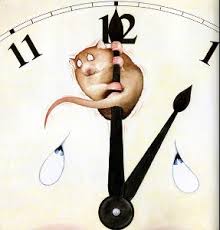 You all know my story, at least the popular version of it. I was an only daughter, the princess (so to speak) of the house until Mama died. Then Papa, who couldn’t seem to manage anything, much less a busy household, went out and got married again and brought Stepmother and her two ugly daughters into the house…and the princess was promptly reduced to servitude.

 This week I bought a pendant that caught my attention. It is Celtic knot work of horses, meant to represent Epona. This triggered my interest in Epona and off I went to learn more.
 ‘Someone needs to gather the stories, to keep the cauldron,’ said the late Goddess feminist artist
  Blodeuwedd, also known as the Ninefold Goddess of the Western Isles of Paradise, was a Goddess like no other in the manner of her birth. She is one of the main figures in the Mabinogion, the Welsh cycle of stories of the early Celtic Goddesses and Gods. But to understand Blodeuwedd, her short life, her actions, and her death we must look back to the story of Arianrhod, Celtic Sky Goddess.
 I’ve been asked by both academics and Pagans what inspired me to pursue doctoral research on the British Goddess movement: of the many ways that people first
  Feminism and Religion