From the Archives: Rosh Hashanah and the Goddess by Joyce Zonana

Moderator’s Note: This was originally posted on Rosh Hashanah Sept 10, 2015. Rosh Hashanah this year begins on Sept. 15th but FAR will be taking a 16 day hiatus at that time so we are posting today.

When I was growing up in the 1950s in my Egyptian Jewish immigrant

My father, an Orthodox man who prayed each morning and went regularly to the local Sephardic synagogue in Brooklyn, privately followed the tenets of his faith.  But it was my mother, unconsciously devout, who brought the public rituals of our religion to life.  As a child, I longed to be at prayer with my father and was envious of the men and boys who studied and recited the sonorous ancient Hebrew; I did not want to be confined to polishing the silver and setting the table.  But today, as an adult, I am grateful for the silent teachings bequeathed to me by my mother.

Continue reading “From the Archives: Rosh Hashanah and the Goddess by Joyce Zonana”

The Czech Tradition of Čarodějnice (Witches).

This post is a follow-up, in a way, to the post I published here on September 11, 2016, entitled “Continuing Pre-Christian Traditions in the Czech Republic,” and will be a combination photo essay* and elaboration on one of the rituals mentioned in that first post.  On April 30th, I was in the small village where my partner’s family has their summer house.  Yes, that same village that has inspired posts like this.  There, we celebrated Čarodějnice, or Witches. This holiday seems to be related to what is called May Day or Beltane in other countries. What is unique about this tradition isn’t necessarily the májka (May Pole) although it is different than other places May Pole, but the burning of the witch.

Throughout the day, everything is gendered.  The women and girls have certain tasks; the men and boys have too.  The women and girls create and decorate.  First, they create a witch to be burned on a large bonfire; the construction and shape of both can vary.  After creating the witch, the women and girls (although it should be virgins – but no one really follows that tradition) decorate the top of a cut-down, very tall pine tree with strips of brightly colored fabric and crepe paper, tying them on to create what will become vertical streamers blowing in the wind, thus creating what is called a májka.  

Continue reading “The Czech Tradition of Čarodějnice (Witches).”

From the Archives: No Hope, No Problem: Reflections on Pesach, Time and Paradox.

Author’s note: This post was originally published on April 19, 2019.

In “Time Telling in Feminist Theory,” Rita Felski suggests that there are four main ways feminists discuss and use time: redemption, regression, repetition and rupture.  They are aptly named as they behave similar to their labels.  Redemption is the linear march of time, hopefully progressing step by step towards a redeemed, or at least better, future even if sometimes things get momentarily worse.  Regression is the want to go back in time or at least return to idyllic and/or imagined pasts: to matriarchy or to a time before patriarchy’s violent arrival.  Repetition is a focus on the cyclical nature of time in bodies, in daily chores, in seasons and so on. Rupture posits a break in time in a way what was before no longer makes sense or doesn’t exist.   Think utopia or dystopia.

Continue reading “From the Archives: No Hope, No Problem: Reflections on Pesach, Time and Paradox.”

The Crone of Winter, by Molly Remer

Just for right now,
let the swirling soften.
Exhale into the day,
wherever you are,
whatever is happening.
Allow a cloak of comfort
to settle across your shoulders
and enfold you
with peace and restoration.
Draw up strength from the earth
beneath your feet.
Settle one hand on your belly
and one hand on your heart.
Feel the pulse of the sacred
you always carry within.
Breathe in
and know you are loved.
Breathe out
and know you are free.
Trust that you are carried
and enfolded
as you go along your way.

A chill is in the air and Winter’s Queen has spread her gray cloak across the land. She has stilled the leaves and frosted the hills, has quieted the scurrying, and placed her fingers firmly on the pause. In this waiting place, hushed and chilled, we remember the preciousness of the light of renewal, we remember how essential the warmth of connection. Just as the earth does, let us, too,
lay aside what is unnecessary and draw close to one another once more, rekindling the fire of community, offering one another what nourishment we can. Let us enter a time of deep restoration with intention. Let us listen to the call of contemplation that twinkles in these dusky hours of replenishment and renewal. Let us pause and wait with grace.

Continue reading “The Crone of Winter, by Molly Remer”

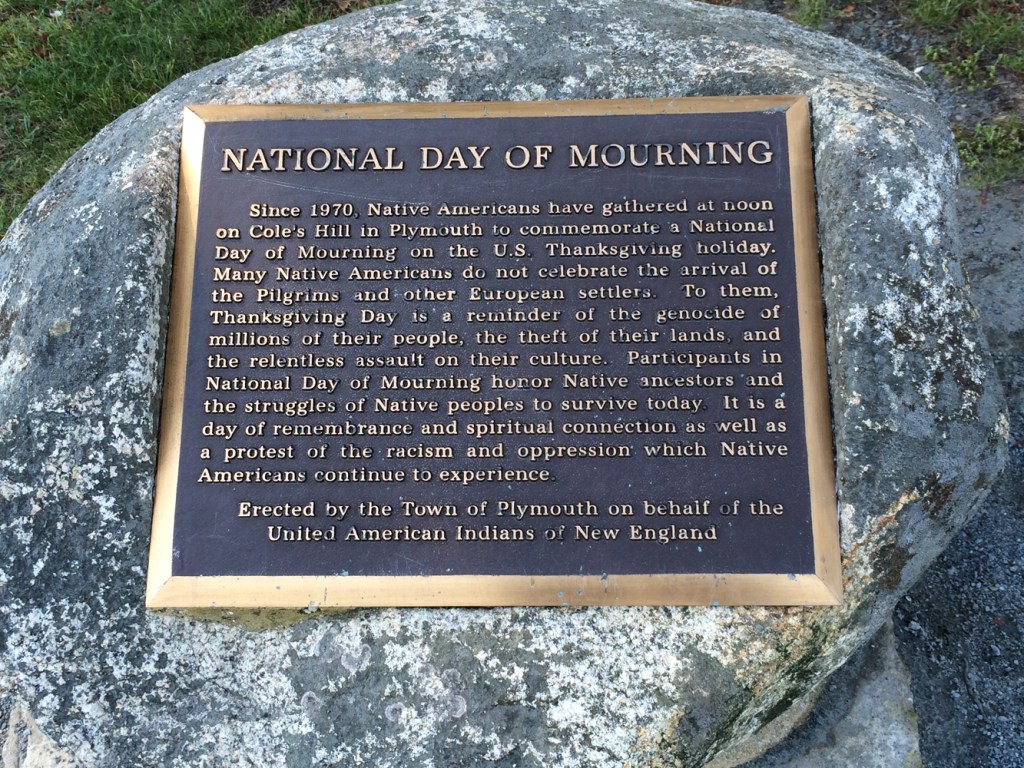
From the Archives: Thanksgiving and Service by Sara Frykenberg

This was originally posted on December 3, 2103

Growing up in an evangelical Christian church, I was taught that human beings should serve one another and put others before themselves.  These two different teachings, paired with patriarchal misogyny, have sometimes been very problematic for me.  I tend(ed) to give too much.  Too many demands with which I complied were self-negating (which after all, helped me to make other people more important than myself).  It took me a long time to learn how to appropriately prioritize my own needs, to stop mistaking self-esteem for the”‘sin of pride,” and how to say no when I needed to… Actually, I am still learning some of these lessons.

Conversely, my ritualized service to the church was sometimes confusing, awkward or embarrassing.  I clearly remember having the opportunity to serve as something like an usher during Thanksgiving at our family’s church as a child.  This involved wearing a pilgrim costume, which for me meant finding a Puritan style costume in the church’s closet that fit my overweight childhood frame.  This was not an easy task and left me feeling ashamed.  Later as an adolescent, my youth group asked us to wash one another’s feet as Jesus did for his disciples.  Now, don’t misunderstand me here— I do believe that this ritual has the potential to be very powerful and meaningful for those involved.  However, my teenage self could not identify with the symbolic gesture beyond realizing that:

1)    I thought touching other people’s feet was gross, as was having my dirty feet touched and,
2)    I knew I ‘should’ get something out of the ritual but did not, so I felt spiritually guilty or inadequate.

Overall, I often associated Christian service with guilt, inadequacy, my role as a daughter or woman or my sacrificial duty.

Despite these issues, I usually genuinely enjoy serving others and giving to other people.  I love to host people and care for them.  I like to help.  I even prefer to help.  Serving one another we can express and allow others to express love.  But this past week, one day before Thanksgiving, a dear friend of mine gently challenged me to allow myself to be served or, as she put it, “to give someone else the gift of giving to me.”  Specifically, she was referring to a pending holiday meal for which I expressed my anxiety and frustration with not being allowed to help—which somehow makes me feel like a child.  Even writing this phrase, “makes me feel like a child,” I know that I have touched deeper feelings of helplessness or vulnerability that at some point, I learned to battle with competence and over-achievement.  I do often feel like a child or guilty when other people do for me what I think I could or should do for myself; and my friend’s brief words encouraged me to explore this relationship to being served.

“Service” can sometimes feel uncomfortable for the reasons I mention above, but more so, for its connection to the coercive “servitude” required by existent hierarchies within andro-kyriarchal oppressive systems.  I have been subject to this coercive servitude, and also, its beneficiary.  As a white, middle class, Western woman I have far too much privilege that is contingent upon the forced labor and oppression of other people.  This kind of forced servitude is very wrong; and I am still learning how and where to choose other than to be complicit in this abuse.  But, there have also been many distinctive instances in my life where I have felt reciprocally and undeniably “served” by people around me, without abuse and without manipulation.

Driving to Colorado one summer to see the friend I mentioned above, my two companions and I served one another.  The individual in the back seat was responsible for cutting bagels and spreading cream cheese on them for the driver and navigator, while the navigator held the drink, food or whatever other item that the driver could not.  This may sound like a small thing, but it wasn’t.  I felt taken care of and loved in this small and traveling community.  We also had a safe word that meant, “leave me alone, I’m grumpy” on our long trip.  We made agreements to account for one another’s  discomfort and effort.  We respected one another and cared for each other.

Beginning my work as an adjunct professor, I encountered a great deal of stress and often long and awkward work hours.  Many times I felt like I needed help, but there was nothing I could ask for help with when it came to my job: I needed to grade my own papers, plan my own lectures, and yes, write my own blogs.  My husband has responded by taking care of me in other ways.  He makes me dinner, goes to the store and makes sure I take breaks.  We take turns taking care of one another, and I am grateful for him.

This past week after talking to my friend, I noticed how willing people were to touch me to soothe aching muscles.  I’m not sure how to describe what I felt, but it was like something invisible in certain spaces was suddenly visible.  I also realized that it had been a very long time since I had freely and openly received this touch.  Later during the weekend, a friend came to my house  and she made me dinner!  My husband rubbed my chest after a long night of coughing yesterday because I still haven’t completely rid myself of the smoldering in my lungs.  I was defensive for so long.  Shedding my defender allows me to rediscover all those things for which I am thankful.

Gratefulness is an action.  It can be found in those expressions that return, receive and allow for mutual loving.  I am learning new rituals that help me to remember that this kind of mutual serving and being served is sacred.  In a summer ritual, my friend and I washed one another’s hair instead of our feet.  I am still learning to ask for assistance from the goddess after freeing myself from an abusive omnipotent god, but I am starting to ask.

I am starting to pray again.

BIO: Sara Frykenberg, Ph.D.: Graduate of the women studies in religion program at Claremont Graduate University, Sara’s research considers the way in which process feminist theo/alogies reveal a kind transitory violence present in the liminal space between abusive paradigms and new non-abusive creations: a counter-necessary violence.  In addition to her feminist, theo/alogical and pedagogical pursuits, Sara is also an avid fan of science fiction and fantasy literature, and a level one Kundalini yoga teacher.

A Ritual for Thanksgiving, by Molly Remer

Find some pine trees
and a wide rock in the sun.
Settle down and feel gratitude
curl around your shoulders.
Listen to the wind
sense that there is sorrow too
in this place,
deep and old,
threaded through the
lines of sun
slices of shadows.
It tells of what has been lost,
what has been stolen,
of silenced stories,
and of fracturing.
Make a vow,
silent and sacred,
to do what you can,
to rebuild the web
to reweave the fabric.
Lie on your back in the pine needles,
feel your body soften into the ground
and become still.
Allow yourself to feel held,
heavy bones and soft skin
becoming part of the land.
Wonder how many of your
ancestors kept other people
from becoming ancestors themselves.
Watch the sunlight making tiny rainbows
through your eyelashes and pines.
Find a pretty rock.
Don’t take it.
Leave it where it belongs,
on the land that gave it birth.
Go home.
Keep your promise.

Continue reading “A Ritual for Thanksgiving, by Molly Remer”

Is the Divine the Unknowable Unknown? A Feminist Take by Ivy Helman

I attended a number of High Holy Days services (online) over the past couple of weeks. In one of them, one of the rabbis said that the divine is the unknowable unknown. I cannot remember what the Rabbi said to contextualize or explain their train of thought; I think I was too intrigued by the idea that I got lost in my own thoughts. In fact, I have been thinking about the unknowable unknown ever since.  

As I write this, I’ve come to this conclusion: if the divine is present among us and the world around us, then there is much we can intuit. In addition, there is much that we can experience the more we interact with other humans and nature.  On the other hand, if the divine is understood as a detached, distant being of a completely different essence than humanity, of course, what can we really know about such a divinity?  How would we even know if that divinity even existed? We probably wouldn’t.  Here is the difference between a  feminist understanding of the divine as this-worldly and empowering and a patriarchal conception of a distant divinity wielding power-over. Yet, interestingly, even the most patriarchal image of the divine has insisted on being relatable to human beings. Nonetheless, how we imagine the divine does matter.

In her book, Models of God: Theology for an Ecological, Nuclear Age, Sallie McFague argues that the words and ideas we use to describe the divine are important. She advocates for the use of metaphors to describe the divine, stating that we can only describe what the divine is like, not what divinity actually is. In fact, she warns the reader of long-lasting models for the divine as these can lead to idolatry, an understanding that limits divinity and, because of this, is essentially untrue. She writes on page 99 that, “[i]f we use only the male pronoun [for the divine], we fall into idolatry, forgetting that God is beyond male and female…” In other words, we are limiting the divine and furthermore speaking an untruth.  

This talk makes we wonder if she too is of the camp that we cannot understand divinity; that the divine is quite different from us. I mean if we cannot and should not have any long-standing model for the divine but only use shaky fleeting metaphors, our understanding of the divinity is genuinely limited and amorphous. Yet, there is a difference between some knowledge and experience of the divine and the idea of the divine as the unknowable unknown, isn’t there?

That being said, I find much of what she has to say extremely helpful when it comes to traditional understandings of divinity.  In her book, she implicates as problematic the long-standing models of divinity as Father and King, among others.  These out-dated models move us further and further away from the divine because they are thought to definitively explain who the divine is in relation to us.  

Let us look at Yom Kippur, the Day of Atonement, as an example of this in Judaism.  Here, we have a day in which we are highly vulnerable as we reflect on the ways in which we have not always treated ourselves, others, the world around us, and the divine as we should (had hoped to). Yet, we enter the synagogue and repeatedly address the divine as Avinu Malkeinu (Our Father, Our King).  Why is the understanding of divinity that we approach one of judge, strict parent, and ruler over us?  Does that not drive a wedge of sorts between divinity and humanity? Does that not make being inscribed in the book of life seemingly impossible unless we are non-human-like?

Contrary to what we often hear in shul, Judaism recognizes some 70 diverse understandings, or names for the divine. These names range from Hashem (the Name) and Shalom (Peace) to Shechinah (the in-dwelling) and Kadosh Israel (the Holy One of Israel). And there are many, many more.  

Returning to our example again, instead of the umpteen rounds of Avinu Malkeinu, what would it be like on Yom Kippur if we approached the divine as Shaddai (Comforter), Hamakon (the Present One, literally the Place), or YHWH-Rapha (The One Who Heals)? These understandings seem to offer the compassion we need on a most vulnerable day.  How much easier would it be to connect to divinity that understands us?  Perhaps we could learn a little more about divinity in that case, and we could in the process become much closer to the holy?  And, isn’t that the point of Judaism? To be holy like the divine is holy?  I think so. 

From a feminist perspective, how we understand the divine has real-life consequences which can shape how we understand ourselves and the world around us. Just imagine what Yom Kippur would feel like, if we called on the divine that day as the comforter, the present one, and the one who heals. It would feel totally different, and for very good reasons.

Who would have thought that some three weeks ago or so, I would have heard a phrase about the divine that still has me in a quandary? I mean, in the end, I suppose there are ways in which the divine is unknowable. Importantly, though, that does not make the divine wholly unknown. Rather, it is often the language we use about the divine that puts distance between us and divinity, that makes divinity less and less known.

Ivy Helman, Ph.D.: A feminist scholar and faculty member at Charles University in Prague, Czech Republic where she teaches a variety of Jewish Studies, Feminist and Ecofeminist courses.  

From the Archives: Yom Kippur as Seen (With Respect) by Barbara Ardinger

This was originally posted on September 30, 2012

No matter which or how many gods we believe in, thinking about what we’ve done wrong and how we can set it straight is useful. The Day of Atonement, the Talmud says, “absolves from sins against God, but not from sins against a fellow man unless the pardon of the offended person is secured.”

 Back in the Stone Age, otherwise known as the early 1980s, I had jobs as a technical writer and editor in five different industries, including aerospace and computer development. Hey, I was trained as a Shakespearean scholar, but in those days—pretty much like today—there were almost no jobs in the academy for newly-hatched Ph.D’s. So I tried technical writing. At one of the aerospace jobs, I sat in the “bullpen”—me and nineteen middle-aged white guys—whereas all the other women slaved—on typewriters in that pre-computer age—in the typing pool. There was a major class distinction in that aerospace firm, and I was glad to be with the guys. (Yes, shame on me.) Those were the days of 9 to 5. As far as I’m concerned, that movie is nonfiction.

One of my tech-writing buddies at the aerospace company was a former Jehovah’s Witness who had been disfellowshipped because his beard was the wrong shape and he’d refused to correct it. Another was an older man who had studied with Earnest Holmes himself and had also known Manly P. Hall in earlier days. A third friend, the project librarian, was a Conservative Jew. All three of these guys soon noticed the books I was bringing to read at lunch. These included the works of Dion Fortune and Gerald B. Gardner, and numerous metaphysical authors, plus every book I could find on alchemy, the tarot, New Thought, reincarnation, trance channeling…well, you get the idea. I was exploring occult worlds and ideas. When we weren’t talking about how to help the engineers write gooder English and I wasn’t trying to figure out how a FLIR (Forward-Looking InfraRed) helmet works, my three buds and I had some majorly interesting conversations on comparative religion and the occult (the word means “secret, hidden”) aspects of religions in general.

One day the Jewish librarian brought me a book to add to my library. This was the 1973 edition of The Jewish Catalog. What a wonderful book! I still have it. It’s sitting next to my keyboard as I type this.

Back in those innocent days, I still believed the pagan myth of the nine million witches burned by the inquisition during the Middle Ages. Yes, it’s a myth—there were never that many witches on the face of the earth at the same time; such a holocaust would have nearly depopulated medieval Europe. I have since learned that it is shameful to compare a mythological holocaust with the real Holocaust of World War II. I read The Jewish Catalog from cover to cover and learned a great deal.

Now flash forward to 2002 when the owner of RedWheel/Weiser phoned to ask me to write a book for them. I immediately said yes. The book, which they titled Pagan Every Day, is not, however, a pagan tome. It’s a daybook, a year and a day of short essays on topics that include goddesses, gods, and old pagan festivals and philosophy, and also saints and holy days from Christianity, Judaism, Islam, Hinduism, and Buddhism, plus less well known religions, plus interesting historical events…and then I also named Miss Piggy as The Goddess Of Everything. I get fan emails from people saying they reread the book, a day at a time, every year and still enjoy every page.

For September 24, I wrote about Judy Chicago’s Dinner Party, which was the most amazing exhibition I’d ever seen. The next day that year was Yom Kippur. I turned to my copy of The Jewish Catalog, where I learned about an obscure custom called kapparot. Here is what I wrote. Yes, I believe that we can borrow—but not pirate!—other people’s customs, acknowledge and express our gratitude to those other people and their religions, and then adapt what we borrow to a pagan perspective. After all, we’re all kin.

September 25: Yom Kippur

 The Jewish Catalog describes custom called kapparot, which “entails swinging a chicken around one’s head as a…symbol of expiating sins. The chicken is then slaughtered and given to the poor….” Most people these days tie money in a handkerchief and swing that around their head, saying, This is my change, this is my compensation, this is my redemption.

Yom Kippur, the last of the ten days of Yamim Noraim, occurs at nightfall on the ninth day of Tishri. The rites for Yom Kippur are set forth in Leviticus 16.

No matter which or how many gods we believe in, thinking about what we’ve done wrong and how we can set it straight is useful. The Day of Atonement, the Talmud says, “absolves from sins against God, but not from sins against a fellow man unless the pardon of the offended person is secured.” People seeking recovery in Twelve-Step programs likewise turn their lives over to the care of “God as they understand him” (Step 3), make a list of people they have harmed and become “willing to make amends” (Step 8), and then actually make amends (Step 9).

Pagans can make amends before Samhain. We want to have a clean emotional field in which to rest over the winter and plant fresh seeds in when spring comes. Let’s revive that old Jewish custom. But not swinging the chicken! That’s cruelty to swinger and swingee. Tie crystals or red corn or other symbolic items in a clean white handkerchief and swing it around your head, reciting the blessing quoted above. Then go around and see the people you need to see. Speak heart to heart with them. Give them something blessed from your handkerchief. Get on with your lives, as friends or no longer as friends, but not as enemies.

BIO: Barbara Ardinger, Ph.D. (www.barbaraardinger.com), is a published author and freelance editor. Her newest book is Secret Lives, a novel about grandmothers who do magic.  Her earlier nonfiction books include the daybook Pagan Every DayFinding New Goddesses (a pun-filled parody of goddess encyclopedias), and Goddess Meditations.  When she can get away from the computer, she goes to the theater as often as possible—she loves musical theater and movies in which people sing and dance. She is also an active CERT (Community Emergency Rescue Team) volunteer and a member (and occasional secretary pro-tem) of a neighborhood organization that focuses on code enforcement and safety for citizens. She has been an AIDS emotional support volunteer and a literacy volunteer. She is an active member of the Neopagan community and is well known for the rituals she creates and leads.

From the Archives: Why Isn’t Easter Marketable? By Anjeanette LeBoeuf

This as originally posted on March 25, 2018.

A few months ago, a friend and I were having one of our many hundreds of random conversations when we started to talk about the differences in the commercialization of the two major Christian holidays: Christmas and Easter. We started really getting invested it this question and what factors lead to Christmas become the juggernaut that it currently is.

Both holidays are given official status. Christmas is a designated federal holiday due to it being permanently celebrated in the Western Christian community on December 25th. Whereas Easter shifts due to seasonal and lunar changes but is always celebrated on a Sunday, meaning it did not need to be given a designated status as Sundays are recognized by the State as a non-work day. Schools across the globe used to call it Christmas and Easter breaks. In the last 10 years, all schools have adopted the politically correct terms of Winter and Spring Breaks. Yet, they still function around the religious observances.

Christmas, it seems comes more and more early in shops. Decorations, candy, gifts, and marketing can be seen as early as September. Christmas music can start to play on radio stations and coffee houses as soon as early November.

Continue reading “From the Archives: Why Isn’t Easter Marketable? By Anjeanette LeBoeuf”

From the Archives: “Home: A New Pesach Reflection” by Ivy Helman

Author’s note: This post originally published on this website on March 11, 2018. How prescient it is. I live in Prague, about an 8 hour car-ride to the Ukrainian border. Over 300,000 Ukrainian refugees have arrived here, with more arriving daily. They need homes, and this need is overwhelming our small country. Yet, we are doing all we can each and everyday to help those fleeing the war. Yet, this housing is not home, not when war still rages and when families are still separated. We need peace. Everyone deserves a home.

In ancient times, Pesach was one of three pilgrimage holidays, the others being Sukkot and Shavuot.  According to the the Torah, Israelite men were required to travel to Jerusalem to bring offerings to the temple. Supposedly, this reconnected these Israelites to their religion, to each other and to the deity.  Participating in these pilgrimages brought about a deeper sense of community. In short, three times a year, Jerusalem became a home away from home.

Continue reading “From the Archives: “Home: A New Pesach Reflection” by Ivy Helman”