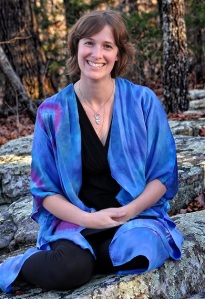
Seeing Death and Resurrection by Linn Marie Tonstad

Linn Marie TonstadYesterday, I visited the Capuchin catacombs in Palermo, Sicily. In a grotto about a mile or so from the center of the modern city are found the preserved remains of about 2,000 people who paid the monks to preserve their bodies after death, dress them in their finest clothing, and put them on display. Each of them is placed in its own niche along the wall, held up by iron bands, and has a tag around its neck with its name and date of death. The bodies are not displayed in random order: they are sorted (to some extent) by sex, profession, and familial status. In one large recess, a number of children’s skeletons are on display, many of them in heartbreakingly tiny coffins. In another corridor, friar after friar hangs in his robes, some with cords around their necks signifying their adherence to a Franciscan order. Almost indistinguishable from the cords are the braids still hanging from the heads of some of the women’s bodies. Some families are arranged together; in another corridor doctors and lawyers are segregated and in yet another female virgins are gathered together. The oldest body I saw dated from 1599 – high on a wall hangs the body of a monk whose name was almost illegible but who hailed from the Umbrian hill town of Gubbio.

Some of the skeletons presented death’s heads; others had skin dried to a leathery tightness over remaining bony protuberances. Some of their outfits are well preserved; others have disintegrated under the relentless assault of the years. The practice became illegal around 1880, but until then, people chose – or perhaps their relatives chose for them – to be preserved in this seemingly macabre manner. Continue reading “Seeing Death and Resurrection by Linn Marie Tonstad”

How I Loved Myself through Charismatic Worship by Andreea Nica

Andreea Nica, pentecostalismBreaking up with your first love can be an excruciating process; especially when it happens to be completely entangled with your being. God was my first love and he stayed for a long while. We had many exhilarating times together, particularly within the branch of Christianity I was raised in: Pentecostalism. I fell in love with God when I uttered his divine language at 13 years of age.

Currently, I’m writing my memoir and narrative nonfiction, Freeligious ™, for which I explore the scientific explanations of my charismatic experiences in the church, which inevitably led to a closer attachment to God. In the Pentecostal church, we were encouraged to connect with God through supernatural phenomena.

Examples include: speaking in tongues (glossolalia), healings, trances (drunk in the holy spirit), visions (hallucinations), prophetic messages (delusions), rebuking evil spirits (paranoia), and many more god-friendly activities. While some of my church peers and most outsiders found the charismatic ordeal to be phantasmical and plain ol’ crazy, I became enchanted by the initiation. The initiation process was quite simple really. As believers in Christ, we must receive the baptism of the holy spirit which usually took the form of speaking in tongues, clinically known as glossolalia. Continue reading “How I Loved Myself through Charismatic Worship by Andreea Nica”

An Epic Woman: A Feminist Eulogy by Molly

editMollyNov 083There were some things about my grandmother that I didn’t find out until after she died. For example, in 1974, she co-organized a “Women’s Exchange”  in Fresno, California with the theme: Stop the World…We Want to Get On. How much I would have liked to talk to her about that! While I didn’t know about the fair, I do know that she was successful with her vision of getting on this brightly spinning world. My grandma was a woman who was hiking in the Channel Islands one month before receiving a diagnosis of aggressive pancreatic cancer. She was incredible.
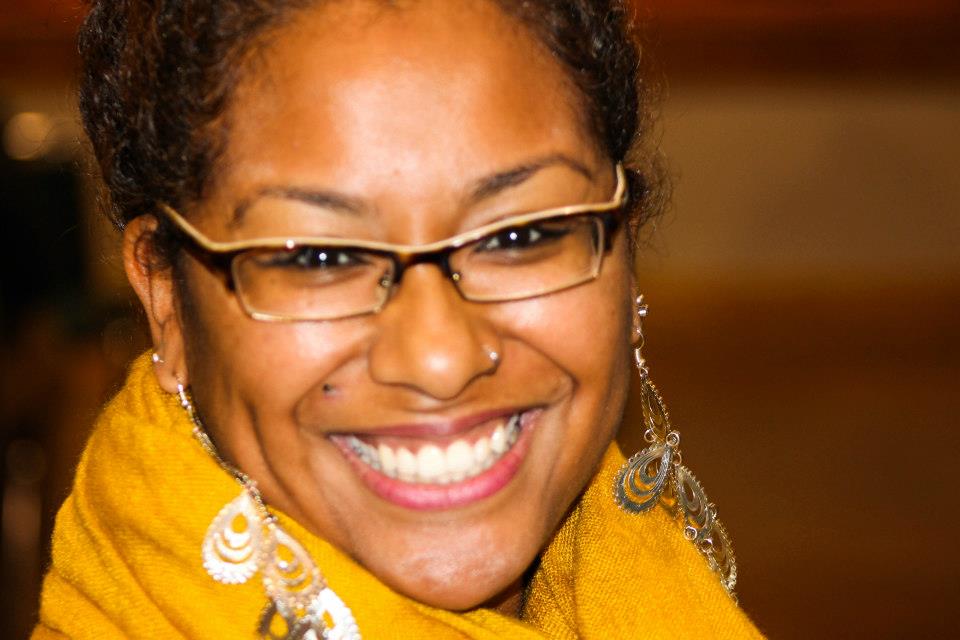
After reading Grace Yia-Hei Kao’s recent post about giving a eulogy at her grandmother’s funeral, my thoughts turned to my grandmother’s memorial services this past spring. What, if any, are the components of a feminist eulogy? Grace wonders. In reading this, I reflected on the components of the services I prepared and participated in for my grandmother and I believe they fit the bill. In a pleasingly feminist move in itself, I was asked by my extended family to serve as the priestess at my grandmother’s “committal” service (in which her ashes were interred in the above-ground burial chamber that received my grandfather’s body in 1989).

It was deeply important to me to have multiple voices represented during the small, family-only, service and I enlisted all the grandchildren present, as well as her step-grandchildren, in an adapted responsive reading based on Walt Whitman’s “Song of the Open Road”. I chose it precisely because it spoke to the irrepressible, adventuresome spirit of my grandmother. It was a lot of pressure to be responsible for the family ceremony for the interment of her ashes. I wanted it to be perfect. I wanted it to be what she deserved. I wanted it to “speak” to every person there. I wanted it to be worthy of her. I hope it was enoughContinue reading “An Epic Woman: A Feminist Eulogy by Molly”

Who Am I Under Oppression? By Deanne Quarrie

Deanne QuarrieIn a class I am taking we were asked to journal with these questions: Ask yourself who are you in the inner voice that does not speak in the world around you or which you have worked tirelessly to bring into fruition in your life. Who are you that has felt suppressed and suffocated?

I sometimes think that I do not know who I am anymore.  Life teaches us that it is those outside of ourselves who determine our value to society.  We are given love and support (if we are lucky) by our parents as children.  Our value is determined by how much time and attention they give us.  If we get a lot, we grow up confident in ourselves trusting our way through life. When we attend school our value is determined by the effort we put into our studies, the grades we receive and the extracurricular activities we take part in and finally by the friends we choose. Continue reading “Who Am I Under Oppression? By Deanne Quarrie”

God the Father or Buffy the Vampire Slayer? by Linn Marie Tonstad

Linn Marie TonstadIn the second season of the television show Buffy, the Vampire Slayer [spoiler alert!], Buffy is faced with an agonizing dilemma. She is condemned to save the world “again.” Buffy’s former lover is the evil Angelus. Angelus – once the good Angel – has awoken a demon that will swallow up the whole world into an eternity of suffering.  In what follows, I read Buffy as God the Father. Angelus represents sinful humanity, Angel is Jesus, and the Spirit is the sword in Buffy’s hand. Buffy attempts to destroy Angelus. But at the moment that she is about to kill Angelus, his soul is returned to him. Unfortunately, only Angel’s blood will close the gaping mouth of the demon. The shift from Angelus to Angel gives a vivid representation of the shifting positions of the first and second Adam in the Christian narrative of redemption. Angelus is evil. Angel carries the weight of Angelus’s guilt without any of the responsibility belonging, strictly speaking, to him. Yet finally, the innocent Angel must bear the consequences of Angelus’s evil for the salvation of the world.

The gender dynamics of this scene complicate and illuminate traditional readings of the involvement of the Father in the crucifixion. Gender subordination and the subordination of the Son to the Father go together, and are ultimately justified by the same theological logic. Reading the Father as an 18-year old girl helps to mark the inadequacy of language to capture God. The evident implausibility, even absurdity, of the image, makes visible the theological truth that God is not a father among other fathers.   Continue reading “God the Father or Buffy the Vampire Slayer? by Linn Marie Tonstad”

Birth Song, Life Song, Death Song by Molly

editMollyNov 083“A woman can spin a primal umbilical rope within her womb through which she passes life-energy to the future.” –Melissa Raphael

“In some indigenous cultures of the Americas there is the practice of finding one’s death song while alive. This song becomes the ally of the person throughout their lives, so that they become very acquainted with what the song means in their lifetime. Death then, is a companion of life, and is never forgotten. In the hour of death, these people would, if they were able to, sing their death song–exiting this world with song on their lips and no doubt feeling the power their ally-song had gathered by being with them in their life. I can see that a death song would provide a connection between the person and the cycles of life, guiding the dying person into the next world and helping to allay fear…” –Leslene della-Madre, Midwifing Death

I was introduced to blessingways, or mother blessing ceremonies, as a girl when my mother’s group of friends hosted them for each other during their pregnancies. I loved attending the ceremonies for my mom during her pregnancies with my younger brother and sister and witnessing the web of love, support, and commitment woven around her. They touched me deeply with their sacred, magical, and mysterious flavor. When I was twelve, the same group of friends had a coming of age blessingway ritual for the daughters of the group, ranging in age from 10-16. It was a mystical, beautiful experience. We wore wreaths of flowers in our hair and were blessed with wisdom and tokens from the wise women of our tribe. At 34 years old now, I still have my folder of prayers, quotes, and messages from that day. For years it smelled faintly of rose petals.

Continue reading “Birth Song, Life Song, Death Song by Molly”

Leaving Behind My First Love by Andreea Nica

Andreea Nica, pentecostalismDuring these realizations, the words of Sue Monk Kidd permeated my mind, “The truth may set you free, but first it will shatter the safe, sweet way you live.”

When most people inquire who my first love was, I’m reluctant to give an honest answer. At times, I just uttered the first boy’s name that would come to mind. As I matured and developed into a confident young adult, I decided to provide a more honest answer. “My first love was God. Jesus. You know, the Trinity.” I would receive puzzled looks, quizzical faces, and frazzled exits. Given the multitude of embarrassing responses, I began to rephrase my answer in a way that prompted them to further question my response. “I fell in love with God as I grew up in a charismatic, Pentecostal religious community. During my college years I left Pentecostalism, my family unit, and the community.” Responses were drastically different with this answer. Many people desired to know more about my transition and how I found the inner strength to embark on an alternative path. I quickly realized I didn’t have all the answers. Although my B.A. in Psychology aided me in understanding aspects of the psychological implications of my departure from the religious institution and a family that identified as Pentecostal, there was still much to uncover. Continue reading “Leaving Behind My First Love by Andreea Nica”

Cells in The Body Of Earth: Living with Violence, Part 2 by Candice Valenzuela

Candice Rose Valenzuela teaches English Literature at Castlemont High School in East Oakland, California, and she has been teaching and organizing inner-city youth for the past eight years. She is currently pursuing a Masters in East-West Psychology at the California Institute for Integral Studies, and desires to bring indigenous healing methodologies into teaching and learning in the inner-city.

In a previous blog, I wrote about the feelings that have engulfed me and the students I teach at Castlemont High School in East  Oakland, California, following the shooting death of “one of my own,” Olajumon Clayborn.

An indigenous elder told me that I needed to go to the ocean in order to heal. I needed to go to nature, the source, to find the sustenance that will strengthen me in these times.  I went to the ocean yesterday evening after school, though my body was exhausted after running up and down Macarthur Avenue trying to dissuade students from fighting with each other in their anger and grief.

As the waves crashed up and down, back and forth on the shore, and came up steadily to meet me, I suddenly found myself knee deep in water, but I was not cold. And I could see clearly from that place. What I saw was this: Continue reading “Cells in The Body Of Earth: Living with Violence, Part 2 by Candice Valenzuela”

Cells in The Body Of Earth: Living with Violence, Part 1 by Candice Valenzuela

Candice Rose Valenzuela teaches English Literature at Castlemont High School in East Oakland, California, and she has been teaching and organizing inner-city youth for the past eight years. She is currently pursuing a Masters in East-West Psychology at the California Institute for Integral Studies, and desires to bring indigenous healing methodologies into teaching and learning in the inner-city.This week has been especially hard. At the high school where I teach, the youth and staff are facing a level of heightened violence, the likes of which, I have not myself personally seen before. Two weeks ago, a young woman was shot in front of the youth center next door, and two days later there was a drive-by in front of the campus targeting one of our young men. Shots flew through the building as youth and teachers hid under desks. I am writing this now as I process the knowledge that one of my own, Olajuwon Clayborn, was shot and murdered this past Sunday around midnight in front of his home while his mother watched.

I’ve been teaching in urban schools for the past eight years (for one of those years I was a sex educator, two a special ed teacher, and the last five an English instructor). In this time I’ve grown tremendously, through having to face the severe struggles of inner-city youth, face what their struggles trigger in me, and then channel that into something that can be helpful, useful, or inspiring to them. What has resulted are new lesson plans, deep relationships, and a constantly transforming work ethic. Above all, I continue to grow into a person who is greater and wiser than I could have ever imagined, all due to the trust and love of the youth, who literally, often give me more than I give them. Continue reading “Cells in The Body Of Earth: Living with Violence, Part 1 by Candice Valenzuela”

Appreciating the Sacrament of the Present Moment by Michele Stopera Freyhauf

In order to be at peace, it is necessary to find a sense of history – that you are both part of what has come before and part of what is yet to come. Being thus surrounded, you are not alone; and the sense of urgency that pervades the present is put in perspective. Do not frivolously use the time that is yours to spend.  Cherish it, that each day may bring new growth, insight, and awareness.  Use this growth not selfishly, but rather in service of what may be, in the future tide of time. Never allow a day to pass that did not add to what was understood before. Let each day be a stone in the path of growth. Do not rest until what was intended has been done. But remember – go as slowly as is necessary in order to sustain a steady pace; do not expend energy in waste. Finally, do not allow the illusory urgencies of the immediate to distract you from your vision of the eternal.

                                                     (Elisabeth Kubler-Ross, The Final Stage of Growth, 167)

Freyhauf, Feminism, Religion, Durham, Old Testament, Blogger, Bible, Gender, Violence, Ursuline, John CarrollLast month we lost a good friend unexpectedly.  His death, just days after his 49th birthday caused me to confront my own mortality. His death also makes me think about that void in life that we leave as well as the legacies we leave behind. How will I be remembered?  Did I make a difference while on earth? Have I served and given back enough?   Continue reading “Appreciating the Sacrament of the Present Moment by Michele Stopera Freyhauf”