You No Longer Get to Tell Me What is Good and What is Evil:  A Story of Krampus and Yule by Caryn MacGrandle

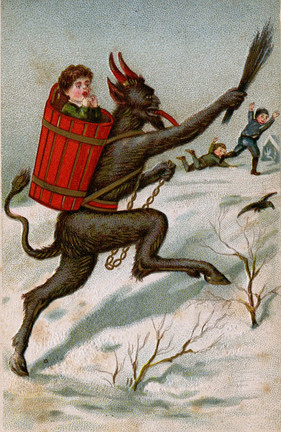
From a 1919 Austrian postcard

One of the members of my app put a Yule event in Tuscambia, Alabama on the divine feminine app. The description is as follows:

A FREE EVENT! Saturday December 3 from 1-9pm. Come out and enjoy the Celtic and Mystical Vibes of the Holiday Season! Dress up if you would like in Celtic, Viking, gods or goddesses, wizards, witches, or any other mystic! Enjoy last minute holiday shopping, downtown local restaurants and some street food, some street performers and photo ops with a 7 foot Krampus and others in character walking around! A very entertaining event in the quaint downtown of Tuscumbia, AL. See you there!! – Hesperia Mystic Shoppe

A few leaders from local churches became upset upon learning of the event saying that they were inviting in demons with this event (the Krampus is what they were particularly opposed to). They asked to speak at the local council meeting, and you can see a news story and video here

Continue reading “You No Longer Get to Tell Me What is Good and What is Evil:  A Story of Krampus and Yule by Caryn MacGrandle”

The Holidays Are Coming: Let’s Celebrate the Saturnalia by Barbara Ardinger

Here we are in December—and what a year 2021 has been. Let’s not even think about what we’ve survived—continuing pandemic, climate change, people with guns, violations of voting rights, the Orange T. Rex still at large. No no no. Let’s celebrate the coming holidays with the antique ancestor of the Feast of Fools. Let’s celebrate the Saturnalia.

Some background: Saturn, who was sometimes conflated with the Greek Titan, Cronus (who became a god of time), was an ancient Latin agricultural god whose name may derive from satur, “stuffed,” or sator, “a sower”; in either case, he stands for abundance. He was a working god who oversaw viniculture and farming and was the king of Italy during the golden age before the rise of imperial Rome. When Jupiter came to conquer him, he hid himself (latuit) in the region that came to be called Latium. The Romans soon proclaimed that Saturn’s body lay beneath the Capitol in Rome. Because his reign (and presumably his hidden corpse) brought prosperity to the city, the state treasury and the standards of the Roman legions were kept in his temple when the army was at home. Saturn’s statue was bound in woolen strips to keep him from leaving Rome. In addition to Saturn, the Romans honored Ops and popular gods like Sol Invictus, Mithra, Consus, Juventas, and Janus in their winter festivals.

Continue reading “The Holidays Are Coming: Let’s Celebrate the Saturnalia by Barbara Ardinger”

The Poiesis of Celebrating Earth’s Seasonal Moments by Glenys Livingstone

Amongst Celtic peoples, the capacity to speak poetically was a divine attribute, regarded as a transformative power of the Deity, who was named by those peoples as the Great Goddess Brigid: She was a poet, a Matron of Poetry (along with her capacities of smithcraft and healing). And at Delphi in Greece, the oracular priestesses delivered their prophecies in poetic form: Phemonoe invented the poetic meter, the hexameter. And from Sumeria, humans have the first Western written records of literature, which is poetry written by the High Priestess of Inanna, Enheduanna in approximately 2300 B.C.E.. Poetry has been recognised as a powerful modality: Barbara Mor and Monica Sjoo described “poetic thinking” as an wholistic mode, wherein “paradox and ambiguity … can be felt and synthesized. The most ancient becomes the most modern; for in the holographic universe, each ‘subjective’ part contains the ‘objective’ whole, and chronological time is just one aspect of a simultaneous universe” (The Great Cosmic Mother, 41).

Poetry could be described as an “Earth-centred language”: it has the capacity to hold multivalent aspects of reality, to open to subjective depths, to allow qualitative differences in understanding. Hence it is especially suited to expressing and bringing together a multitude of beings. Cosmologist and evolutionary philosopher Brian Swimme and the late cultural historian/geologian Thomas Berry have called for such a language – the kind of language “until now enjoyed only by our poets and mystics” that may express the “highly differentiated unit”, the organic reality such as Earth is (The Universe Story, 258-259), and such as “Gaia” was understood of old, and in recent scientific theory: that is, Earth is understood as a highly differentiated unity, which any expression must aim to emulate. Continue reading “The Poiesis of Celebrating Earth’s Seasonal Moments by Glenys Livingstone”

Tlachtga, Forgotten Celtic Goddess – by Judith Shaw

judith shaw photoI am the Sun – bringer of the warming light of day. I am Lightning –  bringer of fire to Earth. I am Tlachtga who flew through the sky together with my father Mog Ruith in our glowing wheel. I am destruction and creation. I illuminate the darkness and point to the pathway of light that resides in each of you. Over time I made my final resting place at the Hill of Tlachtga, where the great fire ritual of Samhain is practiced, reminding the folk of the promise of Sun’s return at the end of the time of darkness and dreaming.  

  Continue reading “Tlachtga, Forgotten Celtic Goddess – by Judith Shaw”

To Light a Flaming Pumpkin: The Inexact Art of Family Ritual, by Molly Remer

Our bounty is inIMG_7695
creativity
friendship
community
the myriad small adventures
of everyday.
We tell of magic
and moonrise
and listening to the pulse
of the earth beneath our feet.

Ah, October. Fall has settled into the trees and air. Last year on Samhain (Halloween), as the sun was setting and the full moon was rising, my family stood together in the dim light on our back deck, lit a fire in a hollowed out pumpkin and offered handfuls of herbs into the flames as we celebrated our blessings, our harvests, and our bounty, as a family and as individuals. As we spoke aloud our blessings and our bounty, our words got deeper, broader, and more authentic. My twelve year old son stepped forward to say how thankful he is that he gets to live with his best friend, his fifteen year old brother, and they embraced over the flaming pumpkin. My fifteen year old son offered his thanks for a family that has “cool IMG_7387rituals like this” and my four year son offered his blessings for the “energy we feel together.” My seven year old daughter offered her gratitude for pandas and for toys.
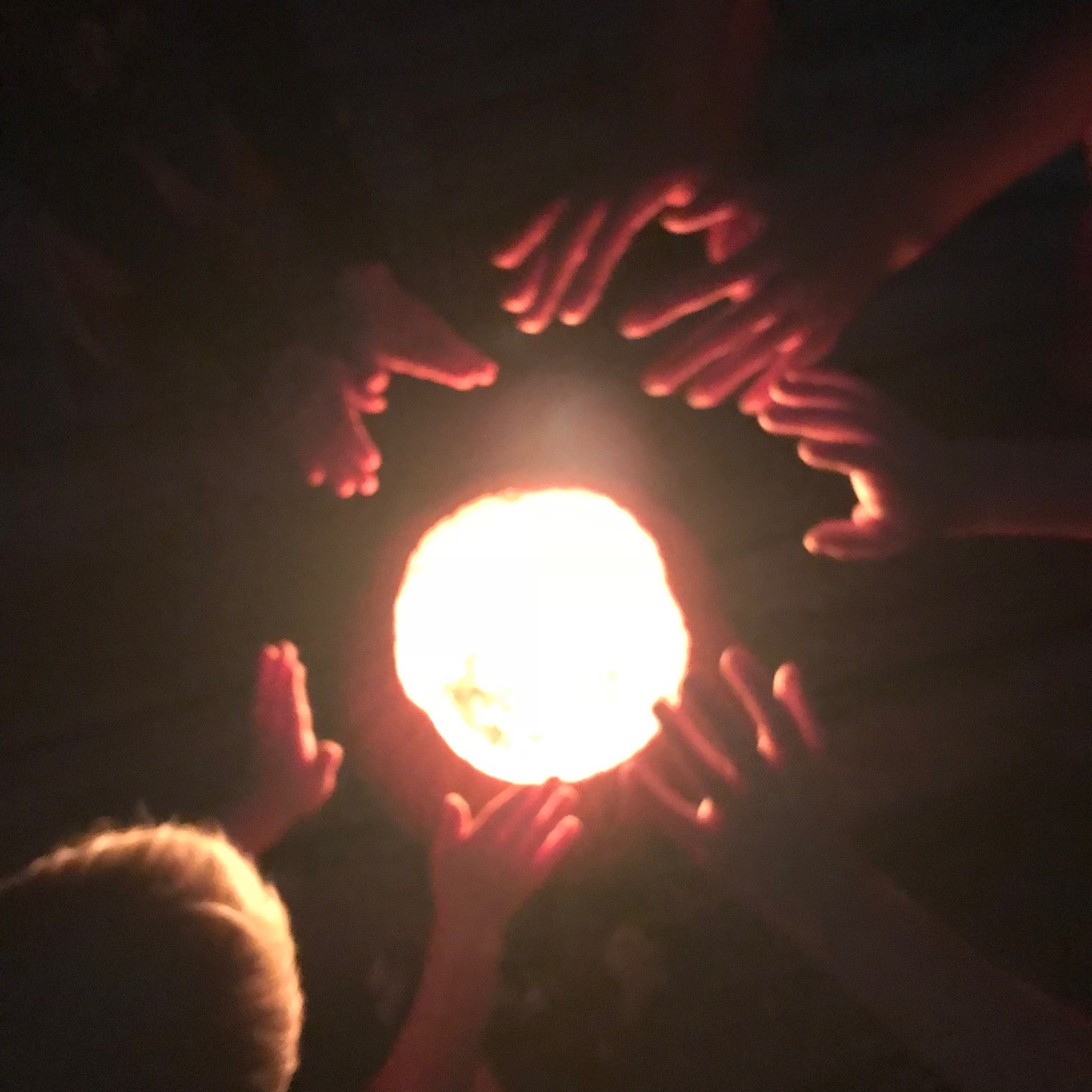
The next week, we returned the seeds to the pumpkin and released it to the outdoors to grow next year.

Seventeen years ago, I held my first Winter Solstice ritual. I wrote my wish for a baby onto a small piece of paper and rolled it up into a “seed” of my dreams that I planted within a special wooden box. On the autumn equinox the following year, I gave birth to my first child, a son who now stands inches above me, but who joins hands with his family each month to sing “Dance in the Circle of Moonlight” together on the back deck under the full moon.

After having this first baby, it became increasingly important to me that we celebrate holidays and traditions that reflect our spiritual values and worldview rather than the packaged version of the holidays offered by society, or the religious observances of dominant faiths that do not match our own. While we have celebrated the wheel of the year together in a variety of ways in what has now been sixteen years of parenting and twenty-one years of marriage, it wasn’t really until last year that I felt I finally, truly hit my stride in planning fulfilling, nourishing family rituals. Perhaps it is because I am no longer trying to juggle nursing a baby or changing a diaper while simultaneously also guiding a ceremony. Perhaps it is because I’ve loosened up and accepted the myriad imperfections possible within a multi-age celebration. Perhaps it is because when one of the children wanders off during circle or interrupts me while I’m talking, I accept it as part of the flow, and continue our work without breaking my stride. Perhaps it is because I now laugh too when someone makes a joke during my careful ritual, and continue to roll with it, instead of feeling like it is disrespectful. Perhaps it is because I consider a 15-20 minutes family ritual perfectly sufficient instead of trying to plan for a full-fledged, retreat-style “program” of activities. Perhaps it is because we’ve joined hands in family circle in so many ways and for so many years that we all now trust that I’m not giving up on doing this together.

In the course of the year we’ve anointed one another’s foreheads with fragrant oils while standing in the freezing water of a freshwater stream. We’ve felt the raindrops kiss our faces and the rays of the sun peek in and out of the clouds as we celebrated the summer solstice by releasing wildflowers into the river. We’ve howled at the moon together, built a green man face from leaves, stones, and sticks in the field, created flower mandalas, thrown pinches of cornmeal into the woods as a symbolic sacrifice, soaked our feet in warm water laced with rose petals and then massaged one another’s feet with lotion, walked through a spiral of candlelight, and offered handfuls of herbs into a flaming pumpkin.

As we notice the changing seasons and honor the call of nature within our lives through ceremony, celebration, and song, we make visible the interconnected dance of life. We reaffirm our commitment, our relatedness, to each other and to the natural environment around us. We communicate with and are in relationship to that larger force of life and spirit that we call Goddess. And, we bring our spiritual beliefs into our bodies, hands, minds, and hearts in an ever-spinning Wheel of celebration, attention, observation, enjoyment, communion, and love.

 “We can think of ritual as the container we weave in which we can be carried away by magic and ecstasy.”

—Starhawk and Valentine, The Twelve Wild Swans

For your own flaming pumpkin ritual, choose a large, round pumpkin, cut off the top 42311806_2188101348068742_1038582461505732608_oand hollow it out. Keep the seeds to plant with the remnants of your fire later. You may start the fire with paper and a lighter and then keep adding herbs to keep it burning, or you may stoke it by putting some alcohol in the bottom of the pumpkin to begin with. Alcohol burns cool and can create a longer lasting, less smoky flaming pumpkin. Offer your autumn bounty into the pumpkin with herbs sprinkles/handfuls—these can be spontaneous spoken aloud declarations of your harvest, your celebrations, your gratitude, etc. What are you thankful for?
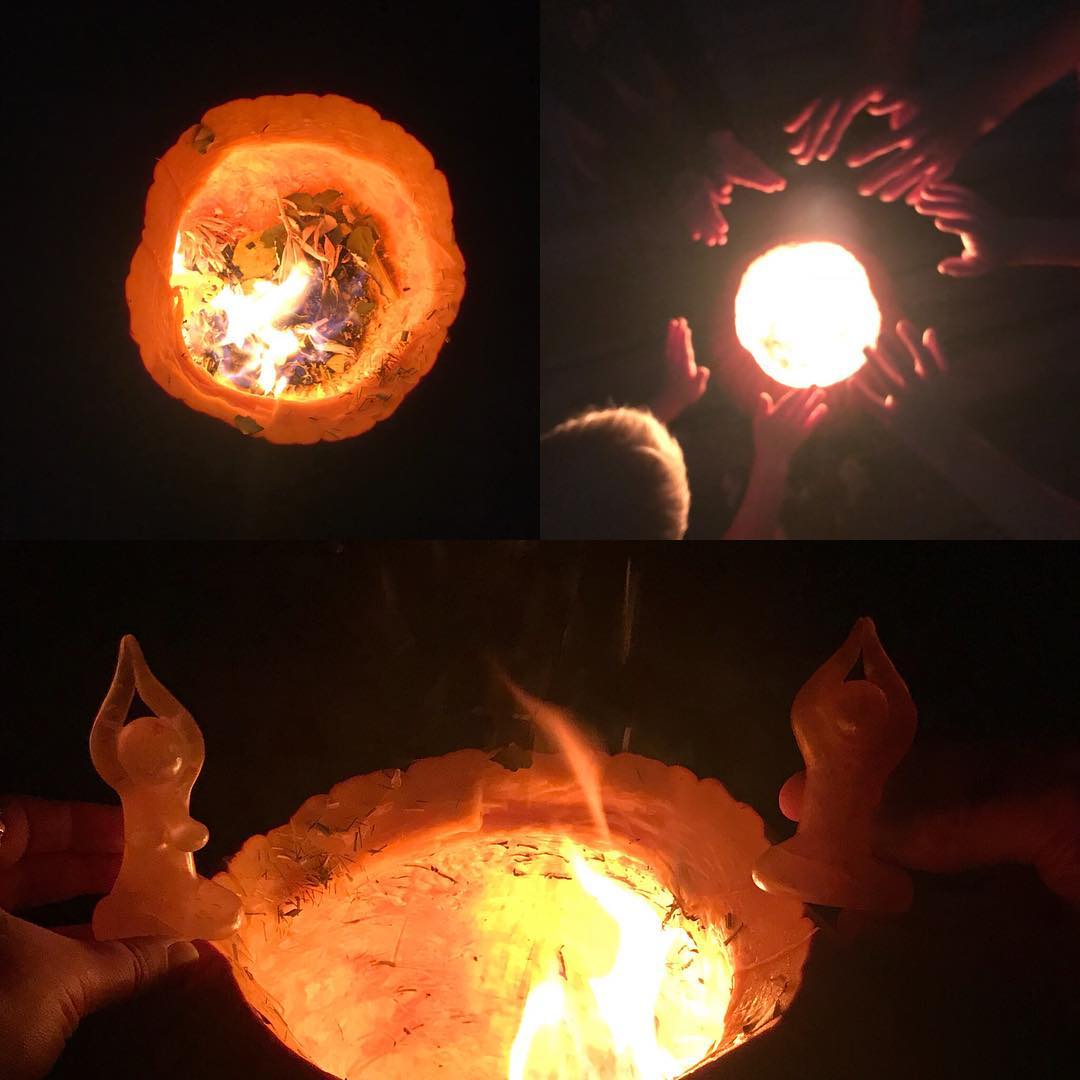
  • Optional: offer any sacrifices/releasing on slips of paper into the flames
  • Optional: Sing “Hallowed Evening” chant (by my kids and me)

Hallowed evening
Hallowed night
We dance in the shadows
We offer our light.

Additional Articles:

A Review of Decembers Past before We Move into the New Year by Marie Cartier

Last month I looked back over six years of postings I have done for FAR. In November,  I noticed that I usually during that month tend to review the year and find something to be grateful for.

I decided this month to follow that up by looking back at the posts I have done for the past six years at this time of year, right before the wheel turns into the New Year. I have the privilege of writing for FAR usually right after Thanksgiving and right after Christmas and before New Year’s. I tend to think of this time as a time of looking forward, and Thanksgiving as a time of looking back.

Continue reading “A Review of Decembers Past before We Move into the New Year by Marie Cartier”

Celebrating the Winter Solstice by Barbara Ardinger

Even though Jesus was born during the reign of Augustus, first Roman emperor, the empire didn’t celebrate that birth until three centuries later when his birth date was moved to mid-winter to match the birth date of the sun god Mithra. The Romans already had a long tradition of celebrating the winter solstice. This celebration was called the Saturnalia. Here are three days in December, taken from my daybook, Pagan Every Day. (When I wrote this book in 2003, I wrote longer days. The publisher demanded that I reduce every day to 300 words. I edited them all down to 301 words.)

December 17: Saturnalia begins

Saturn, who was conflated with the Greek Titan, Cronus, was an ancient Latin agricultural god whose name may derive from satur, “stuffed,” or sator, “a sower”; in either case he stands for abundance. He was a working god who oversaw viniculture and farming, the king of Italy during the golden age. When Jupiter conquered him, he hid himself (latuit) in the region that came to be called Latium. The Romans said Saturn’s body lay beneath the Capitol in Rome. Because his reign brought prosperity to the city, the state treasury and the standards of the Roman legions were kept in his temple when the army was at home. Saturn’s statue was bound in woolen strips to keep him from leaving Rome.

Continue reading “Celebrating the Winter Solstice by Barbara Ardinger”

Lifting the Veil – #WontBeErased by Joyce Zonana

Samhain is upon us. Halloween. The Day of the Dead. All Saints’ Day. All Souls’ Day. That liminal time of year when the doorways to what the Celts called the Otherworld, Annwn in Welsh, are open. In New York City, we have the 45th annual Village Halloween Parade, a queer extravaganza of puppetry, masquerade, and cross-dressing that draws some 60,000 participants and over 2 million onlookers. Elsewhere, we have children in costume and lawns covered with plastic skeletons and illuminated ghouls. Everywhere, if we’re lucky, we might catch a glimpse of  “the piper at the gates of dawn,” the vision granted Rat and Mole in Kenneth Grahame’s The Wind in the Willows: “something very surprising and splendid and beautiful”—Pan the goat-god, boundary-crosser, Friend and Helper, trans-being.

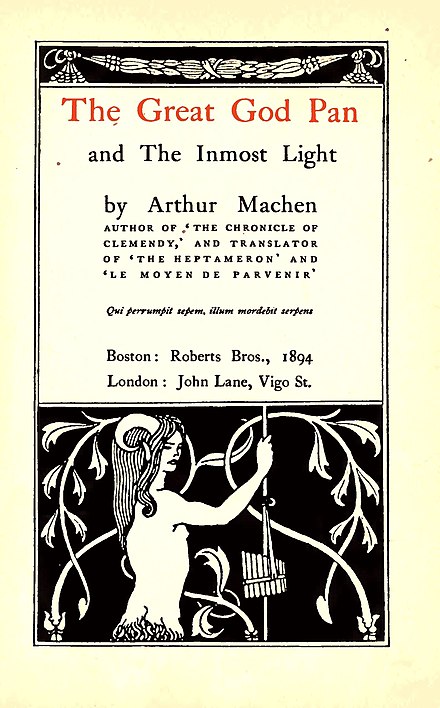
jz-headshotJust last week—a few days after the New York Times reported on the Trump administration’s efforts to define transgender out of existence—I read for the first time Welsh writer Arthur Machen’s 1894 novella, The Great God Pan, today considered a classic of horror fiction. Condemned as “morbid” and “abominable” by most critics when it was first published, the tale was hailed as “un succès fou” by Oscar Wilde, recuperated in the 1920s by H. P. Lovecraft, and particularly praised more recently by Stephen King, who called it “maybe the best” horror story “in the English language.”
440px-Title_page--The_great_god_Pan
Original edition with cover illustration by Aubrey Beardsley

The “queer” tale (the word “queer” recurs frequently throughout) is told by a series of straight-laced Victorian men, each of whom is horrified by the unspecified behavior and bearing of a mysterious woman, Helen Vaughan. Readers are led to suspect that Helen is guilty of some sort of sexual excess or transgression, but nothing is specified until after her suicide, when the medical examiner reports that he was “privileged or accursed” to see the “skin, and the flesh, and the muscles, and the bones, and the firm structure of the human body that I had thought to be unchangeable, and permanent as adamant, beg[i]n to melt and dissolve”: Continue reading “Lifting the Veil – #WontBeErased by Joyce Zonana”

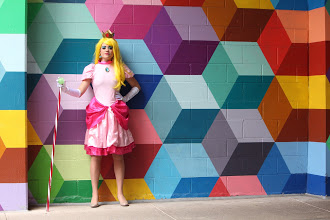
Princess Peach from The Goddess Project: Made in Her Image by Colette Numajiri

Toy stores and department store aisles are decked with pink and purple princess paraphernalia. Disney has provided an array of princesses for little girls to choose their birthday party or bedroom decor from. But as we all know, there’s a deeper secret hidden in the FAIRY TALES that high powered media execs have made their fortunes on: THE GODDESS.

Every hero’s tale, be it in video games or romantic movies sets out to do one thing: SAVE THE PRINCESS.  When I was a child I saved Her myself on my little Nintendo system never knowing why She was in trouble in the first place. And was I the only one who ever wondered why NONE of the PRINCESSES HAD MOTHERS!?

In the early Centuries during the Christianization of Europe, Pagans (which means “people of the land”) hid truths right under the nose of the newly forming Christian Church in their folklore, games and children’s rhymes to avoid being burnt at the stake. These simple people tried to covertly keep the Wisdom of the Sacred Feminine that they’d been honoring since the beginning of time, ALIVE.

Continue reading “Princess Peach from The Goddess Project: Made in Her Image by Colette Numajiri”

A Winter Woman by Molly Remer

“When winter comes to a woman’s soul, she withdraws into her inner self, her deepest spaces. She refuses all connection, refutes all arguments that she should engage in the world. She may say she is resting, but she is more than resting: She is creating a new universe within herself, examining and breaking old patterns, destroying what should not be revived, feeding in secret what needs to thrive…

Look into her eyes, this winter woman. In their gray spaciousness you can see the future. Look out of your own winter eyes. You too can see the future.”

–Patricia Monaghan, Seasons of the Witch

When the wheel of the year turns to winter, I always feel the call to retreat, to cocoon, to pull away. I also feel the urge for significant de-cluttering—my eyes cast about the house for things to unload, get rid of, to cast away. I also search my calendar for those things which can be eliminated, trimmed down, cut back on. I think it is the inexorable approach of the winter holidays that prompts this desire to withdraw, as well as the natural rhythm of the earth which so clearly says: let things go, it is almost time to hibernate.

This shift toward winter is a time of discernment. A time to choose. A time to notice that which has not made it through the summer’s heat and thus needs to be pruned away. In this time of the year, we both recognize the harvest of our labors and that which needs to be released or even sacrificed as we sense the promise of the new year to come. Continue reading “A Winter Woman by Molly Remer”