The Found Goddesses of Good Eats by Barbara Ardinger

August 1—Lughnasadh (pronounced LOON-us-uh) or Lammas—is the first of the three traditional harvest festivals of the traditional Celtic calendar that most pagans follow today. And what naturally follows harvest? Feasting, fairs, and festivals. To help us celebrate the season, here are two Found Goddesses of good eating. The term “found goddesses” was created in 1987 by Morgan Grey and Julia Penelope, authors of a hilarious book titled Found Goddesses. After reading this book and having never met a pun I didn’t instantly love and being of a naturally satirical state of mind, I started Finding—i.e., inventing—my own goddesses shortly before the turn of the century. After I found a hundred of them, they were published in 2003 in my book, Finding New Goddesses.

When Xochitl Alvizo wrote here about the philosophy of vegetarianism and veganism in late June, I was inspired to contribute to the conversation. Although I understand the philosophy of not eating meat, I’m still a meat eater. (Though I don’t go quite as far as the so-called paleo diet.) Yes, it’s an issue of consciousness. I admit it. I just refuse to think about cows and sheep and chickens when I’m eating. But I refuse to eat lobster (because they’re cooked alive) or veal (because of how the calves are treated). I guess I’m not very consistent, and I suspect I’ve just settled for the hungry coward’s way out of the diet dilemma. Continue reading “The Found Goddesses of Good Eats by Barbara Ardinger”

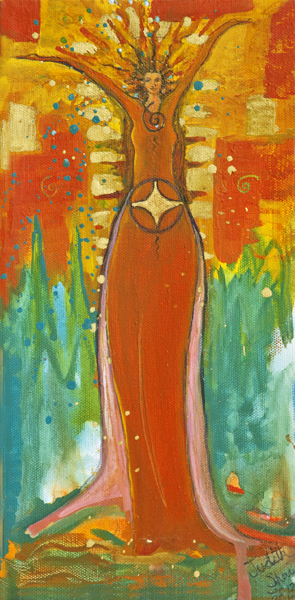
Aine, Summer Goddess of Love, Light and Fertility by Judith Shaw

judith Shaw photoAine, (pronounced AW-neh), was originally worshipped as a Sun Goddess. Like so many goddesses and gods, Aine has assumed many other roles over the years, being seen as a Moon Goddess, a Goddess of Love, a Fertility Goddess, a Healing Goddess, and a Sovereignty Goddess. Aine is also known as a Faery Queen. She is often called Aine, Goddess of Love, Light, and Fertility.  Her name means “brightness, glow, joy, radiance; splendor, glory, fame” and she is associated with the abundance of summer.

Continue reading “Aine, Summer Goddess of Love, Light and Fertility by Judith Shaw”

Tailtiu, Primal Earth Goddess for this Season by Deanne Quarrie

Deanne QuarrieWe are approaching the season of Lughnasadh, also known as Lammas.  This is the first of three harvest festivals.  This one focuses on what we call the “first fruits”, those fruits, vegetables and grains ripening early in the season. The other two are Mabon and Samhain, one celebrating the harvest of the last crops and the next that of the herd animals sacrificed to feed the tribes. Continue reading “Tailtiu, Primal Earth Goddess for this Season by Deanne Quarrie”

Two Ultimates: The Ground of Being and Goddess by Carol P. Christ

carol p. christ 2002 colorThe concept of two ultimates, the ground of being and Goddess, can be helpful in understanding differences of emphasis within and among religions.  Some religions or strands within religions focus on relationship with or worship of a personal God, while other religions or strands within religions focus on identifying with or merging with the impersonal ground of being or the whole of which we are part.  These two ultimates are found in feminist spiritualities and theologies.

In “Being Itself and the Existence of God”* process theologian John Cobb identifies two ultimates.  The ground of being as the metaphysical principles that structure all of life is unchanging; as the whole of which individuals are part, the ground of being is impersonal.  God, on the other hand, is an active presence in the world, is personal, and cares about individuals in the world.  If God is understood to be in some sense an individual in relation to other individuals, then God cannot be identified with the whole, because the whole is made up of God and other individuals.  Yet God is not simply one individual among other individuals.  Only God has perfect knowledge of the world and every individual within it and only God cares for the world in light of perfect knowledge of it.

I find Cobb’s notion of two ultimates helpful in understanding some of the differences in feminist views of Goddess and God.  Some spiritual feminists, especially Goddess feminists, view the sacred as the whole of which we are a part, structured by the seasons and cycles of birth, death, and regeneration.  Starhawk’s tree of life meditation in which the individual identifying with the tree draws energy from its ground imagines Goddess as the ground of being and life.  Z Budapest’s song “We all come from the Goddess, and to Her we shall return” connects us to the cycles of birth and death.

The view of Goddess as a personal presence who loves, understands, and inspires us to love is based on the notion of God as a person with whom individuals are in relation.  Jennifer Berizan invokes a Goddess who cares in her song “She Who Hears the Cries of the World,” addressed to the Goddess in the form of Chinese Goddess Kwan Yin.  Prayer to Goddess and a sense that She is always with us are based on the idea of a relational, personal God.  According to Cobb religions do not have to choose between the two ultimates. If both are real, then religions can and should recognize both.  Continue reading “Two Ultimates: The Ground of Being and Goddess by Carol P. Christ”

Fire, Her Bright Spirit by Deanne Quarrie

Deanne QuarrieIn Celtic Tradition our world is composed of Three Realms, those of Land, Sea, and Sky. In the midst of these Realms we find the Sacred Grove, the place of flowing together. There the Sacred Fire burns, by the Well of Wisdom, beneath the World Tree. Sacred Fire is that which weaves itself throughout the Three Realms.  It connects us and all of life to the Realms as well as to our gods and goddesses.  Fire is Sacred Spirit, Sacred Inspiration, without which life would have no meaning.

Fire is the spark, the flame, the heat of passion.  It is what ignites our creativity, fuels our passion and fires our hearts to love.  It is the Dance of Life, the joy found in movement, sexual energy and the warmth that germinates new life in seeds. It is the warmth of sunlight on our skin and the ecstatic pleasure of orgasm. Continue reading “Fire, Her Bright Spirit by Deanne Quarrie”

Sulis, Celtic Sun Goddess of Healing and Prophecy by Judith Shaw

judith Shaw photoAs we approach the summer solstice, the longest day of the the year, I find myself reflecting on my love of the long, hot days of summer.  The bliss of lying on a beach caressed by the kisses of sun and breeze, with the promise of the cool inviting embrace of the sea by my side, is one of my most favorite forms of relaxation.  Though the ozone layer has thinned and I can only indulge this desire in small doses now, I still love the feeling of the sun on my skin as She paints colored visions in my mind’s eye.

Sulis painting by Judith ShawShe –  how can I personify the sun as She when from across the world we hear only of Sun Gods and Moon Goddesses?  Yet hidden deep in mythology one discovers that long, long ago the sun was worshipped as a goddess. From Aditi – Hindu Solar Goddess from India to Uelanuhi – Cherokee Goddess of the Sun, the sun Goddesses symbolize, with female imagery, the power and life force of the sun. Aditi was seen as the  keeper of the light that illuminates all life and ensures consciousness. She was the source of all, giving birth to the universe and the heavenly bodies. Uelanuhi was responsible for dividing time into units. She was aided by Grandmother Spiderwoman’s web to capture the sun’s warmth for humankind. Continue reading “Sulis, Celtic Sun Goddess of Healing and Prophecy by Judith Shaw”

Unblocking Abundance: A Ritual by Sara Frykenberg

Sara Frykenberg

Rather than release the sadness, heartache and struggle we put into the bowl out into the world, we meditated …to transform what we could of this energy, re-membering the parts of ourselves that had helped to create these blocks and are responsible for transforming them.  We took the transformed energy back into ourselves.

As I have written about many times before, I believe that contemporary Western society operates within a largely abusive paradigm.  I often think of oppression in terms of an abusive cycle.  Theologians like Cater Heyward and Rita Nakashima Brock describe the impact of the theologies that generate such abusiveness, noting how we become smaller to ourselves and smaller to one another.  We do not believe that we are enough, nor are the people or the planet around us ‘enough’ to fill the vacuous alienation that substitutes itself for real relational need in an abusive context.  Judith Shaw wrote eloquently about the environmental impact of conflating need with greed in her Friday post, “Can We Honor Inanna and Her Gifts?”

Shaw writes, “At first glance we appear to be abundant with things, energy, experiences.  But in our mad desire for more and more and always more we neglect the balance of the very earth who provides us with all.”  Many people, particularly in industrialized nations, have been taught to fill the need for a sense of abundance, connection and ‘enough-ness’ with more stuff: more things, more money, more food, more land, etc.  And yet, ironically, this quest for ‘more’ can also prevent us from experiencing the very abundance we seek.  We can create blocks to abundance by trying to fill the vacuum instead of our actual needs: and difficultly, abusive patterns and cycles can prevent us from seeing the difference between the two.  Continue reading “Unblocking Abundance: A Ritual by Sara Frykenberg”

June—a Month Ruled by Feminine Principles by Barbara Ardinger

Let’s celebrate the Matronalia in the 21st century by demanding money from our male relatives, our male religious leaders, and the men in our local, state, and federal governments to support causes that help women—young girls, married women, new mothers, poor and oppressed and abused women, artists and actors and other performers, philosophers and scholars…all of us. Let us seek out and use Juno’s powers to improve the lives of modern women.

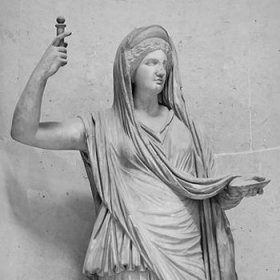
June, Juno, Hera, Barbara Ardinger, marriage, honeymoon, Rome, Hellenistic Period, MatronaliaJust as each Roman man had his genius, or guardian spirit of masculinity, so did each woman have her juno, or guardian spirit of femininity. Juno rules every woman’s entire life and every feminine occasion. In fact, it’s because she’s in charge, so to speak, of married life that we have our June weddings and our honeymoons. Our modern “honeymoon” dates perhaps back to the fifth century and is based on the custom that the newly married couple sweetening the beginning of their life together by drinking a lot of mead (which is made with honey) and making merry. (Honey is sometimes considered to be an aphrodisiac.) Continue reading “June—a Month Ruled by Feminine Principles by Barbara Ardinger”

The Breath of Goddess by Deanne Quarrie

Deanne Quarrie

I am a child of the Earth.
I live and breathe, walk and dance upon Her face.
She is my source and I learn from Her each day. This I know…

Life begins in the dark as Desire.
Deep in that dark place life begins to form, taking root and becoming…..

As life stirs…… deep in the Mother’s Belly,
there is a gentle quickening, movement
that alerts us to a “knowing”
of the presence of something yet to come.

As the Earth prepares Herself with warmth,
the rains and waters come to flood the land,
nourishing the soil in which She is creating new life.

Earth and Water and Fire
come together and Form continues to take shape.

One last thing is needed.
Just as new form emerges,
She breathes Air upon it.
Her Breath, giving Life to all. Continue reading “The Breath of Goddess by Deanne Quarrie”

Creiddylad, Welsh Goddess of Flowers and Love by Judith Shaw

judith Shaw photo

May Day/Beltane (Calan Mai to the ancient Celts) is almost here and our hearts turn to thoughts of love, flowers and the bounty of our Mother Earth. Both Beltane and Halloween/Samhain (Calan Gaeaf) were liminal or threshold days, considered to be outside of normal time. These sacred, mystic days were more important than the solstices in the Celtic world view.

Creiddylad painting by Judith Shaw

Creiddylad, Welsh Goddess of Flowers and Love, is celebrated at this time. (Her name is pronounced cree-THIL-ahd)  She is the eternal May Queen, always seeking peace and stability.  She remains eternally constant in the face of all change.  She is the promise of love, golden glowing moon-flowing love, enduring through all hardship and despair.  Creiddylad also shows us the necessity of self-love. Only by truly loving ourselves can we love another.

Creiddylad is mentioned only briefly in The Mabinogion but her symbolism reveals that she is surely an ancient and important Goddess, whose original stories have been lost to the mists of time.

Creiddylad, the daughter of Lludd Silver-hand, was promised in marriage to her heart’s desire, Gwythyr ap Greidawl. But before the marriage could be consummated she was abducted by Gwyn ap Nudd, who possessed many dark aspects akin to the Lord of the Underworld.

Gwythyr gathered together his warriors and set out to rescue his love, Creiddylad, from Gwyn.  A fierce battle ensued, during which Gwyn, who emerged as the victor, committed horrendous acts of brutality and butchery.

Continue reading “Creiddylad, Welsh Goddess of Flowers and Love by Judith Shaw”