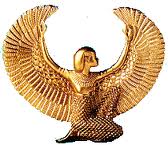
Creiddylad, Welsh Goddess of Flowers and Love by Judith Shaw

judith Shaw photo

May Day/Beltane (Calan Mai to the ancient Celts) is almost here and our hearts turn to thoughts of love, flowers and the bounty of our Mother Earth. Both Beltane and Halloween/Samhain (Calan Gaeaf) were liminal or threshold days, considered to be outside of normal time. These sacred, mystic days were more important than the solstices in the Celtic world view.

Creiddylad painting by Judith Shaw

Creiddylad, Welsh Goddess of Flowers and Love, is celebrated at this time. (Her name is pronounced cree-THIL-ahd)  She is the eternal May Queen, always seeking peace and stability.  She remains eternally constant in the face of all change.  She is the promise of love, golden glowing moon-flowing love, enduring through all hardship and despair.  Creiddylad also shows us the necessity of self-love. Only by truly loving ourselves can we love another.

Creiddylad is mentioned only briefly in The Mabinogion but her symbolism reveals that she is surely an ancient and important Goddess, whose original stories have been lost to the mists of time.

Creiddylad, the daughter of Lludd Silver-hand, was promised in marriage to her heart’s desire, Gwythyr ap Greidawl. But before the marriage could be consummated she was abducted by Gwyn ap Nudd, who possessed many dark aspects akin to the Lord of the Underworld.

Gwythyr gathered together his warriors and set out to rescue his love, Creiddylad, from Gwyn.  A fierce battle ensued, during which Gwyn, who emerged as the victor, committed horrendous acts of brutality and butchery.

Continue reading “Creiddylad, Welsh Goddess of Flowers and Love by Judith Shaw”

Liminal Time and Space by Deanne Quarrie

Deanne Quarrie

The word liminal comes from the Latin word limen, meaning “a threshold.” The word threshold has several definitions.  It can be the sill of a doorway or the entrance of a building.  Ultimately, it means any place of point of entering or beginning. In psychology the term limen means the point at which a stimulus is of sufficient intensity to begin to produce an effect.

Liminal time therefore, is that moment when something changes from one state to another.  Examples would be dawn, the morning sun rising high enough in the sky to bring daylight.  Another is dusk, the evening sun sinking into the horizon bringing nightfall. Continue reading “Liminal Time and Space by Deanne Quarrie”

Goddess Mother by Molly

Mamapriestess

She who changes
She who expands and contracts
She who stretches her limits
She who digs deep
She who triumphs and fails
Every day
Sometimes both within a single hour
She who tends her own hearth
She who comforts and connects and enfolds
She who opens wide

She whose heart cracks open at birth
She who tension bunches her shoulders
And lines her face
She who laughs
She who carries the world
She who sings with her sisters
Molly Remer mamapriestess Triple goddessAnd circles in ceremony
She who holds precious her daughters and her sons

She who defends and protects
She who opens her heart just a little wider
She who trusts
She who tries again
She who gathers to her breast
She who gathers women in ritual
She who hopes
Prays
Fears
She who loves so deeply
That it crosses all boundaries
To eternity. Continue reading “Goddess Mother by Molly”

The Green Man By Barbara Ardinger

The Green Man’s message about rebirth is why he is so popular today. He’s come to symbolize the green movement. He’s a friend of the earth who is whispering to us to wake up and grow up, to march and dance with him in celebration of our relationship with nature. What green thing can we do today?

The Green Man’s message about rebirth is why he is so popular today. He’s come to symbolize the green movement. He’s a friend of the earth who is whispering to us to wake up and grow up, to march and dance with him in celebration of our relationship with nature. What green thing can we do today?
The Green Man

Spring has, as they say, has  sprung, and we who live in the Northern Hemisphere are witnessing the annual greening of the earth. Grasses and grains are growing, trees are leafing, flowers are budding. I like to imagine the goddesses who rule the springtime—Anna Perenna (classical Roman, probably Etruscan), Butterfly Maiden (Hopi), Freya (Norse), Hu-Tu (Chinese), the Rusalky (Russian), and others—calling their worshippers and gatheringthem on the village green to dance and celebrate the revival of the earth. Continue reading “The Green Man By Barbara Ardinger”

The Child of the Bog (continued) By Barbara Ardinger

The story so far. In the ancient land beside the river, the God-King lies in what appears to be death. No one can awaken him. In the house of a court Magician, the peasant girl Ubastet is dusting and conversing with a magical stork when two minor miracles occur. The Magician consults the Hierophant, but they cannot explain the miracles. Now the Queen has come into the room. She is determined to figure out what’s going on. (Where do they fly to? Romania, another land of great enchantment.)

Before the sun set that day, the Queen of the golden land called a convention of priests and wizards and magicians and astrologers and seers and prophets and physicians. When they had all assembled in the throne room, she set the matter before them. Day after day, the learned ones debated, night after night, they performed their high magics and gorgeous rituals. In their secret places, the animals gathered together as well and performed their own rituals. But the mirror, whose thousand pieces had been gathered up and cleansed and set back into the frame in a sublime mosaic, the mirror refused to speak again. The golden beetle remained cold and silent.

child of the bog, barbara ardinger
Isis

Continue reading “The Child of the Bog (continued) By Barbara Ardinger”

The Child of the Bog By Barbara Ardinger

Isis, She of Ten Thousand Names, was worshipped in ancient days for longer than any other deity. What is sometimes called her cult (remember, if it’s ours it’s a true religion; if it’s theirs, it’s only a cult) can be traced back six thousand years. Her worship spread throughout the lands around the Mediterranean and the Roman Empire, going as far north as London. The last temple of Isis was razed by fanatical Christians in the 6th century. But Isis did not die! As we can see in any representation of the Madonna and Child, the iconography of Isis—a mother nursing her son—was adopted by the early Christian church. Worship of Isis was reborn in the 20th century with the establishment in 1976 of the Fellowship of Isis to renew worship of the Great Goddess in modern times. Another temple of Isis, established in 1996, is located at the Isis Oasis in Geyserville, California. It is a legally recognized religion in California.

The name Isis is the Hellenized version of her Egyptian name, approximately Auset. If you want to know more, read The Golden Ass by the Roman author Apuleius (translated by Robert Graves) and Plutarch’s Of Isis and Osiris.

The story below is partly based on the myths of Isis and Osiris and partly on European fairy tales (which almost never have fairies in them) and comes from my imagination, although the motifs are, of course, common ones. Talking animals and miraculous births are common in fairy tales, and the animal gods of Egypt are well known, and storks and other birds are held to be sacred by many cultures. 

Continue reading “The Child of the Bog By Barbara Ardinger”

Do Women’s Circles Actually Matter? By Molly

“We need rituals of memory…because a political movement, the public policy and tactics of our movement, does not come from our ideas, but from the bloody and joyful substance of our lives. We need to be conscious about what our lives have been, to grieve and to honor our strength, in order to break out of the past into the future.” –Minnie Bruce Pratt

I’ve been feeling depressed and discouraged lately after reading some really horrifying articles about incredible, unimaginable violence and brutality against women in Papua New Guinea who are accused of being witches as well as a book about human trafficking around the world (I wrote about this book in a recent post for Pagan Families). Then, I finished listening to David Hillman on Voices of the Sacred Feminine, in which he issued a strong call to action to the pagan community and to “witches” in the U.S. to do something about this violence, essentially stating that it is “your fault” and that rather than spending energy on having rituals to improve one’s love life (for example), modern witches should be taking to the streets and bringing abusers to justice. And, he asserts, the fact that they don’t, shows that they don’t really “believe”—believe in their own powers or in their own Goddess(es). Continue reading “Do Women’s Circles Actually Matter? By Molly”

Rhiannon, Goddess of Birds and Horses by Judith Shaw

judith shaw photoRhiannon, Goddess of Birds and Horses, is also know as the Queen of  Fairies.  She is a Sovereignty Goddess who the king must wed to legitimate his rule.  A Goddess of Transformation, she uses her powers for love of others or self.  She shines in our hearts as an example of true love and beauty. She appears in both the first and third branches of the Medieval Welsh stories, The Mabinogion, a narrative which grew out of the ancient myths of the Celtic Gods and Goddesses.

Rhiannon is associated with Epona, the Gaulish Horse Goddess.  They are probably both derived from the ancient Celtic Goddess, Rigatona, whose name means “Great Queen”.  Unfortunately, Rigatona’s stories  and meaning are lost to us today.

Things sacred to Rhiannon are the moon, horses, horseshoes, songbirds, gates, the wind, and the number 7.

In the Mabinogion Rhiannon first appears to Pwyll, King of the new tribes of Dyved, as a beautiful  dream vision, riding a glowing white horse. Her hair shining in the sun, her birds twittering in circles around her head, She seems to be clothed by golden light.   Thus begins her journey to attain the man of her desires.  She possesses deep magic and can manifest her dreams and desires both for herself and for the good of all.

Rhiannon painting by Judith Shaw

Continue reading “Rhiannon, Goddess of Birds and Horses by Judith Shaw”

A Pro-Science, Skeptical Woman Speaks by Kile Jones

Kile Jones, atheistIn my last post, “Feminism and Religion: Where Do I stand?” I talked about how I support an atheistic, secular, and liberal feminism that criticizes organized religion and certain religious beliefs.  After reading the comments and responding to them, I figured that having a brief interview with a woman who holds these sorts of views would be a good way to introduce them to this blog.  I met Anondah Saide at a course at Claremont Graduate University titled, “Evolution, Economics, and the Brain,” taught by the Executive Director of the Skeptics Society and Founding Publisher of Skeptic Magazine, Dr. Michael Shermer.  Anondah was the TA for the course, and I found her comments in class to promote science, reason, and skepticism towards religious and spiritual claims of all kinds.  So without further ado, here is the interview: Continue reading “A Pro-Science, Skeptical Woman Speaks by Kile Jones”

Arianrhod, Celtic Star Goddess

judith Shaw photoArianrhod, Celtic Welsh Star Goddess of Reincarnation, is known as “Silver Wheel”, “Silver Circle”, “High Fruitful Mother”, “Star Goddess”, and Sky Goddess. She is considered by many to be a Moon Goddess.  She is a primal figure of feminine power, a Celestial Mother Goddess who through her role as Goddess of Reincarnation, rules fertility and childbirth.

Arianrhod, the most powerful child of the great Mother Goddess, Don, was very beautiful, with extremely pale skin.  She was a virgin goddess in the ancient meaning of the word virgin – a woman who is complete unto herself; a woman who needs no protection from a man.   She enjoyed herself sexually, with a distinct preference for mermen.

Arianrhod painting Continue reading “Arianrhod, Celtic Star Goddess”