Mis(sing)Understanding: Kobe, Pompeo, and a Paper Towel by Marcia Mount Shoop

mms headshot 2015Who knows when each of us first learns that sensation—the sensation of being misunderstood.  My hunch is that it comes early on in our lives, maybe even before our brains are making narrative memory, maybe even before we have begun to understand much of anything about ourselves or the world. But it doesn’t take much for the seed to be planted in us that the world won’t always understand us.
My mom has long told me a story about me as a frustrated toddler trying to be understood. I was sitting in my high chair, the story goes, and I started saying “puppy touw.” My mom was not sure what I wanted, but I became more and more adamant, saying “puppy touw” over and over again.

She brought the dog over thinking I might mean I wanted the dog. She showed me all kinds of toys and nearby objects in an effort to understand and respond to my increasingly urgent request. I became more and more frustrated, kicking the high chair, moving my body in the chair, saying “puppy touw” louder and louder through tears. Continue reading “Mis(sing)Understanding: Kobe, Pompeo, and a Paper Towel by Marcia Mount Shoop”

The Brass Tacks of the Trump Impeachment by Anjeanette LeBoeuf

AnjeanetteFrom the very moment after the dust settled from the 2016 elections, notions of impeachment started to break. Now three years into the Trump Presidency, impeachment proceedings have been launched. To start, Impeachment is a Constitutionally supported right. It is an element of the “Checks and Balances” system to ensure that no one branch of the government holds too much power. Instigating impeachment processes is not treason, nor is it unpatriotic – it is a testament to the democratic procedures established by the founding fathers and maintained for the last 230 years.
Continue reading “The Brass Tacks of the Trump Impeachment by Anjeanette LeBoeuf”

Where’s the Love by Gina Messina

In a recent post I wrote about finding God in music. I confess, I cannot remember the last time I set foot in a church. As a woman, I continually grapple with the foundational messages of Jesus and Catholic Social Teaching and the disconnect with the power structures that seek to control the ways we love and find justice. I long to participate in the culture I grew up in, but cannot support the weaponization of the tradition. 

Lately, I’ve come to realize that the messages I connect to I find in music. There are particular songs that offer me the guidance, philosophy, and ideas around meaning and purpose that I resonate with. One of those is “Where’s the Love?” by the Black Eyed Peas.  

I’ve been listening to it on repeat lately because it is the sermon I need to hear; it speaks to me and even though it was recorded quite a while ago, it is still relevant. I think it is fair to say that in our current socio-political culture, people are “acting like they got no mamas.”  And by the way, I include myself in that statement. Like anyone, I sometimes get so caught up in believing that my way is the only way, I forget to listen to what others have to say.

We are in the midst of a political civil war and are so busy yelling past each other, we’ve forgotten how critical unity is to shaping a healthy government that serves its purpose – caring for the people. Continue reading “Where’s the Love by Gina Messina”

Insect Conversations by Barbara Ardinger

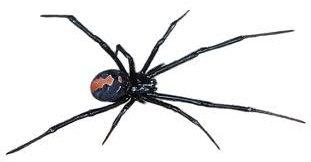
“She’s doing it again,” Mrs. Cockroach is saying to her friend Old Mrs. Spider. “You know? The giant? She’s been blowing on me and telling me to live somewhere else. Like, I’d leave a good home?”


Old Mrs. Spider looks up from her weaving. “Yes,” she says in a weary voice. “But you know she’s not a giant. She’s just a normal human being, well, overweight, as I understand humans measure their bodies. And if she’s going to blow on us and ask us to live somewhere else, well…..I think she needs to brush her teeth.”

Mrs. Cockroach chuckles. “Indeed. We insects, maybe with the exceptions of fleas and termites, we don’t have bad breath. Blood-breath and wood-breath are sour! I was sitting on the wall in her bathroom, keeping an eye on things and telling the termites to get away from the window, and she just walks up. Doesn’t she know we insects and arachnids are protecting her house?”

Continue reading “Insect Conversations by Barbara Ardinger”

Rejecting TMT: Protecting and Protesting the Sacred for Mauna Kea and for all by Anjeanette LeBoeuf

AnjeanetteRoughly 3 ½ years ago my FAR post was about the struggle that the Hawaiian people were facing with the proposed building of a Thirty Meter Telescope on the most sacred mountain in the Hawaiian Islands, Mauna Kea. When that post was published, there was a large social media presence and protests that helped cease construction of the telescope and sent the issue to the Hawaiian Courts. I am writing this post because Mauna Kea is again under threat. The Courts ruled in the favor of the telescope and for the last two months, large scale protests have gone under way on the road up to Mauna Kea.

Continue reading “Rejecting TMT: Protecting and Protesting the Sacred for Mauna Kea and for all by Anjeanette LeBoeuf”

Greenness, Whiteness, Blackness, and the Nature of the World by Marisa Goudy

There’s magic in hiking alone, but as women, we’ve been taught to worry about venturing far on our own. In fact, we’ve been taught to worry about a lot more than that.

Though once I merely shrugged off the warnings and the horror stories, confident that I was wrapped in some sort of “not me” protective veil, I don’t usually take my safety for granted anymore. Maybe it’s because I’ve outgrown the belief that I’m invincible. Maybe it’s because I’m a mother and have a different understanding of the fragility of life and the female body. Maybe it’s because that murderer on the Appalachian Trail went by the nickname “Sovereign,” appropriating the powerful, beautiful word that is so essential to my life’s work.

This particular day, however, my desire to be outside was more compelling than my new bend toward caution. I called my husband to tell him just where I’d be, joking that he needed to know where to look for me if I didn’t pick up the girls from camp on time.

Continue reading “Greenness, Whiteness, Blackness, and the Nature of the World by Marisa Goudy”

Coming to Terms with Privilege: A Personal Reflection by Elise M. Edwards

elise-edwardsIn my two previous posts, I shared my recent experience talking about privilege at a church near me.  Today, I will wrap up this short series with a more personal reflection about privilege from a Christian perspective.  Last month, I was thinking theologically about what those of us who have privilege should do with it.  But, as feminists and womanists, acknowledging our privilege can be complicated.  Most of us in this FAR community do possess some forms of privilege while, at the same time, we lack other forms of privilege.  Each of us remains the same person wherever we go, yet our status can change when we switch contexts.  As a black woman, I do not have white privilege or male privilege.  But I am privileged when it comes to education and class and physical ability.  I am a Christian who works at a Christian university in a part of Texas that is culturally predominantly Christian. So that’s a form of privilege.  Although as a single woman without children, I don’t fit the cultural norm where I live, my sexual orientation and cis-gendered identity afford me some privilege, too.

Continue reading “Coming to Terms with Privilege: A Personal Reflection by Elise M. Edwards”

What Can We Do to Weaken Privilege? by Elise M. Edwards

elise-edwardsIn my previous post, I talked about discussing the concept of privilege (male privilege, white privilege, and class privilege) with nuance.  Earlier that week, I had led a workshop at a local church on “Fine-tuning Privilege,” using Peggy McIntosh’s 1989 essay “White Privilege: Unpacking the Invisible Knapsack” as a resource.  (If you are unfamiliar with it, take a few minutes to read it and reflect upon it.)  Part of my talk was about naming and understanding privilege.  Discussion and comprehension are not enough, though.  We must counter it.

One strategy for fighting privilege is making it visible. The recipients of privilege are often unaware that they have to systemic advantage over others. Privilege, used in the context of racism, sexism, heterosexism, classism, and religious dominance, is not something earned on merit alone. In the essay linked above, McIntosh describes it like this: “I have come to see white privilege as an invisible package of unearned assets which I can count on cashing in each day, but about which I was meant to remain oblivious.” These are conditions built into our culture that some groups receive which benefit them to the detriment of others. Making privilege visible means naming it and calling it out. Wage gaps, digital divides, and racial profiling practices exist; ignoring them perpetrates the problems.

Continue reading “What Can We Do to Weaken Privilege? by Elise M. Edwards”

Talking about Privilege with Nuance by Elise M. Edwards

elise-edwardsYesterday evening, I led a seminar at a local church as part of their series on “Unpacking Privilege.” Once before, I’d been invited to this church, Lake Shore Baptist Church, to speak about intersectional feminism with one of my colleagues, so I expected them to be open-minded and welcoming.  They were.  Although the attendees were overwhelmingly white and older than me, they were attentive and engaged.  We had an enriching time together diving into topics like male privilege, white privilege, and class privilege with Peggy McIntosh’s 1989 essay “White Privilege: Unpacking the Invisible Knapsack” as a resource.  (If you are unfamiliar with it, I recommend taking a few minutes to read it and reflect.)

In the essay, McIntosh writes about becoming critical of male privilege and men’s obliviousness to it through her work in Women’s Studies, which then led her to see her own race privilege (as a white woman) and her obliviousness to it.  The essay does not offer a precise definition of white privilege, but the entire piece is a reflection about it.  She explains:

“I have come to see white privilege as an invisible package of unearned assets which I can count on cashing in each day, but about which I was ‘meant’ to remain oblivious. White privilege is like an invisible weightless knapsack of special provisions, maps, passports, codebooks, visas, clothes, tools and blank checks.”

Continue reading “Talking about Privilege with Nuance by Elise M. Edwards”

The Modern Problematic Nature of the Sabarimala Temple, Part 2 by Anjeanette LeBoeuf

AnjeanetteThe Sabarimala Temple has received an influx of global attention since last October. In my last FAR post, I researched the origin story of the Sabarimala Temple and its dedicated deity, Ayyappan. Ayyappan’s unusual parentage and chosen attributes and patronage made him adverse to all forms of sexual activity and more importantly, not very keen in having female devotees.

Ayyappan, also known as Dharmasastha, is devoted to protecting the dharma, living a yogic life, and more importantly, a celibate life. Ayyappan demands that all his followers when undertaking his pilgrimage, take a vow of celibacy for the duration. No form of sexual impurity must enter Ayyappan’s Sabarimala temple. This is where the problematic elements really start to come to head. Due to the restriction of sexual impurities, females from the age of 10-50 are denied access, as their very biological state of being female, makes them sexually impure. Their ability to menstruate makes them vessels of this apparent sexual impurity that the god Ayyappan does not want. Continue reading “The Modern Problematic Nature of the Sabarimala Temple, Part 2 by Anjeanette LeBoeuf”