

 In the space of twelve days I will have taken two inter-continental and two transcontinental flights to attend two conferences. I will have slept in my own bed in sunny Los Angeles for only four of those nights and been away from my family in either Bochum, Germany or Chicago for the remaining eight. Thank God this kind of travel is far from normal for me. Continue reading “A Tale of Two Conferences (Or Reflections of a Parent Who Occasionally Travels for Work) by Grace Yia-Hei Kao”
Category: Race and Ethnicity
To Do Justice for Jordan Davis by Kelly Brown Douglas

Theology is faith seeking understanding. Faith is that ineffable, intangible spiritual apparatus that keeps us in relationship to a transcendent, infinite god. It is, for Christians, the core of their relationship with the god of Jesus Christ. Yet, as Karen Armstrong and others so often remind, faith is not about loyalty to a certain doctrine, or dogma, or set of beliefs, rather it is about a commitment and engagement in a certain way of “living, and moving and having one’s being” in the world. As the word faith derives from the Greek word “pistis” it fundamentally signals not a way of thinking about who god is and god’s relationship to us, but a way behaving in light of our belief in and relationship to god.
Christian faith is grounded in the theological claim that god became incarnate in Jesus. Faith, in this regard, is not about an intractable and intolerant assertion of that theological claim; rather, it is about a sincere and consistent commitment to live into the implications of that claim. Put simply, “To keep the faith,” is not about holding onto a certain way of thinking, rather it is about maintaining a certain way of acting. The point of the matter is that for Jesus faith did not signal a preoccupation with belief per se.
When Jesus was calling people to faith, or telling them to have faith, he was not calling them to believe in him or in his divinity, rather he was asking them to be engaged in a particular way of living, to be committed to his mission in the world. Their loyalty, their trust was to be in the way of life which he embodied, a way of life that reflected the presence of god in the world. And so it is in appreciating the meaning of this word faith as Jesus used it, that I come to theological task on this day. Continue reading “To Do Justice for Jordan Davis by Kelly Brown Douglas”
Evangelical Missionaries Preach Death in Uganda by Andreea Nica
 A former evangelical Christian friend of mine sent me information on the intriguing documentary God Loves Uganda. The newly released documentary addresses how the American evangelical movement has prompted a political and social shockwave in the country of Uganda. While missionaries are typically associated with delivering aid and improving the conditions of third world countries, the spreading of Christian values and ideals has inflicted suffering upon ethnic communities through evangelical indoctrination.
The intent of the film is to raise awareness of the political and social brutality that the evangelical missionaries are instigating; specifically through their teaching that homosexuality is a sin and should be dealt with accordingly. In Uganda this means death. Given the rise of globalization, transnational religious actors have been more enabled to engender other nations with their respective religious beliefs, often with minimal regard for the cultural and political landscape of the nation they wish to transform. Continue reading “Evangelical Missionaries Preach Death in Uganda by Andreea Nica”
“Never Again…” by Ivy Helman
 Every year, the Greater Lowell Interfaith Leadership Alliance, GLILA, sponsors an interfaith service on genocide. During these services, the community gathers together to remember, to mourn, to heal, to honor and to work towards a world in which Elie Wiesel’s words, “Never Again!” ring true. Three years ago, we focused on the Shoah and the year after that the Armenian genocide. Last year it was Cambodia under the Khmer Rouge and this year our focus is Rwanda. Part of this preparation is self-education. I would like to share with you a few of the things I have learned through my own research about the Rwandan genocide as well as some reflections on this difficult, yet extremely important topic.
In many ways, the Rwandan genocide is a direct consequence of colonialism as well as a United Nations’ failure to respond to warnings. Before colonization, first by the Germans and then as a spoil of WWI for the Belgians, the Hutus, Tutsis, and Twa peoples lived in relatively peaceful coexistence. Yes, there were acknowledged differences between the three groups based on caste-like descriptions, but they also all spoke the same language, practiced the same religion, intermarried, and co-existed together for a long time. Generally, the Hutus who made up 85% of the population were the lower caste, so to speak, and were associated with labor and farming, while the Tutsis, 14% of the population, were the herders. This occupation often generated more wealth and prestige than farming did, so Tutsis were also long associated with the elite in economic and political terms running small chiefdoms and the like. According to Philip Gourevitch in We Wish to Inform You that Tomorrow We Will Be Killed with Our Families: Stories from Rwanda, these were fluid categories of sorts where it was possible to become part of another group through the acquisition or loss of wealth (see page 47). Continue reading ““Never Again…” by Ivy Helman”
Yes, You’re a Homophobe by John Erickson
Jesus loved sinners and Jesus would rather be dancing with me in West Hollywood on a Friday night than lugging through a swamp luring ducks into a trap with a duck caller made by a clan who think that my sexual actions are similar to that of an individual having sex with an animal.

To be able to walk down the street holding the hand of the one you love is a great feeling and an action that some of us aren’t able to perform without fear.
A line has been drawn in the sand between those who support gay rights and those who do not. While some call it being on the “right side of history,” I simply now refer to it as not sounding and looking like a bigot in the halls of history and in the various books, Facebook posts, and Tweets that our children will one day read. Continue reading “Yes, You’re a Homophobe by John Erickson”
What Does Jesus Have to Do with Whiteness? by Kelly Brown Douglas
It matters that he consistently affirmed, empowered, and befriended those who were the outcast, marginalized, oppressed, and rejected of his day—such as Samaritans and women.
A firestorm has been set off recently concerning the self-assured observations by Fox News anchor Megyn Kelly that Santa Claus is white and so too is Jesus. These comments, which were in defiant response to a Slate article “Santa Claus Should Not Be A White Man Any More,” by Alisha Harris, have been spoofed by late night talk shows and satirized across social media. Scholars and others have also weighed in on the matter. All have pointed out that Santa is not real and that Jesus was not white. The fact of the matter is that Jesus was a Jew born in ancient Israel and St. Nikolaos upon which the make-believe Santa character was based was from ancient Myra. The fact of the matter is that neither Jesus or St. Nikoloas were white; indeed both were likely to have had swarthy complexions. While it is easy to laugh at Kelly’s comments or to simply dismiss them as curiously misguided and ill-informed, they point to something even more significant that is worthy of discussion —the meaning of whiteness and its theological implications. And so, I offer some random thoughts for further reflection. Continue reading “What Does Jesus Have to Do with Whiteness? by Kelly Brown Douglas”
A Feminist Eulogy? By Grace Yia-Hei Kao
My grandmother, my last living grandparent, recently died. She was 84 years old. Because I’ve just come back from Taiwan where I participated in all of her funerary rites and delivered a eulogy therein, I’ve been thinking a lot about memorializing the dead. Is there such a thing as a “feminist” or feminist Christian way to remember the dead? What, if any, are the components of a feminist eulogy?
Can Secular Immigrant Assimilation Promote Equality? Pt. 2
I often wonder how my life would have been different if I had undergone a secular immigrant assimilation process. My former faith within Pentecostalism not only shaped my identity, but augmented my ability to assimilate into the American culture. Subsequently, this led me to explore how nonreligious narratives help immigrants better acculturate to western society. Despite my interests originating in personal exploration, emergent studies within religion and sociology show that there are many factors that come into play when considering social and cultural assimilation.
Following up on my most recent post, Liberations of Immigrant Women in Western Religious Conversion, I will draw on a comparative analysis to consider secular immigrant assimilation processes. Women’s experiences during their migration process contribute to their cultural and social identity formation. Many studies point to the established idea that religion is a key variable in influencing immigrant assimilation, particularly among the Latino community. “Faith plays an important role in their lives: 74 percent of Latinos say religion provides a ‘great deal’ or ‘quite a bit’ of guidance for them” (Philanthropy Roundtable). Continue reading “Can Secular Immigrant Assimilation Promote Equality? Pt. 2”
Liberations of Immigrant Women in Western Religious Conversion by Andreea Nica
The prolonged debate around feminist subjectivity and religious participation continues to evoke much compelling discussion in academia, political arenas, and public space. There have been a number of academic studies around the intersection of gender, religion, and migration, specifically on how gender and immigration assimilation is constructed and managed within western religious systems.
I am currently researching the trajectories of immigrant assimilation and conversion, and how gender relations and religious identities are managed within these processes to further develop my proposal for doctoral study. I find this area of research fascinating as it’s so diverse and pertinent to the progression of gender equity amongst religious participants. Continue reading “Liberations of Immigrant Women in Western Religious Conversion by Andreea Nica”
Feminism vs. Humanism: A response to an idealized feminist identity by Mariam Williams
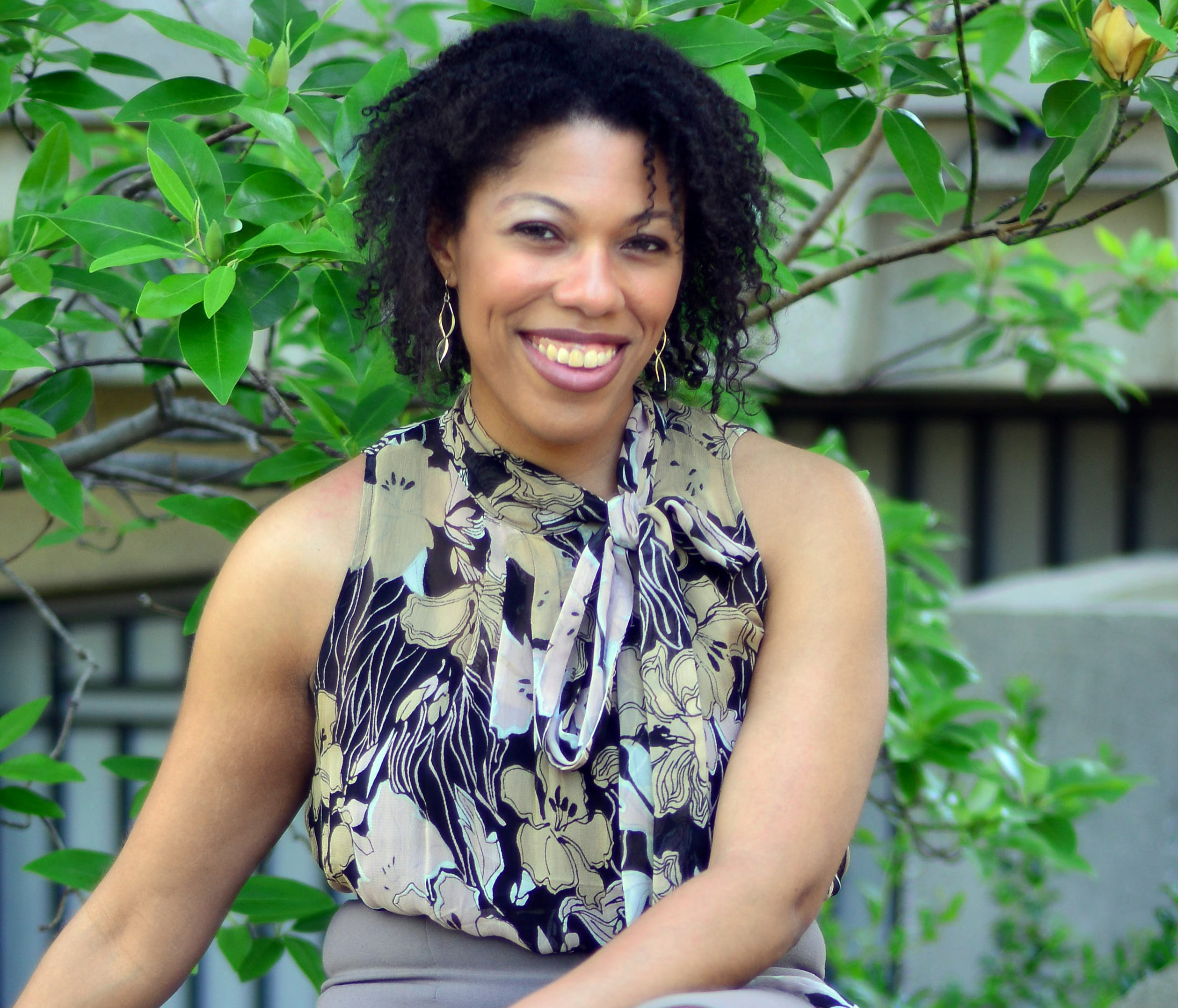
My first thought after reading Gina Messina-Dysert’s post, “Feminism vs. Humanism: Continuing to claim a feminist identity” was, “Guess she missed that whole #SolidarityIsForWhiteWomen trend on Twitter last week.” Until I saw Gina’s bio signaling the end of the post, I thought she was building the foundation for a witty piece of satire. The feminism she wrote about was so ideal compared to humanism that I thought she was using irony to address feminism’s imperfections. She wrote that “humanism does not value diversity and difference,” which implied that feminism does, always or at least consistently. Humanism “reinforces western, privileged … values,” but feminism doesn’t? As in doesn’t ever? Is that what she meant to say?
It isn’t that Gina, or the Feminism and Religion blog as a whole, doesn’t acknowledge diversity among feminists. It’s that in the post, she didn’t recognize that feminism can be just as exclusive as humanism according to the definition of humanism she provided. Continue reading “Feminism vs. Humanism: A response to an idealized feminist identity by Mariam Williams”
 Feminism and Religion