I Celebrate Love by Elise M. Edwards

Happy Valentine’s Day!  I know, I know… so many of us do not like this holiday.  It’s too commercialized, we say.  We don’t need card-makers or florists to tell us how or when to show affection.  Some of us don’t like Valentine’s Day because it reminds us of loves we have lost or never found.  I get it.  This day can seem shallow, overhyped, and falsely sentimental.  It can be lonely.  And yet, I won’t let today pass without celebrating and honoring love.  Love is too important to concede to commercial interests.

Love, in its many forms, keep us alive and able to endure. Love is powerful because it is expansive, growing in unexpected places and ways.  We tend to separate our celebrations of romantic love, friendship, familial love, self-love, and religious devotion.  We make distinctions between our valentines and “galentines.”  Rarely do we shout for joy in ecstatic worship while also celebrating the passionate longings of our innermost desires.  But occasionally, in my religious tradition, we let our disparate loves come together.  We unite them on holy feast days, enjoying the sensual pleasures of good food and company to mark spiritual occasions.  So that’s my inspiration.  Today, I’m celebrating love by reflecting on various forms of love merged together and sharing insight from poets and mystics about the power and beauty experienced in love.
Continue reading “I Celebrate Love by Elise M. Edwards”

Mantra and Meditation in Buddhist Hospice Chaplaincy to Alleviate Anxiety by Karen Nelson Villanueva

Karen Nelson Villanueva has recently successfully defended her doctoral dissertation, “Invoking the Blessings of the Tibetan Buddhist Goddess Tara Through Chanting Her Mantra to Overcome Fear,”

Mantras are not just the prescribed sound formulas or sentences found in Eastern religions, but they can also be thought of as the words or phrases that we continually repeat to ourselves. The word mantra comes from Sanskrit and its roots are manas-, meaning “mind,” and -tras, which can be translated as “tool.” Thus, mantra is a tool to protect the mind.

How often do we engage in negative self-talk like “It’s my fault” or “I’m to blame for what’s happened to me” or “No one loves me”? These expressions can become mantras, as we believe their messages from constant repetition. In hospice and hospital settings, one often finds patients who have convinced themselves that “This is God’s punishment” or “Everyone has forgotten me” or “I’m so scared.” These phrases, rather than protect the mind, become what is believed by the mind and may lead to increased anxiety, stress, and depression, and consequently the need for spiritual and emotional support.

Chaplains, as members of the care team in hospice and hospitals, provide spiritual and emotional support to patients and their families. Most often, chaplains attentively listen to patients and their caregivers (often family members) about the patients’ life story, their relationships, their dreams unfulfilled, and their wishes for those whom they are leaving behind. Chaplains take part in family meetings where decisions are made about patients’ care, sometimes interjecting to ask for clarification of medical terms and to ensure that the family understands. Sometimes, the chaplain will lead prayer with the patients and their families, and at other times, the chaplain will pull other tools from her toolbox such as mantra meditation.

Continue reading “Mantra and Meditation in Buddhist Hospice Chaplaincy to Alleviate Anxiety by Karen Nelson Villanueva”

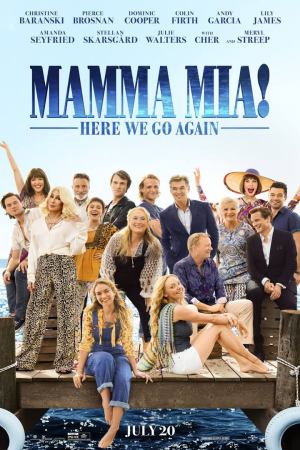
Mamma Mia and the Mother-Daughter Connection by Katie M. Deaver

A couple of weeks ago I went to see the new Mamma Mia: Here We Go Again! movie.  In addition to being a fan of movies inspired by musicals I also loved the emphasis that was placed on the mother/daughter relationship in the first Mamma Mia and had heard that this new installment would continue to focus on that relationship.  It definitely didn’t disappoint!

This second movie takes place five years after the original Mamma Mia, and roughly a year after the death of Donna Sheridan, with Donna’s daughter Sophie preparing for the grand reopening of the Hotel Bella Donna.  This second movie also features lots of flashbacks where we are able to see a young Donna arrive at the island of Kalokairi as well as see how she first meets Sam, Bill, and Harry, her daughter Sophie’s three possible fathers.

As one might imagine, even if you aren’t familiar with the movie there is a lot going on, but the part that I found most intriguing was the very end of the movie.  At this point Sophie has given birth to her own baby and is bringing the child to the church to be baptized.  During the ceremony Donna’s spirit is there at the font with her daughter and new grandchild and you could feel this amazing sense of connection and love between not only three generations but across the lines of physical and spiritual presence and space.

Continue reading “Mamma Mia and the Mother-Daughter Connection by Katie M. Deaver”

The Cosmic Dance (Part Two) by Laura Shannon

Part One of this post looked at connections between the cosmic dance and the Goddess Hera. To read it, click here.

Pythagoras was the first to call the universe by the Greek term kósmos, referring to the order, beauty and tranquility which are inherent in natural and universal geometric form and proportion. He described the cosmos as a single living being in which all things are related, including music, beauty, movement, and justice – much as the world was understood in the Neolithic Goddess cultures of Old Europe, of which more later.

The word kósmos (κόσμος) gives us the word kósmima (κόσμημα), jewellery – silver and gold like the moon and sun, with glinting gems like the stars and planets – as well as the word kosmitiká (κοσμητικά), cosmetics. These adornments were used by priestesses in classical Greece, not to emphasise their individual beauty, but rather to identify them in their public role as instruments of cosmic beauty, harmony, and order. This is the same role which dancers take on today when they don traditional costume to dance on ritual occasions such as Epiphany or Easter. Continue reading “The Cosmic Dance (Part Two) by Laura Shannon”

Knowing my Voice through Writing by Elise M. Edwards

elise-edwardsOver the summer, I’ve been writing more than I do during the traditional academic year when other tasks consume the bulk of my workday.  I have spent more time experiencing the joy of creative discovery and production, but I’ve also had more time confronting the difficulties of creative work as I’ve wrestled with some of its unique challenges.  One of those challenges has been to refine my academic writing voice. I’ve approaches the challenge of developing my voice as both a spiritual and feminist practice and this has helped me find confidence in my work.

Continue reading “Knowing my Voice through Writing by Elise M. Edwards”

The Blessing of Spiritual Direction by Elise M. Edwards

elise-edwardsFive years ago, I moved to Texas from California. In that time, my spiritual practice and my feminist and womanist worldview has grown through contemplative practices.  It’s ironic. “Everything’s bigger in Texas!” the saying goes, but in the presence of big, sweeping landscapes and open skies, big storms, and big egos, I’ve found the sacred in the small things.  I have deepened my connection to God through a small group of women who practice group spiritual direction.

This past Sunday evening, I gathered with these women at my church for our spiritual direction group.  We sat comfortably in  a circle, relaxing on a couch and chairs around a coffee table, as the evening sun streamed in from a large picture window and lit the room.  As we read a passage from the Bible (Mark 3:34-35) in which Jesus looks at the people sitting around him and says, “Here are my mother and my brothers! Whoever does the will of God is my brother and sister and mother,” I saw my companions more clearly.  Although my eyes were closed, I had a vision of these women sitting around me, halos made of sunbeams shimmering over their heads.  I thought, “Here are my sisters!”

Continue reading “The Blessing of Spiritual Direction by Elise M. Edwards”

Four Worlds Poem by Sara Wright

They came from

Life giving Waters,

emerging from a Lake

at the Beginning of time.

Avanyu –

Serpent,

Spirit of the River

pecked into stone

or painted

on canyon walls

embodies their story.


The Tewa settled above

the Great River Banks.

Roaring water flowed

through tributaries

mountain gorges.

The People gave thanks.

  Water meant Life.

Each village was the center

of the Tewa’s First world.


Bound together by

Women who tended

holy household shrines,

prayed for rain,

created fires,

gathered seed,

ground food,

grew babies,

dug clay to shape

earthen pots.

This was the Second world

of the Tewa.

Continue reading “Four Worlds Poem by Sara Wright”

I’m not proud to be Christian – and no one else should be, either by Trelawney Grenfell-Muir

I hear a lot of people talking lately about how they are no longer proud to be Christian. They point to the vocal conservative churches and leaders who support Trump, condemn and exclude LGBTQ people, oppress female bodies and sexuality, exhibit breathtaking racism, classism, sexism, nationalism, and ecocide… and they struggle to call themselves “Christian” anymore, in light of these shameful behaviors by modern American “Christianity.”

I completely understand. The most visible examples of self-identified Christian organizations and leaders in the US today make me cringe— or pale in horror. How could any ethically responsible moderate or progressive Christian want to be associated with such bigotry, violence, and dysfunction? Continue reading “I’m not proud to be Christian – and no one else should be, either by Trelawney Grenfell-Muir”

Spiritual Ideas, Existential and Eastern, in Jonathan Livingston Seagull by Elisabeth Schilling

Peaceful Solitude

After my year of teaching high school students, I found a kinship with them in their frustrations, longing, apathy, hopelessness, and hope. Fortunately, we studied together Jean Paul Sartre, whom I want to get to know more intimately, but we, the teens and myself, could take the spiritual answer to our questions about the meaning of life (is there one? What is it?): The meaning of life is to give it meaning.

I am not sure about their generation, but adolescence for me, in mine, was about discovering, not necessarily creating. Of course, now I think it is a little of both.

Sometimes I wonder if there is also a lesson. Being an academic, perhaps I love learning and teaching. I demonstrate my love as Jonathan Livingston Seagull does, by offering to others, perhaps a specific community of others, those who have chosen or must be in a state of learning (easily found in institutions of high school and college), the truths I have gathered (59). Of course ‘truth’ is a word that tastes a bit tannic, for it needs to be rolled around by the tongue a bit to be cleansed; perhaps to mitigate its toxic potential, we can never consume it undigested, but must gestate it and transform it within our warm bodies, just at the cliff, before we allow it to permeate our organs in a chemical structure that serves us.

Continue reading “Spiritual Ideas, Existential and Eastern, in Jonathan Livingston Seagull by Elisabeth Schilling”

Meeting my Disr by Deanne Quarrie

Deanne Quarrie, D.Min.Who are the Dsir?

Freyja, known as “Ancestor Spirit”, is viewed as the timeless, self-renewing energy in the universe. She witnesses and shapes the direction of creation and undoing. She is not the originating, creating Goddess, but rather a conduit for energy and life. Women who learn Seidr become like her, living conduits. Continue reading “Meeting my Disr by Deanne Quarrie”