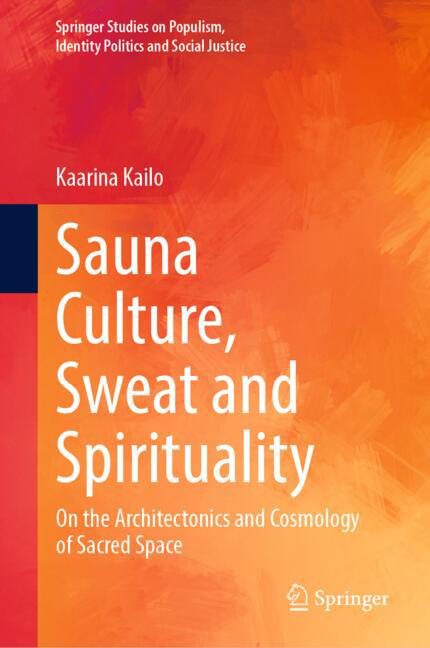
Sauna, Culture, Sweat and Spirituality: On the Architectonics and Cosmology of Sacred Space by Kaarina Kailo: Book Review by Beth Bartlett

Living as I do in the midst of both Finnish immigrant and Anishinaabe cultures, and where the two merge in the many here who identify as “Findians,” I was intrigued by the description of Kaarina Kailo’s book, Sauna, Culture, Sweat and Spirituality, as a comparative exploration of Indigenous sweat lodges  — madoodiswan in Anishinaabemowin — and Finnish saunas.[i] As an outsider to both cultures, I have no ancestral or traditional knowledge of either saunas or sweat lodges and I wanted to learn more about both.  Kailo’s book did not disappoint.  What I hadn’t expected and was delighted to discover was that Kailo connects both with ancient goddess religions, contemporary feminist spiritualities, and ecofeminism. 

Kailo’s book is a widely and deeply researched cross-cultural comparative study of the elements, practices, intentions, and spiritualities of sweat cultures ranging far beyond various Native American sweat lodge practices – Delaware Great Houses, Anishinaabe sweat lodges, Pueblo kivas – and the Finnish sauna,to Iberian/Galician saunas, Irish sweathouses, and Old Europe.  As Kailo herself says, the value of such cross-cultural studies is the way they help to expand our thinking, enabling us to see things we might not have otherwise.  She repeatedly says that she is looking for the “affinities” among these various sweat cultures, rather than focusing on their differences, and she finds many.  In the process, she reveals the role of sweat lodges, sweat houses, and saunas as sacred spaces of healing, restorative balance, connection with the spirits, rebirth and regeneration, women-centered spirituality, and Great Bear religions. Infiltrated throughout are her reflections on how reviving the widespread use of sweat cultures and saunas, and the woman and life-centered spiritualities at their heart, would provide an antidote  to the current economic, ecological, and political threats to the world.

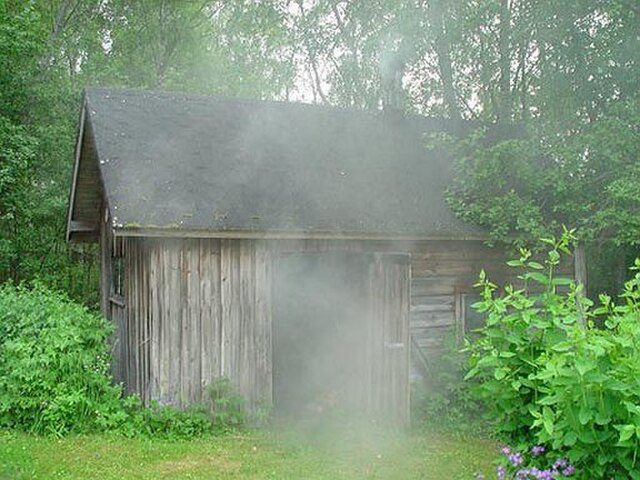
Finish Smoke Sauna
Continue reading “Sauna, Culture, Sweat and Spirituality: On the Architectonics and Cosmology of Sacred Space by Kaarina Kailo: Book Review by Beth Bartlett”

On Korach and Power-Over

This month’s blog will explore Korach, Numbers 16:1-18:32.  It was the Torah portion for June 28, 2025.  The portion contains a rebellion from a segment of the Israelite people, led by Korach, who insisted on the holiness of the entirety of the Israelites (16:3) and their fitness to give offerings in the Tent of Meeting, which challenges the establishment of the Aaronic high priesthood.  The protest is met by the divine with earth-splitting rage and divinely-sanctioned disease.  Over 15,000 Israelites are recorded to have died on account of this “blasphemous” rebellion against the divine and the divine’s proclamation of the chosen status of Aaron and his descendants (17:14).  From a feminist point of view, this incident in Korach reads as an exercise of power-over and sadly bolsters images of the divine that go counter to a liberating presence, dwelling among the entire community.

Continue reading “On Korach and Power-Over”

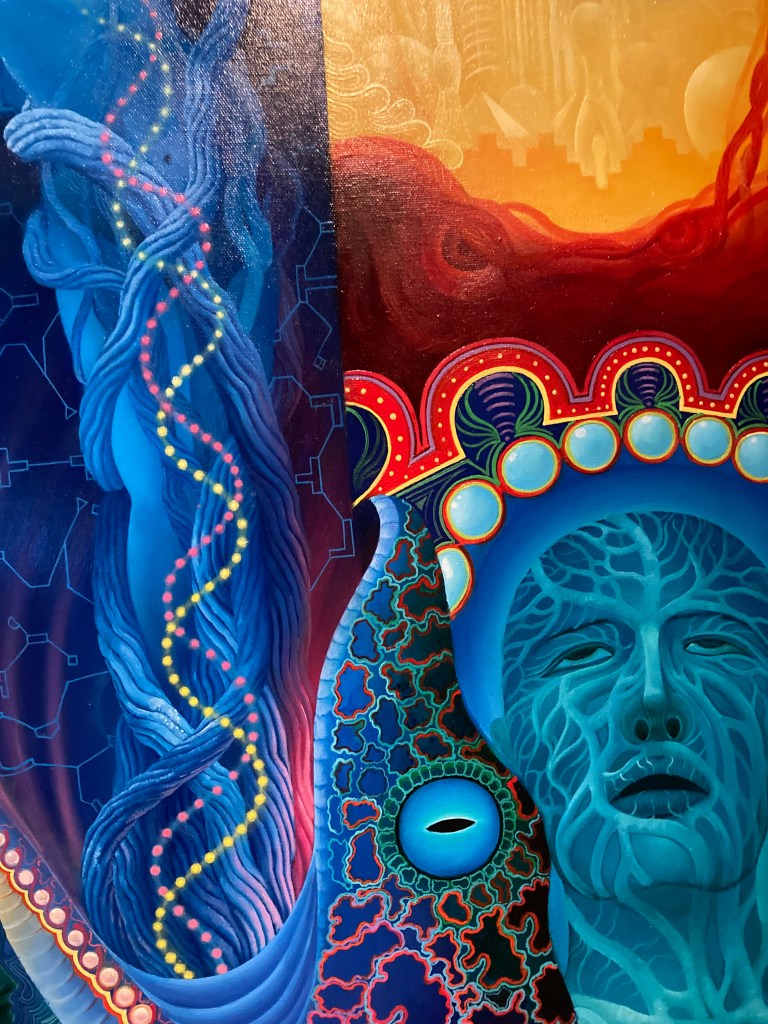
Healing Soul Loss Through Movement

We tend to imagine soul loss as something rare and dramatic, or reserved for those with deep trauma. But in shamanic paradigms across cultures, soul loss is a normal part of being human. The concept refers to moments when a vital piece of our essence disconnects, often as a survival mechanism. In psychology this is called dissociation. This can happen through shock, illness, relational rupture or subtle decisions we make to fit in, stay safe or succeed. A piece of us leaves in order to preserve the rest.

[Image credits: Detail from Anderson Debernardi’s painting “Iniciacion Shamanica”, seen at Exhibition Visions Chamaniques. Arts de l’Ayahuasca en Amazonie Péruvienne, ‎⁨Musée du Quai Branly, 2024. Photo by Eline Kieft.]

Continue reading “Healing Soul Loss Through Movement”

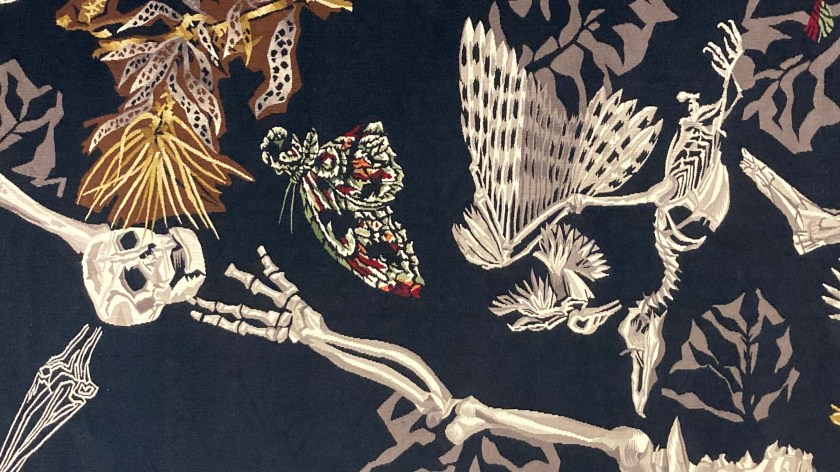
Dancing the Stories That Heal

After a near-death experience in 2019, I found myself immersed in myth and movement—sitting with Clarissa Pinkola Estés, dancing archetypes through Movement Medicine, and weaving stories like the Handless Maiden and the Red Shoes into my everyday life. This post shares some of the journey of how myths became embodied allies and an invitation for you too, to remember what lives in your bones.

Tapestry: Le Grand Charniers (1959) by Jean Lurçat, Musée Jean-Lurçat, Angers, photographed in 2024. Image © Eline Kieft.
Continue reading “Dancing the Stories That Heal”

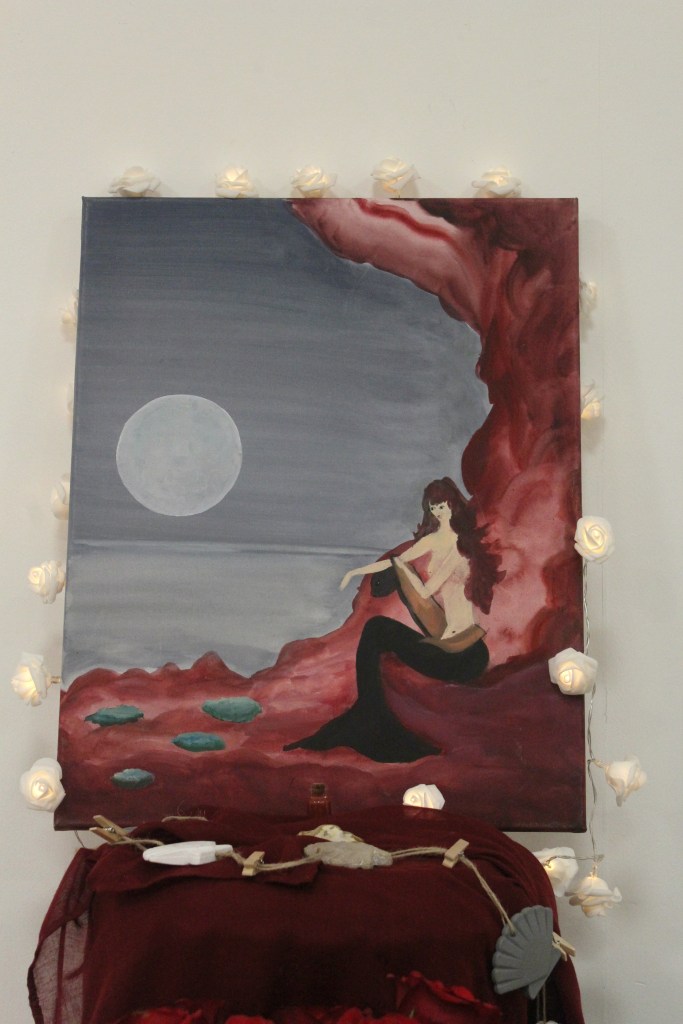
Do You Hear Seal-Woman Calling?

It was beautiful to read Carol P. Christ recent ‘from the archives’ post “Mermaid, Goddess Of The Sea,” especially because I’m in the middle of organising my first live Story-Dance workshop since several years, to move through one of my favourite stories of the Selkie-Seal Woman!

Stories of seal-women drift across the sea from the windswept coasts of Scotland to the icy shores of the Arctic. In the Scottish and Irish Highlands, Seal-women are known as selkies—shapeshifters who live as seals in the ocean, and who, when they shed their skins, walk as women on land. These selkie women dance beneath the moonlight, their laughter echoing across the waves as they rejoin their sisters in joyful reunion with the earth.

Continue reading “Do You Hear Seal-Woman Calling?”

Yoga for Witches: Should You Try This at Home?

In this post, I review Yoga for Witches by Sarah Robinson, a practical book that weaves together two ancient practices with surprising similarities, yoga from the East, and witchcraft as practiced in Northwestern Europe.

I start with what I loved, and how Robinson describes the similarities and differences between those two traditions. That weaves into some personal and deeper reflections on the theoretical background and yoga sequences. At the end you’ll find a specific recommendation so you’ll know if this is the book for you!

Continue reading “Yoga for Witches: Should You Try This at Home?”

Overnight at a Neolithic Dolmen: A Womb Healing Ceremony by Eline Kieft

In preparation for my hysterectomy, I decided to spend a night in a dolmen at Samhain last year, to seek guidance and healing. I chose Dolmen de Bajouilière in Saint-Rémy-la-Varenne, in Northern France, a site I had discovered by chance the previous year on my local explorations.

This well-preserved structure, with its spacious square divided into two rooms, felt inviting and safe for an overnight ritual. Though I am accustomed to spending nights in neolithic monuments, mostly in the UK, I felt some hesitation, partly due to my intermediate French and unfamiliarity with the local spirits.

Nevertheless, I recognized this resistance as part of the ego’s fear of the unknown, and I gave myself permission to retreat if needed. If I would feel too vulnerable, it wouldn’t serve my body and spirit ahead of the surgery. Please join me on my overnight Samhain Ceremony full of deep imagery and transformation as I shed my womb three times… 

Continue reading “Overnight at a Neolithic Dolmen: A Womb Healing Ceremony by Eline Kieft”

An Incantation for 2024, USA by Marie Cartier

-please repeat and/or use in ritual, if needed

There was a time (there was a time)

We were waiting for something (we were waiting for something)

We were wanting something (we were wanting something)

We needed it to be different (we needed it to be different)

We were. We are. We are here: this is it.

We want something. We want something. We need something. We need something.

There was a time when we could make something happen.

Continue reading “An Incantation for 2024, USA by Marie Cartier”

Mourning by Beth Bartlett

Grief is the experiencing . . . Mourning is the process,
when we take the grief we have on the inside and express it outside ourselves –
writing, planting, burying, burning, rising up
ceremony, ritual, community[i]

A glimpse of our cottage as I drove away.

“As long as I stayed there, I could keep you with me. . . .” Those words kept repeating in my mind throughout my long drive home from my sister, Jeannie’s, “Celebration of Life” service. I’d stopped midway on my thousand-mile journey at the cabin our family has shared for sixty years.  There I could still feel her presence — on the hillside where we so often sat with our morning cups of tea, or watching the sunset, or chatting away the afternoon; on the dock where we’d lie in the sun or sit late at night and watch the stars come out, or cuddle up in blankets on windy, fall days; in the circle of couches and chairs where we played telephone Pictionary, charades, and CatchPhrase; in the kitchen where we’d cooked and eaten and played card games together; in the bedroom we often shared with a dog between our beds; the road where we’d go for family walks – eight, ten, twelve of us all together, and always two, three, or four dogs; even the driveway where we’d greet and hold each other with great gladness after months of separation, and where we’d hug and say goodbye, and then hug once more because in the back of our minds we’d be wondering if this was the last time.  . . .

Continue reading “Mourning by Beth Bartlett”

Naso: An Invitation for Feminist Imagining.

This week’s Torah portion is Naso (Numbers 4:21-7:89).  The portion discusses who, among the Israelites, carries the components of the Miskan (Tenting of Meeting) while wandering through the desert.  It also entails a census of the tribe of Levi, describes various offerings that were brought to the Tent of Meeting in general and for its twelve days of dedication, decrees keeping the ill and ‘contaminated’ out of Israelite settlements, details the Nazirite vow, gives us the priestly blessing, and proscribes the process through which women are acquitted or found guilty of affairs.  There are many components of this parshah that offer food for thought when it comes to a feminist analysis, but for today, I am going to focus on where there is equality between men and women within the text and where there isn’t.  

Continue reading “Naso: An Invitation for Feminist Imagining.”