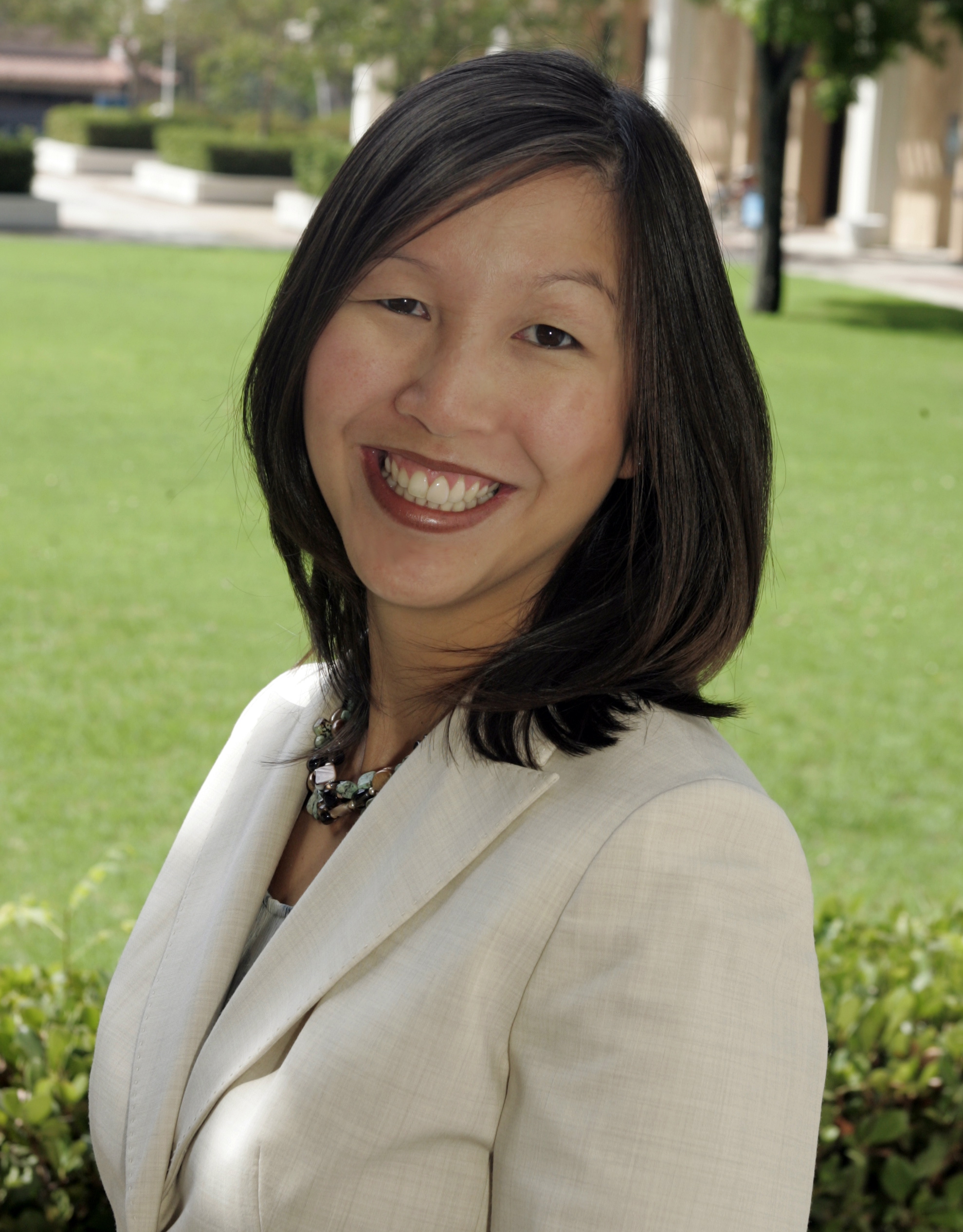
In the original blog I explained that the students were asked to identify a private or public a problem that they could find a full or partial solution for and that their actual final had to actually implement their proposed solution. Students had to use “The Feminist Ethical Toolbox,” or what they call “Cartier’s Toolbox,” in their solution. The toolbox addresses questions such as, “Is everyone affected by the decision (the solution to the problem) at the decision making table?” and “If they are not at the table, are they represented at the table by someone who will speak to their interests?” among others.
The second blog addressed combining art with scholarship/activism so that we do not only change minds but also move hearts. Students had to attempt to combine art with their problem/ solution-consciously using art as a “toolbox” element helps facilitate social change. It is in the integration of both art and scholarship that the most poignant and effective social change strategies are birthed. Continue reading “Feminist Ethics Class and Final Problem Solving by Marie Cartier”
“As we approach Memorial Day Weekend (and the militaristic patriotism it promotes), as the 2012 election cycle heats up, and as I meditate more deeply upon my and my country’s many riches, one of [Walter] Brueggemann’s prayers in particular spoke to me.”
One of the three books I took with me on vacation is by the world’s leading interpreter of the Old Testament, Walter Brueggemann. It’s not actually on the Bible, but something he published in 2008 called Prayers for a Privileged People.
It can only be that She begins in a small way at a single place in the world. It can only be that She begins within us.
Carol Christ’s post this week made me think of a favorite little passage I love from a Catholic theologian, Gerhard Lohfink, who wrote a book about whether God needs the church. I’m not going to engage that specific question here nor am I going to talk about the ins and outs of the book. I simply mention it because it holds within it the beautiful passage that deeply resonates with me and has become the primary image I hold on to when thinking about how I want to participate in the transformation of the world. The passage comes from a part of the book where Gerhard Lohfink muses about how God would start a revolution while still respecting human freedom and participation:
God, like all revolutionaries, desires the overturning, the radical alteration of the whole society – for in this the revolutionaries are right: what is at stake is the whole world, and the change must be radical, for the misery of the world cries to heaven and it begins deep within the human heart. But how can anyone change the world and society at its roots without taking away freedom? (Lohfink, 26)
The issue is that for centuries people have tried and tried again to change the world, to ‘free the masses’ and save people from suffering, misery, and oppression – but too often revolutionaries resort to violence as their means. The systems are so rigidly and stubbornly in place that the revolutionary comes to see no other way to bring about radical social change except through a widespread violent overthrow. Continue reading “How Does Goddess Change the World? by Xochitl Alvizo”
I forgot, that relationships, like feminism, are not easy, and that it is a conscious and continual effort of renewal to remind yourself everyday why you love the person you love and more importantly, in the case of feminism, why you fight, “the good fight.”
I was once told by my ardent feminist advisor in undergrad to “not put all my proverbial eggs in one man basket” after discussing my relationship with my boyfriend over a cup of coffee. Thinking my relationship was different and that we were special, I heeded the warning but thought of it no further. Now, looking back on it three in a half years later, I wish I would have.
Relationships are a powerful tool. They help to make you feel special. They help to bring you joy. They help you discover the reason why a divine presence may have endowed us with the ability to love and most importantly they help you realize and discover things about yourself you may have never taken the time to notice.
Feminism 101 is more than just the pop culture stereotype of a bunch of women advising the younger generation of girls to be weary of men and the pain they can bring. Feminism, specifically as what I now call Feminism 101, is the transformative ability to listen to your elders, trust yourself, and ultimately, if you happen to trust in the relationship you have built, knowing deep down that it is built on equality, love, and trust. Continue reading “Why I Failed Feminism 101: Gender, Sexuality, and the Power of Relationships”
“Yo soy mujer en busca de igualdad, no aguantar abuso ni maldad. Yo soy mujer y tengo dignidad, y pronto la justicia serd una realidad. Mujer, tù eres mujer, porque supiste ver, la realidad de tu poder. Hoy canto al Dios del Pueblo en mi guitarra, un canto de mujer que se libera” – From “Mujeristas: A Name of Our Own!” – Ada María Isasi-Díaz [i]
Translation: I am woman searching for equality; I will not put up with abuse and wickedness. I am a woman and I have dignity, and justice will soon be a reality. Woman, you are woman, because you have known how to recognize the fact that you are powerful. Today I sing to the God of my people with my guitar, I sing a song of a woman who liberates herself.
Labels, names, and categories can evoke prejudice and oppression. Ada Maria Isasi-Díaz, the founder of Mujerista Theology, wrote:
To be able to name oneself is one of the most powerful abilities a person can have. A name is not just a word by which one is identified. A name provides the conceptual framework and the mental constructs that are used in thinking, understanding and relating to a person.[ii]
These words relate to U. S. Hispanic women, who, according to Isasi-Díaz, struggle against ethnic prejudice, sexism, and in many cases classism [and who] have been at a loss as to what they should be called.[iii]In finding that common name, lyrics from three different songs inspired Isasi-Díaz who developed the term “Mujerista Theology,” replacing Hispanic women’s liberation theology:
“Yo soy mujer en busca de igualdad, no aguantar abuso ni maldad. Yo soy mujer y tengo dignidad, y pronto la justicia serd una realidad. Mujer, tù eres mujer, porque supiste ver, la realidad de tu poder. Hoy canto al Dios del Pueblo en mi guitarra, un canto de mujer que se libera”[iv]
For Isasi-Díaz, mujerista unifies Hispanic women and embodies strength. Mujeristas are those:
Ada Maria Isasi-Díaz Picture From Drew University’s website
Who desire a society and a world where there is no oppression.
Who struggle for a society in which differences and diversity are valued.
Who know that our world has limits and that we have to live simply so others can simply live.
Who understand that material richness is not a limitless right but it carries a “social mortgage” that we have to pay to the poor of the world.
Who savor the struggle for justice, which, after all, is one of the main reasons for living.
Who try no matter what to know, maintain, and promote our Latina culture.
Who know that a “glorified” self-abnegation is many times the source of our oppression.
Who know women are made in the image of God and, as such, value ourselves.
Who know we are called to birth new women and men, a strong Latino people.
Who recognize that we have to be source of hope and of a reconciling love.
Who love ourselves so we can love God and our neighbor.[v]
For Isasi-Díaz, Mujerista Theology is defined as:
“a process of enablement for Latina Women, insisting on the development of a strong sense of moral agency, and clarifying the importance and value of who they are, what they think, and what they do….mujerista theology [also] seems to impact mainline theologies, the theologies which support what is normative in church, and, to a large degree, in society.”[vi]
Come, come, my conservative friend, wipe the dew off your spectacles, and see that the world is moving – Elizabeth Cady Stanton
Whenever I find myself in conversation with a liberal skeptic who assumes that the existence of a liberal Mormon or Catholic is about as likely as aliens walking the planet, I do two things. First, I show them our blog. Second, I attempt to describe the complicated, long, and constantly evolving relationship between American liberalism, religion, and feminism. The roots of this complex triad are planted in a complicated history whereby, on the one hand, religious liberalism helped women gain equal rights and social justice, while on the other hand, it created divisions among some religious women who felt liberalism threatened their theological beliefs. Of course, the term “liberalism” is fraught with its own contemporary meanings. However, religious feminists throughout history have nevertheless engaged in practices we could place under the rubric of liberalism, including the push toward cosmopolitanism, modernism, and political progressivism. The difficulty was (and still is) maintaining their religious practices and beliefs.
“Now the Vatican says that nuns are too interested in “the social Gospel” (which is the Gospel), when they should be more interested in Gospel teachings about abortion and contraception (which do not exist). Nuns were quick to respond to the AIDS crisis, and to the spiritual needs of gay people—which earned them an earlier rebuke from Rome. They were active in the civil rights movement. They ran soup kitchens.” — Roman Catholic Women Priests (via Facebook)
I once had a conversation with my New Testament Professor about the issue of women ordination. He was optimistic and thought there might be a possibility that change was in the air – that was six years ago. The basis for his statement had to do with language. Of the journals and articles read, he felt the language used was more inclusive and that once people adjust to this discrete change in gender inclusive language, change for women in the Church can come.
Love is defiant. In a cruel world of violence and vengeance, love is the ultimate rebellion: the only thing that can beat back the forces of death and destruction.
It is an interesting coincidence that when both Jewish and Christian communities were rehearsing our respective salvation narratives, the world outside of synagogues and congregations was consumed with the story of The Hunger Games, a young adult novel turned Hollywood hit. This trilogy chronicles the coming of age and struggle for freedom of Katniss Everdeen, a 16 year old citizen of the post-apocalyptic nation of Panem.
As we in the Christian tradition journey through the Easter season, the dystopic world of the Hunger Games invites us to re-imagine resurrection in light of a crucified world.
We first meet Katniss as she sets off for the annual Hunger Games, a state sponsored television show, a cross between the pseudo-reality shows of Survivor and Fear Factor and the very real, ancient Roman gladiator battles. Invented by the Capitol as a form of perpetual discipline and punish for a past rebellion of the 12 (once 13) districts, the Games require each district to send two children, or tributes, to star in a live broadcast battle in which the adolescent scapegoats kill one another until only one remains.
I’ve admired JC for years. That’s Joan Chittister, OSB the Benedictine nun of course. I first saw her speak when I was in graduate school and she visited Yale. I’ve also read a number of her books. Her life is an example of how religious people support feminist ideals. There is a story in Beyond Beijing: The Next Step for Women: A Personal Journal that I would like to share with you
Chittister began her historic journey on the Peace Train to the UN Conference on Women in Beijing in 1995. As she entered a conference room to register as a Peace Train participant, she was handed a large manila envelope. To her surprise it was filled with condoms. At first, she thought that the woman who handed them to her meant to hand them to someone else. However, Chittister was told (quite emphatically according to her) that she should distribute the condoms to the health workers she encounters while on the train and in the small towns she visits along the way to Beijing. Eventually after much thought, Chittister decided to do just that and stuffs the manila envelope into her backpack. Trying to find some humor in what she considered an awkward situation for a nun to be in she remarked, “Now all I have to do is to try not to die in front of some bishop with condoms in my backpack.”
My first reaction to this story is to laugh along with her. I am also struck by her thoughtfulness to share the story publicly. She could have been given the envelope, quietly distributed the condoms and then never told a soul. But, no. She includes the account of this feminist action she undertook in her book for the world to read. What an amazing amount of courage and integrity this woman has! Continue reading “The Need for a Positive Counter-Narrative of Religious Involvement in Feminism by Ivy Helman”
Following the testimony of Sandra Fluke on the lack of availability of contraception and the appalling remarks by Rush Limbaugh that took place in early March, 2012, much discussion around issues of reproductive justice has emerged. Among these conversations, Mary Hunt recently shared her thoughts in “Contraceptive Controversies” on the issue on FSR-Inc., and graduate students Katie German and Linda Claros organized an event at Loyola Marymount University to invite faculty members, students, and interested persons to engage in dialogue on reproductive justice. I was honored to have the opportunity to participate in that discussion and would like to share my thoughts here in an effort to continue that dialogue.
To begin, I understand reproductive justice as the call for the social, political and economic ability to make responsible and healthy decisions about gender, sexuality, and procreation for ourselves and our communities with the goal of transforming power inequities and bringing about systemic change. The denial of reproductive justice in the Catholic Church is a symptom of the larger rape culture. When I use this phrase I am referring to a culture that not only perpetrates rape, but all forms of sexualized violence against women and girls. Continue reading “Reproductive Justice by Gina Messina-Dysert”