She studies, and disputes, and teaches,
and thus she serves her Faith;
for how could God, who gave her reason, want her ignorant?
—Sor Juana Inés de la Cruz, Villancico, or, “Carol”, in celebration of St. Catherine of Alexandria (1692)
The reason for this blog, and for writing it on this day, is to celebrate and remember the life and legacy of Sor Juana Inés de la Cruz.
In 1994, I was exposed, by chance, to the life and writings of 17th century Novohispana feminist Sor Juana Inés de la Cruz. I am the product of twelve years of Catholic education, eight years of which were in an all-women setting. Again, by chance, I learned about Sor Juana in a liberation theology class while studying feminist theology at Harvard Divinity School. In this class, I learned about Sor Juana’s bold advocacy of the right of women to be educated. This spurred me to learn more about this Catholic Latina theologian whom I would later discover was the last great author of El Siglo de Oro (Spain’s Golden Age), recognized in her era as an esteemed poet, mathematician, astronomer, and more. This was the beginning of my life-long passion to reclaim the legacy of Sor Juana and her-story within the Christian, non-Christian Western tradition, and in Spanish and Mexican history. Continue reading “Remembering Sor Juana Inés de la Cruz’s Life and Legacy: Champion of Universal, and Non-Human Rights November 12, 1648/51 – April 17, 1695 by Theresa A. Yugar”
Late last year, Nancy Weiss Malkiel described how coeducation triumphed in the universities not out of a desire to include female students, but out of a desire to appeal to the changing tastes and expectations of male ones. Coming from such unpromising beginnings, she wrote, we should not be surprised that coeducation has done so little to address the systemic obstacles women face across the broader society. In its broad lineaments, Dr. Malkiel’s conclusion that “coeducation … has not succeeded … in accomplishing real equality for young women in colleges and universities,” can hardly be disputed
If I look only at the specifically academic issues that trouble Dr. Malkiel, however, I feel compelled to dispute what seems an implicit suggestion that male students’ choices are a standard which women should seek to emulate. She expresses concern that more women do not enter STEM fields, and sees this as an example of the way in which “Coeducation did not resolve the perplexingly gendered behaviours and aspirations of female students.” Thus, with one pernicious adverb, she manages to criticize women’s aspirations simply for being different from the aspirations of men, before lamenting that “Women also make gendered choices about extracurricular pursuits” in that “they typically undersell themselves, choosing to focus on the arts and community service, while declining to put themselves forward for major leadership positions in mainstream campus activities.” I certainly wish to see such positions open to women who want them, but I find it hard to be disappointed that Dorothy Day decided to focus on community service instead of putting herself forward for a “major leadership position,” or that Virginia Woolf “undersold” herself in the arts instead of participating in more “mainstream” activities. Continue reading “Coeducation and the Virtue Gap by Race MoChridhe”
The pieces of my dissertation are beginning to float to the surface, piece by piece, released into the world as smaller parts of the whole. At some point this all may become a book, but for now, I have enjoyed the opportunity to share some of the learning from my dissertation research in book chapters, articles, and blog posts, which I’d like to share with you all so that you can see some of what I’ve been up to these days.
The most recent piece that has come to be is an article on The Listening Guide, the particular method of narrative analysis I used to analyze the transcriptions of the interviews I conducted with participants of Emerging Church congregations. I’m particularly excited about this piece because I think it could be a useful tool to many of us in our respective fields of study and work. And although my particular context is theological and, even more specifically, Christian, as a tool and method, The Listening Guide can be used for reflection and be of great value in a variety of contexts. Continue reading “Updates on Listening by Xochitl Alvizo”
One of things that has dismayed me since I began graduate school and started focusing my study on the Bible, is how much sensationalism exists. We are told in the academy not to use Wikipedia or watch the History Channel. The first, as we know, is unreliable due to the fact that anyone can enter information and make changes. The other caters to the general public. What compounds this problem is the fact that scholars, many times – even reputable ones – appear on these shows. Sometimes creative licenses are exercised by the producer distorting or otherwise shifting the message of what the scholar was trying to explain. Other times, scholars will just give the producers and the public exactly what they want to hear and thus perpetuating myths rooted in literalism.
Cave in the Church of the Apocalypse in Patmos, Greece
This is not the only time this issues manifests. The other time I encountered this is when I travel to sacred or holy sites in the Middle East. The people in charge of sites may want raise money and increase tourism – so they give the people what they want. What do I mean by this? Walking into a place that has a story whether true or not provides pilgrims a sense of awe and wonder.
Certainly I am not saying that this experience should be diminished or should be taken away. What I am saying is that we should be a bit more truthful in our descriptions and remove the shroud of literalism that seems to fuel tourism and not faith. What was difficult for me when visiting Patmos is the rhetoric surrounding the island. It may or may not have been where John had his visions, but certainly the mystique surrounding the Church of the Apocalypse seems to perpetuate the literalism that surrounds the Book of Revelation as being prophetic in dealing with the end times. Moreover, the vendors around the Church certainly focus their merchandise to support this myth. However, while I study the Book of Revelation and teach that it is something other than prophetic, a person visits the island and the church, are told that it is prophetic – who is a person to believe? Me or the religious order running the Church or the vendors living on the island?
This also happens at dig sites. If a tourist is led by a guide or lead at a holy site being excavated and they tell them what they want to hear so they come back and tell their friends, who has more creditability – me or the person who guides on the site? When scholars like myself, write about a topic that seems to gel with what the commonly held view of the academy, and goes against literalism or fundamentalist beliefs, we become heretics in relation to the information being fed by the sensationalism on the History Channel and the tourist industry. So the popular view does not change and the academic view is left on the margins and Biblical literalism wins.
Kecia Ali, one of the contributors to this Feminism and Religion blog, recently wrote an excellent article titled, “Muslims and Meat-Eating Vegetarianism, Gender, and Identity,” (Journal of Religious Ethics, Volume 3, Issue 2, June 2015).
In her article, Kecia Ali “…argue[s] that Muslims in the industrialized West–especially those concerned with gender justice–ought to be vegetarians and that feminist ethics provides underutilized resources for Muslim thinking about ethics generally and food ethics in particular.” She assures the reader that “productive dialogue” is possible when Muslims engage with non-Islamic (not “un-Islamic”) ethics. The “engaged” parties may “disagree about basic presumptions but agree on desirable outcomes.” Continue reading “Slouching Towards Justice by Esther Nelson”
History is written by the victors – this is something that we all know, or at least should know. I apologize in advance for being elementary in my discussion, but I think one thing that scholars tend to do too often is assume our readers or audience has a firm grasp on what we are talking about. With this topic, I am not assuming.
When studying artifacts from past civilizations, an interesting phenomenon of using spolia as a demonstration of conquest is commonplace. If a conquered country’s deity is placed on the bottom of a column, or even turned a different direction, the significance usually means that deity is demoted or inferior – this is found in the Hagia Sophia (especially under the structure). If spolia is found whereby a country adds their deity (even if that deity is their ruler) to another country’s monument, then there is a coexistence or combining of empires with the conquesting ruler in prominent view, even substituting past rulers. This is best demonstrated on the Arch of Constantinople whereby Christian symbols and the likeness of Constantine was incorporated into an arch that once displayed the victories of Marcus Aurelius and Domitian. If you are interested in this topic, please see my article “Hagia Sophia: Political Symbolism in Stones and Spolia” in Popular Archaeology magazine.
Ten thousand people descend on San Diego this weekend for the American Academy of Religion and Society of Biblical Literature joint Annual Meeting. We will present papers, interview and be interviewed, shop for books, and network busily. Many will feel overwhelmed, lost, and/or hungry – convention center food somehow always manages to be lousy and expensive.
I have attended nearly every AAR Annual Meeting since 1999. I have presented papers, spoken on panels, responded to sessions, led tables at pre-conference workshops, and presided at business meetings. I have served on program unit steering committees and chaired a Section. I have gone to editorial board breakfasts and AAR committee meetings. I have had coffee with editors with whom I’ve gone on to publish books. I have served as a mentor at the Women’s Mentoring Lunch. Though I never used the Employment Center as a job candidate, I have put in cubicle time as part of two search committees.
Abstract from the Study: The low proportion of women within the subject areas of Theology and Religious Studies has long been observed, and is increasingly recognised as a serious problem for staff and students. In this new study, Mathew Guest, Sonya Sharma and Robert Song chart patterns of gender imbalance among staff and students across UK Theology and Religious Studies departments, exploring why such patterns remain so persistent. Drawing on interviews with Theology and Religious Studies academics across the country, the report examines the professional life of female university staff, and makes recommendations for how universities might address the inequalities of opportunity and practice that emerge.
While this report focused on UK institutions, it is an important study for this field of study and did garner feedback outside of the U.K. Some of the findings that may be of interest:
Females outnumber males at the undergraduate level in theology and religious studies (60/40). When moving to the taught post-graduate level, the proportion of female students drop to 42%, and at the post-graduate research level (Ph.D. program) another drop to 33%.
Women make up 29% of academic staff in the field of theology and religious studies. 37% amount early career academics and lecturers, 34% senior lecturers, and only 16% amount professors.
Comparing the field of theology and religious studies to other disciplines across the humanities, social sciences, and natural sciences reflect the same trajectory of gradual female withdrawal in tandem with academic progression. The drop-out rate seems to be more dramatic in theology and religious studies, especially between the undergraduate and taught postgraduate levels.
Structural factors influencing this pattern include the tendency of theology and religious studies departments to recruit postgraduates from international contexts in which a form of Christianity that favors the authority of men is prominent.
Interviews with academics in the field reveal additional factors which include entrenched connections to Christianity and Christian churches, the gendered style of academic engagement in some of the sub-discipllines, and the up-hill struggle to develop the confidence to succeed in a male-dominated environment.
Generic issues include poor allowance for childcare and family responsibilities as well as bullying.
Advisors have a profound effect as well as interaction with the faculty.
Often, women are pressured to perform better than their male counterparts in order to stand out from the other female candidates.
Gender stereotypes that work against “women’s entrance and mobility” in academic jobs, especially those related to leadership positions.
Collegiality focused on “male sociability”whereby women’s ideas are suppressed or they find themselves on the margins within their departments.
Being the lone voice or scapegoat in the department for “women’s issues.”
Studying stereotypical topics and migrating away from traditional “male” disciplines.
I read your guideline[s] on “Writing a successful conference paper proposal”. I intend to submit a paper for a conference, for the first time, so I am a bit afraid and hesitant. Actually, I have many ideas[;] still I feel that I cannot really focus on a clear argument. Can you advise me please on how to organize my argument? Honestly, I feel that I am not fully grasping the whole idea of a paper. Should I come up with something new or just review books that have more or less the same approach to a particular theme? I really cannot fathom the essence and the main idea of a paper. I am sorry for any disturbance, but I thought that you may accept to help me. If it is possible to send you my attempt and the ideas that I have in mind for the conference, I will be really grateful.
I received this email several months ago from a North African doctoral student whom I had never met, working on a topic (literature) distant from my own areas of expertise (law).
On the surface, her request seems ridiculous, on a par with students who ask about rules clearly stated in the syllabus. The guidelines to which she refers state clearly that the point of a conference paper is to present “something new.” It suggests ways to narrow down “a clear argument” and a “main idea.” And whether she knows it or not, she is asking for a major investment of time and energy. A two paragraph email is not going to help her understand “the whole idea of a paper” if it is not yet obvious from her studies or reading. From a time-management perspective, devoting a good chunk of time to reviewing a stranger’s disorganized ideas, in a field far removed from my own, is neither efficient nor professionally savvy.
Yet it is more complicated than that. Although I ultimately did not provide any substantial assistance, I was tempted to help, despite my unsuitability in terms of specialization and my awareness that female academics are prone to spend disproportionate time on service activities, making us less likely to advance professionally. Continue reading “Random Email Blues #2 by Kecia Ali”
I am deep in the throes of writing my dissertation. Writing started in earnest, in its most recent stretch, in mid-July when I came out to write in isolation in my home city of Los Angeles.* If all goes as scheduled (so far, so good), I will be submitting the first chapter to my editor today, the same date of publication as this blog post. Of course, after my editor’s suggestions, the chapter then goes to my advisor and will inevitably have a life of its own after that. For now, I am enjoying the moment of being on the cusp of completing my very first chapter. I’m a big believer in celebrating every moment of success!
Last month I was in the throes of data analysis. My dissertation involves qualitative research with twelve Emerging Church congregations across the United States. From that research I ended up with 40 audio -hours of transcriptions from the interviews I conducted. I spent the whole month of June – again, in isolation –in San Diego at Point Loma Nazarene University* focusing on the task at hand. Analyzing data is a completely different challenge than writing, and finding the best method of analysis based on one’s own commitments particularly so. Luckily, I found a method of analysis that allowed me to ‘listen deeply’ to my data and leave myself open to discovery.
I have written before about Nelle Morton’s feminist principle of ‘hearing each other to speech’, its importance in my own life, and how valuable I think it could be for those of us in academentia and for the way we do our work. There is a logic that sometimes dominates in the academy of finding the fault in the argument of the other and building one’s own argument in opposition to it. That is not, however, the manner in which I want to do my own work. Nelle Morton proposes a model of engaging one another in which we commit to ‘hearing all the way’, to “depth hearing.” The practice is of a kind of hearing that engages the whole self to the point that you might find yourself holding your breath in order to allow the coherence of someone else’s story to form and come together. Her claim is that this kind of hearing evokes “a new speech – a new creation” because it enables the speaker to be heard to their own story, thereby creating the possibility for new imagining, an imagining that contributes to the mutual empowerment and transformation of both hearer and speaker. Continue reading “Using the Listening Guide to Leave Oneself Open to Discovery by Xochitl Alvizo”


 The reason for this blog, and for writing it on this day, is to celebrate and remember the life and legacy of Sor Juana Inés de la Cruz.
 Late last year, Nancy Weiss Malkiel
 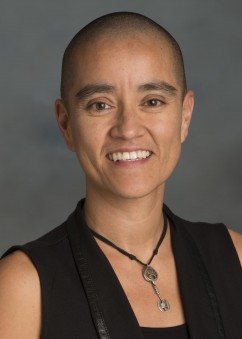 The pieces of my dissertation are beginning to float to the surface, piece by piece, released into the world as smaller parts of the whole. At some point this all may become a book, but for now, I have enjoyed the opportunity to share some of the learning from my dissertation research in book chapters, articles, and blog posts, which I’d like to share with you all so that you can see some of what I’ve been up to these days.

 Kecia Ali, one of the contributors to this Feminism and Religion blog, recently wrote an excellent article titled, “
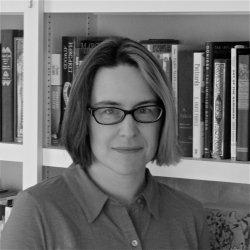 Ten thousand people descend on San Diego this weekend for the


 Feminism and Religion