“Papa Don’t Preach”: TED-like Talks at Malmo Nordic Women’s Forum May 2014

amina 2014 - croppedWhen I was a little girl, I used to be afraid. I was afraid of the dark. I was afraid of thunderstorms. I remember once cowering on the floor in the back seat of the car waiting for my dad to come take us home. My dad, who was a Methodist Minister, was too busy talking about God to really notice my reaction to being there in the back seat of the car during that terrible storm. Instead, he just kept busy, talking about God to other grown ups—talking in a way I did not understand, or found incredibly boring and long winded, sometimes even just a little frightening.

But Thunderstorms filled in a gap I did not know I had. A gap between my tiny self and the awesome Reality I have since come to know in a very different way. So when I would hear thunder, I thought of it as coming from God. I would begin this conversation with the Awesomeness of It asking moral questions: you know about good and bad. The thunder would seem to provide direct answers. Was that the voice of God?

Isn’t that how so many people think of God: an awesome and overwhelming omnipotent presence—with a voice that roars?

One dark night, during another storm, maybe my father heard me crying. He sat me on his lap and told me, in his quiet voice, how God had promised He would never again destroy the world by water. The sign of this promise, he said to me, was the Rainbow… the place where water, light and power combine to show color and beauty. That was my first experience of transcendence. From that time forward I would seek that loving nurturing experience of the Ultimate. Continue reading ““Papa Don’t Preach”: TED-like Talks at Malmo Nordic Women’s Forum May 2014″

A feminist closet? by Linn Marie Tonstad

Linn Marie TonstadEvery now and again, a budding systematic theologian comes to my office and wants to talk about how to avoid being pegged as a feminist, and therewith avoid not being taken seriously as a theologian. Sometimes the students are feminists, but don’t want that aspect of their work to dominate or perhaps even to be visible for a time; in other cases, the students aren’t feminist – or didn’t start out that way – but are having experiences as they enter the guild that are raising these concerns for them in a new way. Perhaps professors are assuming that they are feminist simply because they are female, or perhaps male students are dominating in class and the professor is doing nothing to rein them in.

These students seek me out knowing that I am an avowed feminist and an avowedly feminist theologian. But they are concerned about the effects being or appearing feminist might have on their future careers. After all, they want to join the theological conversation in order to shape it – and their ambitions are right and justified. Continue reading “A feminist closet? by Linn Marie Tonstad”

The Quiet Voice of the Frame Drum by Oxana Poberejnaia

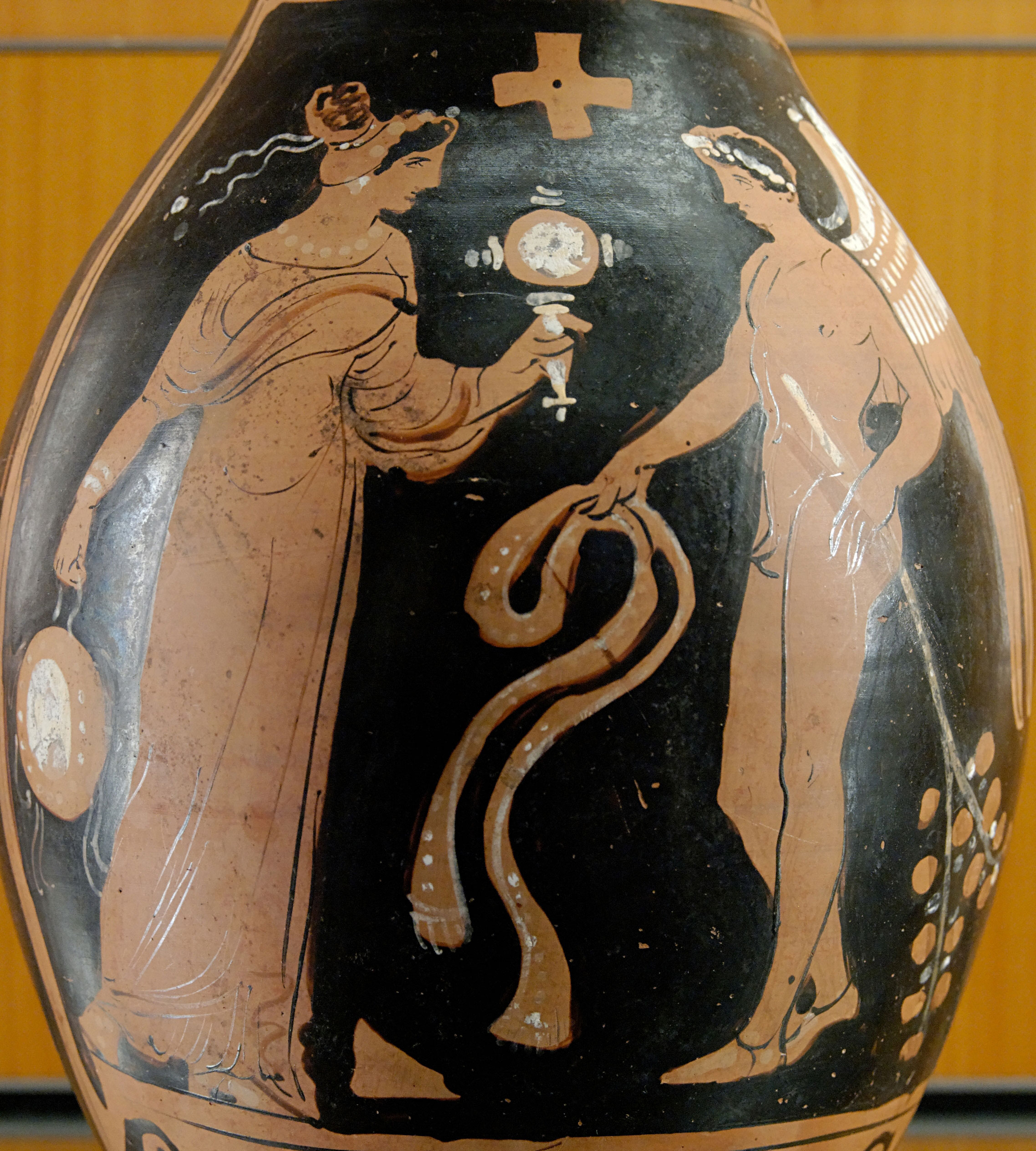
oxanaLayne Redmond passed away on 28 October 2013. Days before her death I received by post her signature Lotus Tambourine which Layne developed with Remo, manufacturer of world frame drums. Remo posted a tribute to her on her page as a Remo artist. Percussive Arts Society published an In Memoriam of her, along with the link to an article by Layne Redmond “Frame Drums and History”. Facebook and especially Women Frame Drumming page exploded with expressions of gratitude, sympathy and testimonials of how Layne changed people’s lives. Here is an account of Layne’s last summer by a person who supported her in her end-of-life transition.

Woman_mirror_tambourine_MBA_Lyon_L631FWLayne Redmond was intensely busy with two projects during this time: completing her film about drumming spiritual practices to dream awake Afro-Brazilian Gods and Goddesses, and preparing her seminal book When The Drummers Were Women for re-printing with new materials and photos. She put out appeals for both projects, including on Karen Tate’s show “The Voices of the Sacred Feminine” in June 2013, and people helped with their money and time.

Continue reading “The Quiet Voice of the Frame Drum by Oxana Poberejnaia”

An Interview with Lyz Liddell from the Secular Student Alliance by Kile Jones

KileIn this post I interview Lyz Liddell, Director of Campus Organizing at the Secular Student Alliance.  I first got in contact with Lyz about the idea of building a Humanist Center at my school, Claremont Lincoln University.  She was very helpful and inspiring.  I then had the pleasure of meeting her face-to-face when I gave a presentation on “Atheism and Interfaith” at the Secular Student Alliance’s Annual Conference in Las Vegas.  So once again, I give you an interview with a strong female non-believer:

Lyz Liddell of the SSA

Can you give us a little background to how you became interested in secular activism and how you became the Director of Campus Organizing for the Secular Student Alliance?

I first became interested in secular activism via our Executive Director August Brunsman, close to ten years ago.  The editor of our newsletter had recently acquired some fame (that was Hemant Mehta, with the fame from his experience of selling his soul on eBay) and was no longer able to commit to the regular editorial schedule; I was asked to step up, and since I had some editing experience, I took it on.  Up until that point, I had been a “layman,” if you will – secular for sure, but not really an activist.  Through several years of editing that newsletter, I learned what secular student groups were doing, and what was happening in the secular movement at large.  The more I encountered, the more enthusiastic about it I was.  I started going to conferences to get more information and news for the newsletter, and got more involved with the organization’s staff and volunteers and affiliates.  When the campus organizer position opened up in late 2008, I stepped up into that position, and we’ve grown it from there (2 full time staff and some volunteers, a board of mostly college students) to the professional organization we are today (9 full time staff, 4 part-timers, a professionalized board and dozens of dedicated volunteers; we’ve grown from ~100 affiliates in 2008 to over 400 today).

To Dust and Ashes by Natalie Weaver

Natalie WeaverThis year marks the fifth anniversary of the publication of Mama, PhD: Women Write About Motherhood and Academic Life, edited by Caroline Grant and Elrena Evans.  I contributed a chapter.  A few days ago, I was contacted by the editors and asked for an update.  “What had changed for me in five years?” they asked.  As I tried to respond to their questions, I was surprised by the gravity in my heart.  When I wrote about motherhood and life as a professional theologian five years earlier, I was a new mother, applying for my third-year review, and trying to navigate my nascent roles as both mom and scholar/educator.  I felt overwhelmed to be sure, but I was overtly grateful to have such a rich and full array of choices about how I lived my life.  Here, a few years later, I am applying for full-professorship.  I am a more seasoned mother with two healthy children.  I chair two departments at my school, and I am generally more established in the many things I juggle simultaneously.  Had I given it any consideration, I would have anticipated a more cheerful five-year check-in. Continue reading “To Dust and Ashes by Natalie Weaver”

What It’s Like To Be A Woman In The Academy: Mentoring Edition by Linn Marie Tonstad

Linn Marie TonstadIn my first post, I promised to return to the topic of mentoring. Mentoring is a survival strategy for feminists inside hostile or difficult-to-navigate environments; in its best possibilities, mentoring is a strategy for flourishing, not just surviving. But when a mentoring relationship goes wrong, it is so destructive an experience that it may even be characterized as traumatic. Mentoring is also a practice rife with possibilities for abuse: the recent Yale study of gender bias in the sciences shows the extent to which gender alone serves as a significant variable for scientists assessing the possible rewards of mentoring a student.

I have given a lot of thought to mentoring in recent months – as I transition into new mentoring roles in a new institution, as I negotiate changing relationships with current and former mentors, as I reflect on successful and unsuccessful mentoring relationships I’ve been involved in, and as I seek to develop policies and practices that will serve me (and more importantly, my mentees) well.  Continue reading “What It’s Like To Be A Woman In The Academy: Mentoring Edition by Linn Marie Tonstad”

What It’s Like to Be a Woman in the Academy by Linn Marie Tonstad

Linn Marie TonstadLast fall, I was asked to sit in on the women’s pre-doctoral colloquium at the divinity school where I teach. In the course of a wide-ranging lunchtime conversation, the central question to which the students wanted an answer was: “what is it like to be a woman in the academy?” The question took me by surprise at the time – mostly because I’d expected to be asked more nitty-gritty questions about applying to graduate school, writing samples, and personal statements – but it has stayed with me in the weeks since the lunch as I’ve found myself trying out answers from different directions.

The first answer, and perhaps the most obvious one, is this: there is no such thing as being “a [generic] woman” in the academy (or anywhere else). Continue reading “What It’s Like to Be a Woman in the Academy by Linn Marie Tonstad”

Blessings for the New Year on Feminism and Religion by Marie Cartier

I remember being in Korea for the 2009 International Women’s World Congress with Hye Sook Hwang and Inhui Lee and many (many) others and realizing then in ways I had not before, how crucial feminist scholarly friendships are to not just my work –but my sanity. The way we see things and the way we talk about things makes sense in a way that many times the rest of the world does not make sense. I re-member, to use Mary Daly’s phrasing, Hye Sook’s Magu scholarship that awakened in me and many others the Goddess magic of Korea. I re-member Inhui’s work with the female shamans of Korea and their rituals to honor and memorialize with honor the “comfort” women—Korean women used as sexual slaves by the Japanese during World War II. I went to that conference on the urging of Hye Sook and came home from that conference with new lifelong friends—among them Inhui. At that time none of us were doctors—now we all are. Continue reading “Blessings for the New Year on Feminism and Religion by Marie Cartier”

SPECIAL AAR SERIES Part I: Re-envisioning the Academy as ‘Open Source’ Community by Kate Ott with introduction and response by Mary Hunt


Kate OttMary HuntIntroduction:

This is one of four papers presented in Chicago at the Annual Meeting of the American Academy of Religion, November 17, 2012, in a session entitled  “Feminism, Religion and Social Media: Expanding Borders in the Twenty-First Century,” organized by Gina Messina-Dysert and chaired by Rosemary Radford Ruether with Mary E. Hunt as the respondent. What follows is the general response followed by, after each of the contributions, Hunt’s appreciative analysis. Two of the papers will be posted here on Feminism and Religion and two will be posted on the Feminism in Religion Forum

General Remarks by Mary Hunt:

The stated purpose of the panel is to discuss “how digital projects are remapping the feminist theological terrain and creating opportunities for a wide range of voices to participate in ongoing and new conversations related to feminist issues in religion.” These writers have done that and more. Continue reading “SPECIAL AAR SERIES Part I: Re-envisioning the Academy as ‘Open Source’ Community by Kate Ott with introduction and response by Mary Hunt”

In Memoriam Patricia Monaghan: The Goddess Community Remembers and Mourns by Dawn Work-MaKinne

Patricia Monaghan, scholar, author, poet, activist, artist, visionary and vice-president of the Association for the Study of Women and Mythology died early on November 11, 2012 after a two year journey with cancer. Patricia was one of the Founding Mothers of the Goddess Spirituality community in the United States, and her loss is a profound one for our spiritual and scholarly communities.

I was a very junior scholar when I first met Patricia in the 1990s. I had long admired her work, especially O Mother Sun!, her comprehensive study on sun goddesses. We were at a regional gathering, and Patricia had been deputed to lead a table of discussion devoted to Goddess scholarship. When we introduced ourselves, she simply said that she was Pat, from Chicago. Our discussion was rolling along when recognition hit. As I remember, I broke into the conversation. “You’re Patricia! From Chicago! “ I enthused. “Your work has been so important to me!” One of Patricia’s key characteristics was her generosity, especially with young and emerging scholars. I left that gathering with her email address, and I thought I was the richest young woman in the world. In the ensuing years, she encouraged me all the way through my doctorate. We had a long and joyous journey together. Continue reading “In Memoriam Patricia Monaghan: The Goddess Community Remembers and Mourns by Dawn Work-MaKinne”