


The biblical traditions of Miriam the prophetess have captured the imaginations of Bible-readers throughout the ages. Miriam, Moses’ sister, watches over Moses in his cradle (Exodus 2), and leads the Hebrew women in dance at the shore of the Sea of Reeds to celebrate redemption (Exodus 15). Rabbinic lore identifies Miriam with Puah, the midwife who saved Hebrew babies from Pharaoh, and depicts her as the herald of Moses’ birth (Exodus Rabbah 1:13; Babylonian Talmud, Sotah 12a). Contemporary Jewish feminists have established traditions of singing to Miriam the prophetess on Saturday night, parallel to the tradition of singing to Elijah the prophet at that time. It has also become popular among some feminist/egalitarian Jews to place a cup of Miriam on the seder table at the time of Passover. This cup is usually filled with water in order to recall the ancient legend that a well of water followed Miriam through the wilderness, quenching the thirst of the wandering people (cf: Babylonian Talmud, Taanit 9a). It was even said that healing herbs grew near this well, so that Miriam’s prophetic power became a source of healing.
The veneration of Miriam is especially deep in Sephardic Jewish traditions—those Jewish traditions stemming from the Spanish Jewish diaspora, which may be found everywhere from North Africa to Holland to Greece and Bulgaria. Sephardic women used incantations along with various rituals involving salt, herbs, and other substances, as healing for various ailments and troubles; women skilled in these practices were called precanteras or precantadoras. Some of their healing incantations invoke Miriam as the ancestress of all women healers, as in the following prayer:
Continue reading “Miriam the Prophetess as Guardian and Healer by Jill Hammer”
 Even after I was ordained as a rabbi, I longed to be a priestess.
  My first post for FAR appeared on
  Recently I took one of those on-line quizzes that show up on Facebook. Based on my response to particular questions, it promised to tell me what my Biblical name would be. To my joy I received Mary Magdalene. To my disappointment her bio lacked any of the historical tensions we have come to expect.
 My grandmother took me to church often when I was a child. It was not my favorite activity. The village church, surrounded by the graveyard, was cold and gloomy, and the priest demanded too much undue reverence, I thought. As a consequence, I used to spend whole days devising plans of sudden sickness and disappearance acts before church time.
 Deborah is one of the few women in scripture depicted as a strong leader who does not need the help of a man. The start to Deborah’s story appears bland, a mere introduction to a narrative that will later become juicy, surprising, and even a bit gory. Judges chapter four merely introduces us to a woman named Deborah, a judge over Israel. Judges is a book that records a time when Israel was without a king, so judges had to arbitrate justice, command, lead, and settle disputes. The book of Judges involves a constant downward spiral in which the people of Israel experience God’s grace; they forget God and do evil; they get into trouble and cry out for help; a judge arrives to help; the people get better; the judge dies and the people repeat the cycle.
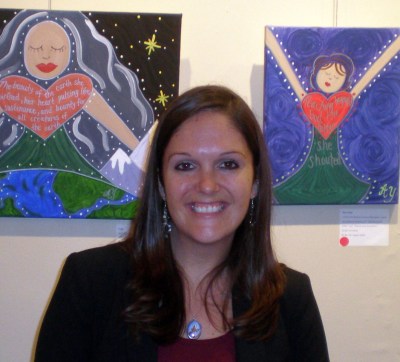 Of all my Holy Women Icons, Mother Teresa joins Blessed Mary in being one of the most familiar, and often the one least cited for the cause of feminism. Joining

 Feminism and Religion