Reform? Progress? By Elise M. Edwards

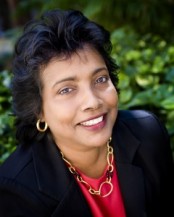
Elise EdwardsIn my class yesterday (a survey of Christian thought and practices), I was lecturing about monastic life in the Middle Ages. Among other points, I mentioned that medieval religious orders provided settings where women could be educated and assume leadership roles (primarily among other women), thinking of Hildegard of Bingen (1098-1179) who was the Abbess of a monastic community in Rupertsberg. Other women medieval writers who developed influential writings, like Mechtild of Magdeburg (ca. 1210-1282) and Catherine of Siena (1347-80), belonged to tertiaries or third orders, which were monastic community for laypersons. This part of the lesson emphasized that monastic reforms around the 12th century opened religious orders more extensively to women and laity.

Still speaking of medieval reforms, I displayed a picture of Francis of Assisi on the screen at the front of the room. I mentioned that Francis was concerned about the poor and the animals and that he has inspired some contemporary Christians, including the current pope who took Francis as his name. We talked about how both St. Francis and Pope Francis are seen as reformers.

Because earlier in my lesson I’d made a point of speaking of women’s experience, when I spoke about the Pope’s name as a possible sign of renewal or reform, Gina Messina-Dysert’s question “What about the women?” came to mind. In her recent post, she responded to the Pope’s exclusion of many issues that concern women in his address to the US Catholic Bishops. Like Gina, I applaud many of the Pope’s reforms but I am confused about how rarely he is criticized for maintaining the long-held Catholic view that disallows women to be ordained as priests.

Let me provide an example: During the Pope’s visit to the US, one of my students described Pope Francis as “very liberal.” When I interjected that he has not supported the ordination of women, the student laughed and said the pope would be accused of heresy for supporting that! While that may be true, my more immediate concern was that in a classroom of students who are mostly supportive of women in ministry, the Catholic restrictions on the priesthood were seen as a part of the tradition not worth challenging. Why is it that preserving male leadership is excused as a part of the tradition while preserving exclusive marriage practices is something to be challenged? They are interrelated.

As we know from blogs and social media sites, many people who support LGBTQ rights were upset over news stories about the Pope meeting with Kim Davis, the county clerk who was jailed for refusing to issue marriage licenses to same-sex couples. Certainly such a meeting is disturbing to same-sex marriage advocates. But is it surprising? At least one womanist ethicist I know, Eboni Marshall Turman, pointed out in a Facebook discussion that the church has long since been public in its support of male privilege and heteronormativity. My intent is not to single out Catholicism for sexist practices. When recently asked about women’s ordination and leadership in Baptist churches in my own town of Waco Texas, I had to admit that even though ordination of women is permissible and practiced in many of the churches, the number of churches that have called women to the position of senior pastor is shockingly few.

My point is this: When we find teachings in particular religious traditions that justify the exclusion of one group, we should expect to find justifications for excluding other groups, too. In the same discussion I referenced above, Eboni Marshall Turman said, ”Oppressions are compounded and intersectional. If they come for me, it is just a matter of time before they come for you. This is basic theological ethics.”

The experiences of varied groups are not the same; our oppressions and marginalizations also differ. But practices of exclusion are constructed on the same logic that values some persons (the in-group) more than others (the outsiders). Therefore, feminists have a responsibility to advance the well-being and interests of other groups (besides women) who are being marginalized.

Another reason for this advocacy is that many women are included in other marginalized groups. To ignore the intersectionality of oppression is to deny its pervasiveness and the realities of women’s lives. This is why feminists of color are often critical of white feminism. (The recent debate over the photo shoot for the movie Suffragette is a new instance of a persistent critique of white or mainstream feminism. See Rebecca Carroll’s piece on “Suffragette’s Publicity Campaign and the Politics of Erasure”).

To counter the limitations of our own experiences and be consistent in our pursuit of equality, feminists should intentionally cultivate practices of solidarity and coalition-building in our work. I, like everyone else, am often unable to see the inconsistencies in my own practices and teachings without others’ experiences to expand my view. This is one reason I value this Feminism and Religion community. Thank you for the wisdom and practices you offer from your own religious traditions and your own experiences of marginalization. You make me a better feminist through your writings and comments.

Perhaps working together, we can bring about religious reforms that our descendants will recognize in the centuries to come.

Elise M. Edwards, PhD is a Lecturer in Christian Ethics at Baylor University and a graduate of Claremont Graduate University. She is also a registered architect in the State of Florida. Her interdisciplinary work examines issues of civic engagement and how beliefs and commitments are expressed publicly. As a black feminist, she primarily focuses on cultural expressions by, for, and about women and marginalized communities. Follow her on twitter, google+ or academia.edu.

Embracing the Hebrew Priestess by Jill Hammer

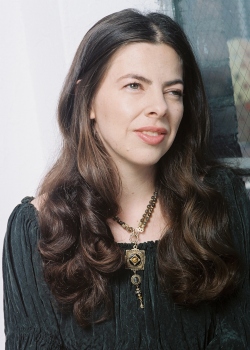
Jill HammerEven after I was ordained as a rabbi, I longed to be a priestess. The spiritual leadership I wanted most was less about leading traditional Torah study and prayer (though I’d done plenty of that) and more about immersing in the ocean, creating new rituals, reading kabbalistic sources on Shekhinah (the divine feminine mentioned in Talmud and kabbalah), or interpreting legends about women. My deepest desire was for there to be a school for Jewish women on a priestess path.

Ten years ago, my dream came true. In 2005, Taya Shere and I founded the Kohenet Hebrew Priestess Institute to bring to life the traces of the priestesshood we were finding in the Bible, in Near Eastern archaeology, and in Jewish lore and history. In Kohenet sacred space, we explore the women of spirit among our ancestors, resist their erasure, and bring forward the practices that were sacred to them. We discover in these forgotten teachings the mysticism of the material: the understanding that in our lived experience on the earth we are closest to divinity. At Kohenet, we meet the submerged version of deity called Shekhinah, Imma Ilaah, Elat, Goddess, Divine Mother, and understand why she has been so feared and rejected, yet also has been a deep and lasting part of our tradition as Jews.

The Kohenet Institute has ordained four classes of women and now meets twice a year for training weeks at the Isabella Jewish Retreat Center in Falls Village, Connecticut, and at Ananda Meditation Retreat in Nevada City, CA. We and our students run workshops and services in venues like Limmud UK and the Parliament of World Religions, as well as classes at retreat centers, local synagogues and women’s centers. Days at Kohenet are filled with spiritual exploration: prayer in the feminine in Hebrew and English; ceremony to grant new names or celebrate elders or heal the sick; making incantation bowls in the style of ancient Babylonia; slideshows of ancient priestess and Goddess art from the lands of the Bible; drum circles and labyrinths; stories of witches dueling with Talmudic sages, immersing in the lake before the Sabbath. At Kohenet, we celebrate and embody the sacred feminine, and prepare our students to lead ritual in an earth-based, embodied, feminist way that is rooted in Jewish tradition. Continue reading “Embracing the Hebrew Priestess by Jill Hammer”

Painting Herstory: Our Lady of Silver Lake by Angela Yarber

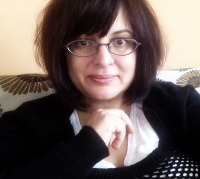
angelaIt has become my new routine during the first phase of my queer little family’s year-long journey. After completing my chores, I run along the trails surrounding Silver Lake and once I’m thoroughly drenched in sweat, I grab a book and push our enormous 15-foot canoe into the frigid waters of the little lake we’re calling home for three months. With a smile that has yet to wipe off my face, I paddle fiercely. I’m typically the only person on the lake.

It’s a steep mile hike from the trailhead, and we’re the only ones “living” here for the summer, so my giant green canoe ripples the silvery waters in solitude. Once I find the right spot, I stuff my life vest behind my head and cozy down into the belly of the canoe, book in hand, goofy grin still spread across my flushed face. In the warmth of the sun, I read. In the belly of the canoe, I drift into the history of the lake, the unwritten annals lapping alongside my rocking boat, the portions on record filling the book in my sun-warmed hands.

The author who wrote the history of Silver Lake, William Powers, hiked up with several autographed copies in his rucksack several days after our arrival. He’s a nice man who wrote a nice book. There’s nothing like reading about the history of a place while in the place. Hear me say this clearly: there’s nothing wrong with the nice book this nice man wrote. The stories of Frank Chandler feeling a call from God to build a place for religious camp meetings along Silver Lake’s shores are fascinating, an interesting part of the history of camp meetings that filled the Awakenings throughout the United States. But as I read about Frank Chandler and the various men who the logged roads hikers now hike and built the buildings that haven’t existed for years due to fire, I couldn’t help but notice who was missing. Continue reading “Painting Herstory: Our Lady of Silver Lake by Angela Yarber”

Holy Women Icons on Tour: A Motley Crew of Unlikely Saints Hits the Road by Angela Yarber

angelaSeveral months ago I introduced one of my newest Holy Women Icons with a folk feminist twist, the intrepid traveler and passionate nomad, Freya Stark. In writing about her fearless journeys to far-flung places women only dreamed of visiting in the early 1900s, I also shared that my wife, toddler, and I have decided to follow her fierce lead into the seemingly unknown. In less than one month, our journey will begin as we spend an entire year volunteer traveling throughout the United States. We have sold our home. We finish teaching summer courses at the end of the month. And in Freya’s courageous words, we have decided that “it is the beckoning that counts, not the clicking latch behind you.” The beckoning is calling us to live more gently with the earth, do more justice, and to create a more peace-filled world. And we have the privilege of radically altering our lives to follow this beckoning.
This time next month, we’ll be settled into our little pop-up camper in the Green Mountain National Forest of Vermont where we’re volunteering for three months. In the fall, we’ll do the same in the southernmost part of the Shenandoah Valley. December will find our trusty camper—aptly named “Freya Stark”—chugging east to west across the southern parts of the United States, parking in the San Francisco Bay Area so that we can fly to Hawaii to volunteer on an organic farm and lead yoga retreats for the first three months of 2016. Continue reading “Holy Women Icons on Tour: A Motley Crew of Unlikely Saints Hits the Road by Angela Yarber”

Thoughts on Nuns and Sisters and Perpetual Indulgence by Marie Cartier

helen prejean
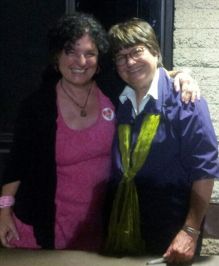
Marie and Sister Helen Prejean

The word “nun” can conjure images from traditional to irreverent in terms of gender. The gender of those who call themselves nuns can range from feminine to masculine, from a woman who looks like a woman dressed as a woman, a contemporary sister or “nun,” who does not wear the traditional black habit, but contemporary female clothing and perhaps a short veil or “wimple” and a cross around her neck; to a man dressed as nun in extremely sexual female garb, a “drag queen” nun; to the traditionally dressed nun, whose habit is a full-length black gown, and full veil covering everything but her face and hands, who means to conceal gender and become something else – a “nun.”

The physical space of “nun” then has opened the realm of gender for women, and recently men, since the creation of the category “nun” was established with the first order of female religious. Cloistered orders of women began in the fifth century, with the more liberated orders of “sisters” forming in the sixteenth century. The Encyclopedia of Catholicism lists approximately twelve Roman Catholic religious orders of sisters, or as they are commonly called, “nuns.” However, this terminology should be amended to allow for the difference between “sisters”- non-cloistered orders, and “nuns”- cloistered orders. Most traditionally the word nun officially refers to Roman Catholic nuns – those who take solemn vows of chastity, poverty and obedience, and live cloistered lives of silence, and prayerful meditation. Choir nuns, such as that of the famous convent headed by Hildegard de Bingen, (1098-1179), German nun, mystic and composer, chant the Liturgy of the Hours daily – consisting of a set order of readings and prayers, including Morning, Evening, Daytime and Night Prayers. Continue reading “Thoughts on Nuns and Sisters and Perpetual Indulgence by Marie Cartier”

This Be My Altar by Lori Tiron-Pandit

LTP Feb2015My grandmother took me to church often when I was a child. It was not my favorite activity. The village church, surrounded by the graveyard, was cold and gloomy, and the priest demanded too much undue reverence, I thought. As a consequence, I used to spend whole days devising plans of sudden sickness and disappearance acts before church time.

One summer, I must have been around seven or eight, my grandmother told me that we would be going to a monastery in a neighboring village, and there was nothing I could do or say to get out of it. I felt betrayed by fate and bereft of hope.

When we reached the Vladimiresti Monastery, I found myself in front of a tall fence of thick, whitewashed walls, over which trailed heavy clematis and morning glory vines. It was a beautiful day, with a perfectly clear sky and balmy weather, and that first image of the monastery was so perfect that it seemed almost fake, like a movie set. Continue reading “This Be My Altar by Lori Tiron-Pandit”

Painting Lottie Moon, Redeeming Lottie Moon by Angela Yarber

angelaI never imagined I’d paint her. Though I was not raised in church, I have vivid memories of worshiping in Southern Baptist Churches, churches where women’s voices were not permitted behind the pulpit, churches where women could never dream of ordination, churches that damned LGBTQ folks to hell with a pound of a fiery fist on a well-worn bible perched atop an angry pulpit. Canonize a Southern Baptist woman into the sainthood of Holy Women Icons? No, thank you.

Though I am an ordained Baptist minister myself, it’s important to remember that there is a vast spectrum of belief and practice when it comes to the Baptist church. Because our polity is non-hierarchical and we are anti-creedal, one cannot easily say, “All Baptists believe ______ or all Baptists practice _______.” Whether you are as conservative as the Southern Baptist Convention or as liberal as the Association of Welcoming and Affirming Baptists, we all share some core Baptist distinctives: the separation of church and state, believer’s baptism, the autonomy of the local church, freedom of conscious, and the priesthood of all believers. Learning of these distinctives as a young feminist searching for a faith to call my own, I was immediately drawn to the core Baptist tradition. They reject hierarchy. All are supposed to be equal. It is up to the individual conscious to determine what one believes. And it is up to the individual church to determine how that particular community of faith will practice those beliefs. It is feminist to its core. Southern Baptists feel otherwise, which is why they refrain for ordaining women and claim that they should be submissive to their husbands.

Continue reading “Painting Lottie Moon, Redeeming Lottie Moon by Angela Yarber”

Stop. Drop. And Pray. by Valentina Khan

543296_10151140607043082_1192980077_n

The other night, it was close to 11:00 pm and I was finally enjoying my own little ‘midnight’ snack and a healthy dose of reality TV when I got a phone call from a cousin I haven’t heard from in quite some time. He is in the East Coast and it seemed too late for a leisure phone call from him. So I answered in a panic, yet, all he wanted was to say “hi” and to talk a little bit about the obligation of a Muslim to pray the five daily prayers. OK, this is odd, I thought, but I guess I could entertain this topic for a few minutes. Might be better for me than the junk TV I was winding down to anyway.

We chatted for a few minutes and he started to get very heated about the requirement of the five daily prayers.  To back up a little, let me paint a quick picture of this eccentric cousin of mine. He is smart.  A New Yorker.  Middle-aged. He has studied at prestigious universities, has traveled the world, and even delved into religion so much so that he used to give sermons on Fridays, the holy day of the week for congregational prayer in the Muslim tradition. His main question for me, “Do you really believe in the flying white horse story?” Continue reading “Stop. Drop. And Pray. by Valentina Khan”

The Nuns Jumped Over the Wall by Dawn Morais Webster

Dawn Morais Webster, the Pope off to his summer palace, Castel Gandolfo. He tells the world he will now become just a “humble pilgrim.”

One of the most prized dishes in Chinese cuisine is called “The Monk Jumped Over the Wall.” The name comes from the folk belief that the monk was unable to resist the aroma of this delicious dish and jumped the wall in search of it.

Reading Jo Piazza’s If Nuns Ruled The World: Ten Sisters on a Mission, it is clear that these nuns, and others like them, have been drawn by people’s needs, to jump the walls of patriarchy and prejudice.

And there’s no putting them back behind those walls.

Just ask media maven, Sr. Maureen Fiedler: “After all, Jesus was a feminist, and we claim to follow him.”

One nun, though, has accepted being put behind bars for literally breaking through the fences around the nuclear facility in Oak Ridge,Tennessee. Sr. Megan Rice is unfazed by clerical disapproval.

“I don’t believe in excommunication,” she says, “because I don’t see the institutional Church as the real Church.” Continue reading “The Nuns Jumped Over the Wall by Dawn Morais Webster”

Lessons Learned from the Atheist Alliance of America Convention by Andreea Nica

Andreea Nica, pentecostalismThe Atheist Alliance of America National Convention 2014 held earlier this month in Seattle, Washington granted me the opportunity to interview, converse with, and listen to renowned speakers, comedians, and influential figures in the atheist movement including the likes of David Fitzgerald, Dr. Steven Pinker, Dr. Rebecca Goldstein, Richard Haynes, and Dr. Richard Carrier.

This year’s convention drew in approximately 100 attendees throughout the weekend, according to Amy Monsky, Executive Director of Atheist Alliance of America (AAA). Monsky states that the AAA National Convention has several primary goals including: to bring atheists together; to hear great speakers; to network and socialize; and to raise awareness through education.

The family-friendly event was comprised of educational and activist-oriented sessions, debate, a comedy show, VIP non-prayer breakfast, film by Jeremiah Camara, “2014 Richard Dawkins Award” banquet, and a Sunday outing to Snoqualmie Falls and Chateau Ste. Michelle Winery.

Below is an overview of the sessions I attended, the conversations I had with presenters and experts, and the interviews I conducted. Continue reading “Lessons Learned from the Atheist Alliance of America Convention by Andreea Nica”