I want to be a lonely mystic
dwelling in devotion,
constantly dialoging with divinity,
drenched in wonder,
and doused with delight
in knowing my place
in the family of things.
I want to weave spells
from wind and wildness,
soak in solitude,
and excavate the depths
of my own soul.
I want great expanses of time
to be and to listen,
to feel and know,
each step a prayer,
ceaselessly walking with the goddess.
I crave the clarity of insight
dropping with a flash
into my open hands,
the clear space of listening
with no other voices in my head.
I want to pray with my eyes wide open
from sunrise until sunset,
never missing an opportunity
to commune with the sacred,
to feel myself enrobed,
ensconced,
ensorcelled,
enspelled
with divine wonder, curiosity,
awareness, and understanding.
I want to light candles
and speak spells,
weave magic from the ordinary
and listen,
always listen,
to the whispers of my heart.
I want a chamber of quietude
with only crows and owls
for companions,
the soft eyes of deer
in a wooded glade
my witnesses,
steam rising from my broths and brews,
weeds and roses twining together
into the medicine of my spirit.
I want to be quiet and contemplative,
waiting in the shadows to spot the magic,
to feel the power,
to see through to the threads of things.
I want to feel still and holy
grateful and graceful,
to be an enspirited beacon
embodying my prayers.
Instead,
I am a mama mystic
I nestle children against my shoulder,
my nose resting in blonde hair and needs,
mediate disputes,
knead bread dough,
make dinner,
fold laundry,
read books,
find filaments of magic
wound around the smallest things,
claw solitude from scraps,
and weave small spells
and bits of enchantment
from moments of magic
that wander by my full hands and head.
I gently coax quiet poems
from full spaces,
let prayers wind up over days,
nosing patiently into the cracks
between my deeds.
And, with my hands in the dough,
or my nose in the hair,
or the hand in mine,
I am drenched in devotion,
dialoging with divinity,
each step a prayer,
and knowing my place
in the family of things.
This is where the goddess dwells
right through the middle of everything,
in the temple of the ordinary.
Here, she says,
this too,
is holy,
sacred,
true,
and it needs you,
not that bloodless,
imaginary,
perfect priestess,
of silent
secret praise.
This is the real work of living
and it shows you who
you
are.
*“Family of things” phrasing from Mary Oliver.
Molly Remer has been gathering the women to circle, sing, celebrate, 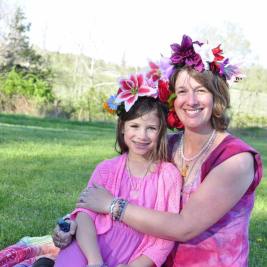 and share since 2008. She plans and facilitates women’s circles, seasonal retreats and rituals, mother-daughter circles, family ceremonies, and red tent circles in rural Missouri. She is a priestess who holds MSW, M.Div, and D.Min degrees and wrote her dissertation about contemporary priestessing in the U.S. Molly and her husband Mark co-create Story Goddesses, original goddess sculptures, ceremony kits, mini goddesses, and jewelry at Brigid’s Grove. Molly is the author of Womanrunes, Earthprayer, the Goddess Devotional, She Lives Her Poems, and The Red Tent Resource Kit and she writes about thealogy, nature, practical priestessing, and the goddess at Patreon, Brigid’s Grove, and Sage Woman Magazine.


 Every morning I walk to the river in the velveteen hour between the vanishing blue night and the coming of the first scarlet, pink, lavender, purple or golden ribbons that stretch across the horizon. Sometimes clouds with heavy gray eyelids mute first light. Either way all my senses except that of sight are on high alert; a deep peace embraces me in the dark. My body knows the way. I murmur to the willows as I pass through the veil and under their bowed bridge. Their response is muted, a song beneath words.
 For almost 35 years nature has been my sacred place. As an 8-year old, I started to pray to Mother Earth even though the protestant tradition in which I grew up only recognised ‘God the Father’. I went outside in my inflatable rowing boat to seek solitude (as an only child in a quiet family!) on a small island in the lake of our local park. I practised rowing and walking quietly to not break the sacred silence. I collected herbs to brew infusions in my little thermos flask with boiled water brought from home. I sung to the moon, and danced my love for all creation back through my moving body. Over the last 15 or so years, I spent many days and nights at Neolithic monuments, dreaming in ancestral burial mounds, time traveling in stone circles in Cornwall, Wales, Scotland, England, Ireland and Brittany. This nature-based practice evolved naturally, and later incorporated my training with the Scandinavian Centre for Shamanic Studies and the School of Movement Medicine. Nature is where I reconnect most easily with the Sacred, and listen to the whispers on the great web of life in which all of nature is a great teacher. Nature, for me, is a strong place of prayer, solace, awe, reverence, gratitude, joy, guidance, reconnection, healing and transformation.



 Artwork and sustainable agriculture are the two threads of my professional life. They mingle fruitfully beneath the surface as I sift through remaining evidence of ancient worlds, trying to sense how people of lost cultures met basic survival needs and also how they responded to the very human hunger for beauty, meaning, and story.
 Yesterday at the Mid-Summer Turning I took a woodland walk in warm summer rain and then spent a quiet day at home. I visited with a few tadpoles and green frogs that inhabit my vernal pool, sat on the bridge and listened to the flow of water over stone at a woodland waterfall, a place so dear to my heart. I also spent quiet time reflecting…
 Root Woman
 Warning…TMI ahead. I’ve thought a lot about writing this piece. I believe in the spirit of sharing experience; learning from one another—recognizing our own stories and finding we are not alone—when someone is willing to speak her truth. My gratitude to
  Feminism and Religion