Apaḥ and the Nāga: Water and the Snake by Lenore Lowe

Image © 2024 Compilation of Lenore Lowe and Freepik.com

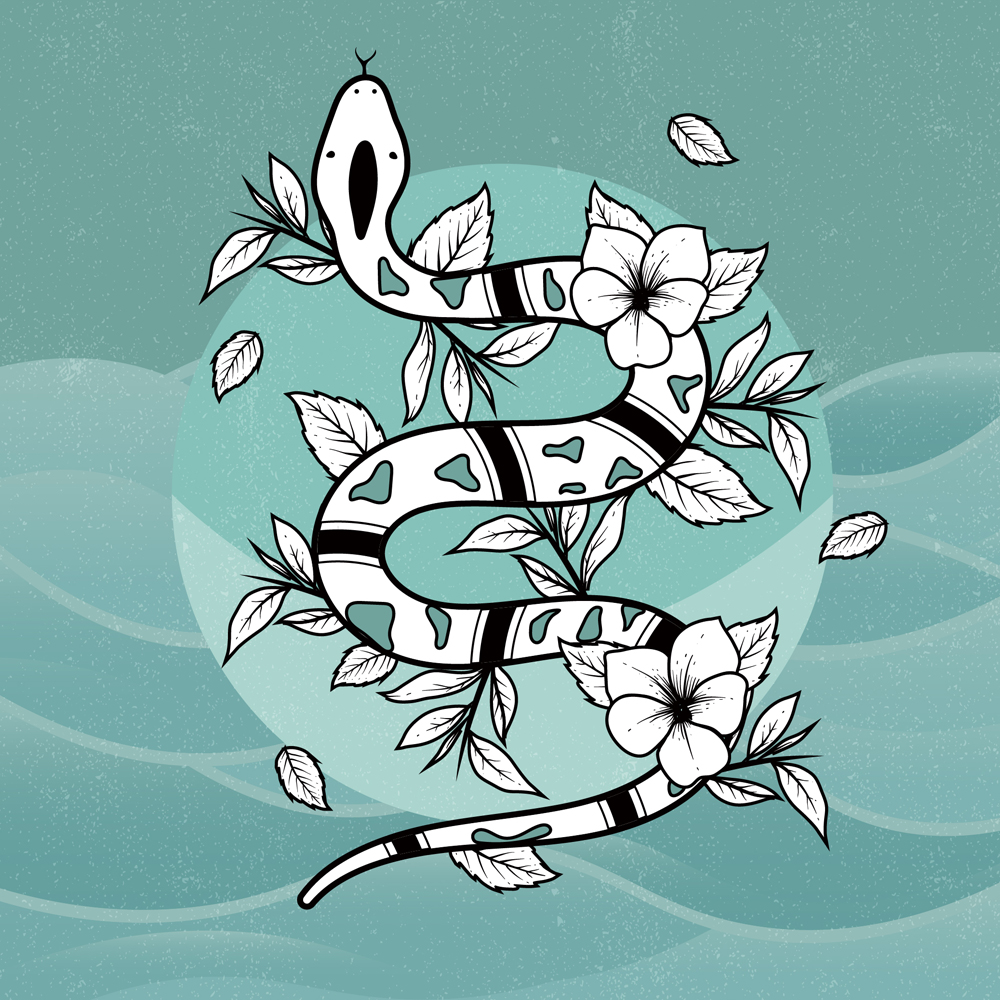
As I write this, water has slowly leaked in my front yard for a day. It has already turned what was dry and brown to moist and green. It seems fitting on the day of Nāga Pañcamī (worship on this particular 5th day of the half moon). It’s fitting that water—apaḥ—has gently made its way to the surface. It has wound around pipes, rocks and roots like a cobra—nāga—to come up to show itself. Though, there are financial challenges in fixing the leak, I can’t help celebrate it as a blessed omen of goodness to come.

            After all, it’s arrived for this extra auspicious day in the most favourable month of the vedic calendar. I admit some of my frivolity may be from feeling better on my 5th day of covid. (The significance of the number 5 is not going unnoticed: linked to Patañjali and the great Yoga Sutras.) My mind too feels like it’s been making its way back to the surface. The seepage also keeps bringing me back to thoughts about the watery world of emotions, and new depths of emotions seem to be rising up in me. They feel deeply personal and universal at the same time. The celebration is devotional, the auspiciousness of having this extra time off of work to bring roses to the Mother.

Continue reading “Apaḥ and the Nāga: Water and the Snake by Lenore Lowe”

3 Taoist Secrets for Embodying your Life

Taoism is an ancient Chinese philosophy and spiritual tradition that offers a unique perspective on life, existence, and human experience. Where many religious practices aim to transcend and sometimes even punish the body, Taoism cultivates a deep connection with our physical self in ongoing relationship with nature around us. 

This resonates with my own experience, in which I see the body as starting point and place of return for everything we do in life. Leaving the body in order to meet spirit or the divine has never made any sense to me. 

In this article I’ll highlight a few elements of Taoism as an embodied philosophy, specifically zooming in on principles and practices that promote holistic wellbeing and inner peace.

Continue reading “3 Taoist Secrets for Embodying your Life”

Paradigm Shifts: Playing the long game

You’re probably tired of hearing it… We live in a time of major change. But hardly anyone acknowledges that change doesn’t happen overnight. 

In anthropology and ritual studies, the state of change between the old and the new, is called liminal or threshold space. It is the in-between time. I believe we are living in such a time now. Our familiar frames of reference are crumbling, yet there are no clear new ones in place yet. 

In this post I reflect on a few aspects of this long-dance with the unknown.

Continue reading “Paradigm Shifts: Playing the long game”

Activate your Body to Navigate Overwhelm

We live in a time of radical change, in a steam cooker of accelerated alchemy. No wonder most of us struggle with chronic overwhelm.

Beliefs, habits, thought patterns and organisational structures don’t change overnight, and we need ways to boost our resilience in the long arc of paradigm shifts. How can we look after ourselves during this personal and collective dance of change?

In this post I reflect on the connection between movement and health, breathing, and the role of our nervous system. I propose 5 simple steps to minimise and transform overwhelm when it happens.

Continue reading “Activate your Body to Navigate Overwhelm”

How Not to Join a Cult: (It’s not as easy as it seems)

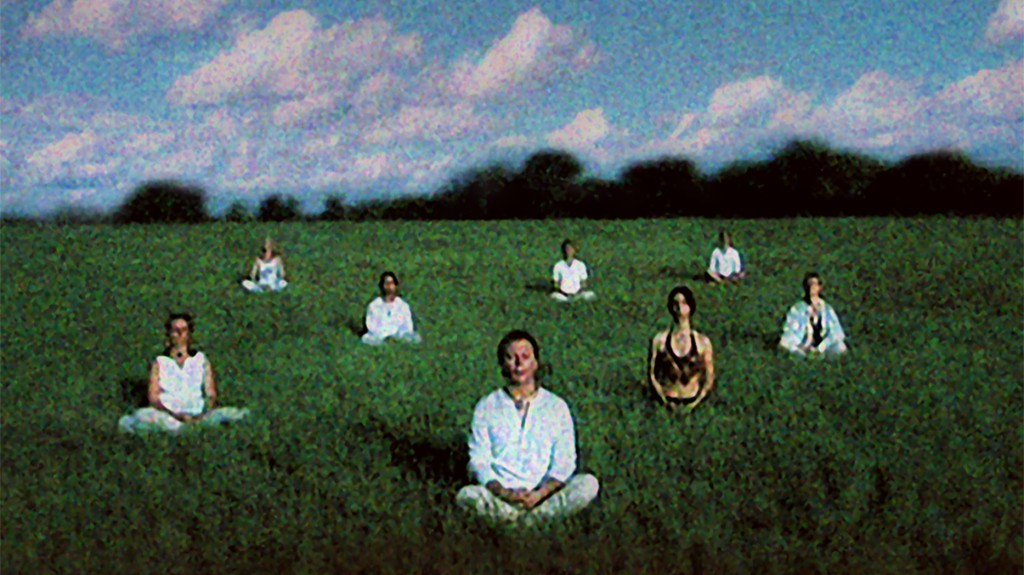
A still from Will Allen’s 2016 documentary “Holy Hell.”

Many, many moons ago, when I was still living in England, my husband and I thought it would be a wonderful idea to join a local meditation group.

Meditation, after all, is rightly praised for conferring countless benefits for body, mind, and soul. Renown teachers such as Pema Chodron, Jon Kabat-Zinn, and Jack Kornfield have popularized the idea of Buddhist-inspired meditation being just what stressed Western people need to live more joyfully and mindfully.  

Alas, Pema Chodron, Jon Kabat-Zinn, and Jack Kornfield were all on the other side of the Atlantic. In this pre-Zoom age we had to make do with what was available to us locally. So, we went to a free taster evening led by a Western Buddhist monk who seemed like a kind and well-spoken young man. The venue was pleasant, the participants were friendly and welcoming. The meditation practice itself, a visualization of breathing white light into the heart space and breathing out the gunky stuff, created a heightened mood and expansive state of mind. In this altered state, we listened to the monk speak about Buddhist philosophy. I didn’t agree with everything he said—he was a bit too ascetic and world-denying to my taste. Even so, the meditative experience itself was so enjoyable that we became regulars and befriended the other regulars. Not only did we attend the weekly meditation sessions, but we also joined the group activities, such as fundraising walks and other events.  

Fast forward a few months. Our teacher asked if I would lead a few sessions, as he had teaching commitments elsewhere. At first, I was honored. But then as I understood this was meant to be a regular thing and not the one off, it began to seem very strange. In most traditions, students study meditation for considerably longer than a few months before they are asked to lead classes. I wasn’t even an actual Buddhist and had never taken refuge vows.

Yet not only was I asked to lead the meditation, I was expected to lecture on Buddhist philosophy. I was told to purchase a book by the monk’s spiritual leader, study each chapter, and talk about the message. I learned that in this school of Buddhism, people were only allowed to read books written by their spiritual leader and not by other Buddhists of any other school. Some of the stuff in this book just seemed off. Any act of self-assertiveness or personal agency was denounced as “self-cherishing,” supposedly a dangerous obstacle to enlightenment. However, shame was celebrated as good thing as it helps herd a straying student back to the One True Path. This caused my alarm bells to go off big time.

I also learned that this branch of Buddhism preached a fanatical opposition to the Dalai Lama. They worshipped a protector deity called Dorje Shugden, shunned as a malevolent spirit by other schools of Tibetan Buddhism. My teacher was urging people to picket and protest the Dalai Lama’s upcoming visit to the UK.

My head exploded. To think that my innocent desire to practice meditation in community had landed me in some bizarro spirit-worshipping, Dalai Lama-hating cult!

My online research then revealed that the New Kadampa Tradition, the institution behind the seemingly innocuous meditation class I joined, was, in fact, a Chinese-funded cult with the express agenda to undermine and discredit the Dalai Lama.

The NKT is a new brand of pseudo-Buddhism, made in the United Kingdom. Very keen on fundraising, they have opened numerous meditation centers and residential centers across the UK and across the world. Tibetan Buddhists from actual lineage traditions won’t go near them.

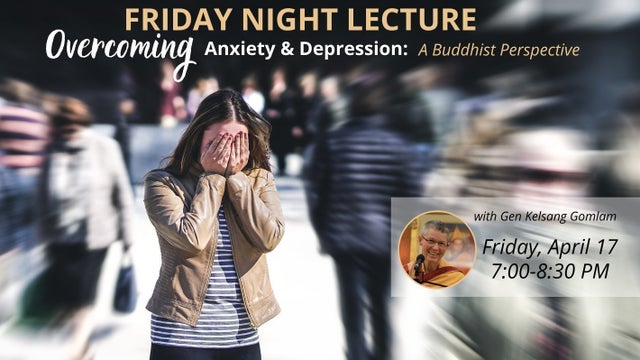
An NKT advertizing flyer. It might look innocent, but . . .

I was lucky. By the time I learned how toxic this group was, my husband and I could get out unscathed. We had invested some time and money, but weren’t deep into the organization. Others weren’t so fortunate. Seduced by the feel-good meditations and the lure of enlightenment, flattered to be asked to teach, other people got roped into opening residential centers, volunteering their time as cooks at the NKT cafes, or even making monastic vows to the organization. The last option is a poverty trap. The monks and nuns subsist on social benefits from the UK state while spending all their time volunteering to teach, fundraise, and run the residential and retreat centers.

Here are some survivor stories:

Is the New Kadampa Tradition a Cult?

Ex-Nun Carol McQuire’s story

If I had it to do over again, I would have done my online research before attending the first class. This is what I now recommend to everyone joining a spiritual group or even a harmless-sounding meditation evening. Google the name of the organization or the leader and then add the words “cult,” “controversy,” or “criticism” in the search box and see what comes up.

As well as the danger of cults, there is also a very real problem of women and girls being sexually abused in some spiritual communities. We’ve all heard countless stories about high-profile Yoga teachers and gurus being found guilty of sexual misconduct and abuse.

Author, activist, and feminist Yogini, Uma Dinsmore-Tuli has started “Yoni Shakti: The Movement” to protest this abuse. The goal, as stated on the website, is: Eradicate Abuse of Women in Yoga and Reclaim Yoga as a Tool for Healing and Justice. You can join the movement and download the information packet for free.

Uma has created a comprehensive 13-point checklist of warning signs to let you know when you have accidently stumbled into a toxic group. You can access the list below. If I’d had this list way back when I joined that meditation group, I would have been able to extricate myself a lot earlier.

The problem with many gurus and spiritual teachers is that they encourage seekers to look for power and spiritual meaning outside themselves–in the guru or the group. As Yoga Nidra teacher and author, Tracee Stanley explains in a video conversation with Uma Dinsmore-Tuli, a good teacher will point you to the teacher within your own heart and teach you to find Source within your own soul, as women mystics of every faith have done throughout the ages. No ethical spiritual teacher will ask you to “outsource” your power and your center to another person or to a group.

Meditation and Yoga can and should be liberating in every sense of the word. Let’s work together to ensure that the world of Yoga and meditation is a safe refuge for every seeker.

Happy Holidays!

Mary Sharratt is on a mission to write women back into history. Her acclaimed novel Illuminations, drawn from the dramatic life of Hildegard von Bingen, is published by Mariner. Her new novel Revelationsabout the mystical pilgrim Margery Kempe and her friendship with Julian of Norwich, is now available wherever books and ebooks are sold. Visit her website.

Women, like Goddesses, Come in All Colors, Shapes, and Sizes…by Vanessa Soriano


I wish I could have gotten this phrase tattooed on my arm when I started the serpentine journey into womanhood.  Like most of us, growing up, all I ever saw in media were thin female bodies with impossible proportions.  As one article put it:

Although body size and weight perception differ across race and ethnicity, women in western society are subject to images of women as not only thin, but also athletic and toned, with small waists, large buttocks, and large breasts, a body type that is largely unattainable.  Because of this ideal, all girls and women typically have weight concerns that ultimately shape body image, satisfaction, and appreciation. Continue reading “Women, like Goddesses, Come in All Colors, Shapes, and Sizes…by Vanessa Soriano”

Nourishing Your Caring, by Molly Remer

Take time 60107979_2326071390938403_2921363486892097536_o
to nourish
your caring.
It is needed.

Last month it was raining heavily on a Saturday morning and I spent time coloring letters to fairies with my younger children and baking a cake. Before I knew it, the day had slipped away into the rain and I didn’t get to make my daily visit to the woods behind my house as I like to do in the morning. While the things I did instead were fun and loving, I found myself telling my husband, once again, that I am feeling burned out in my life in general and like I’ve lost my caring. I sometimes worry that I don’t care anymore, that I’ve used up my care, my inspiration, my passion, that I’ve fueled magic for others for so long, that my own has evaporated and I’m finished, extinguished. I listed off the things I need to refuel my soul and restore my care so that I can be there for others, for our work. My list was simple and short and my husband pointed out that I get the things on it almost every day:

  1. Go to the woods.
  2. Write and journal.
  3. Walk and discover things.
  4. Create/draw/take pictures.
  5. Read.

I need to nourish my care, I tell him, because I can’t stop caring.

Caring is what holds life together.

What do you need to nourish your caring?

This year, I have found myself struggling with recurrent episodes of feeling like I don’t care. I feel careworn, care-overloaded, care-burned out, care used-up. Sometimes I even feel like I actually can’t care anymore, like all my care is used up, spent, extinguished, exhausted. I have also found myself feeling a little sad and wistful remembering how much I used to care, about everything, but at times I also feel liberated by owning the “don’t care” sensation. Sometimes it sets me free. The world is stained, strained, and brittle from so much lack of care from so many people. We must keep caring, we must care, even when it is a strain. I suppose the secret may be not to care too much about things that don’t require our care, not to overload ourselves with cares that are not our own, or that don’t actually require our attention and are, frankly, quite fine without us and our meddling.

After the month’s Pink Tent ritual with my local circle, a friend tells me that she has been 58639012_2319362924942583_1704575264542949376_o(1)going to yoga class and every time she lies on the floor at the end of class, she thinks of me. I consider this a compliment. If I could be known as a lay-down revolutionary, that would please me. At least two years ago, I put on my list of “100 Things to Do this Year,” to lie on the floor for at least three minutes every day. I have kept this up more or less every day since then, even setting my phone timer for three minutes at the end of my personal yoga practice each morning, so I know I’m actually giving this to myself. I wonder what might change for many of us if we allowed ourselves three minutes a day to lie on the floor? Ten minutes? Fifteen minutes? One hour? Another friend tells me she needs a time out to refill herself until she is overflowing, instead of just refilling her cup a tiny bit and then draining it over and over again. I feel this too. I have the sensation that I been coasting on my reserve tank for at least a year and my reserves are now becoming depleted too. It takes more than three minutes to fill the tank, so that it carries sustained and lasting energy to fuel my soul.
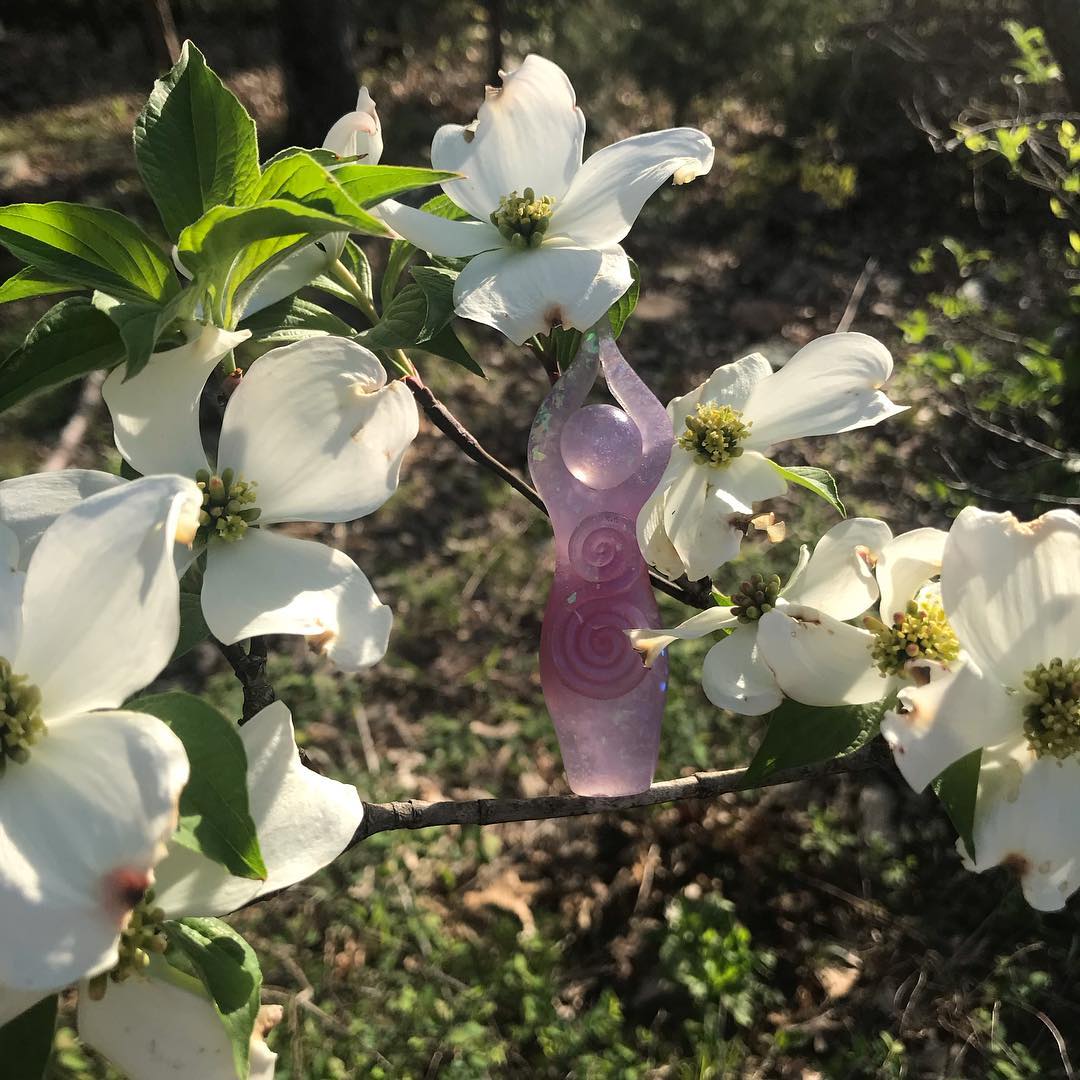
In the woods the next day, I sit with my eyes closed in the sunshine, basking in the warmth. I hear the sound of birds from each side of me, ping-ponging off of one another into the sparkling green air. I listen to them until my mind softens and I am no longer tormenting myself with questions of how to be better, be more, fix it all. I am very still on the rock and when I open my eyes, I see a vulture coasting towards me. It swoops very low, skimming the treetops, possibly checking to see if I am actually breathing there on the stone, it circles once, twice, three times, above my head, at each pass coming very low, low enough that I can see its red head turn from side to side, looking at me.

Hey, buddy, I say. Yes, I’m still breathing!

My floor-lying friend has spent the night at my parents lodge and I go to visit her and to paint with my mom, my daughter, and my friend and her family. My head is throbbing with the headache I often get following an intense ritual and I don’t feel very present, but we paint anyway, the colors swirling and mixing and the freeform nature of the pour painting meaning there are no mistakes, only magic. When we finish, I help her load a weaving loom into her car and we speak briefly about group dynamics and ritual etiquette, and priestessing energetics. As we speak, I look up to see nine vultures this time, circling in the wide sky above the large open field surrounding the lodge building. They dance in the air and they whisper, It is okay to let go. It is okay to soar. It is okay to be free. It is okay to clean things out and away. That is how you can keep caring.

Recipe for Rebuilding a Soul:

1 weary heart61445954_2342336385978570_2975037873578835968_o(1)
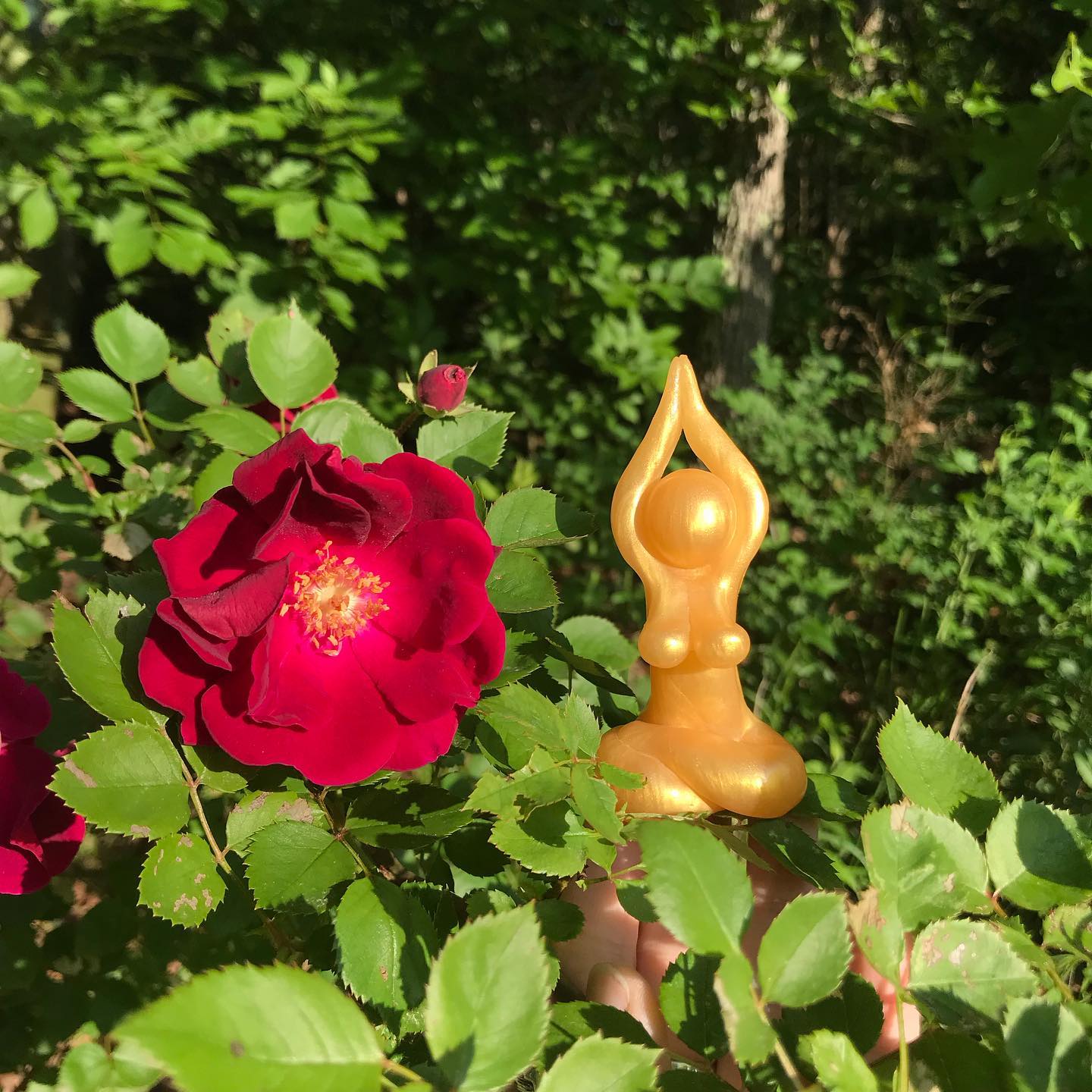
2 open arms
1 large flat rock
As many tall pine trees
as you can find
1 empty book
Many pens
Lots of water
2 scoops of sunlight
An infinity of starshine.

Mix together patiently and wait in the shadows. Let rise in the sun. Let rise with the moon. Check for delight. If still soggy and deflated, expose on a hillside or soak in the ocean. Sprinkle with laughter.

Submerge beneath a stream of inspiration.
Drizzle with dreams and a generous helping of time.
Steep with incredible slowness.
Dust with flowers and need well.
Let become exquisitely tender and soft.

When fully risen, warmed throughout, and glowing with strength and satisfaction, enjoy with a tall glass of moonlight, a side of magic, and a handful of enchantment.

Create regularly for best results.

Additional audio poem: Careworn Soul

This essay is excerpted from my book in progress, The Magic of Place: Rebuilding the Soul Where and How You Are.

Molly Remer has been gathering the women to circle, sing, celebrate, and 61538890_2344169199128622_8199673458095816704_oshare since 2008. She plans and facilitates women’s circles, seasonal retreats and rituals, mother-daughter circles, family ceremonies, and red tent circles in rural Missouri. She is a priestess who holds MSW, M.Div, and D.Min degrees and wrote her dissertation about contemporary priestessing in the U.S. Molly and her husband Mark co-create Story Goddesses, original goddess sculptures, ceremony kits, mini goddesses, and jewelry at Brigid’s Grove. Molly is the author of WomanrunesEarthprayerShe Lives Her Poems, and The Red Tent Resource Kit and she writes about thealogy, nature, practical priestessing, and the goddess at Patreon and at Brigid’s Grove.

Where the Dance Is . . . On Cultivating a Daily Practice by Joyce Zonana

Although Goddess traditions invite us to embrace a world of immanence and change, rather than to seek to escape into transcendence—which some yoga teachings seem to point toward—I have come to believe that the “still point,” is, as Eliot writes, where “the dance is.” In other words, daily practice might grant us the capacity to always move through the world with grace and joy. The mind will be steady as it encounters and embraces the turning world. We will be whole.

jz-headshotWhen I was growing up, I was fascinated to see my father each day recite the morning blessings mandated for Jewish men. While the rest of the household bustled sleepily—my mother in the kitchen, my brother and I taking turns in the bathroom, my grandmother slowly getting dressed—my father, still in his pajamas, would stand in the center of our small living room, yarmulke on his head, tefillin wrapped around his arm and forehead, tallit draped over his shoulders. Using a tattered old siddur he had brought with him from Cairo, he would face the east and begin the ancient Hebrew prayers: “Blessed art thou, Lord our God, King of the Universe . . .”
I never knew then the content of what my father intoned, but I knew how committed he was to his practice: he prayed every morning without fail, from the day of his bar mitvah at the age of eleven (the rabbi in Cairo had decided to initiate him early because he had lost his father as a young child) until he a few years before his death at 84, when he became debilitated by Parkinson’s Disease. Ours was not a traditionally Orthodox Jewish family—we did not observe the Sabbath or keep kosher—but my father’s faithful performance grounded him and all the rest of us, bringing us us to what T.S. Eliot called “the still point of the turning world.”

Continue reading “Where the Dance Is . . . On Cultivating a Daily Practice by Joyce Zonana”

Yoga, Resilience and Learning Self-Care by Marie Cartier

All Photos by Kimberly Esslinger

It is spring and it is warm in California. I haven’t been exercising over the winter because it has been extremely cold for California. I had the bug everyone else had. But, now I am back, and we have just experienced Spring Equinox on March 21st, 2019.

And I am headed back to yoga classes.

Why did I start doing yoga? It’s a good question, since I started as a senior in high school, which would have been 1973. I was a lower middle class kid who had very few resources. I was also from an abusive family, where I was responsible for taking care of my younger five brothers and sisters. This meant I almost always had to come home from school and start peeling potatoes, getting dinner ready for when my father would walk through the door—and hopefully be in a good mood.

I learned to not be around when he walked in that door, because he would take out his anger on whoever was first in his path. I remember thinking this was very smart on my part, and also feeling guilty that I hadn’t imparted this to the other kids. Someone had to be in his path when he got home, and I didn’t want it to be me. I still feel guilty about that—even though as the oldest I was punished physically by him more than the others.

Continue reading “Yoga, Resilience and Learning Self-Care by Marie Cartier”

The Mud and the Lotus: What India Is Teaching Me by Vanessa Soriano

About 5 years ago, I began a consistent yoga practice.  Right around the same time, I started a PhD program in Women’s Spirituality at the California Institute of Integral Studies where I eventually wrote my dissertation on Women’s Spiritual Leadership.  Throughout my studies, I realized that the path of the Divine Feminine is an intricate journey that accentuates the mind, body, soul connection.  The yogic path does the same.  In late 2018, I enrolled in an intensive 5-week 300-hour yoga teacher training in India where I continued my spiritual explorations.  Hindu culture reveres the Divine Feminine and Divine Masculine and yoga is viewed as a pathway into God/dess through the body.  Here’s the first part of the story…

I’m in India and it’s 5:30 a.m. and an hour of pranayama awaits me.  The yogis define prana as the life force that animates the entire body and yama relates to discipline.  The practice of pranayama consists of breathing techniques that aim to control the breath in order to connect to the life force that resides within.  Accessing this life force can invoke feelings of bliss and a connection to the Divine.

Class starts, I’m officially starving, and I haven’t had enough coffee. Continue reading “The Mud and the Lotus: What India Is Teaching Me by Vanessa Soriano”