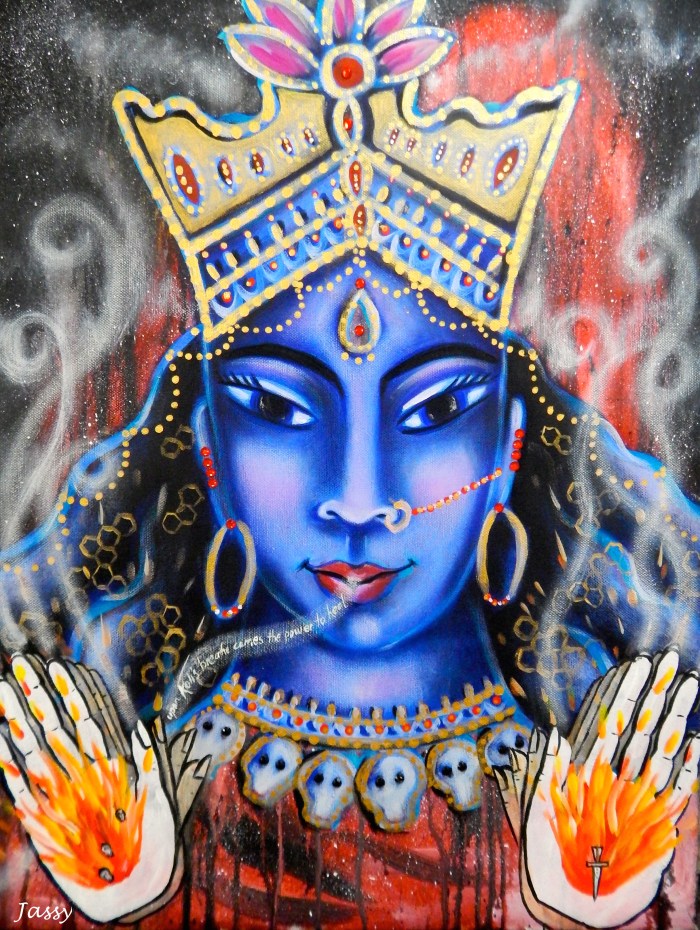
Sky Woman comes to Earth by Sara Wright

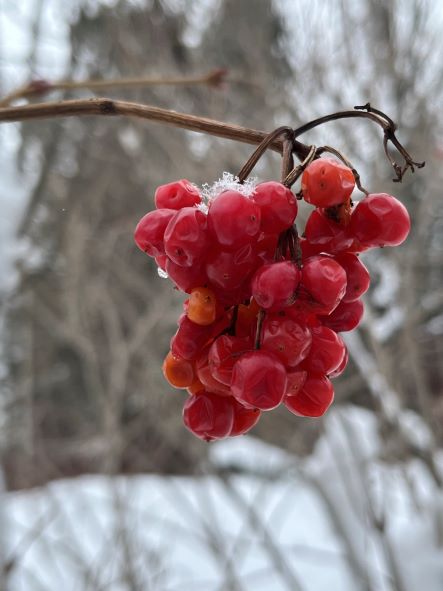
Every twig

is singing

a song of thanksgiving

to Sky Woman

who gifts

steady rain

 nourishing

earth’s parched body.

Cracked ground

softens

 soaks in minerals

and scent

 sensing wonder.

Continue reading “Sky Woman comes to Earth by Sara Wright”

Legacy of Carol P. Christ: Goddess as Love: From Experience To Thealogy

This was originally posted on September 24, 2012

If theology is rooted in experience, how do we move from experience to theology? In my life there have been a number of key moments of “revelation” that have shaped my thealogy. One of these was the moment of my mother’s death.

In 1991 my mother was diagnosed with cancer. While she was being treated, I realized that I had never loved anyone as much as I loved her. When I wrote that to her, she responded that “this was the nicest letter” she “had ever received” in her life and she invited me to come home to be with her and my Dad.

My mother died only a few weeks after I arrived, in her own bed as she wished. She was on an oxygen machine, and I heard her call out in the dark of early morning. When my Dad got to the room, he tried to turn up the oxygen, but it didn’t help. Then he called the doctor who reminded him that my mother did not want to go to the hospital under any circumstances.

Continue reading “Legacy of Carol P. Christ: Goddess as Love: From Experience To Thealogy”

Rocked Back on Our Heels in Awe by Beth Bartlett

I wanted to know . . . why the most ordinary scrap of meadow

can rock us back on our heels in awe.[i]

– Robin Wall Kimmerer

Along the roadside, broad swaths of Queen Anne’s lace and chicory grace the landscape as far as I can see.  They take my breath away with their exquisite beauty. The delicate white petals of the Queen Anne’s lace paired with extraordinary blue of the chicory evoke not only awe, but tenderness, gratitude, and memories of my mother pointing out these favorite flowers every year as they came into their full flowering in the heart of summer in northern Michigan. How she loved the blue and white, made even more beautiful by their contrast with each other.

In a recent FAR post, Sara quoted Janet quoting Teresa of Avila: “If we learn to love the earth, we will find labyrinths, gardens, fountains and precious jewels! A whole new world will open itself to us. We will discover what it means to be truly alive.” My mother opened that world to us, teaching us to love and appreciate each wildflower as it came into its season. She taught us to love them as friends who came to live among us at different times of year, each with its special gifts. 

Continue reading “Rocked Back on Our Heels in Awe by Beth Bartlett”

What is Wrong with This Picture? Rewriting Eve by Caryn MacGrandle

One of my oldest friends who I met when I was eight years old reached out to me the other day saying that if there was ever anything she could do, please let her know. She lives in another state far away but is a subscriber to one of my blogs so she has been aware of the various things going on in my life (second divorce, so many changes and transitions in my life yet again, etc.)

Her note said if there was ever anything she could do to help, just let her know.

And I thought to myself: hmmmmmm.

You see I just put a new feature on my app where it emails local events to local users, and one of the first steps in getting this to work is having those local events on the app. So I asked her if she would mind helping me put local events on the app.

We had not actually talked in a long time, and when we had a zoom call to discuss this, I broke down crying.

I felt the pity from her. I also saw just how far I had departed from ‘normal.’ 

But I don’t want to be ‘normal’. 

Continue reading “What is Wrong with This Picture? Rewriting Eve by Caryn MacGrandle”

The Norns, Spiritual Mystery and Me, Part 2 by Janet Maika’i Rudolph

Part 1 was posted yesterday. You can read it here. The Norns were explaining the mess they had made when they got drunk at a Valhalla party.

The Norns looked at me with sadness. “We knocked over one of our looms/templates/arrangements” 

Their tone changed, they looked at each other and I thought I could see emotion churning. They were arguing and then they stopped. They turned toward me and looked sheepish, that is if divinities can look sheepish. “It was a disaster/calamity/debacle.”

“Tell me then,” I was growing impatient.

Verdandi: “Well you see the loom we knocked over was . . .”

“What?” I almost shouted at them.

Urd: “It was the loom holding the pattern from Salim/Jerusalem.”

Continue reading “The Norns, Spiritual Mystery and Me, Part 2 by Janet Maika’i Rudolph”

The Norns, Spiritual Mystery and Me, Part 1 by Janet Maika’i Rudolph

In 2020, I began writing my biography because some weird things were happening in my life including some which were time-bending. To help make sense of it, I wrote up “conversations” with the mythical characters of Persephone, Inanna and the Norns of the Norse. Throughout my bio, I speak to the Norns as an out loud meditation on the nature of time, fate and energy.

The three Norn sisters are Urd, Verdandi and Skuld. Their names come from Old Norse which is not a spoken language. The actual translation of their names is open to speculation. In general, here are their common meanings.

  • Urd – past
  • Verdandi – happening or present
  • Skuld – future or debt.

By mythological tradition, they show up at a child’s birth and then weave their “fateful” decisions about that child’s life into a tapestry. They are considered more powerful and fearsome than the gods because even the gods are ruled by the hands of fate (or Norns in this case). They were also treated as oracles where kings and warriors went to consult them much as was done in Delphi Greece.[1]

Continue reading “The Norns, Spiritual Mystery and Me, Part 1 by Janet Maika’i Rudolph”

RELIGION, GOD, CHURCH, THE STATE, AND ABORTION by Esther Nelson

The phrase, “separation of church and state,” crops up frequently in conversation these days. I hear it most often when someone wants to clinch their argument on a politicized subject. Lately, it’s been concerning one’s “right” to an abortion. “It doesn’t matter what your church says, we have separation of church and state in this country.” That phrase, though, is not in the Constitution. It was Thomas Jefferson (1743-1826) who paraphrased the Constitution in a letter to the Danbury Baptists, “…building a wall of separation between church and state.”

The first part of the 1st amendment states: “Congress shall make no law respecting an establishment of religion, or prohibiting the free exercise thereof….” All manner of questions have been raised with this statement. What does it mean to establish a religion?  What is religion? Is religion something intrinsically good? Most Americans think of religion in terms of God. What/who is God? 

Continue reading “RELIGION, GOD, CHURCH, THE STATE, AND ABORTION by Esther Nelson”

Time of the Goddess by Sara Wright

Apple trees have always been dear to my heart and of course, they are associated with the goddess. What follows is a little story where the goddess is made manifest.

Torn Apple Heart

Three years ago I had a beloved apple pruned – I do not normally prune trees, believing that to do so may harm them, but because I once trusted a young boy who also loved trees, I allowed him to make a few cuts that spring.  

Last year my apple struggled and dropped her apples too soon.

I worried.

This year rain has been scarce except for monsoons that first drown the trees, leave roots barren, with most of the moisture rushing down the hill to the brook. When I noticed so many many apples on too thin young branches I became uneasy….

It’s almost mid August; since mid July we have experienced the hottest summer I have ever endured.

Continue reading “Time of the Goddess by Sara Wright”

Legacy of Carol P. Christ: Let Us Proclaim the God Who Bleeds Now

This was originally posted November 19, 2018

we need a god who bleeds now

we need a god who bleeds now
a god whose wounds are not
some small male vengeance
some pitiful concession to humility
a desert swept with dryin marrow in honor of the lord

we need a god who bleeds
spreads her lunar vulva & showers us in shades of scarlet
thick & warm like the breath of her
our mothers tearing to let us in
this place breaks open
like our mothers bleeding
the planet is heaving mourning our ignorance
the moon tugs the seas
to hold her/to hold her
embrace swelling hills/i am
not wounded i am bleeding to life

we need a god who bleeds now
whose wounds are not the end of anything

–Ntozake Shange

Continue reading “Legacy of Carol P. Christ: Let Us Proclaim the God Who Bleeds Now”

On Ki Tavo and its Absence of Divine Compassion by Ivy Helman.

Grounded in an ancient theodicy, Ki Tavo (Deutoronomy 26:1-29:8), the Torah portion for September 17th, is an emotional rollercoaster.  In it, the Israelites find their lot in life directly linked to their own behavior.  Follow the commandments to gain blessing; ignore them at your own peril.  While the commandments listed here are laudable from a feminist perspective, the deity’s response to non-concompliance is problematic.  It is full of victim-blaming and empty of compassion.  Furthermore, Ki Tavo’s portrayal of divine expectations leaves no room for human nature to actually be anything other than complete perfection.  This is unacceptable.   

As should sound familiar to the reader by now, Ki Tavo speaks to a specific historical context: the Babylonian exile.  As we are aware, the typical theodicy of the Babylonian exile places blame for the Israelites’ lot in life on the Israelites themselves, specifically on how their behavior (or their ancestors’ behavior) has warranted divine punishment.  In other words, the Isrealites have not observed the commandments and thus deserve what is happening to them.  This justifies an understanding of the divine as vengeful, spiteful, jealous, and victim-blaming.

That being said, what exactly happens in Ki Tavo?  Ki Tavo, also like many Torah portions, discusses commandment observance.  From a feminist perspective, the portion rightly focuses its description of the commandments on justice and fairness within the community (27:16-25)  as well as care for the widow, stranger, orphan, the poor, and the disenfranchised (26:12-13, 27:18-19).  Its interpretation of the commandments seem to be truly about how, according to its time, a community, that puts the downtrodden and outcast first, should function.  These are generally good principles.

Taken by author.

Ki Tavo then lists, in varying degrees of specificity, what happens to the Israelites when and if they observe the commandments.  If they heed the commandments, they receive abundant blessings.  These blessings focus on material, this-worldly rewards (28:3-13).  Most offer abundant crops, flowing, deep rivers, good bread, fertility of human and animal, and rain, while, unfortunately, there are a few which mention blessings in terms of gaining power-over and, thus, influence.  (Here it is impossible to give specific verse references as many verses have a combination of material blessings and less tangible, power-focused ones.)

When the Isrealites fail to heed the commandments, they incur divine wrath.  This is depicted in Ki Tavo as curses or cursing.  The curses are sometimes quite mundane and other times absolutely disturbing.  There are the typical droughts (28:22, 24), plagues (28:22, 38-39, 42), diseases (28:22, 27-28, 35, 59-61), wars (28:49-53) and so on.  

And, then, there are some not-so-common curses.  One intriguing curse is exile, which forces the Israelites to practice idolatry (28:36). Interestingly, here idolatry is not a breaking of the commandments, but a punishment for doing so (28:36).  Exile signifies the physical breakdown of the group, while idolatry distances that same group from their covenantal relationship with their chosen deity (28:64). They are not a people any longer as they live in foreign lands and worship different gods.

The uncommon curses go one step further and remove any semblance of the Israelites’ humanity through cannibalism.  In Ki Tavo, this is a result of war.  The deity wages a vicious war against the disobeying Israelites, using other humans  (28:57).  Their cities are so mercilessly besieged to the point that the people completely run out of food.  With nowhere else to turn, they are forced to resort to cannibalism (28:53).  Even the most gentle and well-behaved man and woman becomes, when this happens, cannibals (28:53-55), eating their own children to survive.  

Yet, who is to blame for the death of their community and their own inhumanity?  The deity who punishes?  No.  Ki Tavo makes it clear that it is the Isrealites themselves.  By punishing the Israelites’ non-observance, the deity is only being faithful to the established covenant to which both parties freely agreed.  This victim-blaming might have made sense of the Babylonian exile for those who were living through it, but it is also clearly a product of patriarchy.  Back then victim-blaming justified war and disease. Now, it condones such practices as domestic violence, rape, and various manifestations of power-over.  It is problematic because it does not acknowledge who is most often truly at fault: other, more powerful, humans.

Ki Tavo also paints a one-sided picture of divine understanding when it comes to good and evil.  There is either goodness (in Ki Tavo, observance) and blessings or evil (non-observance) and curses.  There is no middle ground, no explanation, and certainly no compassion.  

This lack of divine compassion is what bothers me the most in Ki Tavo.  Even though humans are divine creations, the writers of the Torah have depicted the Creator as so disconnected from creation that there is no compassion and no understanding of humanity, only sheer anger and divine wrath.  According to Ki Tavo, our Creator is more than willing to shattered the community, our relationship with the divine, and even our own humanity than practice forgiveness and mercy.

Thank goodness that the Jewish tradition’s understanding of the divine does not stop at Ki Tavo.  Rather, Jewish tradition teaches us that we, in the covenant, have partnered with the divine who understands us, showers us with compassion and mercy, and does indeed forgive us (when we don’t always behave as we should).  We have a faithful deity who is abundant in goodness and rarely upset or disappointed.  We can put our hope and our faith in the goodness of the Holy.   

As we enter the High Holy Days, may Ki Tavo’s understanding of the divine as wrathful, angry, destructive, and vindictive stay in the past where it belongs. In this new year, may Compassion embrace us, gifting us with a sacred empathy for others and also for ourselves.  May mercy and goodness be with us this year and all the days of our lives.  And, may the world and our hearts be at peace.

L’shana tova umetukah! (For good and sweet year!)

Ivy Helman, Ph.D.: A feminist scholar and faculty member at Charles University in Prague, Czech Republic where she teaches a variety of Jewish Studies, Feminist and Ecofeminist courses.