Carol P. Christ’s Legacy: Love Divine, All Loves Excelling

This was originally posted on Sept. 9, 2011

In my last blog I wrote that the image of God as a dominating other who enforces his will through violence–found in the Bible and in the Christian tradition up to the present day–is one of the reasons I do not choose to work within the Christian tradition.  To be fair, there is another image of God in Christian tradition that I continue to embrace.  “Love divine, all loves excelling” is the opening line of a well-known hymn by Charles WesleyCharles Hartshorne invoked these words and by implication the melody with which they are sung as expressing the feelings at the heart of the understanding of God that he wrote about in The Divine Relativity.

Love divine, all loves excelling also expresses my understanding of Goddess or as I sometimes write Goddess/God.  Though I am no longer a Christian, but rather an earth-based Goddess feminist, I freely admit that I learned about the love of God while singing in Christian churches.  Hartshorne wrote that he knew the love of God best through the love of his own mother, and I can say that this is true for me as well.  My mother was not perfect, and she did not understand why I wanted to go to graduate school, my feminism, or my adult political views, but I never doubted her love or my grandmothers’ love for me.  (I count myself lucky.  I know others did not have this experience.)  Like Hartshorne, I also learned about the love of God through the world that I always understood to be God’s body.  Running in fields and hills, swimming in the sea, standing under redwood trees, and encountering peacocks in my grandmother’s garden, I felt connected to a power greater than myself.


Continue reading “Carol P. Christ’s Legacy: Love Divine, All Loves Excelling”

From the Archives: Preserving the Complete History: Remembering Japanese Internment Camps

This was originally posted on May 28, 2017

A couple of months ago I did a day trip to visit the historical site of one of the 10 internment camps which were formed due to Executive Order 9066 issued on February 19, 1942. Manzanar Relocation Camp is located between the Sierra Nevadas and the Owens Valley. Manzanar held over 11,070 Japanese Americans from 1942–1945. EO 9066 forced 120,000 American citizens to leave everything and become in all accounts prisoners; two-thirds of those were native-born American citizens. This executive order largely focused on people living on the West Coast of the United States to eliminate the possible threat of a secondary attack. They were relocated far inland and the majority of the camps were outside of the West Coast. While this was done in the 1940s, our current climate is looming to make it seem like there are forces in this world that are attempting to perform different forms of subjugation and confinement.

Manzanar, in the middle of nowhere California (and I mean nowhere—it takes over three hours to drive the more than 230 miles from Los Angeles and it is not directly accessible from Central California), is divided by the great Sierra Nevadas. This is one of the things that struck me when I arrived at Manzanar—the stark beauty and ruggedness of the mountains, the immense flat lines of the valley, and the complete isolation. Due to being so close to the Nevadas and the desert valley conditions, the weather can be extreme. Many of the detainees documented the harshness of the weather conditions, from the high winds to the stark cold at night, and the barely adequate buildings to shelter them from it.

Continue reading “From the Archives: Preserving the Complete History: Remembering Japanese Internment Camps”

Rosemary Radford Ruether, 1936-2022

Rosemary Radford Ruether, 1936-2022
Catholic Feminist Theologian

Pioneering Catholic feminist theologian Rosemary Radford Ruether,  accompanied by her daughters Mimi and Becky, died peacefully on Saturday, May 21, 2022 at 3 PM PDT in Pomona, California after a long illness. Arrangements are pending with more information to follow.

Dr. Ruether was a scholar activist par excellence. She was respected and beloved by students, colleagues, and collaborators around the world for her work on ecofeminist and liberation theologies, anti-racism, Middle East complexities, women-church, and many other topics.

Continue reading “Rosemary Radford Ruether, 1936-2022”

Symbols of Hope – Event in Support of Ukrainian Refugees by Mary Condren

Despite the many assertions, made since the Second World War, that never again could we see war on European soil, the past several months have proved otherwise. Ukrainian refugees have arrived all over Europe, mostly women and children, or elderly male relatives. They arrive with only the clothes on their backs, exhausted, traumatised, stressed over the possible fate of those they have had to leave behind.

Laura Shannon Pysanky Eggs

As a neutral country, Ireland does not offer military assistance.  However, thirty thousand refugees have been welcomed, in houses, sports clubs, hotels, bed and breakfasts, and when they first arrive, until more suitable accommodation can be found, they are offered campsites.

Where do we begin to address, let alone heal, such brokenness? What kind of language would we speak from our common humanity? English, Irish or Ukrainian?  Or maybe we have other languages: the language of symbols, songs, poems and stories?

Continue reading “Symbols of Hope – Event in Support of Ukrainian Refugees by Mary Condren”

Don’t Feed the Christians and More Importantly Don’t Feed the Fear by Caryn MacGrandle

I just returned from a Pagan festival in Tennessee. This is the first overnight event that I have gone to post Covid pandemic and also the first Pagan festival that I have ever been to. Pre-pandemic all the events that I have gone to have been Women’s events and gatherings such as Gather The Women Annual Gathering, ALisa Starkweather’s Daughters of the Earth, Midwest Women’s Herbal Conference and others along those lines.

They pretty much all had a Pagan dusting to them because anything where you find the Divine in the Feminine and in the Earth, rocks, crystals, herbs, the stars, and populated by people who live closer to the Earth, avoid crowds, are empathetic, well, you’ve got Pagan leanings.

But I shied away from the word ‘Pagan’ for a long time, because I grew up Catholic and even though growing up in a very waspy suburb of Dallas, I did not give it much thought at all, I have since realized that the undercurrent of my belief system was that Pagans were evil, animal sacrificing, overly sexual, devil-worshiping and otherwise just something to be avoided.

Continue reading “Don’t Feed the Christians and More Importantly Don’t Feed the Fear by Caryn MacGrandle”

From the Archives: Abortion–the topic that won’t go away–or even morph

This was originally posted on March 12, 2014. It was Esther’s first FAR post.

Recently, I got involved in a conversation about abortion.  It happened on Facebook when a relative posted that her heart hurts when she considers her “sweet baby girl” and how the law (Roe v. Wade, 1973) in the United States gave her the choice as to “whether [or not] I would have her killed.”  She’s sincere.  Many of her friends “liked” her post and, with few exceptions, commented in agreement.  I was one of the exceptions.

March celebrates Women’s History Month–a month to remember the accomplishments of our foremothers, noting their work helping to secure for us (their progeny) certain rights, most notably the right to vote (Elizabeth Cady Stanton, 1815-1902) and reproductive rights (Margaret Sanger, 1879-1966).  Support for abortion nowadays almost always falls under the rubric of “women’s reproductive rights.”  So when we hear, “It’s my body and I’ll decide what I’ll do with my own body,” the speaker is giving voice to what many consider to be a fundamental right–the right to be autonomous and exercise free agency over one’s own person.

Continue reading “From the Archives: Abortion–the topic that won’t go away–or even morph”

Women’s Autonomy and Well-Being v. the Patriarchy by Elizabeth Ann Bartlett

A recently leaked draft of the US Supreme Court’s opinion on Dobbs v. Jackson Women’s Health Organization suggests that the court is ready to overturn Roe v. Wade. Most people know the legal consequence of Roe, but few know the grounds for the decision. The focus was on the “important and legitimate interest” the state has in preserving and protecting the health of the pregnant woman. Defining “health” broadly, Justice Blackmun wrote:

            The detriment that the State would impose upon the pregnant woman by denying this choice altogether is apparent. Specific and direct harm medically diagnosable even in early pregnancy may be involved. Maternity, or additional offspring, may force upon the woman a distressful life and future. Psychological harm may be imminent. Mental and physical health may be taxed by child care. There is also the distress, for all concerned, associated with the unwanted child, and there is the problem of bringing a child into a family already unable, psychologically and otherwise, to care for it. In other cases, . . . the additional difficulties and continuing stigma of unwed motherhood may be involved. (410 U.S. 113, 1973) 

Psychological, physical, familial, social, present and future health of the woman are all to be taken into consideration. I would add to this the spiritual well-being of the woman, for this is a deeply personal spiritual decision as well.

Continue reading “Women’s Autonomy and Well-Being v. the Patriarchy by Elizabeth Ann Bartlett”

Symbols of Hope – Event in Support of Ukrainian Refugees

Womanspirit Ireland has organized an event for this coming Sunday, May 22nd, to exchange cultural themes with Ukrainian Refugees and to raise funds for the 30,000 refugees who have already arrived in Ireland, and the many more expected. All donations will go to the group:  “IrelandforUkraine” to maximize the funding for Ukrainians in Ireland and those still in Ukraine.  

FAR is happy to note that one our regular contributors, Laura Shannon, is part of the program. The event will include stories, songs, poetry, beautiful Ukrainian embroideries, rich with symbols, and an opportunity to reflect on the brokenness of the situation that brings folks at this time.

Continue reading “Symbols of Hope – Event in Support of Ukrainian Refugees”

“Calculated Emotional Violence” and Abuse: Memories of ‘Mother Days’ by Sara Wright

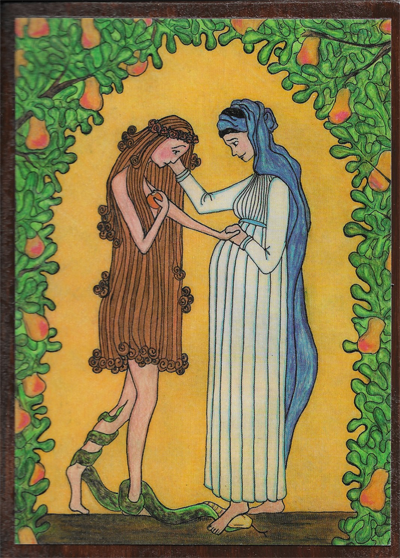
I took the above phrase from a post on FAR (published 5/6/22) after it triggered memories of mother abuse. Like Sedna I was a daughter who was thrown into the sea, her fingers cut off one by one (but not by my father). Abandoned and left to die, Daughter sank to the bottom of the sea. The classic Handmaid’s Tale. In the Inuit story the abused daughter survives, transforming into Mistress and Mother of the Animals. As a woman I have followed in Sedna’s footsteps in that I became a dedicated naturalist with a fierce love for all non-human creatures (and plants), but I have yet to transform my unfortunate family history.

With Mother’s Day approaching, I am forced against my will to think about my calculating, deceitful mother who had little use for women in general, and spent her life criticizing and eventually deleting her only daughter permanently from her life. Trashed.

My first crib memory is one of raw terror – a bewildered baby crying out for a mother that never came. Comfort, compassion, love were withheld. Now at 77 I ask myself: what was wrong with this woman?

Continue reading ““Calculated Emotional Violence” and Abuse: Memories of ‘Mother Days’ by Sara Wright”

Carol P. Christ’s Legacy: Is This How Patriarchy Began?

This was originally post on June 19, 2017

In my widely read blog and academic essay offering a new definition of patriarchy, I argued that patriarchy is a system of male dominance that arose at the intersection of the control of female sexuality, private property, and war. In it, bracketed the question of how patriarchy began. Today I want to share some thoughts provoked by a short paragraph in Harald Haarmann’s ground-breaking Roots of Ancient Greek Civilization. Haarmann briefly mentions (but does not discuss) the hypothesis that patriarchy arose among the steppe pastoralists as a result of conflicts over grazing lands. As these conflicts became increasingly violent, patriarchal warriors assumed clan leadership in order to protect animal herds, grazing lands, and the women and children of the clan.

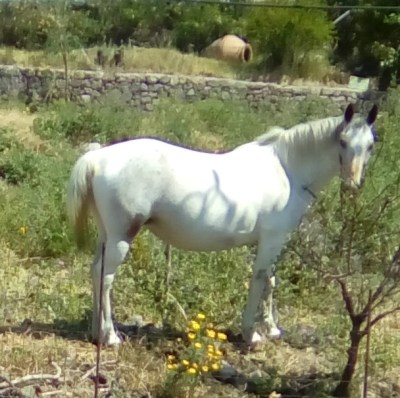
On the recent Goddess Pilgrimage to Crete, while we were driving through sparsely populated grazing land, my friend Cristina remarked that the shepherds on foot wearing traditional clothing that she had seen several decades earlier had been replaced by men in shirts and jeans, driving farm trucks. Her nostalgic reverie was interrupted by our young Cretan bus driver who said, “You would not want to be alone with one of those men, not now and certainly not then.”

Continue reading “Carol P. Christ’s Legacy: Is This How Patriarchy Began?”