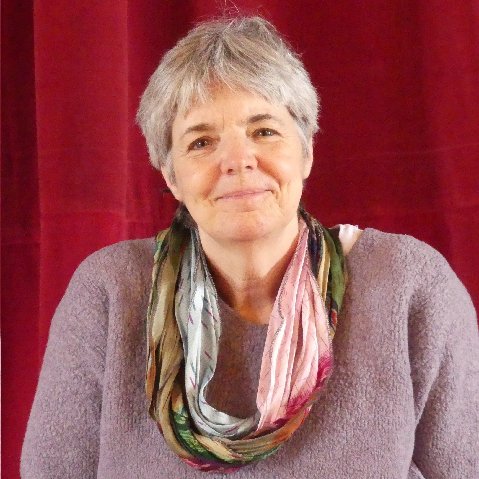
This Story, I Am This Story by Marie Cartier

photo by Kimberly Esslinger

1.

The papaya, the lemon, the squash.
The everything going bad—not yet.
I can pickle anything I can save—still. And I am never still.
Still…at sixty-four here I am. Rise. This is age—still.

2.

I have a passport to somewhere that does not
exist. As a white skin person with color
roots that do not show. My grandfather could not
have had the chance I have to walk at night
in a white neighborhood and nobody knows who I am,
until they know. And still… I am here. This is race—still.

3.

An ivory castle, an ant hill teeming with fire ants, a
stop sign, the rich woman’s house my grandmother
cleaned, the rich woman was my English teacher. My
father beat me for wanting to go to the Ivy League
school, Sarah Lawrence—I could not want to go
where he did not go. So, I went—to the state school.
But, I went, and I did, and I still…I’m
never still. This is possession.
This is wanting—still.

4.

The dark room without a light. The stars
blink at me to move along. I am less
afraid of a coyote than a man out
with my dog at night walking
it off. Walking off the fear of a pandemic virus.
Walking off the fear of—everything—
where are we headed?
Somewhere.
Walking somewhere – my dog ahead of me,
Her ears pointing. She is…I am
never, ever still.

*

I am a rape survivor many times over, and I survived
to be this woman with a pen. And I am…
never still. Stillness as location.
For this is location—still.

5.

A red apple on the teacher’s desk is never
enough if you are not in the class.
The guy said I wouldn’t get the job at seventeen
because it had to go to a boy even though I
created the job the summer before—
a park director in a dangerous neighborhood that I made
a park because no one wanted it. But I did. And I did.
I knew he was wrong, but it would be twenty years
before the words sexual harassment became a
tool I could use. Because…and still. I am
now. I am never still. This is gender—still.

6.

I am a wave, a crash, a body among bodies
among bodies. I believe in people
fighting for what’s right. My wife and I
got married in 2008 and two days later
the state shut down gay marriage and we
spent our honeymoon protesting.
Her first protest sign,
“When do I get to vote on your marriage?’

*

And here I am. Still. Still protesting this shit, is
a sign I would use later. Still. I am never.
I am never still. And this is relationship—still.

*

It’s a long life, I say to students.
A lot can happen. Miles to go before you sleep.
A long road. At sixty-four I think, yes. Maybe yes, it isA Wonderful Life.
And still…
I am never still.
This body I am. This story I am
is to be continued. And still.
For I am never…I am never still.

–Marie Cartier
  January 9, 2021
With thanks to LA’s Cuties Coffee Shop, Poetry Workshop


Marie Cartier has a Ph.D. in Religion with an emphasis on Women and Religion from Claremont Graduate University.  She is the author of the critically acclaimed book Baby, You Are My Religion: Women, Gay Bars, and Theology Before Stonewall (Routledge 2013). She is a senior lecturer in Gender and Women’s Studies and Queer Studies at California State University Northridge, and in Film Studies at Univ. of CA Irvine.

Delilah Reclaimed by Janet Maika’i Rudolph

*This post includes a call for stories at the end.

In my previous blogpost, I wrote about the Biblical tale of Samson and Delilah and why it was likely written in a manner to hide older pagan mythos. You can read it here: Delilah Lost. I promised to share my own myth about the story and tell it as best as I can.  Here it is:

Samson was known as one of the strongest forces in the galaxy, a shining light in the sky. Humans would one day recognize his rays of light as his hair. In the infinity of time, his attention was drawn to movement in the star system known as Sorek. Looking more closely, he saw a woman dancing in dazzling motion while draped in star dust and star light. He could hear the slight tinkle of bells as she shimmered. It was as if the heavens themselves were shouting ha-la-hu-ya at her beauty. She noticed his gaze and winked back at him, tempting him with her swirls and her sparkling eyes. He was enthralled. Continue reading “Delilah Reclaimed by Janet Maika’i Rudolph”

Crane Song: Finding my Way Home through Image, Myth, and Nature – Part 1 by Sara Wright


The last gift I received from my very distant parents was a print of a Native American Medicine Wheel by Ojibway artist Joe Geshick. I received this present on my birthday in 1993.

When I opened the cardboard tube I was astonished by the image. A Medicine Wheel? As far as I knew neither of my parents had any idea that I had picked up the thread of my Native heritage and was studying Indigenous mythology. What could have motivated them to send me such an image? I was stunned by the seemingly bizarre synchronicity. Continue reading “Crane Song: Finding my Way Home through Image, Myth, and Nature – Part 1 by Sara Wright”

It’s Time to Thank Stacey Abrams Again by Carol P. Christ

The insurrection in the Capitol on January 6 has dominated the news ever since. Coverage of the Democrats’ victories in the two Senate runoffs in Georgia has been virtually nil. Now that it seems that at least as long as the National Guard is deployed to defend the national and state capitols, the insurrectionists have been stopped, it is time to thank Raphael Warnock and Jon Ossoff–and most of all to Stacey Abrams–for returning control of the Senate to the Democrats.

As is well-known to most readers of FAR, Stacey Abrams narrowly lost the election for Governor of Georgia in 2018 due to voter suppression.

Voter suppression of voters of color and young voters is a scourge our country faces in states across the nation.  Georgia’s 2018 elections shone a bright light on the issue with elections that were rife with mismanagement, irregularities, unbelievably long lines and more, exposing both recent and also decades-long actions and inactions by the state to thwart the right to vote. 

In response to widespread nation-wide efforts of Republican dominated states to suppress the vote, Stacey Abrams founded Fair Fight. Continue reading “It’s Time to Thank Stacey Abrams Again by Carol P. Christ”

The Day(s) after Epiphany(ies) by Elizabeth Cunningham

Elizabeth Cunningham

I am beginning this post (again!) on Thursday, January 7, 2021, the day after Epiphany. I have been working on it since Monday. It not unusual for me to take a whole week to write a post for Feminism and Religion, which is why I only post quarterly. It is unusual for me get to Thursday and scrap all attempts, to acknowledge that I still don’t know what to say.

In western Christianity the feast of Epiphany commemorates the arrival of the Magi at the birthplace of the Christ Child. The eastern Church celebrates his baptism. The divine made flesh is (an) E/epiphany. Continue reading “The Day(s) after Epiphany(ies) by Elizabeth Cunningham”

A Failed Insurrection and Two Impeachments, the Ending Legacy of the Trump Administration by Anjeanette LeBoeuf

It has been hard to do anything other than absorb and witness what has been happening since January 6th. The day started off with amazing news that both Rev. Raphael Warnock and former intern for John Lewis, Jon Ossoff had both won Georgia Senate seat races. Thus, solidifying Georgia turning back to “Blue.”  The day ended with a failed insurrection lead by Trump supporters raiding the National Capitol trying to stop Congress from certifying the 2020 election of Joe Biden as the 46th US President. We are still processing what happened on January 6th, we also must be very clear on the language we use and the accountability we enforce.

Continue reading “A Failed Insurrection and Two Impeachments, the Ending Legacy of the Trump Administration by Anjeanette LeBoeuf”

About Bridgerton: A Different Feminist Perspective by Christine Irving


First of all, I’m grateful to Bridgerton for providing several spirited conversations between my friends and me, not to mention the POVs penned recently in these pages.  It was fun to take part in exchanges that did not highlight or veer off into either politics or the COVID-19 epidemic.

What first drew me to Bridgerton was the fun of it – the blatant over the top spoofery and satire so like the Commedia dell’arte it so brilliantly imitates.  The Commedia got away with its mockery of society because it disguised it beneath a froth of opulent, frippery, and coarse buffoonery that distracted the rich (but not the poor) from its real message about the foolishness and vanity of the ruling class.  So does Bridgerton, but in this case, the culture being satirized and unveiled is ours.  Unlike those earlier dramatists, in our age we fortunately and so far, at least in this country, still enjoy much greater leeway in making mockery.  “Huzzah!” I say. Continue reading “About Bridgerton: A Different Feminist Perspective by Christine Irving”

Guadalupe Rises Again by Sara Wright


I was in a Mexican store helping someone to choose tiles for the sink and bathroom of a new casita. I have always been drawn to Mexican art because the images tell stories, and many of those stories revolve around images in Nature – usually stylized. The tiles, for example portray flowers, birds, butterflies, and fish in brilliant colors. The child in me loves to see these stories. Artists who work with animal images in a respectful way honoring the spirit of the animal portrayed (either natural or stylized) allows me to bridge the world from animals to people.

Mexican art moves me. The expressive folk images, and the use of natural objects like gourds to create complex designs give me a sense of being at home in the world of people as well as Nature. The former has been my Muse since I was a child. As a life long naturalist I am deeply drawn to the world of animals, I think in part because aside from my brother, animals were my first real friends. Continue reading “Guadalupe Rises Again by Sara Wright”

Waking Up in Shock by Carol P. Christ

I went to sleep in Greece on Wednesday night January 6 feeling elated that Jon Ossoff, following Raphael Warnock whose victory had been declared earlier, was officially named the winner of his runoff election in Georgia, returning the Senate to the Democrats by the slimmest of margins. I expected to wake up to the celebration of Stacey Abrams’ contribution to the victory and to listening to commentators discussing how it came about and what we could expect from the next Congress.

Instead, I learned that a violent insurrection by thousands of people hoping to overturn the election of Joe Biden and Kamala Harris had taken place in the Capitol of the United States. It was clear from the early footage that there had been a massive failure on the part of police and security forces to secure the Capitol building. The President himself, abetted by his son Don Junior, Rudy Guiliani, and other Republicans, urged the mob to march to the Capitol and to fight to overturn the certification of the Electoral College results. This is why Democrats will most likely move to impeach him for a second time.

Just as disturbing is the emerging news that the Capitol Police had been adequately warned that some of the groups urging their members to attend the rally were posting on social media about their intent to storm the Capitol. Apparently there had been discussions about trying and hanging Vice President Pence and also about killing Nany Pelsoi. Questions have been raised about how the mob knew its way about secret rooms within the Capitol building, with the suspicion being that members of Congress, their staff, or security personnel within the building had been in communication with leaders of the mob.

Though the press has been hesitant to fuel the fires by reporting on it, insurrectionist groups are calling for armed rallies at the US Capitol and state capitols on Inauguration Day or in the days leading up to it. In other words, the failed coup of January 6 could be the beginning, not the end of violent insurrection in the United States. Continue reading “Waking Up in Shock by Carol P. Christ”

The Religious Aspects of Star Trek: Discovery Season 1, by Ivy Helman.

I have been watching more television than usual.  Perhaps, the reader has too. Two weeks ago, while I was rewatching Star Trek: Discovery, I thought to myself, “wouldn’t it be nice if I could write something about this series?”  

After all, I want to acknowledge how grateful I am for the ways the series celebrates diversity with: women of color in leading roles; the normalization of gay relationships; and, in the latest season, the inclusion of non-binary and transgender identities. Not only that, it has strong female characters that are empowered, supported and mentored by each other and other crew members. I am also glad that it expresses ecological sustainability, the interconnectedness of life through the mycelial network, and the ethical treatment of animals.  Finally, I have appreciated the way this series questions violence and war.  Notably, it contends with the question: how does a united planetary organization committed to peace find itself in the midst of war?  The answer: war and violence are learned behaviors.  That has a very feminist ring to it, doesn’t it?

However, the show is not perfect.  It contradicts itself in one major area: Starfleet’s hierarchical ranks and the corresponding requirement to follow orders.  Captain Lorca in season 1 episode 3 reminds the crew that they are not part of a democracy.  Yet, the Federation preaches equality and freedom and often touts itself as utopian, where hunger, wants and needs no longer exist.     

Continue reading “The Religious Aspects of Star Trek: Discovery Season 1, by Ivy Helman.”