Election Musings by Janet Maika’i Rudolph

On Friday, Nov. 6th, the day before the Biden/Harris race was called I spent a day in a deeply meditative state. I live in the NY City metropolitan area and it was a beautiful day.  I mostly sat in my backyard in a patch of sunshine musing on the world and seeking a personal sense of balance. I didn’t do anything that day. Well not entirely true, I did a few things, for example I shifted positions a few times to stay in the sun. I grew up in the Puritan based school system which frowned on “doing nothing” as if spending a day not actively achieving anything was somehow wrong, perhaps sinful. For my kids, 30 years after me, it was far worse, codified in hours of homework following a complete school day. And today it’s even harder with afterschool activities (although I must say, to my great pleasure, I have never seen so many children playing on the street in my neighborhood than since this pandemic began.) No wonder Mama Nature is not generally honored. We don’t raise our children to have the time nor space for Her. Continue reading “Election Musings by Janet Maika’i Rudolph”

Women’s Spiritual Power Is All Around Us by Carolyn Lee Boyd


Carolyn Lee Boyd

In this most challenging time, women are showing the world what women’s spiritual power can do. They are guiding nations, states, and communities through the pandemic and towards environmental sanity; feeding the hungry bodies and spirits of their neighbors by organizing community assistance projects; offering hope and care to vulnerable family members; and leading and healing in so many other ways. They are calling on their inherent, profound belief in their own sacredness and that of others to gain access to the strength and clarity that leads to wisdom and effective action.

Yet, finding and using your spiritual power is easier when it is affirmed by the people and subtle messages you experience every day.  In our society, too often girls and women may struggle to find encouragement to identify and use their spiritual power, whether because of present or past experiences or the sheer overwhelming nature of our individual and societal challenges.  Yet, symbols of women’s spiritual power are all around us, everyday, and can help guide us to that deep well within we have all carried since birth.

Continue reading “Women’s Spiritual Power Is All Around Us by Carolyn Lee Boyd”

Crow and the Pornographic Gaze by Sara Wright

Once she believed that
it was her fault
they came on to her,
that she owed them
something
They owned her?
Secretly the
girl was pleased
because any kind of attention
was better than none,
or being so “different” –
stitched into an Indian skin.

She was a pretty shell,
an abandoned spiral
worn down by waves –
assaulted from within
by the pornographic gaze.
How she hated being young.

Continue reading “Crow and the Pornographic Gaze by Sara Wright”

Covid in Greece by Carol P. Christ

Greece is on nationwide lockdown due to a surge in Covid cases in the fall. What does this mean? For three weeks until December 1, we can leave home only for essential reasons which include: going to a nearby supermarket; visiting the doctor or pharmacy; going to banks or public utility offices; helping someone in need; traveling to work if working from home is not possible; attending a funeral; traveling to see children when parents are separated; leaving home for physical exercise or to care for pets or strays. Masks must be worn at all times outside the house; SMS must be sent to a national number listing the reason for leaving home or a paper must be carried with the same information; a special document is required for work listing hours; the fine for violation is 300 euros and police are enforcing this, particularly in the cities. Restaurants and bars are closed; only a few categories of shops are open. A curfew from 12 am to 5 am was extended to begin at 9 pm; this is because young people have been congregating outside in groups. Travel in Greece is restricted; visits to second homes are not allowed. Primary schools are open, but secondary schools are using internet. Similar restrictions were in place in March and April in Greece and the country had one of the lowest virus rates in the world until recently. The hope is that the lockdown will stem the spread of the virus and that the restrictions will be lifted before the holidays.

This situation contrasts with the United States where the President has refused to acknowledge the extent of the health crisis or to take measures to restrict the spread of the Covid virus. Continue reading “Covid in Greece by Carol P. Christ”

Turning Five by Sarah Frykenberg

My daughter turned five years old this week. I am now a five-year-old-mother of one. Big Five <3. I’ve been thinking a lot about the fact that this is the age when children’s brains are developed enough to start creating more permanent memories of their childhood. What will my daughter’s earliest memories be when she is grown?

Four was a pretty chock-full year.

Fires—though those may seem like just another California season to her by now. Pandemic; staying home with Mommy, Daddy, and our new roommates, Auntie and Uncle for weeks on end.

Learning to ride a bike.

Pages upon pages of art, including a whole notebook almost exclusively dedicated to her “study” of “Hazel Vampire” (I blame Uncle and Auntie for this one).


Pandemic. More pandemic.

Continue reading “Turning Five by Sarah Frykenberg”

The Other Side of the Mountain by Mary Sharratt

The author in the Dolomite Mountains in 2017.

I love my new life in Portugal and I’m so happy and grateful to be here. However, I have encountered one major roadblock–I simply cannot replicate my daily writing routine that I’d relied on in the UK for nearly twenty years. I used to get up and leap right on the page, but now I keep horses on my property and their care and feeding come first, before I even get my human breakfast. And horse care is the last thing I do before sunset. If once I was a morning writer, now I’m a late morning/early afternoon writer. Writing gets sandwiched between horse care. Creative ideas bubble up as I ruminate while picking poo in the early morning. I’ve had to find a new rhythm that fits my new life.

Many of us, particularly many women, are struggling to find their daily rhythm while balancing the demands of remote-working with childcare, home schooling, and elder care as we enter the eleventh month of our global pandemic. This can be depleting, to say the least. To make matters worse, the old boundaries between work, family life, and “leisure” have unravelled and become impossibly blurred. Many of us feel under even greater pressure to be productive during this time.

Experts preach that we need to manage our time, plan every minute of the day by making little boxes for each task in our daily planner. I have tried to do this, but always rebel in the end. It seems a pointless task to try to force the flow of my day into orderly boxes. Instead I try to find what rhythms work for me so it feels organic rather than forced.

Now as a woman in my mid-fifties, I feel I have arrived at the other side of the mountain. I moved to Portugal, in part, to slow down. To be less frantically obsessed about work and career. To take a step back from the whole competitiveness of the writing world that can be soul-destroying and completely antithetical to the creative process. I’m done running myself ragged in some misguided attempt to get ahead. Perhaps I’m losing my “edge.” Perhaps this is what it means to be literally “over the hill.” You’ve come so far on your journey that it’s too late to return to old ways of doing things or old ways of seeing the world–the view is completely different up here.

Due to the radical reset of the pandemic, I think that a lot of people are arriving at this place, regardless of their chronological age. At some point we reach a peak of life experience beyond which there is no going back. We have entered a new landscape, brand new territory where the old maps will not get us anywhere. We have to seek a new direction. We have arrived in the place where we can claim our power, our inner sovereignty, and live our life to the rhythms that work for us.

For me this means abandoning the cult of productivity, the pervasive belief that living to work makes us virtuous. That our worth is determined by our output. This cult is particularly damaging to women who still carry the bulk of childcare and domestic work–the whole second shift of wife work that goes unrecognized, unvalued, and unpaid. I believe the majority of male productivity gurus can only adhere to their monastically rigid schedules because they have an unpaid woman in the background doing all the childcare and mopping up all the mess.

One thing I’ve learned the hard way is that, if we let it, the cult of productivity will completely poison both our creativity and our spirituality.

The cult of productivity diminishes our daily spiritual practice as yet another demanding task on our to-do list, a result-oriented form of competitive striving. “I’m not a serious spiritual seeker unless I get up at 5:00 am to meditate. How else will I be on track to achieve enlightenment?”

Spiritual practice is by its very nature the precise opposite of doing or striving. It’s letting go, surrendering to a state of pure being and receptivity, relaxing into the divine luminosity welling up in our hearts.

As for creativity, international best-selling author Hilary Mantel, one of my great idols, has written one of the best essays on the writing process I have ever read. Writing world-class literature, for her, is not a matter of locking herself in her office for eight hours a day or adhering to a rigid word count but of finding the right rhythm.

“I have to grab a notebook and write before I am properly awake,” she writes. “The day’s writing starts to unroll in my head. It’s fragile and often a matter of rhythm rather than words.”

Mantel stresses the importance of writers trusting themselves, trusting their creative flow, rather than obsessing about productivity. Good writing is not a matter of “persecuting paper with ink or pounding the keys. . . . You can’t measure your productivity day-to-day in any way the world recognizes.”

Then Mantel spills her secret that cuts the productivity gurus down to size:


I feel shy of saying this, because to non-writers it sounds lazy–but if, seven days a week, you can cut out two hours for yourself, when you are undistracted and on-song, you will soon have a book. Unoriginally, I call these “the golden hours.” It doesn’t much matter where I find them, as long as I do. I usually work many more hours. But sometimes I wonder why.


When we step into flow, either creative or spiritual flow, we enter a realm of timelessness, where our calendars and clocks dissolve into oblivion. We lose ourselves in that rich inner world. And it’s not forced. It’s not imposed upon us. The flow carries us. May we all be blessed with golden hours.


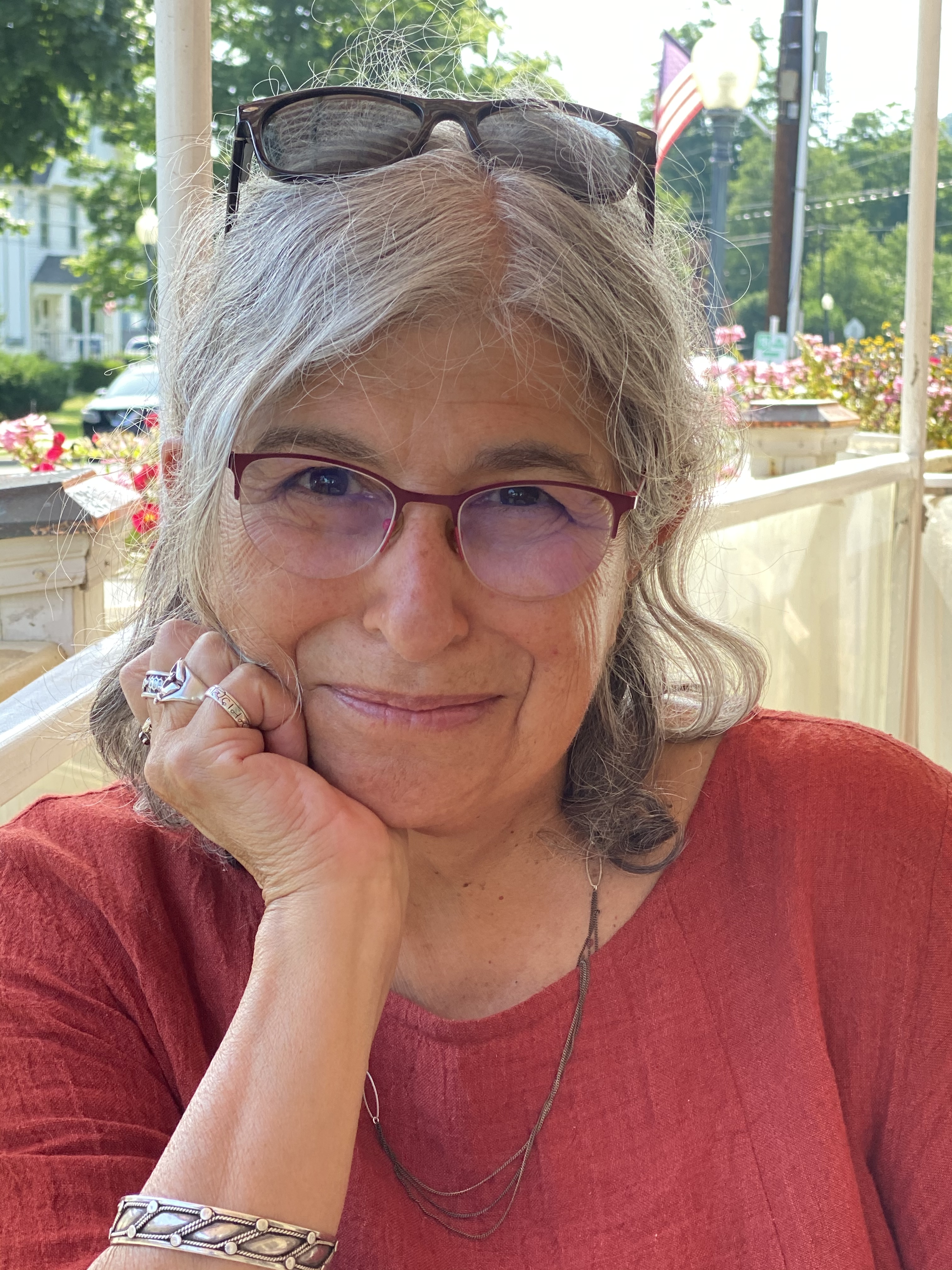
Mary Sharratt
is on a mission to write women back into history. Her acclaimed novel
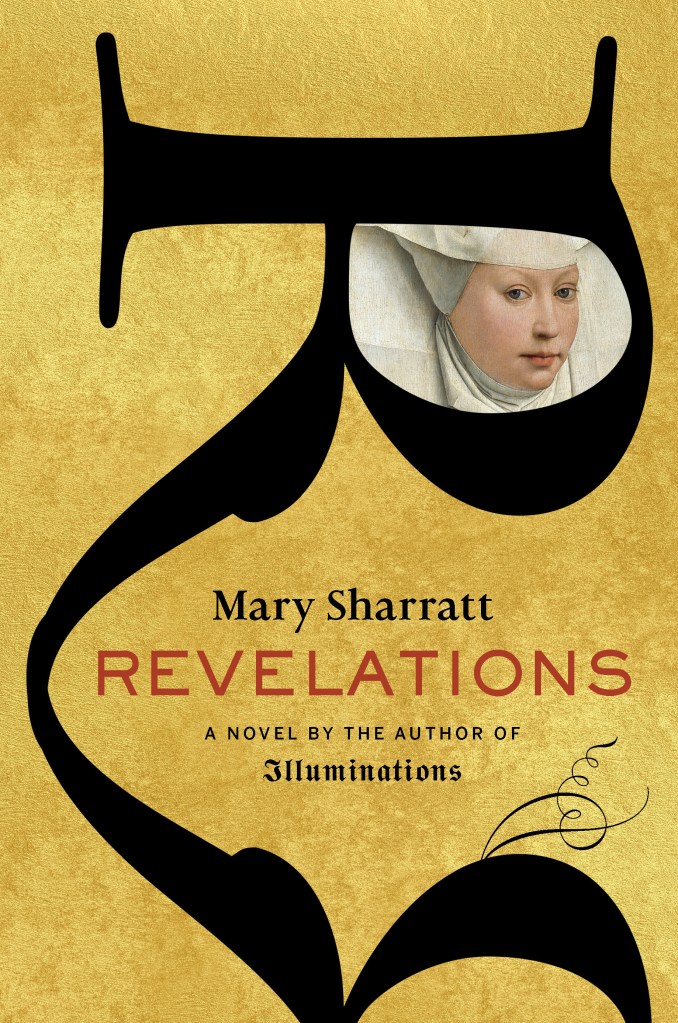
Illuminations, drawn from the dramatic life of Hildegard von Bingen, is published by Mariner. Her new novel Revelations, about the globe-trotting mystic and rabble-rouser, Margery Kempe, will be published in April 2021. Visit her website.


Dancing for Forgiveness and Reconciliation – Part Two By Laura Shannon

In Part One of this article, I described dancing Jewish, Romani, and Armenian dances for forgiveness and reconciliation with groups in Germany and all over the world. I also offered danced rituals of remembrance at former concentration camps and other places scarred by the atrocities of war.
I went to camps including Dachau and Auschwitz, to genocide memorials and sites of massacre throughout Eastern Europe, in Australia, and the Americas. At first, my prayers were private: I brought flowers, lit candles, danced my grief, and spent time in meditation. I tried to visualise the prisoners in those places, sending them my deep sorrow and regret back through time. I wanted to let them know that they are remembered and mourned by people from their future. My prayers contained a fervent apology as well as a soul commitment to do my part in this lifetime to overcome prejudice and stand for peace.
In time I invited others to dance with me for healing and peace. We danced at former camps in Germany, including Bad Gandersheim, a subcamp of Buchenwald, and on many occasions in Steyerberg, a former prison camp and forced-labour munitions factory which is now the site of an intentional community called Lebensgarten (‘Garden of Life’), a centre for permaculture, non-violent communication, and other ecologically and spiritually oriented ways of living.

Continue reading “Dancing for Forgiveness and Reconciliation – Part Two By Laura Shannon”

Dancing for Forgiveness and Reconciliation – Part One By Laura Shannon

Armenian Candle Dance with Laura Shannon, Findhorn 2015 (photo: Hugo Klip)

When I first began researching traditional circle dances in the mid-1980s, I was amazed to find that the peoples who have suffered the worst of human experience – oppression, exile, genocide, war – also produce the most vibrant and joyful music and dance. Armenian, Jewish, Kurdish, and Romani (Gypsy) dances, in particular, were passionate affirmations of life, despite the horrors these peoples have gone through in their history. The dances seemed to hold clues to the mystery of moving on with life after trauma.
This was something I was desperate to learn how to do. Barely 20 at the time, I was struggling to keep my dignity and optimism while growing up female in a woman-hating world. The trauma of a violent rape on my 18th birthday had robbed me of my joy for life – but I could experience joy again in those dances.
Early on in my research and teaching, therefore, alongside the women’s dances which were always my main interest, I began to focus on the traditional dances of persecuted peoples, which I called Dances of Exile and Homecoming. These songs and dances seemed to have an inherently therapeutic potential, profoundly moving for people from any background and any culture.

Continue reading “Dancing for Forgiveness and Reconciliation – Part One By Laura Shannon”

St. Brigid to Brigid of Danu By Anne Fricke

AnneOh, bright flame of the dawn, You,

who came before me and still breathe into the forge,

whisper into the ears of poets, long after my bones

have ground into dust upon the earth, I held your place


claimed it for my own—but what choice did I have?

Patrick had arrived, cast his fire atop the Hill of Slaine

brought my God to your people


But you were fading already, your son’s deceit

bleeding tradition onto the battlefield, the blood of matriarchal

death seeping into the soil to find underground waterways

Continue reading “St. Brigid to Brigid of Danu By Anne Fricke”

The Mask and the Mirror – Part 3 By Sara Wright

Artist Debra Fritts

One concrete way of accomplishing this change is to submerge ourselves in the rest of Nature and stay open to the appearance of animals, birds, plants, etc., and by paying close attention to images and words, nudges, synchronicities, dreams, and fantasies. Especially while caregiving, perhaps the most exhausting job of all. S/he provides us with a means to deal with the crisis of Covid 19 by staying in the present moment as much as we possibly can. Debra’s flowers/ four-leaf clovers, owls, stars, all speak to the importance of the presence of nature in different ways.

It is hard to miss the change of expression on Everywoman’s face. Held by the bear, her eyes are focused and there is a sense of peace that permeates the woman’s countenance. Clearly, Everywoman is able to be present to what is. This woman has once again found home.

To the right and below the moon there is a small leaf-like image that seems to be drifting. When I asked Debra what the image was she responded that the leaf was a simplified four-leaf clover. It symbolized the role that luck plays in the spread of an impersonal virus, but memories of being with her grandfather on Sunday afternoons searching for four-leaf clovers, and the way the two were connected with nature were also part of the reason she included this image. Once again we see the archetypal and the personal intersecting in Debra’s work. On an archetypal level, the impersonal presence of luck/trickster/fool determines viral outcomes, on a personal level this symbol attaches Debra to nature and her love for family.

Continue reading “The Mask and the Mirror – Part 3 By Sara Wright”