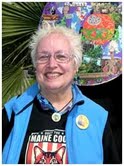
The wind changed during the night. Even as they slept, the Witch and the Ladies of the Magic Mirror felt it and stirred in their beds. Kahlil the raven, who was sitting on the roof, felt it, too, and as he looked down the highway, he spotted the travelers. “What’re those folks doing on the road?”
The travelers were walking along the highway built only a few years ago by the people of the country towns who had fled from El Presidente’s capital city. They were coming toward the Witch’s house, too many for the raven to easily count: women, men, and children dressed in dark clothing that was stylish a hundred years ago.
The sun began to rise. The travelers came closer. The Witch and the Ladies got up, got dressed, and stood on the porch to wait for them. At the direction of the stout woman who was leading them, smaller groups broke off and turned toward other houses in the small town. The stout woman led her people to the Witch’s front porch. The wind changed again—and look! The travelers were no longer wearing dignified attire. Cloth caps instead of bowler hats on the men’s heads, headscarves on the women, scraps wrapped around the children. “They’re laborers,” said one of the Ladies. “Migrants.” Another Lady nodded. “And they obviously need our help. They need to be fed.” “They need jobs,” said the Witch. “How can we help them?” Continue reading “Going With the Wind by Barbara Ardinger”
My previous post on this site, Trauma Healing through Communal Dance, on February 1, told of a traumatic event and its lingering effects, including insomnia, brain fog, nightmares, tearfulness, migraines, anxiety, and fear. Now I’m hearing reports of similar symptoms from virtually all of my friends who are affected by the trauma of the coronavirus pandemic.
Three months ago, Greek communal dance helped me recover from my traumatised state. Now, nobody has access to communal practices like circle dance to help us get through it.
So how do we heal when we all need healing? When we don’t have access to the things which would normally help us heal?
Circle Dance with Laura Shannon, Germany 2008 (photo: Beate Frey)
There is a lot of talk right now about strategies, small and large, which can keep us sane in this crazy time. Many speak of the ‘silver linings’ we can find in this enforced retreat, and I have found a few myself. But I have also heard from people who aren’t in a safe place, or who just aren’t coping well.
Even if you are blessed with a peaceful home, access to nature, and continuing income, not everyone is made for isolation. The lockdown can be particularly hard on extroverts. And many people may find that high stress levels in this time of separation, loss, and uncertainty awaken old ghosts of unhealed trauma.
My earlier blog named some of the therapeutic aspects of communal circle dance, including connection with others, shared movement synchrony, realignment with ‘my self, my body, my place between heaven and earth, and my home in the human community.’
Armenian Candle Dance with Laura Shannon, Findhorn 2015 (photo: Hugo Klip)
As I wrote in Medusa and Athena: Ancient Allies in Healing Women’s Trauma, “Past trauma can be transformed through ‘physical experiences that directly contradict the helplessness, rage and collapse that are part of trauma’ and which foster a renewed sense of self-mastery. Because trauma tends to be experienced in ‘isolated fragments’, treatment particularly needs to engage the entire organism, ‘body, mind, and brain’.”
So, dancing is perfect. Circle dance, particularly, is my ideal method of trauma healing. But how can we dance without a circle?
A lot of us are dancing on platforms including Skype and Zoom, but the slight time lag with this technology means that true synchrony is impossible; everyone’s movement appears slightly off the beat. Nevertheless, I love seeing cherished faces, talking together, and dancing despite the distance.
My favourite way to dance ‘in circle’ is without any online technology, simply connecting in heart and spirit. Since the start of the lockdown, my network of dance students, friends, and colleagues in different countries have been ‘meeting’ at set times twice daily, and it is deeply moving to join together in this way. We light a candle for loved ones, health workers, key workers, and anyone who is unwell or needs extra support at this difficult time. Then we each dance the same sequence of circle dances, plus our personal favourites. Knowing that my friends are all dancing in their own homes, and that we are all thinking of each other at the same time, is very precious.
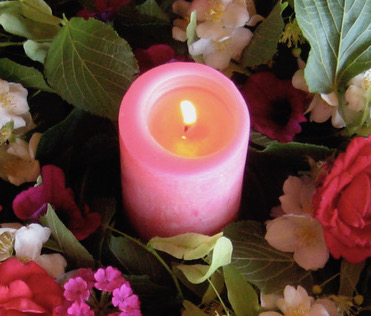
Candle (photo: Laura Shannon)
If you too are separated from your loved ones, you can choose a time every day to stop what you are doing so you can think of one another, with no need for online technology. You don’t have to dance; just put on your favourite music and know you are connected.
Doing things you love can also provide an antidote to trauma – cooking favourite foods, lovingly repotting houseplants, or embarking on a fun creative project – anything you enjoy can connect you to your own power and experience of mastery as a source of healing. With my housemates here in Canterbury, we created a beautiful Easter feast – twice, first for Western and then for Orthodox Easter – with photos of our missing loved ones on the table. It was such a simple act, but nourishing on so many levels.
Time in nature connects us with the flow of life force which is in each of us. As we walk outdoors, feeling the earth below and the sky above, we can remember when we have come through challenges in the past, and let those memories reassure us that we will come through this now too. It was the same earth under our feet then, and it’s the same sky around us now and so it will be in the future when all of this is behind us.
Trees (photo: public domain)
Sometimes a larger crisis, like this pandemic, can put things in perspective, and bring us closer to forgiveness and healing. To support this inner process, I have found the Hawaiian indigenous practice of ho’oponopono to be very powerful. Hawaiian scholar and educator Mary Kawena Pukui describes it as a practice of forgiveness and reconciliation, for family members to ‘make right’ broken relations and prevent problems from erupting.
What can we do to foster forgiveness, move beyond blame, and focus on what we have in common? One recent story on the Karuna website tells how rival gangs in South Africa are now cooperating to deliver food to the vulnerable in their community. Amazing!
There is always something we can do, for ourselves and for others. And let’s not forget the larger context: life as we knew it has hit the pause button, and we have a chance to make some different choices in preparation for when we once again press ‘play’. Maybe we will find that all of us – and all of humanity – are suddenly dancing to a more beautiful tune.
Laura Shannon has been researching and teaching traditional women’s ritual dances since 1987, and is considered one of the ‘grandmothers’ of the worldwide Sacred / Circle Dance movement. She trained in Intercultural Studies (1986) and Dance Movement Therapy (1990), and is currently pursuing postgraduate studies in Myth, Cosmology, and the Sacred at Canterbury Christ Church University in England. Her primary research in Balkan and Greek villages seeks out songs, dances, rituals and textile patterns which descend from the Goddess cultures of Neolithic Old Europe, and which embody an ancient worldview of sustainability, community, and reverence for the earth. In 2018 Laura was chosen as an Honorary Lifetime Member of the Sacred Dance Guild in recognition of her ‘significant and lasting contribution to dance as a sacred art’. Her articles and essays on women’s ritual dances have appeared in numerous publications, including Re-Enchanting the Academy, Dancing on the Earth: Women’s Stories of Healing Through Dance, She Rises! Vol. 2, Inanna’s Ascent, Revisioning Medusa, and Spiritual Herstories – Call of the Soul in Dance Research. Laura is also Founding Director of the non-profit Athena Institute for Women’s Dance and Culture. She lives in Canterbury, Greece, and the Findhorn community in Scotland.
Medusa and Athena: Ancient Allies in Healing Women’s Trauma in Revisioning Medusa: from Monster to Divine Wisdom, edited by Glenys Livingstone, Trista Hendren and Pat Daly. Girl God Press, 2017, 206-222. www.thegirlgod.com. This excerpt cites Bessel Van der Kolk, The Body Keeps the Score (2014), pp 4, 40, 53.
Mary Kawena Pukui Karuna website: This site collects positive stories in the time of coronavirus. ‘Karuna’ is a Sanksrit word meaning compassion. Their site motto: ‘Karuna spreads faster than corona.’
You might be asking yourself, “Is Karen losing her mind?” Last post she’s asking us “Are Your Shackles Showing?” as she writes this morbid and scary piece reminiscent of movies where someone is being held captive by a serial killer, and now this (I think most of you realized I was writing about being held captive by patriarchy and predator capitalism.), talking about the benefits of the Black Death – while we’re shuttered-in trying to dodge this virus. And she sees a benefit of Trump?!
Stay with me here. Let me explain.
When the Orange Jumpsuit moved his clan of crooks and cronies into the White House I told my friends to take a deep breath and wait. I could understand people gave him a shot because neither party, the Republicans nor the Corporate Democrats, were doing much for them. Desperate voters turned a blind eye to what many of us could have predicted came along with Trump. As scary as this man was and is, he was necessary. He was the perfect and tactical move of Goddess or the Universe, who is sometimes about tough love and not just sweetness and light. Continue reading “The Benefits of The Plague….and Trump by Karen Tate”
All along, I’ve believed that Malicroix had something important to offer English-speaking readers: an embrace of solitude, a profound connection with nature, a bold exploration of dream-states. And right now it seems to resonate with our current moment of introspection and reassessment of priorities.
Very early in Henri Bosco’s 1948 novel Malicroix, a young man, Martial de Mégremut, living placidly amid fruitful orchards in a tame Provençal village, receives a letter informing him he has inherited “some marshland, a few livestock, a ramshackle house” from a reclusive great-uncle, Cornélius de Malicroix. Against his family’s strenuous objections–with alarm they speak of “marshes, mosquitoes, miasmas”–Mégremut resolves to travel alone to the remote Camargue to claim his “wild” Malicroix inheritance. The house is on an island, and to reach it Mégremut must cross a rough river, at night, in a frail wooden boat piloted by a taciturn old man who meets him at dusk in the middle of a vast plain.
So begins a deeply internal quest narrative, an initiatory journey that forces Mégremut to come to terms with himself and with the elements–earth, water, wind, and fire–that are ever-present, sometimes terrifyingly so, on the island. For once he arrives, he learns that he must remain there alone for a full three months if he wishes to obtain the inheritance. Torn about whether to stay or leave, he finds that the decision to stay is made of its “own accord,” unconsciously.
Have you forgotten yet? Have you forgotten what it felt like to go about your life pre-pandemic?
My brain has switched to a different filter system. If I watch a movie or see an image from the pre-pandemic world, the first thing I notice is that people are standing too close to each other. Or I notice that they are touching each other. People are supposed to be in proximity to each other only in the boxes of Zoom or in the confines of their home or in a hospital where the staff has on protective equipment. That pandemic filter overlays itself onto everything now, even memories.
It’s hard to access the joy of greeting someone with a hug or handshake, because those things are something we must tell our bodies not to do. We have to resist that urge. We have to rewire our impulses. There are tiny threads of shared trauma in it all—how will we ever feel like we can be together again and not be afraid? Continue reading “Redemptive Forgetfulness by Marcia Mount Shoop”
I awakened this morning to frozen raindrops hanging from trees – jeweled beads, snow capped hills, and a cacophony of spring songs – I was serenaded by robins, chickadees, phoebes, goldfinches, and nuthatch tweets as I walked out the door into the early morning sun. I listened for the cardinals, who for the moment were absent. It was cold! 28 degrees at the end of April speaks to anomalies, or more realistically, Climate Change.
Yesterday we had rain, and working in the still damp air is literally a healing experience. The fragrance is a combination of chemicals released by soil-dwelling bacteria, oils released from plants during dry spells and ozone created when lightning splits oxygen and nitrogen molecules that then turn into nitric oxide.
I dug in baby trees that I had rescued from the side of the road the day before. Salt kills tender cedar seedlings if the road crew misses slaughtering them. Around Maine trees are worthless except as an economically viable product, a heartbreaking reality for someone like me. Continue reading “Earth Day Reflection by Sara Wright”
During the past week I have been thinking about Greek spring fountains while designing a water fountain for my new apartment in Heraklion, Crete. When the architect sent photos showing that the tiles had been removed from my balconies, I noticed an enclosed niche that could be used for stacking wood, turned into a closet, or as I began to imagine, would be the perfect place for a fountain to bring the soothing sound of running water to my balcony. Continue reading “Designing with the Goddess in Mind: A Meditation on Greek Spring Fountains by Carol P. Christ”
By now, all aspects of life have been altered or halted. The world as we know it has become radically different as we attempt to get a handle on this disease and stop the rising number of deaths each day. We are enduring trauma on a global and individual level. Trauma carries a myriad of emotions; anger and grief sometimes being the prominent two. And with the rising uncertainty paired with the increasing amount of trauma and grief we are all experiencing, we need to find ways to talk about our feelings, share, and move forward.
Photo of the author and her wife by: Margaret Smith
In these United States and across the world we are in quarantine. Lockdown.
Shelter in place. We’re alone together.
And I miss it all: restaurants, coffee shops, movies, hanging out with friends in real time,
But mostly I miss hugs—and I live with my wife and we hug a lot
…but I miss hugs from friends and even sometimes strangers.
I’m a hugger.
I miss handshakes and whispers and rubbing shoulders and close smiles.
Are we embodied beings? Does the body need other bodies?
What is a “crowd of something called” is always my favorite thing to look up:
a pandemonium of parrots, a swarm of eels, a fever of sting rays,
a cauldron of bats, a gaggle of women,
a herd of sea horses, a clutch of vampires, a clowder of cats,
an army of frogs, a crash of rhinos, a business of ferrets,
a passel of possums….
It’s all mythical now, for humans anyway, groups and crowds.
We might as well be mermaids.
And if mermaids were fish, a group of us would be called a school.
If we were human mermaids, we would be a tribe.
And if we were sea mammals, like dolphins, we would be a pod.
I’m missing my pod,
my school, my tribe.
Like whales or manatees, or dolphins—we need a pod.
We are social creatures. We zoom our pod on social media.
And I worry for the elderly in my pod that they do not use this technology that keeps us whizzing
into each other’s homes.
Zooming in– in Brady Bunch boxes.
Here we are! Open your mic!
Toasting the edges of my Brady Bunch box with my glass of wine—Cheers!
Did God mean for us to need each other in bodies? As bodies.
In the same space?
What does it mean that we are here spinning on the planet in embodied forms?
Our experience and our consciousness of being in bodies—
the phenomenology of what it means to be in a body with other bodies.
We are bodies first I think; we are bodies.
Human bodies. A crowd of them, a group… a family, a band, a community,
a nation, a city, a town…a party.
So– I miss hugs, and handshakes and close spaces and smiles and whispers.
I miss sitting tight next to strangers at a sold-out play, a concert, a movie….
I miss crowded events, parades…a club where I am jostling my drink
across the floor to meet my friends.
I miss waiting for a table and making small talk with the other patrons
and chatting up the maître de.
I miss laughing with clerks at the convenience store and talking
to everyone. In person.
And I miss hugging. I’m a hugger.
And I miss, oh I miss
my pod.
–Marie Cartier
April 2020
Photos by the author: from the “sheltering at home” collection
Marie Cartier has a Ph.D. in Religion with an emphasis on Women and Religion from Claremont Graduate University. She is the author of the critically acclaimed book Baby, You Are My Religion: Women, Gay Bars, and Theology Before Stonewall (Routledge 2013). She is a senior lecturer in Gender and Women’s Studies and Queer Studies at California State University Northridge, and in Film Studies at Univ. of CA Irvine.
One of my favorite trainings I have received on my spiritual pathway is with Aloha International. I was ordained as an alaka’i (Hawaiian spiritual guide) in 2016. I began studying Huna intensely in 1997. In 2015, I personally met and studied with our Kumu Kupua (founder and shamanic guide) Serge Kahili King. I love the Hawaiian way as it is gentle, loving and teaches us to examine our beliefs, life practices and thought-patterns in a way which heals our wounds and nurtures our lives in many beautiful ways. Huna means secret but not as something we can’t share, rather something that is hard to discover or grasp like the mists of the sea. Dr. King, however, makes it easy and I am happy to share some of his teachings here.
I have several medical people in my family. They study science and closely follow journals to find treatments and cures. I bless those efforts because their findings are wonderful tools when we, ourselves, are in need of medical treatment. The shamans, however, have a different approach to disease. Instead of looking to see what medications work, we like to explore why other methods work. Placebos, for example, are so powerful that scientists must go to extreme measures to avoid activating them with practices such as double-blind studies. What if instead of working to eliminate the placebo effect, we work to strengthen it? What if our goal is to harness the power of our minds to explore how our expectations, beliefs and thoughts affect our health and well-being? Continue reading “Beauty, Blessings and Bistros: The Hawaiian Huna approach to dealing with the virus as well as everyday stresses by Janet Maika’i Rudolph”


 The wind changed during the night. Even as they slept, the Witch and the Ladies of the Magic Mirror felt it and stirred in their beds. Kahlil the raven, who was sitting on the roof, felt it, too, and as he looked down the highway, he spotted the travelers. “What’re those folks doing on the road?”
 My previous post on this site,


 You might be asking yourself, “Is Karen losing her mind?” Last post she’s asking us “
 Very early in Henri Bosco’s 1948 novel Malicroix, a young man, Martial de Mégremut, living placidly amid fruitful orchards in a tame Provençal village, receives a letter informing him he has inherited “some marshland, a few livestock, a ramshackle house” from a reclusive great-uncle, Cornélius de Malicroix. Against his family’s strenuous objections–with alarm they speak of “marshes, mosquitoes, miasmas”–Mégremut resolves to travel alone to the remote Camargue to claim his “wild” Malicroix inheritance. The house is on an island, and to reach it Mégremut must cross a rough river, at night, in a frail wooden boat piloted by a taciturn old man who meets him at dusk in the middle of a vast plain.
 Have you forgotten yet? Have you forgotten what it felt like to go about your life pre-pandemic?
 I awakened this morning to frozen raindrops hanging from trees – jeweled beads, snow capped hills, and a cacophony of spring songs – I was serenaded by robins, chickadees, phoebes, goldfinches, and nuthatch tweets as I walked out the door into the early morning sun. I listened for the cardinals, who for the moment were absent. It was cold! 28 degrees at the end of April speaks to anomalies, or more realistically, Climate Change.
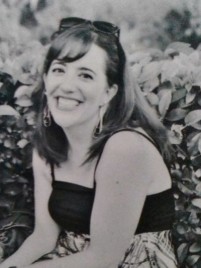 By now, all aspects of life have been altered or halted. The world as we know it has become radically different as we attempt to get a handle on this disease and stop the rising number of deaths each day. We are enduring trauma on a global and individual level. Trauma carries a myriad of emotions; anger and grief sometimes being the prominent two. And with the rising uncertainty paired with the increasing amount of trauma and grief we are all experiencing, we need to find ways to talk about our feelings, share, and move forward.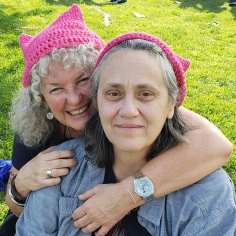


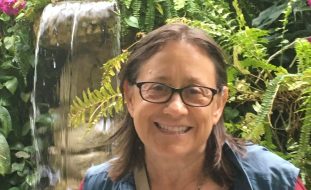 One of my favorite trainings I have received on my spiritual pathway is with Aloha International. I was ordained as an alaka’i (Hawaiian spiritual guide) in 2016. I began studying Huna intensely in 1997. In 2015, I personally met and studied with our Kumu Kupua (founder and shamanic guide) Serge Kahili King. I love the Hawaiian way as it is gentle, loving and teaches us to examine our beliefs, life practices and thought-patterns in a way which heals our wounds and nurtures our lives in many beautiful ways. Huna means secret but not as something we can’t share, rather something that is hard to discover or grasp like the mists of the sea. Dr. King, however, makes it easy and I am happy to share some of his teachings here.
