“As I sat there, my heart overflowed with joy at the sight of the bright circle…for I know not where to look for so much character, culture, and so much love of truth and beauty, in any other circle of women and girls” – unidentified woman from Margaret Fuller’s “Conversations” (1)
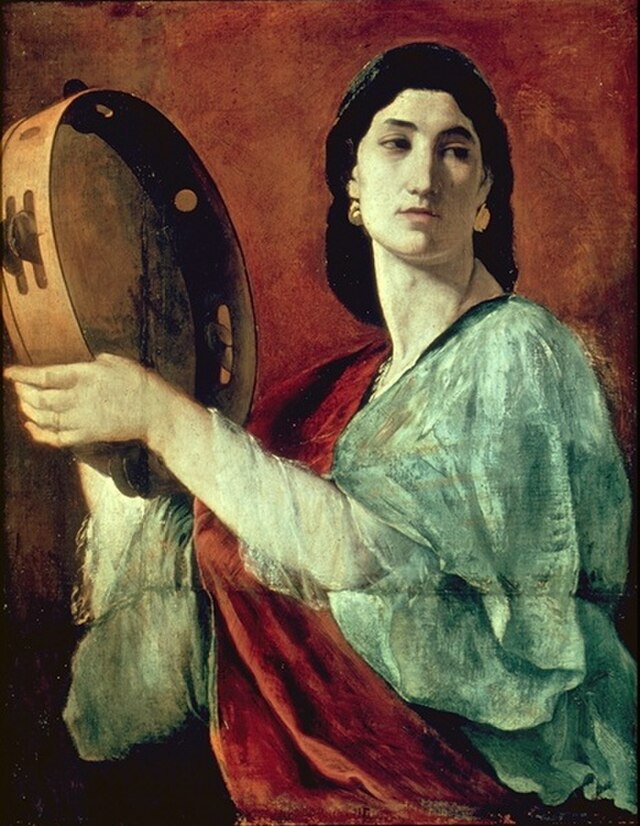
In the early 19th century, the five women of Fuller’s book — Margaret Fuller, Elizabeth Palmer Peabody, Mary Moody Emerson, Sophia Peabody Hawthorne, and Lydia Jackson Emerson — built many of the foundations of both American feminism and the philosophical movement known as transcendentalism, among many other American “firsts.” Yet, they are almost unknown to most people today.
Kinship, the Powers of Place, and Leavetaking by Sara Wright

What do I mean by the word kinship? I believe that kinship is the idea, and the belief that all aspects of nature from photons to galaxies are connected to one another. Practically, I think of kinship as my feeling/sense of being intimately linked to place/landscape. In my mind Kinship and Place are not only related, each is shaped by the other.
The powers of place are invisible threads that work by exerting a kind of physical and psychic pressure, pulling me into relationship. Place acts like an attractor site. My body behaves like a lightening rod or perhaps a tuning fork picking up information from the landscape. Once I have heard the “call” the door opens through my relationship with elements, trees, animals, stars or stones to name a few possibilities.
As this presence manifests through its individuals place begins to teach me what I need to know about an area and how I might best live in harmony with a particular landscape, if not its people. This learning occurs in bursts or very slowly just below the threshold of everyday consciousness. Either way, information seeps in through my body as I listen and pay close attention to what my senses are telling me. I allow animals, trees, plants to speak to me in their native language, and I note synchronistic occurrences. Information also comes to me through dreams. Eventually a discernable pattern emerges. My body acts as the bridge between self and the rest of Nature; the vehicle that keeps me connected to the whole.
Continue reading “Kinship, the Powers of Place, and Leavetaking by Sara Wright”Legacy of Carol P. Christ: How To Find Those Lost Ancestors
This post was originally published on Jan. 21st, 2013
Over the past year I have written several blogs on ancestor connection. In this blog I will share what I have learned about how to find ancestors.
I recommend the popular television series Who Do You Think You Are? which has US, UK, and Australian, and other versions, and the PBS series hosted by Henry Louis Gates, African American Lives and Finding Your Roots. While you might think, as I did, that genealogical research is about finding the names and birthplaces of ancestors, these programs set the genealogical quest in the great flow of history.
Records show that I have ancestors who immigrated to the United States from Ireland, Scotland, Prussia, and Germany in the early 1850s. Historical research tells me that more than a million people left Ireland and Scotland in the 1850s due to the “potato famine,”* which affected the rest of Europe as well. History explains why ancestors emigrated.
Begin your search by asking parents, grandparents, aunts, and uncles, for names, dates, places of residence, stories, and other information they remember. Continue reading “Legacy of Carol P. Christ: How To Find Those Lost Ancestors”
She Spoke My Name: Finding the Feminine Divine in Silence, Fire, and Verse by Madeleine F. White
Two years ago I was in Pembrokeshire in South Wales. The retreat I’d taken myself to consisted of a collection of stone and flint buildings half way up a mountain and set around a farmhouse and chapel. I had come to find a way through my writer’s’ block and also to deal with a couple of really painful family issues.
My room was only a half corridor away from the chapel itself. It was four o’clock in the morning and because I was quite close to the kitchen on the other side I had my earplugs in. Despite all this, on the second night, I quite clearly heard a woman’s voice calling “Madeleine,” loudly enough to wake me and send me looking down a deserted corridor. It was not imagined or metaphorical, but distinct and unmistakably real. The experience startled, not because I was afraid but because I recognised the truth of it. This familiar, maternal and sacred truth led directly to the writing of Maiden Mother Crone, my second poetry collection just a few months later as well as a resolution of the two other issues that had weighed so heavily on my mind.
Continue reading “She Spoke My Name: Finding the Feminine Divine in Silence, Fire, and Verse by Madeleine F. White”Dyke March, Long Beach, CA 2025 by Marie Cartier
This year it is more important than ever to celebrate LGBTQ+ PRIDE. Here’s a taste of Long Beach, CA’s Dyke March. I was the emcee for the rally. My wife, Kimberly Esslinger was on the organizing committee and also created the first “Dykes After Dark” event– a poetry reading open mic– last year the poetry event was a pop-up with 15 people. This year the coffeehouse was filled to the max- 80 people or so, and the Dyke March itself had over 400. This is the thing: we need places to gather. And if you build it, we will come.

Devi* Has a Sense of Humour by Terry Folks

(*Devi is the feminine principle in Hinduism, the goddess counterpart to Deva, the male aspect.)
I live alone.
I put a small stool on the bathroom floor beside a kitchen chair next to the vanity counter top. My plan was to step on the stool then up on to the chair, then up on to the counter so I could stand and put a hook in the ceiling.
When I finished, I carefully turned around to make my way back down from counter to the chair. As I was stepping down, I felt unstable so I instinctively reached for the towel bar on the wall. The towel bar gave way and I fell directly left side down on to the high back of the chair, bringing the chair down to the floor with me beside the empty stool.
Continue reading “Devi* Has a Sense of Humour by Terry Folks”Be A Friend: A Conversation on Self-Care by Mary Gelfand & Rev. Bernadette Hickman Maynard

Mary:
Like many of you, I struggle to balance spiritual, emotional, and physical well-being in these chaotic times. As women, we’re conditioned to prioritize others—family, work, community—while systemic injustices demand our energy daily. It’s like Sisyphus pushing his boulder: exhausting, endless. But rediscovering the FRIEND acronym, created by Reverend Bernadette Hickman Maynard, helped me reframe self-care and I wanted to share this with my FAR community. Bernadette, how did this concept come to you?
Bernadette:
In December 2023, I was the pastor of a church, deputy director of a community organizing nonprofit, mom to four kids, and a wife. My body rebelled and I had pain in five areas, dizziness, heart palpitations, panic attacks. I’d cry uncontrollably. I was burned out. Finally, I took six weeks off from everything. During that time, I realized I couldn’t fight for others’ liberation while sacrificing my own. So I created FRIEND—six practices to reclaim my joy – and determined to “be a FRIEND to myself” every day.
Mary:
Your story resonates deeply. We’re rarely taught to prioritize ourselves and pay attention to our physical and emotional needs. There’s always another task that seems to take priority over self-care and it’s easy to burn-out. How does Be A FRIEND work?
Of Birds and Dogs –Invisible Birds and the Weaver by Sara Wright

I am not feeding my year-round avian friends in the hopes that ‘my’ phoebes can nest in peace above my door and raise their brood without red squirrel interference. Last night I startled a nesting mother by turning on an outdoor light, so egg laying has begun. Every day I apologize to my beloved chickadees who must find food elsewhere (for now).
It’s hard to ignore the truth. So many birds that used to be common around here are gone. Mourning doves and white throated sparrows are two species that I miss too much. Occasionally, I hear a solitary w/t sparrow’s call. In March one mourning dove visited for a day; the flocks are gone
In this space in between bird loss and my choice not to feed those that I recognize by sight and sound, I have gradually learned how to listen to the invisible warblers that have probably been here all along.
Continue reading “Of Birds and Dogs –Invisible Birds and the Weaver by Sara Wright”Legacy of Carol P. Christ: What Was Your Childhood Religious Tradition And Do You Still Follow It?
This post was originally published on Nov. 26th, 2012
Recently, in an interview with the Women’s Living History Project of Claremont Graduate University, I was asked: What religious tradition did you identify with as a child and how did it impact your childhood? and: Is your tradition the same today that you had when growing up?
I was surprised that the interview questions didn’t ask anything about feminism, experiencing exclusion in patriarchal religions, or belief. My religious and political convictions, which are intertwined, have alienated me from family members. Therefore, I was suspicious of questions that seemed to have been formulated by someone for whom religion and family go together, and for whom believing or not believing (!) did not seem to be an important issue.
After expressing criticism of the questions, I agreed to work with them. My answer to the first question was that I did not have a single religious tradition as a child. I had four. Continue reading “Legacy of Carol P. Christ: What Was Your Childhood Religious Tradition And Do You Still Follow It?”
As a Hen Gathers by Elanur Williams

In the early years of my childhood, my family lived for a short time on a poultry farm in Bandırma. Hens wandered freely, unconfined. The contours of that land have long since changed, replaced by refrigerated depots and industrial freezers that hum along the highways, the relentless march of capital. In the Gospels of Luke and Matthew, Jesus laments: “How often have I desired to gather your children together as a hen gathers her brood under her wings, and you were not willing.” These days, I find myself returning to the image of the mother hen—a figure who embodies a special wisdom that is seldom named, yet deeply and instinctively known.
Although I did not have a religious upbringing, I grew up embracing aspects of many faiths. My spiritual background is Alevi, and after inviting the Presbyterian faith into my life following my marriage, I find these layered identities influence each other in ways that are both intricate and transformative. In her sermon Who Is Jesus? Mother Hen, Reverend Agnes Norfleet lingers on the vulnerability of the mother hen metaphor, questioning what strength a hen can possibly offer in the face of the fox—Herod—and, more broadly, in the face of violence at large. Reverend Norfleet asks why Jesus does not invoke a more forceful or fiercer maternal figure—a lion, perhaps, or a bear? What does this choice imply for our activism and understandings of leadership? What unique wisdom does the mother hen offer?
Continue reading “As a Hen Gathers by Elanur Williams”