

 In 1929, my grandmother wrote the word “HOME” in resounding letters across the bottom of a photo of a herself and my grandfather, smiling lovingly and confidently, with my infant mother propped in between them on a rattan chair. Within a few years the Great Depression stole that house, rendering them desolate and homeless, cutting a psychic wound so deep that it never healed.
I recently found the photo and thought of our family’s ancestors who, millennia ago in Old Europe, worshipped the Goddess in peaceful, egalitarian societies. Then and there, as in so many cultures outside modern western societies, “home” was a sacred place. As discovered by Marija Gimbutas and others, small statues of the Goddess were frequently found by the ovens inside family dwellings, and temples included rooms for both sanctuaries and workshops for making bread and weaving cloth. Houses and temples were extensions of one another.
Continue reading “Coming Home to the Sacred by Carolyn Lee Boyd”


 According to poet Muriel Rukeyser, “the world would split open.”
 From the archives – 9/23/11
 Read
Read 
 This semester I am teaching the course EcoJustice and chose Sallie McFague’s
 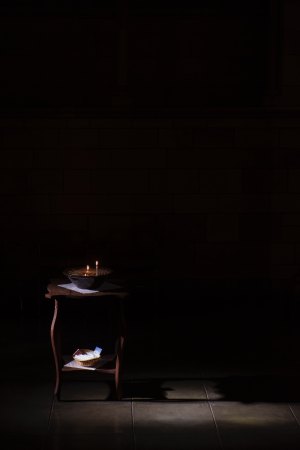 As I type this post, I have another browser window open to track the path of Hurricane Florence due to make landfall in my area sometime later this week. Though I now live a few hours inland, I grew up in a coastal town, so I know how unpredictable storms like these can be. It’s entirely possible that we will get a bit of rain and wind and nothing else–and it’s just as possible that we’ll be spending quite some time without power. I pray that the latter is the absolute worst of what we all endure here.
 Though represented by its detractors as an incursion of paganism into Christianity, and presented as an integrally and intrinsically Christian phenomenon by its supporters, the truth about the Re-Imagining Conference and movement is that it was a product of a wider feminist awakening. The critique of patriarchal religions that emerged in the academy and in churches and synagogues in the late 1960s and early 1970s was part of the emerging feminist uprising. The feminist movement placed a question mark over all patriarchal texts and traditions, secular and religious, and as such was beholden to none.
