This blog is an excerpt from our new book Goddess and God in the Worldwhich will be published by Fortress Press in just one week — on August 1. As we look forward to its release, we remember the critical works that started us on a journey of discovery that continues to unfold. In a jointly written chapter, we describe the beginnings of feminist theology.
Feminism was welling up from under during [the late 1960s]. We became feminists early in graduate school but did not discover feminist theology until we were preparing for our comprehensive exams. As Judith was later to write, feminism placed a question mark over absolutely everything for us: the maleness of God, the male authorship of the Bible, and the male perspectives from which virtually all theologies had been written. Three key essays set the stage for future work in the field, including our own. We have already mentioned these essays, but it is important to address the challenges they posed to traditional theology, and our own responses to them, in more detail here. Continue reading “The Emergence of Feminist Theology: Remembering our Roots by Judith Plaskow and Carol P. Christ”
The conclusion of my 3-part post on how the Hamilton musical has changed the narratives and bringing diversity to Broadway. This last piece of the puzzle is how Hamilton has impacted me. I have always had a love of history, yet growing up I struggled with the narratives I was given. I couldn’t find myself within the pages; the people building, defending, and sustaining our nation were far from me. Continue reading “Hamilton Part 3 – Conclusion: “Satisfied” By Anjeanette LeBoeuf”
As a practicing witch, feminist, energy worker and a student of life, I am often puzzled as to why, in this day and age, we continue using the terms “masculine” and “feminine” as descriptive modifiers. What exactly does it mean when we call an energy masculine or feminine, anyway? While I understand that these are descriptors that generally address what are typical characteristics – why do we insist on being so vague, misunderstood and perhaps even, insulting, depending on who we are speaking to? Continue reading “The Adjectives We Use by Deanne Quarrie”
When you read this Feminism and Religion community, we will have just finished the televised portion of the Republican National Convention (RNC), which as I write this Wednesday, July 20 has announced that Donald Trump is the presumptive nominee for president of the United States.
Last night the first night of the RNC we witnessed the emerging platform of the party going far to the right.
Republicans moved on Tuesday toward adopting a staunchly conservative platform that takes a strict, traditionalist view of the family and child rearing, bars military women from combat, describes coal as a “clean” energy source and declares pornography a “public health crisis.”
The platform demands that lawmakers use religion as a guide when legislating, stipulating “that man-made law must be consistent with God-given, natural rights.”
It also encourages the teaching of the Bible in public schools because, the amendment said, a good understanding of its contents is “indispensable for the development of an educated citizenry.”
The photo that accompanies this article, or others similar, have been posted, shared and commented through social networks as expression of the inherent misogyny of Islam, with descriptions such as “DAESH taking women to sell in the concubine’s market” or “Muslim women being carried to forced marriages”. I’ve also seen this picture being used by some feminists in academic conferences to illustrate their presentations on the “Status of Women in Islam.”
This photo has been misused. This image is taken from a religious event which is celebrated for Shiite Muslims to describe the terrible events that took place in Karbala 1,200 years ago. This act recalls the occasion when the family of the Prophet Muhammad, formed mostly by women, was taken prisoner, including children and forced to walk chained. History records and praises the courage of women who bear this painful pilgrimage instead of submit themselves to their captors.
In my home city of Cleveland, Ohio, yesterday Donald Trump received the nomination to run as the Republican presidential candidate in the 2016 election. While we were on an upswing following the Cavaliers NBA championship and have been highlighted as “Believeland,” the nomination of Trump is another disappointing and health hazardous event that can be added to the reasons Cleveland is sometimes called “the mistake on the lake.”
There are so many reasons to be angered by the nomination of Trump; his blatant racism and bigotry, incitement of violence, ignorance of domestic or foreign policy, his insistence on discussing his penis size, and the list goes on. With the recent tragic murders of Alton Sterling, Philandro Castile, and eight police officers in Dallas and Baton Rouge, Sterling’s 15 year old son has called for us to come together as “one united family” and end the violence. Trump on the other hand, capitalized on their deaths as a way to highlight his “law and order” campaign and argue that Obama and Hillary Clinton are weak.
We’ve seen time and time again that Trump is unable to articulate anything meaningful in relation to his ability to fulfill the role of POTUS and his hateful rhetoric is influencing the ongoing violence in our nation. Critical points are being made about an anti-immigrant, anti-Muslim, anti-Latino, pro-white supremacy Trump; however, I am concerned that appropriate attention is not being given to the anti-woman sentiment of Trump and the GOP in general.
Oppressions are deeply intertwined and must be uprooted together. And so, the misogyny that exists within the Republican party must also be acknowledged as problematic.
Trump has certainly been condemned for his statements about women; however as a whole the Republican party is focused on a campaign that is anti-woman and ordained by God. My question is why are many much more willing to acknowledge racist and bigoted statements, but often turn a blind eye to the repeated right wing attempts to over turn Roe vs. Wade, defund Planned Parenthood, and regulate women’s sexuality in the name of religion?
Despite the fact that we are a secular nation, the Republican Party has claimed Christianity as a weapon against women’s human rights and it has been accepted as fair game in the world of politics. Trump’s argument, along with Gingrich’s and others that we should create tracking systems or ban Muslims from coming into the nation has been immediately recognized as racist, ethnocentric, and fear mongering (and rightfully so). But attempting to control women’s bodies and send us back to biblical times, well, it is something that many shrug their shoulders at and call a reasonable political issue.
All forms of oppression need to be addressed; you cannot uproot one, you must uproot all. And so, if we are to properly address the bigoted statements coming from the Republican nominee, and booming through Cleveland at the moment being, we must acknowledge the complexities of these issues, the ways they are intertwined, and why all are unacceptable.
Gina Messina, Ph.D. is an American feminist scholar, Catholic theologian, author, and activist. She is also Co-founder of Feminism and Religion. She writes for The Huffington Post, has authored multiple publications and is the co-editor of the highly acclaimed Faithfully Feminist: Jewish, Christian, and Muslim Feminists on Why We Stay. Messina is a widely sought after speaker and has presented across the US at universities, organizations, conferences and on national platforms including appearances on MSNBC, Tavis Smiley, NPR and the TEDx stage. She has also spoken at the Commission on the Status of Women at the United Nations to discuss matters impacting the lives women around the world. Messina is active in movements to end violence against women and explores opportunities for spiritual healing. Connect with her on Twitter @FemTheologian, Facebook, and her websiteginamessinadysert.com.
Jessi Klein wrote an Op-Ed in last Sunday’s New York Times entitled “Get the Epidural” in which she takes on the arguments for “natural” childbirth and makes an astute point about its premise: “It’s interesting that no one cares very much about women doing anything ‘naturally’ until it involves their being in excruciating pain.”
Thinking back to the months leading up to my daughter’s birth, I remember occasions similar to the one Klein describes in this article in which I was asked about my pre-natal care and plans for the birth, though admittedly they did not often come from strangers in the grocery store line. While Klein’s response was different from mine (I birthed without pain medication, and as you might have guessed from the title, she planned for an epidural), we each experienced feeling judged by others when they heard about our intended plans for birthing.
Klein alludes to this childbirth debate as symptomatic of our increasingly competitive culture around motherhood. I agree with her. But I worry about what happens when we talk about birth as primarily a parenting event rather than a physical one. When we divorce our intentions for our babies from what we desire for our bodies.
As with any piece having to do with childbirth, this article made the rounds on my Facebook feed and incited the usual divisiveness that all social media posts seem to do, splitting my friends and acquaintances into those who felt affirmed by Klein’s words and those who felt silenced by them. My reaction was to applaud that we have the ability to make different decisions about our health care, and that no matter how we plan our births—or how they turn out in the end—that is something to celebrate.
In my attempt to be diplomatic, I also quickly overlooked the assumptions of privilege at play in Klein’s piece and in my own response. Let’s start with the concept of a birth plan. A plan assumes that different options are available and acquirable. I’ve often written about how my pregnancy was one of the times when I felt my white, educated, middle-class privilege most acutely. I was able to have an intervention-free birth in large part because my family could afford to pay a doula on top of covering the costly medical fees related to the pregnancy and birth.
I wonder among my circles of privileged parents, why do we occupy so much of our time and expend so much of our energy arguing over which school of medically-sound thought regarding childbirth is best when there are so many people who bring life into world with inadequate or no health care at all?
Years before I got pregnant I began working with faith communities as an advocate for the full range of reproductive health care needs that people have throughout their lives, including safe and respectful childbirth. I’ve spent a lot of time reading and retelling the biblical stories of women giving birth and comparing them to the stories of global women today who face enormous challenges in their labor and deliveries. Tragically each year hundreds of thousands of women lose their lives as they bring new life into the world.
Pieces like Klein’s remind me of how easily people like me get caught up in our own spheres of experience and become blinded by the privilege that affords us the ability to fixate on details of our own lives rather than turning our gaze toward the world’s immense suffering.
As a faith-based advocate for gender justice, I’m currently working on a book with the FAR Press called Women Rising in which I look at the lives of ten biblical women through the lens of our current struggles for women and girl’s freedom and well being around the globe. One of my chapters focuses on the story from the book of Genesis in which Rachel dies in childbirth, and another looks at Mary’s delivery of Jesus as the miracle of maternal survival. My hope is that those of us who identify with the sacred stories of the Jewish and Christian scriptures will re-encounter them in a way that leads us back to a place of compassion for one another rather than judgment.
Katey Zeh, M.Div is a strategist, writer, and educator who inspires intentional communities to create a more just, compassionate world through building connection, sacred truth telling, and striving for the common good. She has written for outlets including Huffington Post, Sojourners, Religion Dispatches, Response magazine, the Good Mother Project, the Journal for Feminist Studies in Religion, and the United Methodist News Service. Find her on Twitter at @kateyzeh or on her website www.kateyzeh
“All children are our children.” As I was posting my recent blog about the shooting of black men by the police, these words came into my mind with the force of revelation. At the time I was looking at a photograph of Philando Castile, taken at his place of work. Yes, I thought, my heart opening: “he is my child too.” This widening of the heart is at the center of the maternal values of ancient and contemporary matriarchal cultures around the world. It is a feeling some of us who were mothered well enough or who mothered children—including children not our own—carry within us. Is this the healing balm our world needs today?
Maternal values? So many of us turn up our noses at such a “gendered” term. Perhaps we were not mothered enough in our families of origin. Perhaps we still feel un-mothered. Perhaps we don’t want to be told that we have to become mothers. Perhaps we fear that if we become mothers, we will be only mothers—all of our other ambitions and desires will have to take second place.
Since beginning her posts for FAR four years ago, Elizabeth has featured an excerpt from my chronicles each July in honor of my feast day on the 22nd. At least I thought it was my Feast day. It has been brought to our attention that Pope Francis only recently elevated the 22nd to the status of a Feast. Before that, it was merely a Memorial of me as a saint, whether optional or obligatory I am not sure. The only thing more elevated than a Feast day is a Solemnity. (Needless to say my mother-in-law, aka the Blessed Virgin Mary, has one of those.)
You may not know me as Maeve, the Celtic Magdalen. Mary Magdalen, who she was (or is) should or could have been is a highly charged subject. Not very much is known about me, really, which is why legends, novels, and films abound. I’m a storied woman, to borrow Natalie Weaver’s term. There are fourteen references to me in the Gospels. I am associated with the non-canonical Gospel of Mary (I believe the credit for that should go to Mary of Bethany whom many people conflate with me). Pope Gregory is largely responsible for my lugubrious image as a penitent prostitute. Continue reading “Nobody’s Disciple by Maeve Rhuad aka the Celtic Magdalen via Elizabeth Cunningham”
I have entitled this post O Tempora o mores after a sentence by Cicero, meaning “Oh what times! Oh what customs!” I would like to discuss how some of the messages we get from religious writings are defined by the age in which they were written.
As a result, I argue that it is wiser to pay more attention to the overall message of a given spiritual tradition, rather than to subject our view on a single quote.
One of the most popular texts in Thai Buddhism (which is of Theravada tradition) is called Phra Malai Klon Suat, “Chanted Version of Phra Malai.” It was reproduced copiously in the 19th century, with the earliest version dating from the 18th century. However, its origins are believed to be more ancient, coming from the original Indian Buddhism.


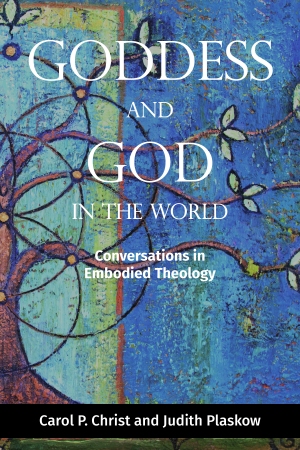 This blog is an excerpt from our new book Goddess and God in the World which will be published by Fortress Press in just one week — on August 1. As we look forward to its release, we remember the critical works that started us on a journey of discovery that continues to unfold. In a jointly written chapter, we describe the beginnings of feminist theology.
 The conclusion of my 3-part post on how the Hamilton musical has changed the narratives and bringing diversity to Broadway. This last piece of the puzzle is how Hamilton has impacted me. I have always had a love of history, yet growing up I struggled with the narratives I was given. I couldn’t find myself within the pages; the people building, defending, and sustaining our nation were far from me.
  As a practicing witch, feminist, energy worker and a student of life, I am often puzzled as to why, in this day and age, we continue using the terms “masculine” and “feminine” as descriptive modifiers. What exactly does it mean when we call an energy masculine or feminine, anyway? While I understand that these are descriptors that generally address what are typical characteristics – why do we insist on being so vague, misunderstood and perhaps even, insulting, depending on who we are speaking to?
  When you read this Feminism and Religion community, we will have just finished the televised portion of the Republican National Convention (RNC), which as I write this Wednesday, July 20 has
 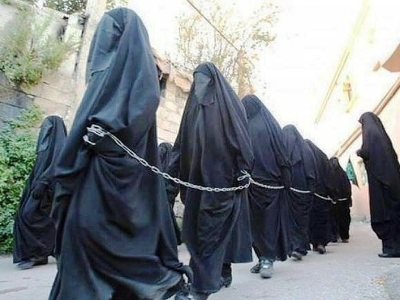 The photo that accompanies this article, or others similar, have been posted, shared and commented through social networks as expression of the inherent misogyny of Islam, with descriptions such as
  In my home city of Cleveland, Ohio, yesterday Donald Trump received the nomination to run as the Republican presidential candidate in the 2016 election. While we were on an upswing following the Cavaliers NBA championship and have been highlighted as “Believeland,” the nomination of Trump is another disappointing and health hazardous event that can be added to the reasons Cleveland is sometimes called “the mistake on the lake.”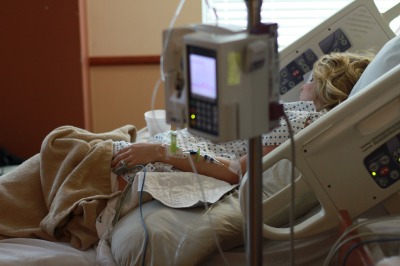
 communities to create a more just, compassionate world through building connection, sacred truth telling, and striving for the common good. She has written for outlets including Huffington Post, Sojourners, Religion Dispatches, Response magazine, the Good Mother Project, the Journal for Feminist Studies in Religion, and the United Methodist News Service. Find her on Twitter at @kateyzeh or on her website
  “All children are our children.” As I was posting my
  Since beginning her posts for FAR four years ago, Elizabeth has featured an excerpt from my
  I have entitled this post
 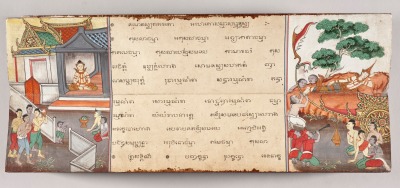 One of the most popular texts in Thai Buddhism (which is of Theravada tradition) is called
