Arduinna, Gaulish Goddess of Forests and Hunting is one of the many Celtic Goddesses who is associated with a particular region or body of water. She was worshipped in the heavily forested regions of the Ardennes, located in what is current day Belgium and Luxembourg with small portions found in France and Germany. She was also associated with the Forest of Arden in England. Her name has its roots in the Gaulish word “arduo” meaning “height”.
It happened while writing my first published essay, a project that triggered fears within me about writing in more public venues. The essay pushed me out of the comfort zone of my typical academic voice. This both energized and terrified me, so I went to the woods for invigoration and clarity. The trails were empty that afternoon. I breathed in solitude and soft winter light and decided to speak, voicing statements of boldness and courage: “Be bold. Create despite fear. You can do this.“ And then I saw it, an unfamiliar creature, about the size of a medium dog, moving quickly into my periphery. It leapt onto the trail, landing fifteen yards ahead, midway up a low hill.
The elevation difference brought us face-to-face. I found myself staring into a fierce, furry-brown, teddy bear face. It exuded a stout confidence and an instinctual danger thumped. Eye-to-eye, neither of us moved. What was this thing? Suddenly from the reservoir of memory a recognition emerged—it looked like a wolverine. But wolverines aren’t in these woods, right? Fifteen unflinching seconds passed and then it leapt back into the woods. I stood mesmerized by the beauty and surprise of it—this was not something ordinary. Continue reading “Synchronous Wisdom: Face-to-face with a Fisher by Kate Common”
Last week I watched Spotlight, the film about the Boston Globe‘s exposure of priests’ sexual abuse of children, and then I watched it again. There are many reasons for my fascination with this film. I almost always root for the underdog, and in this story the underdog wins. Moreover as a former Catholic (for a period of time) and as part-Irish, I relish an inside glimpse of the machinations of the all-male Church hierarchy and the all-male Irish power structure that supported it in Boston.
They always say in writing – use a title and the first few sentences to grab attention and the reader will want to see what you have to say. By my title, you have probably ascertained that I have made reference to a couple things: Wonder Woman, Sheryl Sandberg’s “Lean In,” and traction. While lately, I have suffered from writer’s block and lack of time to work on my writing, I have also found myself in another place of suffering that has me in traction at least thrice weekly.
It is in that spirit that I reflect on my former status as the infallible wonder woman – the mom of 4, who works full time, teaches, writes, supports her family, is in the middle of writing a dissertation and who started this new year as my year to “Lean In” and really excel in my career – to the current status of fallible woman, mom of 4 trying to stay afloat in all of her obligations, dealing with difficult sibling and teenage bantering as well as (thanks to a begging daughter spouting promises of responsibility) a Siberian Husky puppy and a resident 10 year-old Boston Terrier who now demonstrates the epitome of love-hate relationships, to prioritizing projects in order to keep everyone happy while I try to heal, attend physical therapy, and manage newfound pain and limitations.
In this post, I offer my [brief] thoughts about aging and struggles when a body, probably abused through pushing too hard, but also enduring the normal wear and tear of aging, begins to betray you while trying to come to terms with to a new normal of limitation within your own being – “adapting” if you will – a skill that I believe women have come to master well.
Throughout life, we all face our shares of limitations and encounters with mortality. Lately, it seems like I have encountered one thing after another. However, as these events arise, life must inevitably move on – but, moving on does not mean ignoring what just occurred. Rather, time needs to be taken to understand and appreciate each of these things – even if things do not go our way. Continue reading “What Happens when Wonder Woman “Leans In” and Winds up in Traction? by Michele Stopera Freyhauf”
At the time of climate change and crises of capitalism we need to drop our sense of entitlement to comfortable life or even to life at all. Nature will not spare us just because we are humans. When the meltdown of economic and environmental systems occurs, we are all going down: humans and non-humans, women and men, spiritual or not. We have almost run out of time.
Victor Pelevin, my favourite contemporary Russian author, has a novel called “The Sacred Book of the Werewolf“. I love it in part because, like Kill Bill, it is a rare creation by a male author, which manages to capture the female warrior spirit.
It starts with the main character, a Chinese Buddhist Were Fox who lives in present-day Moscow, consoling herself: “What else (or What the fuck) did you expect from life, A Huli?” A Huli is her name, supposedly meaning Fox A in Chinese. It is also a swear phrase in Russian, meaning “What the fuck?”
It’s been 56 years since she published her article on “The Human Situation” in The Journal of Religion, and her most basic groundbreaking insight holds true: Under patriarchy, the fundamental sin and danger for women is not too great a sense of self, too much pride as Reinhold Niebuhr would argue; rather, the problem is too small and diffuse a sense of self. Prioritizing others ahead of herself, the woman under patriarchy accepts second-class citizenship and submission to male headship as her rightful place.
Wrong.
Yet, in recent years, when reminding colleagues of this fundamental feminist insight from the second wave, I have received replies that begin “But Sarah Coakley says ….” What they lift up is Coakley’s supposed reclamation of kenosis as feminist, of self-emptying as a revolutionary Christian act in relationship to God. To them, this corrects Valerie Saiving. I have heard variations on this defense from senior male scholars who believe themselves to be quite advanced in their thinking, as well as from female scholars who believe this is the kind of feminist theology they want.
Last year I thought, seriously, of getting married. I know, it may be hard to believe, given my image of cranky feminist. But I still have an engagement ring in art-deco style with a bright ruby to show this was true.
He and I came across each other in 2011 and we talked about many things. Then, we got caught up in life and lost touch with each other. Exactly a year ago, he found me again and the universe granted us to meet and agree in time, place, intentions, and feelings.
From the beginning, I had faith that what I was living was a gift from God. I received it with thankfulness and opened my heart. I often prayed in gratitude and asked for guidance: “Allah, let me see his heart,”“Allah, grant us understanding.” God always answered me. We had beautiful moments of bliss and deep connection in which we disclosed our wounds and scars as well as learned to appreciate each other. One Sunday, after I showed him how to cook Tacos with Guacamole, he asked me for the third time. I accepted. Continue reading “Mawada, Rahma and Sakina by Vanessa Rivera de la Fuente”
A theology of complementarity, referred to by Pope Francis as an “anthropological fact,” has had a strong influence on American politics. According to the Vatican teaching, women and men have distinct but complementary roles, meaning that women’s value is found in the home as wife and mother and men are responsible for providing for the family. Such a teaching is highly problematic in that it demeans women’s value and places women on the underside of dualism.
As a woman with an ongoing struggle with infertility, I find it troubling that my church sees my value as less because my womb is barren. Likewise, do women have less value if they choose a career over motherhood? What if they choose not to marry? There are also clear implications for single parents, LGBTQ parents, and so on. In addition, societal norms make clear that women’s work in the home is not valued as the work of men in society. Likewise, it is damaging to men in that it refuses to acknowledge the critical role men play in the household, in the lives of their children, and their responsibilities to be partners and co-parents.
The idea of complementarity upheld by Pope Francis greatly contributes to economic injustice for women. The Vatican’s refusal to value women’s roles outside the home influences US social policy on women’s issues. The continued struggle to close the pay gap, implement paid parental leave, and create viable options for childcare and early childhood education are directly connected to complementarity. If women are supposed to remain in the home and be wives and mothers, then there is no need to address any of these issues. How can we possibly have women in leadership roles if they are supposed to be at home cooking dinner and caring for children? And so, when women do pursue careers the social attitude is that women do not belong. Such an idea is even more problematic for women of color who suffer a lower pay rate – $.64 on the dollar for African American women and $.54 for Latina women. Furthermore, many have have been forced to work outside of the home as a result of economic and racial injustice. In this secular nation, Christian values dominate our political debates and perpetuate the idea that women are subordinate to men. And to be frank, these are community issues that impact men as well as women; yet they have been deemed women’s issues as a result of the manifestation of theological teachings.
As republicans focus on defunding Planned Parenthood, ending marriage equality, protecting religious freedom, and claiming issues like parental leave are not federal issues, women continue to be relegated to second class status. In a time of turmoil and multiple threats to the progression of our nation, there is greater concern for regulating women’s bodies than guns.
Pope Francis has been praised for his commitment to the poor; yet he has been unable to make the connection between poverty and the women’s issues that exist as a result of complementarity. Likewise, the Church’s stance on reproductive justice continues to perpetuate the very issues that the pope seeks to address. As Sr. Joan Chittister points out:
I do not believe that just because you’re opposed to abortion, that that makes you pro-life. In fact, I think in many cases, your morality is deeply lacking if all you want is a child born but not a child fed, not a child educated, not a child housed. And why would I think that you don’t? Because you don’t want any tax money to go there. That’s not pro-life. That’s pro-birth. We need a much broader conversation on what the morality of pro-life is.
No doubt, his lack of relationships with women is a major contributing factor to his ignorance when it comes to such issues – by the way, which could be easily fixed by embracing women’s ordination. And so, as Pope Francis has become an international figure deemed a savior to the people, these disconnects fuel ongoing US political debates that keep women in a marginalized position and continue a cycle of poverty and oppression.
Pope Francis has called for a “Year of Mercy” in which he has stated that if a woman confesses having an abortion, she will be forgiven. Many have praised the pope for taking such a step towards healing; yet, I can’t help but think, “how judgmental and irresponsible.” Without knowing a woman’s circumstance, her decision making process, her doctor’s concerns, etc., why should one be told to repent? To deny women the right to reproductive justice is to deny women the ability to make decisions about their physical, emotional, and financial health – and we see this play out in the US as a result of the influence of complementarity in our political system. So, in this “Year of Mercy,” I wonder will the Vatican confess its sins against women, LGBTQ persons, and others it has marginalized?
Portions of this article are excerpts from If Jesus Ran for President coming from the Far Press in Spring, 2016.
Gina Messina-Dysert, Ph.D. is Assistant Professor of Religion and Gender Studies at Ursuline College and Co-founder of Feminism and Religion. She writes for The Huffington Post, has authored multiple publications and is the co-editor of the highly acclaimed Faithfully Feminist: Jewish, Christian, and Muslim Feminists on Why We Stay. Messina-Dysert is a widely sought after speaker and has presented across the US at universities, organizations, conferences and on national platforms including appearances on MSNBC, Tavis Smiley, NPR and the TEDx stage. She has also spoken at the Commission on the Status of Women at the United Nations to discuss matters impacting the lives women around the world. Messina-Dysert is active in movements to end violence against women and explores opportunities for spiritual healing. Connect with her on Twitter @FemTheologian, Facebook, and her websiteginamessinadysert.com.
Earlier this month the Center for Disease Control (CDC) released a new infographic on alcohol consumption with some controversial recommendations for women of childbearing age. In short, if a woman is not on birth control, the CDC recommends that she avoid alcohol altogether because she might become pregnant.
My first take on the report was that this was simply another example of how we treat young women as if they are merely wombs in waiting. In her response to the recommendations Rebecca Ruiz wrote this for Mashable.com:
While the original recommendation may have been intended to ensure safe pregnancies and healthy children, its underlying message was unmistakable: Women should consider themselves first a vessel for human life and make decisions about their health and behavior based on that possibility.
Despite severe backlash CDC officials stand by their assertion that the primary goal of this infographic is to alert the public about the dangers of alcohol consumption, particularly for pregnant women. In an interview with the New York Times CDC deputy director Dr. Anne Schuchat said, “We’re really all about empowering women to make good choices and to give them the best information we can so they can decide what they want to do themselves.”
When my husband and I made the decision to have a child, I immediately immersed myself in research. I read Taking Charge of Your Fertility and began tracking my basal temperature. I started taking folic acid and yes, I did cut back on my alcohol consumption. The timing of that decision happened to coincide with attending a bachelorette party. As I nursed my club soda while the rest of our group had cocktails, I told myself that it was a small sacrifice to make. The thing is, I was trying to get pregnant. That decision about my future had shifted the way I thought about my day to day life. I was preparing for the real possibility that everything was about to radically change, so making some minor adjustments ahead of time felt small in comparison.
But the CDC’s recommendations are not intended only for women who are trying to conceive. They apply to any woman of childbearing age who has the possibility of becoming pregnant. The problem isn’t that they encourage women to be careful about how much alcohol they are consuming. The problem is that it reinforces the idea that a woman’s decisions and behaviors should be focused on a potential pregnancy, whether or not she wants one.
The fact that this is being promoted by a government agency is particularly troublesome in an age when the policing of pregnant women’s bodies is becoming more and more stringent. In 2014 Tennessee passed a law that allows the state to criminally charge women who give birth to babies who show signs of drug withdrawal. While this is the most extreme law on the books, other states have similar legislation that considers prenatal drug exposure a form of child abuse. What would stop a state from passing a law that would prosecute a woman for consuming alcohol during her pregnancy?
I’ve grown increasingly fed up with this emphasis on an individual woman’s personal responsibility and decision-making without an equally serious focus on the conditions in which she lives her life. Reproductive justice activists have been saying this for decades. Loretta Ross, co-founder of SisterSong Women of Color Reproductive Justice Collective, writes about the connection in her article “Understanding Reproductive Justice”:
We believe that the ability of any woman to determine her own reproductive destiny is directly linked to the conditions in her community and these conditions are not just a matter of individual choice and access.
As a person of faith committed to justice, I am compelled to take seriously what might appear on the surface to be innocuous and even ridiculous guidelines from the CDC and examine how they contribute to a larger, more dangerous narrative about women’s bodies. I fully support the CDC’s stated goals to reduce fetal alcohol syndrome and to ensure that every pregnancy is healthy. But we shouldn’t do so at the expense of women’s dignity and full humanity.
Katey Zeh, M.Div is a strategist, writer, and educator who inspires intentionalcommunities to create a more just, compassionate world through building connection, sacred truth telling, and striving for the common good. She has written for outlets including Huffington Post, Sojourners, Religion Dispatches, Response magazine, the Good Mother Project, the Journal for Feminist Studies in Religion, and the United Methodist News Service. Find her on Twitter at @ktzeh or on her website www.kateyzeh.com.
Like you, I am no longer a young woman. Like you, I am a lifelong feminist activist. But, unlike you, I am not supporting Hillary Clinton. I am supporting Bernie Sanders because of–not in spite of–my feminist principles. I came into the feminist movement through the antiwar, antipoverty, and civil rights movements. My feminism cannot be reduced to the single issue of women’s rights. I believe that feminism can and must be intersectional and inclusive of issues of class and race. For me it must also include an analysis of the relationship between patriarchy and war, which I have discussed in a series of blogs on Feminism and Religion that I hope you will read.
I believe the future of the United States (and the world) requires us to dismantle the system in which the 1% owns more of the world’s resources than the rest of us combined. As you and I both know, poor women of color are at the bottom of this system, both in the United States and worldwide. As you and I both know, there are reasons to seriously doubt if democracy can function in a political system in which the 1% can buy candidates and fund voter suppression. Continue reading “Dear Gloria: The Feminist Candidate I Can Believe In Must Be Unbossed and Unbought by Carol P. Christ”


 Arduinna, Gaulish Goddess of Forests and Hunting is one of the many Celtic Goddesses who is associated with a particular region or body of water. She was worshipped in the heavily forested regions of the Ardennes, located in what is current day Belgium and Luxembourg with small portions found in France and Germany. She was also associated with the Forest of Arden in England. Her name has its roots in the Gaulish word “arduo” meaning “height”.
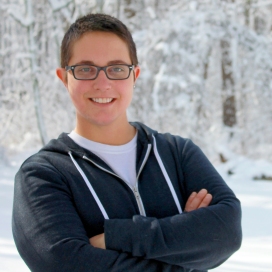 Last month I came face-to-face with a fisher.
 The elevation difference brought us face-to-face. I found myself staring into a fierce, furry-brown, teddy bear face. It exuded a stout confidence and an instinctual danger thumped. Eye-to-eye, neither of us moved. What was this thing? Suddenly from the reservoir of memory a recognition emerged—it looked like a wolverine. But wolverines aren’t in these woods, right? Fifteen unflinching seconds passed and then it leapt back into the woods. I stood mesmerized by the beauty and surprise of it—this was not something ordinary.
  Last week I watched
  They always say in writing – use a title and the first few sentences to grab attention and the reader will want to see what you have to say. By my title, you have probably ascertained that I have made reference to a couple things: Wonder Woman, Sheryl Sandberg’s “Lean In,” and traction. While lately, I have suffered from writer’s block and lack of time to work on my writing, I have also found myself in another place of suffering that has me in traction at least thrice weekly.
 epitome of love-hate relationships, to prioritizing projects in order to keep everyone happy while I try to heal, attend physical therapy, and manage newfound pain and limitations.
 At the time of climate change and crises of capitalism we need to drop our sense of entitlement to comfortable life or even to life at all. Nature will not spare us just because we are humans. When the meltdown of economic and environmental systems occurs, we are all going down: humans and non-humans, women and men, spiritual or not. We have
  It starts with the main character, a Chinese Buddhist Were Fox who lives in present-day Moscow, consoling herself: “What else (or What the fuck) did you expect from life, A Huli?” A Huli is her name, supposedly meaning Fox A in Chinese. It is also a swear phrase in Russian, meaning “What the fuck?”
 I still think that Valerie Saving was right.
 Last year I thought, seriously, of getting married. I know, it may be hard to believe, given my image of cranky feminist. But I still have an engagement ring in art-deco style with a bright ruby to show this was true.
 A theology of complementarity, referred to by Pope Francis as an “anthropological fact,” has had a strong influence on American politics. According to the Vatican teaching, women and men have distinct but complementary roles, meaning that women’s value is found in the home as wife and mother and men are responsible for providing for the family. Such a teaching is highly problematic in that it demeans women’s value and places women on the underside of dualism.
 Portions of this article are excerpts from
 communities to create a more just, compassionate world through building connection, sacred truth telling, and striving for the common good. She has written for outlets including Huffington Post, Sojourners, Religion Dispatches, Response magazine, the Good Mother Project, the Journal for Feminist Studies in Religion, and the United Methodist News Service. Find her on Twitter at @ktzeh or on her website
  In the past week, founder of Ms. Magazine Gloria Steinem, whom I have always greatly admired,
