 Guns and bibles have somehow become linked in this nation. Particularly throughout the midwest and the south, many associate their right to own a gun with their Christian religious values. I personally find this confusing given Jesus’ stance on non-violence.
Many call me a “gun hater,” and that might not be too far from the truth. But with that said, I need to be honest and share that there are guns in my home. They belong to my husband, Chris, but they exist in my space. It was a major issue that we debated before and after we were married. Growing up in Ohio, Chris started hunting at a young age and continues to do so today (yes, he does eat what he kills). We have a six year old daughter and I find it very difficult to cope with the fact that we own guns with a child in the house. Nonetheless, we own a gun safe and take proper precautions. And although I don’t like guns and I don’t like hunting, after fifteen years of marriage, I finally told my husband that I am going to stop judging him for his hunting lifestyle – it seems like the Jesus thing to do. *read sarcasm
I share this to say that the gun debate that exists in this nation also exists in my home. Both my husband and I feel very strongly about our stances. But we love and respect each other and so we find ways to compromise and ensure that in some ways we are both getting what we want, our rights our being honored, and safety is always our first concern.
The gap in the gun control debate has grown substantially in the last few decades. During his presidency, Ronald Reagan argued that “I do not believe in taking away the right of the citizen for sporting, for hunting and so forth, or for home defense. But I do believe that an AK-47, a machine gun, is not a sporting weapon or needed for defense of a home” (February 6, 1989). I don’t disagree with this position, and I don’t think many would. However, the debate over gun control has become about party lines rather than a reasonable law that honors rights and is committed to safety.
In 2015 there were more mass shootings in the US than days in the year. In fact, the US has one of the highest murder rates of developing countries with nearly three quarters of those murders being committed with a gun. In addition, gun control is a serious women’s issue given that most women murder victims are killed by a gun by someone they know. Following the mass shooting at Umpqua Community College on October 1, 2015, Obama commented, “Tally up the number of Americans who’ve been killed through terrorist attacks over the last decade and the number of Americans who’ve been killed by gun violence, and post those side-by-side.” So here are those numbers:
From 2005-2015:
- Americans killed in terror attacks on US soil: 71
- Americans killed by gun violence in the US: 301,797
Whether you are an Obama supporter or not, you have to admit, the numbers don’t lie. Also important to note, mass shootings only account for about two percent of gun deaths annually. Most of those killed by guns are murdered in various situations from domestic violence, to arguments at the bar, to road rage; there are numerous situations that result in someone being murdered with a gun in the US each year. When I hear Trump propose that there should be no such thing as a gun free zone, I wonder if he is really looking at the issue with a critical eye?
Many republicans don’t disagree that some level of gun control is needed. For instance, in January, 2013 now Speaker of the House, Paul Ryan stated “I think we need to find out how to close these loopholes and do it in such a way that we don’t infringe upon people’s Second Amendment rights.” He continued, “We had this issue, 2001, 1999 I think … when I first got into Congress. At the time I remember thinking, ‘You know, there is a loophole here. We should address that.'”
However, in January of 2016 when President Obama announced his executive action aimed at reducing gun violence, Ryan criticized him for being “dismissive” and called his actions unconstitutional. Focused on expanding background checks, registration for licensed gun dealers, and narrowing the gun show loophole, Obama’s executive action mirrors Ryan’s call for change in 2013. However, once the plan was proposed by a democrat, Ryan argued, “We all are pained by the recent atrocities in our country, but no change the president is reportedly considering would have prevented them…At a time when the country wants the president to lead the fight against radical Islamic terror, this is yet another attempt to divide and distract from his failed policies.”
Likewise, Marco Rubio took to the airwaves claiming that Obama wants to take away everyone’s guns. In an interview on Good Morning America, Rubio made this argument and was quickly called on the carpet by George Stephanopoulos. Backing down, barely, Rubio acknowledged that the executive action would not take away gun owner rights, but continued that he strongly believes this is the ultimate goal of Obama. Rubio then followed up calling all citizens to purchase guns. Appearing on Face the Nation with John Dickerson, Rubio argued, “If ISIS were to visit us, or our communities, at any moment, the last line of defense between ISIS and my family is the ability that I have to protect my family from them, or from a criminal, or anyone else who seeks to do us harm. Millions of Americans feel that way.” It seems that fear mongering rather than facts continues to play a critical role in our gun control debate.
While our politicians are obsessed with battling party lines and maintaining partisan stances, our “Christian” nation continues to be one of the most violent. As a Catholic and a feminist, I would personally like to see harsher gun control laws. But that said, I wonder, if we fought so vigorously for every person’s right to have food, clean water, and health care as we do for guns, where would we be as a nation? As a people? A global community? When will our politicians stop focusing on personal vendettas and instead put the needs of the people first?
This article is an excerpt from Jesus in the White House coming from the Far Press in Spring, 2016.
Gina Messina-Dysert, Ph.D. is Assistant Professor of Religion and Gender Studies at Ursuline College and Co-founder of Feminism and Religion. She writes for The Huffington Post, has authored multiple publications and is the co-editor of the highly acclaimed Faithfully Feminist: Jewish, Christian, and Muslim Feminists on Why We Stay. Messina-Dysert is a widely sought after speaker and has presented across the US at universities, organizations, conferences and on national platforms including appearances on MSNBC, Tavis Smiley, NPR and the TEDx stage. She has also spoken at the Commission on the Status of Women at the United Nations to discuss matters impacting the lives women around the world. Messina-Dysert is active in movements to end violence against women and explores opportunities for spiritual healing. Connect with her on Twitter @FemTheologian, Facebook, and her website ginamessinadysert.com.


 Friday, January 22nd marks the 43rd anniversary of the Roe v. Wade decision of 1973 which provided all women nationwide, for the first time, the right to get a legal abortion for any reason–the right to choose. There are celebrations, and actions for visibility planned throughout the nation. Some of them are listed on the Planned Parenthood website.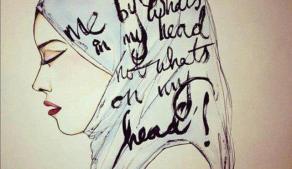


 communities to create a more just, compassionate world through building connection, sacred truth telling, and striving for the common good. She has written for outlets including Huffington Post, Sojourners, Religion Dispatches, Response magazine, the Good Mother Project, the Journal for Feminist Studies in Religion, and the United Methodist News Service. Find her on Twitter at @ktzeh or on her website
  No matter how carefully developed they are, theories of female power in pre-patriarchal societies are dismissed in academic circles as “romantic fantasies” of a “golden age” based in “emotional longings” with “no basis in fact.” I was reminded of this while reviewing
  Religion. As a species we can’t seem to live with it or without it. There is dispute about the derivation of the word,
 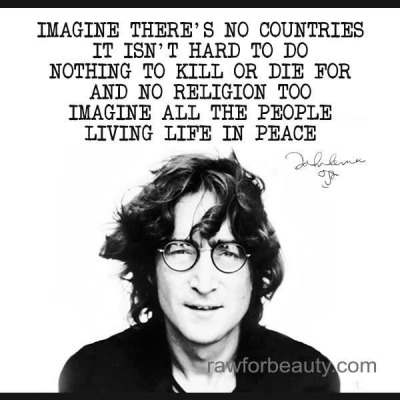 I titled this piece “And no religion, too” after a line from John Lennon’s song “Imagine.” Maybe I am struck by that line, because my life and work have been dominated by religion, literally since birth. My mother’s labor was induced to accommodate my curate fathe
 There are three vicious circles: patriarchy, samsara and wanton destruction of environment. All three lead ultimately to annihilation of life. All three are incredibly difficult to escape. One of the reasons for this difficulty is that there are pay-offs. Someone or something benefits from keeping the cycles going.
 Last week I was finally able to see “
 In medieval Europe, religious devotion provided an alternate narrative for women’s lives in a male-dominated culture. Defiant women who stood up for themselves in the face of rape, incest, and murder were hailed as virgin martyrs. Religious vocations, such as becoming a nun or a beguine, provided a viable and esteemed alternative to forced marriage.
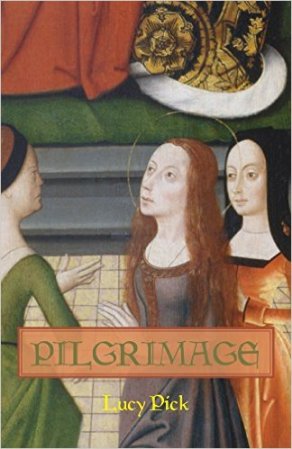 The cover of academic historian Lucy Pick’s novel
