Earlier this week I went to hear Sr. Helen Prejean speak about the death penalty. You will remember, if the name does not immediately ring a bell, that the amazing movie Dead Man Walking (dir. Tim Robbins, 1995) was about her and her ministry to provide solace and closure with God to those inmates on Death Row. In the film, Sr. Prejean was played by Susan Sarandon. Dead Man Walking, a phenomenal hit, chronicled her first attempt at this ministry—her trials and limited success—in helping Matthew Poncelet come to grips with what he had done, ask forgiveness of the victims’ parents (because he was complicit in the murder of two teenagers) and face his death with dignity.
In addition to teaching Gender and Women’s Studies, I have also been the screenwriting professor at University of California Irvine since 1992. I have used the screenplay for this movie (adapted from Prejean’s book and direct interviews) almost since it was published. It’s a great example of how research, interview, and authenticity can make a movie work—rather than “making it up.” Even the title was new to most of America- “Dead man walking!” refers to the last walk an inmate makes as he (or she) walks to his (or her) death.
So, I was enthusiastic when I heard that Sr. Helen was speaking at a local church very close to my house. Although I’ve used the screenplay for well over a decade, I had never met her or read the actual memoir she wrote. It seemed the perfect opportunity to meet her and get a signed copy—and also something my students would love to hear about when we discuss the film in the winter. Continue reading “Right to Life vs Right to A Life: Abortion & The Death Penalty by Marie Cartier”
Abstract from the Study: The low proportion of women within the subject areas of Theology and Religious Studies has long been observed, and is increasingly recognised as a serious problem for staff and students. In this new study, Mathew Guest, Sonya Sharma and Robert Song chart patterns of gender imbalance among staff and students across UK Theology and Religious Studies departments, exploring why such patterns remain so persistent. Drawing on interviews with Theology and Religious Studies academics across the country, the report examines the professional life of female university staff, and makes recommendations for how universities might address the inequalities of opportunity and practice that emerge.
While this report focused on UK institutions, it is an important study for this field of study and did garner feedback outside of the U.K. Some of the findings that may be of interest:
Females outnumber males at the undergraduate level in theology and religious studies (60/40). When moving to the taught post-graduate level, the proportion of female students drop to 42%, and at the post-graduate research level (Ph.D. program) another drop to 33%.
Women make up 29% of academic staff in the field of theology and religious studies. 37% amount early career academics and lecturers, 34% senior lecturers, and only 16% amount professors.
Comparing the field of theology and religious studies to other disciplines across the humanities, social sciences, and natural sciences reflect the same trajectory of gradual female withdrawal in tandem with academic progression. The drop-out rate seems to be more dramatic in theology and religious studies, especially between the undergraduate and taught postgraduate levels.
Structural factors influencing this pattern include the tendency of theology and religious studies departments to recruit postgraduates from international contexts in which a form of Christianity that favors the authority of men is prominent.
Interviews with academics in the field reveal additional factors which include entrenched connections to Christianity and Christian churches, the gendered style of academic engagement in some of the sub-discipllines, and the up-hill struggle to develop the confidence to succeed in a male-dominated environment.
Generic issues include poor allowance for childcare and family responsibilities as well as bullying.
Advisors have a profound effect as well as interaction with the faculty.
Often, women are pressured to perform better than their male counterparts in order to stand out from the other female candidates.
Gender stereotypes that work against “women’s entrance and mobility” in academic jobs, especially those related to leadership positions.
Collegiality focused on “male sociability”whereby women’s ideas are suppressed or they find themselves on the margins within their departments.
Being the lone voice or scapegoat in the department for “women’s issues.”
Studying stereotypical topics and migrating away from traditional “male” disciplines.
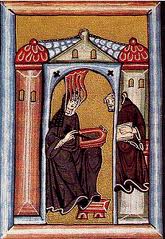
The visionary abbess Hildegard von Bingen (1098-1179) has long been regarded as a saint, with her feast day of September 17, yet she was only officially canonized in May 2012. Why did it take the Vatican over eight centuries to canonize this great polymath, composer, and theologian?
The first attempt to canonize Hildegard began in 1233, but failed as over fifty years had passed since her death and most of the witnesses and beneficiaries of her reported miracles were deceased. Her theological writings were deemed too dense and difficult for subsequent generations to understand and soon fell into obscurity, as did her music. According to Barbara Newman, Hildegard was remembered mainly as an apocalyptic prophet. But in the age of Enlightenment, prophets and mystics went out of fashion. Hildegard was dismissed as a hysteric. Even the authorship of her own work was disputed as pundits began to suggest her books had been written by a man.
Newman states that Hildegard’s contemporary rehabilitation and resurgence was due mainly to the tireless efforts of the nuns at Saint Hildegard Abbey in Eibingen, Germany. In 1956 Marianna Schrader and Adelgundis Führkötter, OSB, published a carefully documented study that proved the authenticity of Hildegard’s authorship. Their research provides the foundation of all subsequent Hildegard scholarship.
In the 1980s, in the wake of a wider women’s spirituality movement, Hildegard’s star rose as seekers from diverse faith backgrounds embraced her as a foremother and role model. The artist Judy Chicago showcased Hildegard at her iconic feminist Dinner Party installation.
Medievalists and theologians rediscovered Hildegard’s writings. New recordings of her sacred music hit the popular charts. The radical theologian Matthew Fox adopted Hildegard as the figurehead of his creation-centered spirituality. Fox’s book Illuminations of Hildegard of Bingen remains one of the most accessible and popular books on the 12th-century visionary. In 2009, German director Margarethe von Trotta made Hildegard the subject of her luminous film, Vision. And all the while, the sisters at Saint Hildegard Abbey were exerting their quiet pressure on Rome to get Hildegard the official endorsement they believed she deserved.
Pope John Paul II, who had canonized more saints than any previous pontiff, steadfastly ignored Hildegard’s burgeoning cult, possibly because he was repelled by her status as a feminist icon. Ironically it was his successor, Benedict XVI, one of the most conservative popes in recent history—who, as Cardinal Ratzinger, expelled Matthew Fox from the Dominican Order where Fox had served for thirty-four years—finally gave Hildegard her due. Reportedly Joseph Ratzinger, a German, had long admired Hildegard. He not only canonized her but elevated her to Doctor of the Church, a rare and solemn title given to only the most distinguished theologians.
But I believe the true credit for Hildegard’s triumph is due to the Benedictine Sisters at Saint Hildegard Abbey for keeping Hildegard’s flame burning.
Read Hildegard’s poem slowly as a prayer, contemplating how the Sacred Flame, however you envision it in your own spiritual tradition, relates to your life.
Although putting women in charge of drafting new policies that address the “woman problem” currently facing the NFL, it too reeks of the similar dismissive and patronizing actions women face when trying to obtain leadership roles in their religious traditions. Supercilious progress for the sake of progress isn’t progress and progress under the guise of silence is still misogyny. We need women in positions of leadership in both the NFL as well as in religious traditions. The culture of violence and silence will only continue, albeit with a Band-Aid firmly in place, holding the painful experiences and histories of women, long forgotten and often overlooked, until society values their rights just as much as the men leading the prayers and those that are being prayed for on Sundays across America.
There is never a reason for physical violence. There is never a reason to hit your partner or child to the point where they are unconscious or bruised. There is never a reason to inflict violence against someone else, but apparently there are exceptions to these rules if you’re an NFL football player.
In my native state of Wisconsin, watching football on Sunday is synonymous with attending church prior to the game. Watching football on Sunday is a cultural norm in many, if not all, different regions of the country where individuals, whether you like it or not, gather each Sunday to both praise and pray that your team ends up on top.
In Wisconsin, you attend church with your family and head to your desired destination where you gather with friends and family to eat, talk about your life, and of course watch your local football team battle their weekly rival. Although I am not much of a football fan these days, I have very fond memories of attending football games, watching them with my family and talking about the Green Bay Packers’ Super Bowl chances. It was my time to both bond with the men of my family as well as catch up on the gossip the women would whisper back and forth to each other at the dinner table while the men were in the other room screaming at the TV.
Although I’m sure I will watch more games in my future, lately, all I do is cringe when I think about the growing violence that women and children face and have faced in the large shadow of an organization worth north of $9 billion dollars.
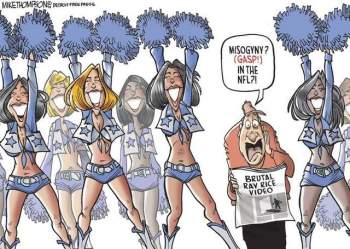
The biggest scandal to hit the news waves lately is that of Baltimore Ravens running back Ray Rice’s assault of his wife in an Atlantic City elevator. Although Rice and the various other incidents regarding NFL players and violence is disturbing, the biggest problem facing the NFL isn’t just its treatment of women but its continual commodification of them as a disposable resource emblematic with the culture of violence that it has created.
If you didn’t know, women make up an estimated 45% of the NFL‘s more than 150 million American fans and have, in recent weeks, become their most valuable resource and source of criticism. However, after a long string of incidents stemming back from NFL teams underpaying cheerleaders to the Ray Rice incident, one needs to ask what the roles of women, if any, are outside of the disturbing images of the abused wife, hypersexualized cheerleader? Is being dragged out of an elevator by your abusive husband the only way to get women’s issues addressed in the NFL by fans, league owners, and the NFL commission?
The roles of women in the NFL and religion have many similarities. Aside from end zone celebrations where players praise God for his apparent direct role in helping them score a winning touchdown or certain players edifications as gods on Earth, women make up the crux of both NFL fandom and attendance but are responsible for the gatherings similar to the ones I, and many others, grew up with.
Although putting women in charge of drafting new policies that address the “woman problem” currently facing the NFL, it too reeks of the similar dismissive and patronizing actions women face when trying to obtain leadership roles in their religious traditions. Supercilious progress for the sake of progress isn’t progress and progress under the guise of silence is still misogyny. We need women in positions of leadership in both the NFL as well as in religious traditions. The culture of violence and silence will only continue, albeit with a Band-Aid firmly in place, holding the painful experiences and histories of women, long forgotten and often overlooked, until society values their rights just as much as the men leading the prayers and those that are being prayed for on Sundays across America.
Ann Braude said it best in her foundational text Sisters and Saints that “if we want to understand the history of American women, we need to examine the religious beliefs and activities that so many have found so meaningful.” Without women, we wouldn’t have many, if not all, of the religions that are present throughout the world today and in case we forget, without women, we too wouldn’t have the millions of little boys who grow up being taken to and from practice by their mothers with the hope that they too could one day become the professional football players that fans scream and pray for.
Without women, there is no NFL and without women, there is no religion. Kelly Brown Douglas said it best on this very blog when she stated, “It is the violence that violence creates.” Although I agree with her, I would only add that while violence does indeed create violence, the real sin isn’t the violence itself but rather the silence that follows.
Let us pray that we will continue to not be silent and that we will rise up and fight for the millions of women (and men) each day who do not live in fear that their significant other’s multimillion dollar contract will not be reinstated but rather that they and their children may not see another day on this Earth.
John Erickson is a Ph.D. Candidate in American Religious History at Claremont Graduate University. He holds a MA in Women’s Studies in Religion; an MA in Applied Women’s Studies; and a BA in Women’s Literature and Women’s Studies. The LGBTQ and women’s rights movements, masculinity studies, gender theory, and the utilization of technology in forming communities and creating new teaching methodologies influence his research interests. His work is inspired by the intersectionality of feminism, queer identity, LGBTQ history, and religious and sexual cultural rhetoric. He is a Non-Fiction Reviewer for Lambda Literary, the leader in LGBT reviews, author interviews, opinions and news since 1989 and the Co-Chair of the Queer Studies in Religion section of the American Academy of Religion’s Western Region, the only regional section of the American Academy of Religion that is dedicated to the exploration of queer studies in religion and other relevant fields in the nation. When he is not working on his dissertation, he can be found at West Hollywood City Hall where he is the City Council Deputy and Chief of Staff to Councilmember Abbe Land. He is the author of the blog From Wisconsin, with Love and can be followed on Twitter @JErickson85
A link to a talk called “Moral Behavior in Animals” by Franz de Waal recently found its way into my email inbox. I am a big fan of Franz de Waal because his findings confirm what I always believed—that animals are intelligent. I followed the link and other suggested links and spent most of the evening listening to de Waal.
De Waal began his studies of animal behavior at a time when instinctual behaviorism was academic orthodoxy: the idea that animals can think and feel was “poo-pooed” by “scientists.” As de Waal observed ironically, everyone who has a pet knows better than that. But academic researchers continued down this path, expressing contempt for ordinary people who thought their pets were intelligent and the likes of de Waal who suggested that scientists might be colossally wrong.
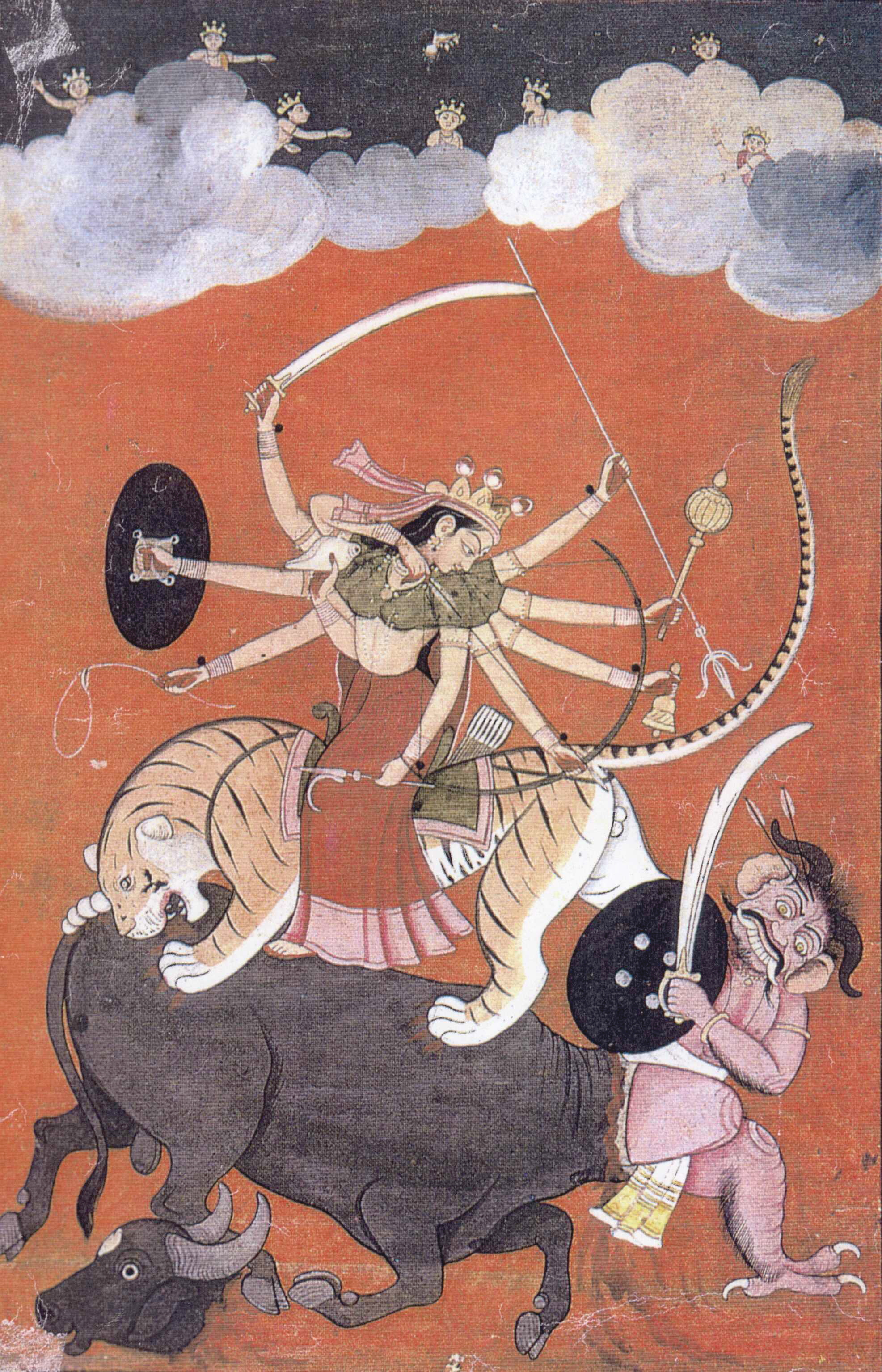
Ramakrishna was one of the major poets who popularized Kali’s worship in Bengal, the northeasternmost province of India. Born in the early part of the 19th century, he was a Hindu saint in a tradition known as bhakti, where devotees lovingly surrender their hearts, minds and spirits to their chosen deity in a practice which leads to ecstatic union with the divine. Such devotion is easier for us in the West to imagine when the beloved is the playful Krishna with his sublime flute-playing and sacred lovemaking. But in Ramakrishna’s case, the object of his devotion was the fierce Kali, the wild and uncontrollable aspects of the sacred, to whom he devoted himself as a child would to its mother.
Kali as the mother of Shiva
In his best-known evocation of the Goddess, Ramakrishna observes her as a graceful young woman sinuously emerging from the waters of the Ganges. As her belly breaks forth from the waves, we realize that she is late in pregnancy, coming to dry land to deliver her child. When she reaches the shore, she gives birth to a beautiful baby whom she fondles affectionately and lifts to her breast, where the child suckles until it is content. Holding her baby once more in her arms, the woman becomes the Kali we are more familiar with, a frightening old hag, gaunt with age and hunger. In her ferocious aspect, Kali then lifts the infant to her mouth, crushes it between her teeth and swallows the baby whole. Without a backward glance, she returns to the waters from which she emerged, disappearing again from view. Continue reading “Ramakrishna Devotion to Kali-Ma (Part 2 of 3) by Nancy Vedder-Shults”
I am currently in Cape Town South Africa at a Queer Muslim International Retreat. Next month I will go to Jakarta Indonesia for a workshop focused on the same agenda: reform in Muslim communities towards the lives of dignity for lesbian, gay, bi-sexual, transgender, Queer and Intersex Muslims. It has been a long road and the end of the struggle is nowhere in sight. Still, there are important developments worth noting.
I am the fifth of eight children. My brother, just older than me, is gay. Although we are both in our 60’s now, it was evident that his sexual orientation was not normative heterosexual from very early. My first nephew, son of my older sister is also gay. Now in his mid-40’s his was also not a question of lifestyle choice. I love these two men and always have. That did not mean I was devoid of homophobic tendencies and subtle acts of discrimination against queer people. I wasn’t against them, but I did not see why I, who lived as a straight heterosexual woman, should have to pay any attention to the particularities of their life struggle. It was their problem and I could ignore it. So I did.
I was never guilty of vicious acts – teasing, name calling or bullying; I just put it out of my mind. As a Muslim, I would come to encounter a much greater awareness how the convenience of sitting on the fence was inadvertently a tacit approval of gross homophobic violations and that all I believed about a Merciful and Compassionate Creator of Justice required me to support the struggles to establish that divine justice and cosmic harmony and beauty everywhere and for everyone. Continue reading “LGBTQI Muslims and International Movements for Empowerment by amina wadud”
We had an incredible time. La Plaza UMC, led by CST alum Rev. Vilma Cruz-Baez (’07), graciously hosted a reception before our panel discussion. As we feasted on hearty Mexican food (my favorite was the watermelon agua fresca), we perused the Exodus exhibition in the Museum of Social Justice, which featured dramatic black and white photographs of migrants and others who had made their lives in Los Angeles (n.b., the Museum is located in the basement of the Church, which is itself located on historic Olvera Street). I was grateful for the warm welcome and short history of the Museum that Director Leonara Barron provided.
We women of this blog, of this movement to bring Feminism to Religion and vice versa, are planting seeds of a better future. One part of this future is educating young people. I do not want my daughter to repeat some of the mistakes I have done in my youth. One thing I would most certainly urge her to do would be:
Conserve Your Energy
One of the Foremothers of the Goddess movement said that it is very easy to observe Goddess in everyday life: just look at teenage girls. They are uninhibited, creative, playfully sexual (I do not promote underage sex here, I am just emphasising that people can be sexual in their life cycle before and after they practice sexual acts with other people). Most of all, teenage girls are bursting with energy.
The question is: where would this energy go? What would it be spent on?
Roughly seven hours prior to my composing this blog, a report was disseminated across the Internet offering what is being called a first-hand account of Mosul women’s prison currently in Iraq where possibly thousands of Yazidi, Christian and Muslim women are being held. After these women are rounded up and sent to various prisons across Iraq and parts of Syria, they are given a choice to either abandon their religious tradition and convert to Islam or be sold to ISIS soldiers for roughly 30 dollars whereafter they will be raped, forced into marriage, and in some cases will later be tortured to death. After the women have been sold they are forced to call their families and offer detailed descriptions of what has just occurred. This sort of psychological warfare is why many UN aid workers are calling ISIS more diabolical than al-Qaeda.
Let me back up here. A couple of years ago, while researching religious freedom abuses in Iraq, I came across a small religious group called the Yazidi. Having never heard of this religious sect before, I took interest in why the United States Commission on International Religious Freedom, USCIRF, was highlighting specifically this group, naming religious persecution by Sunni militants in Iraq against the Yazidi as a reason for citing Iraq as a CPC, or Country of Particular Concern, making Iraq uniquely vulnerable to U.S. government sanctions. The Yazidi have been given the unfortunate nickname, “Devil Worshippers” in Iraq because their God is known as both Malak Taus and Shayton (or Shaitan), the latter meaning Devil in Arabic. The Yazidi are known to be highly secretive regarding their religious praxis which allegedly incorporates elements of Islam, Judaism and Christianity; hence, there is much confusion about who the Yazidi are and what they stand for. Articles from the BBC’s World Report and the Daily Mail in the UK have both pointed out that one of the few known cornerstones of the Yazidi faith is that one cannot be converted to the faith – one must be born a Yazidi and one may not ever denounce one’s faith. If a Yazidi woman were to claim another religion, she would be expelled from her community not only for the rest of her life, but eternally. This should help elucidate why imprisoned Yazidi women refuse to convert, choosing instead rape, slavery and ultimately death.
Now, who and what is ISIS and why is ISIS targeting the Yazidi among other minority groups in Iraq and Syria? ISIS or IS represents the Islamic State of Iraq and Syria or the Islamic State of Iraq and the Levant. The leader of this militia goes by the name of Abu Bakr al-Baghdadi. A religious fundamentalist, al-Baghdadi is fighting for the systematic removal of the Yazidi along with all other religious minority groups in Iraq and Syria. ISIS controls major cities on both sides of the Iraqi border which have allowed them to mobilize and procure enough weaponry to arm their fight across the entire region. The Huffington Post has reported several incidents of Sunni Muslim insurgents celebrating mass murders of the Yazidi and other minority religious groups by shooting massive weaponry in the air and parading through the streets.
The United Nations, along with Human Rights Watch, released a statement calling the current systematic murder of Yazidi men and the imprisonment and rape of Yazidi women, “religious extermination” and an “ongoing genocide”. An official spokesperson for Iraq’s Human Rights Ministry has said that, “the terrorists by now consider [the women] sex slaves and they have vicious plans for them…these women are going to be used in demeaning ways by those terrorists to satisfy their animalistic urges in a way that contradicts all the [sic] human and Islamic values.” The U.S. and France have been delivering aid to those minority groups that have fled to and are attempting to survive the harsh Mt. Sinjar climate. U.S. drone attacks along with missile strikes have flooded the areas where the ISIS militia is fighting. But is this enough?
The U.S. has an inarguably complicated political history with Iraq and many, including some UN representatives, wonder if the U.S. and its allies are truly doing enough to help the Yazidi women. There are multiple reports across social media, claiming family members in Iraq and in the U.S. are receiving phone calls from female relatives who have managed somehow to retain their cell phones. The women detail similar accounts of being captured, separated from their husbands and children, forced onto trucks and taken to abandoned schools and mosques. Some have witnessed other women being sold in the marketplace to ISIS men. One woman describes witnessing a pregnant woman being shot on sight for refusing to get into a truck headed to the now infamous Mosul prison. Certainly, the U.S. has many decisions to make regarding how and to what extent the U.S. government should help the plight of a religious minority in Iraq. The Yazidi community is being targeted directly, but so are many other religious minority groups in Iraq. The Yazidi specifically have been targeted by Islamic extremists for centuries in Iraq and many Yazidi have found refuge in Syria, until now. Women are undoubtedly being targeted by ISIS in this genocide as women are so often the target in religious conflict across the globe.
The USCIRF has named Iraq a CPC since 2008 and has detailed the ongoing Yazidi religious persecution in almost every annual report. What more can the U.S. government and U.S. allies do for the minority citizens of Iraq? They must take the threat of religious persecution seriously and understand that when religious freedom is not equally protected and valued by the government then basic, universal human rights are equally disvalued. When women’s rights are not protected, basic human rights are not protected.
Michele Buscher, PhD, received her degree from the Claremont Graduate University in 2013. Her PhD is in Religious Studies with an emphasis on Theology, Ethics and Culture. Her dissertation titled, Commission Impossible: The International Religious Freedom Act and its Impact on U.S. Foreign Policy with Particular Reference to Iraq and Burma, 1999-2012 explores the relationship between the International Religious Freedom Act of 1998 and current U.S. foreign policy abroad. She is interested in the role religion plays in the development of U.S. foreign policy particularly in the Middle East and how this contributes to human rights. Additionally, her scholarly interests include Feminist Theologies and Modern Catholic Studies. She received her BA from Seattle University in Creative Writing and her MA from Union Theological Seminary in Theological Studies. Michele works at Pitzer College as the Language & Cultural Lab Coordinator, Instructor for the International Fellows Program and Program Coordinator for the Kobe Women’s University visiting Cultural Program.


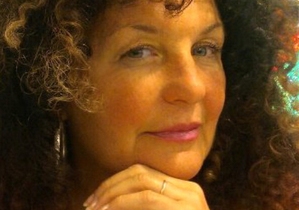 Earlier this week I went to hear Sr. Helen Prejean speak about the death penalty. You will remember, if the name does not immediately ring a bell, that the amazing movie Dead Man Walking (dir. Tim Robbins, 1995) was about her and her ministry to provide solace and closure with God to those inmates on Death Row. In the film, Sr. Prejean was played by Susan Sarandon. Dead Man Walking, a phenomenal hit, chronicled her first attempt at this ministry—her trials and limited success—in helping Matthew Poncelet come to grips with what he had done, ask forgiveness of the victims’ parents (because he was complicit in the murder of two teenagers) and face his death with dignity.
 In addition to teaching Gender and Women’s Studies, I have also been the screenwriting professor at University of California Irvine since 1992. I have used the screenplay for this movie (adapted from Prejean’s book and direct interviews) almost since it was published. It’s a great example of how research, interview, and authenticity can make a movie work—rather than “making it up.” Even the title was new to most of America- “Dead man walking!” refers to the last walk an inmate makes as he (or she) walks to his (or her) death.

 There is never a reason for physical violence. There is never a reason to hit your partner or child to the point where they are unconscious or bruised. There is never a reason to inflict violence against someone else, but apparently there are exceptions to these rules if you’re an NFL football player.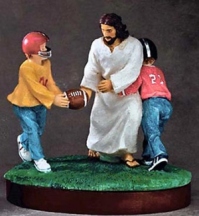


 Ramakrishna was one of the major poets who popularized Kali’s worship in Bengal, the northeasternmost province of India. Born in the early part of the 19th century, he was a Hindu saint in a tradition known as bhakti, where devotees lovingly surrender their hearts, minds and spirits to their chosen deity in a practice which leads to ecstatic union with the divine. Such devotion is easier for us in the West to imagine when the beloved is the playful Krishna with his sublime flute-playing and sacred lovemaking. But in Ramakrishna’s case, the object of his devotion was the fierce Kali, the wild and uncontrollable aspects of the sacred, to whom he devoted himself as a child would to its mother.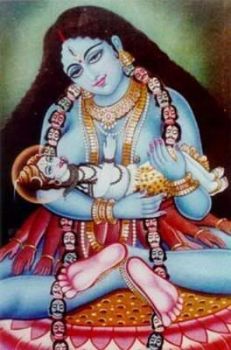
 I am currently in Cape Town South Africa at a Queer Muslim International Retreat. Next month I will go to Jakarta Indonesia for a workshop focused on the same agenda: reform in Muslim communities towards the lives of dignity for lesbian, gay, bi-sexual, transgender, Queer and Intersex Muslims. It has been a long road and the end of the struggle is nowhere in sight. Still, there are important developments worth noting.