Is “Barbie” Feminist Media?

Is Barbie a kind of counter-apocalyptic feminism? I am quick to embrace liminal violence in my own theories. Why not liminal joy or fun? Or, is Barbie just product placement?

Lately I’ve been thinking a lot about the idea of feminist media in light of all the hype around the Barbie movie and the backlash over the fact that neither director Greta Gerwig nor Margot Robbie (Barbie) received Oscar nominations. And while America Ferrera did receive a nomination for best supporting actress, a lot of critical attention has gone to the fact that Ryan Gosling (Ken) received a nomination for best supporting actor. I see the point. I understand the feminist critique here: female power is given an “atta girl,” but her creative contribution and leadership is overlooked. All that said: I didn’t really love the movie and the performance of the “I’m Just Ken,” song was my favorite part. Ferrera’s “iconic” monologue fell flat for me. Haven’t I read those words before, all over social media? The Barbie movie leaves me wondering, not for the first time, just what is feminist media?

When Game of Thrones was at its height of popularity, I saw so many online posts about the amazing female power (read feminism) of the show. But, having read the books, I took great issue with this characterization of the HBO blockbuster. Book five of The Song of Ice and Fire features, from what I recall, a double-digit number of sexual assaults against women. Every strong female in the story uses power as violence and dominance, and then of course, they are punished for it (as I wrote about in another blog). HBO’s Girls received similar feminist (and/or “post-feminist”) cred, featuring women who were supposedly friends but clearly seemed to disdain or ignore one another. Carter Hayward’s concept of “alienated power,” runs rampant in these two shows, and we enjoy it, because, as she explains, we have a hard time seeing power as anything else in a patriarchal system.

Continue reading “Is “Barbie” Feminist Media?”

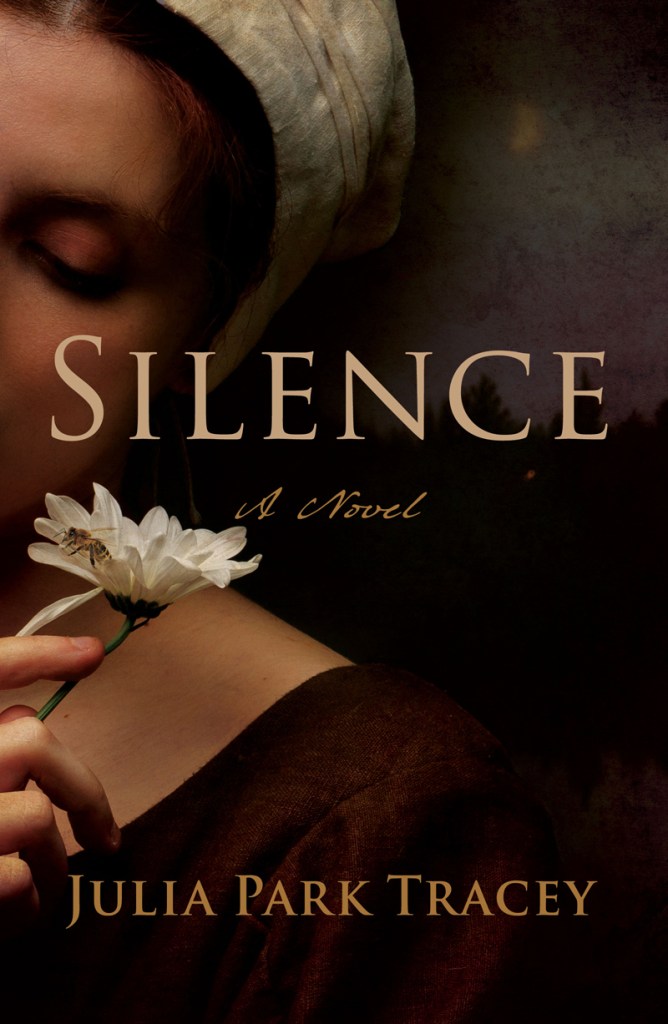
Maternal Thinking: Gifts, Mothers’ Bodies, and Earth edited by Sid Reger, Mary Jo Neitz, Denise Mitten, and Simone Clunie; book review by Carolyn Lee Boyd

Cover designed by Rebekkah Dreskin ~ http://www.blameitonrebekkah.com Front cover art “Bee Goddess of Rhodes Banner” by Lydia Ruyle. Bee goddess logo by Sid Reger

Maternal Thinking: Gifts, Mothers’ Bodies, and Earth, the fourth book of proceedings of conferences held by the Association for the Study of Women and Mythology (ASWM), is an instructional guide to saving ourselves and our planet. Many pre-historic, and even contemporary cultures, especially Indigenous communities, feature “Maternal Thinking.” Such cultures perceive that societies are successful when they center qualities associated with mothering: care, nurturance, cooperation, and meeting everyone’s basic needs while respecting the Earth and reciprocating nature’s generosity. Some 5000 years ago, Maternal Thinking was superseded in many societies by a perspective valuing instead competition, exploitation, and domination, and we and our planet are now facing the catastrophic consequences.

The fifteen contributors and four editors represent myriad disciplines and life experiences. They are academic researchers in wide-ranging fields, artists, activists, a storyteller, a therapist, scientists, educators, and more. This diversity reflects the expansiveness of the book’s vision, including many layers and facets of “mothering,” and the need for as many voices as possible to be heeded if we are to envision and birth a peaceful, just, equitable, compassionate, and environmentally balanced Earth.

Continue reading “Maternal Thinking: Gifts, Mothers’ Bodies, and Earth edited by Sid Reger, Mary Jo Neitz, Denise Mitten, and Simone Clunie; book review by Carolyn Lee Boyd”

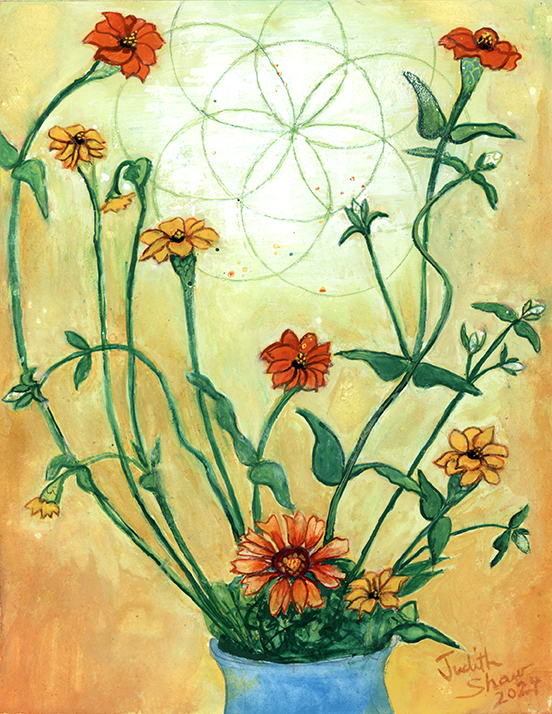
A Time of Renewal: Brigid Emerges at Imbolc by Judith Shaw

The wheel of the year continues turning and once again we find ourselves at the transition point from winter’s deep sleep to the first awakenings of spring. It is marked by an ancient Celtic festival called Imbolc, also known as Imbolg or Brigid’s day. It is believed to have been celebrated long before the Celts arrived in Ireland and Scotland, probably as far back as Neolithic times.

Continue reading “A Time of Renewal: Brigid Emerges at Imbolc by Judith Shaw”

Navigating the Dark by Sara Wright

Photo credit: Abiqui News

This morning I read an article about a woman who ‘forgot’ to light one of the candles on the Menorah or what I would call the ‘Tree of Life’ for the Jewish celebration of Hanukkah which takes place over a period of eight nights beginning in December. I was struck by her concern because she had forgotten one of the ‘rules’ and missed a night. Twice over a period of years…

While reading her reflection I noted that she seemed to get close to the underlying meaning behind the lighting of candles (present in every extant tradition) at the darkest time of year – she believed that she was bringing light into the literal darkness of night and kindling the divine spark within herself.

Continue reading “Navigating the Dark by Sara Wright”

Legacy of Carol P. Christ: Of Human Life*

This was originally posted on December 30, 2011

Watching the last episode of the Australian series Brides of Christ in which Catherine leaves the sisterhood of the convent because of her disagreement with Humanae Vitae brought me right back to the Yale Roman Catholic chapel and the folk mass I attended regularly.  In 1968 just after the publication of Humanae Vitae, priest and co-graduate student Bob Imbelli preached a sermon on the doctrine of conscience, arguing that though it was incumbent on Catholics to think carefully about the papal encyclical on birth control, it was also the responsibility of every Catholic to follow her or his conscience on the matter.  In the episode, Sister Catherine encourages a Roman Catholic mother of six who has already self-induced more than one abortion to take the pill, but the woman decides she cannot go against the church’s teachings.  Catherine allows an editorial against Humanae Vitae to be published in the school newspaper even though she knows it will probably lead to the expulsion of one of her favorite students.

Continue reading “Legacy of Carol P. Christ: Of Human Life*”

Let Your Voice Be Heard • Let Your Heart Be Inspired! by Dale Allen

I was honored to be a part of a special project for the Parliament of the World’s Religions Women’s Task Force: conducting interviews inside the first-ever Women’s Village in Chicago at the Parliament Convening. I had been on a team of women led by Sande Hart with Pat Fero. We met online over the course of nearly a year to plan the Women’s Village. It was a very special endeavor, and our group efforts produced a beautiful, calming, nurturing, sacred and inspiring space.  

The McCormick Center is America’s largest convention center, and yet we were able to create serenity.  The tapestries of Women’s Woven Voices provided a colorful and meaningful enclosure for our space.  A fountain cascaded a peaceful hum. Majestic staffs created by Erin Beatty stood as sentries; keepers of ancient feminine power. A great Mother Tree crafted by Elisa Guyton and Leah Myers spread her paper branches outward and received the written prayers and blessing posted there by attendees.  The crown-making table was always busy with women talking and crafting exquisite headpieces. The Red Tent room was a tranquil place of mediation, rest, and a variety of spirit-nourishing workshops and presentations.

The Great Mother Tree crafted by Elisa Guyton and Leah Myers, close up with written prayers and blessings.
Continue reading “Let Your Voice Be Heard • Let Your Heart Be Inspired! by Dale Allen”

Snake Priestesses of Crete as Earthquake Oracles? by Laura Shannon

Knossos Throne Room showing edge of lustral basin at left. Photo: Laura Shannon

A few weeks ago I was on Crete, having coffee with an archaeologist friend. She happened to mention something strange. Crete has always been a seismic zone, with lots of earthquakes, yet remarkably, in Minoan times, no one was killed in collapsing buildings; they were never taken by surprise. 

We pondered this – it seems astounding. They must have had some means of warning. Perhaps the serpents sacred to them could have given them some sign? 

Continue reading “Snake Priestesses of Crete as Earthquake Oracles? by Laura Shannon”

On the changing role of the Goddess

Goddess Prominence & Nature Participation through time

Today I reflect on the presence or absence of the goddess in religion and society, and how we view humanity and participate in nature as a result. 

This post is inspired by “The Myth of the Goddess. Evolution of an Image” by Anne Baring and Jules Cashford, and especially by its final chapter “The Sacred Marriage of Goddess and God: the Reunion of Nature and Spirit.” This dance of integration of apparent opposites is essential to my work.

Continue reading “On the changing role of the Goddess”

Get Some Grip! by Stephanie Arel

In my practice working in rehabilitative exercise, addressing minor injuries as well as traumatic ones – from brain injuries to falls, I see a lot of women over 60 who have a history of not training or challenging their upper body. The lack of upper body strength in women is, in some part, a result of culture. The historic role for women molds them to avoid muscles – to look thin, small, or frail in the upper body. A message emerges: “Let the man do it.” These roles are not benign, a fact reflected by changes in cultural views of sex and gender roles/expectations. While hewing to the feminine idea of the past might be easier, there is a price to pay later in life.

Anecdotally, men concern themselves with larger pecs, big biceps, and successful arm wrestling. Incidentally, when they can no longer do what they did as young men, some men give up doing much of anything. In my experience, women usually don’t surrender to age, but they traditionally resist both the look of a strong upper body and the labor necessary to achieve such strength. I have one client who feels afraid every time she has a weight over 10 pounds in her hands. Furthermore, women often defer to men: observe the next time you travel who lifts luggage in an airplane or brings baggage to the car. Life gets easier when someone else can grab the bags…but this ultimately makes later life harder – strength in the upper body is critical to the ability to break a fall, recover from injuries, and longevity.  

Continue reading “Get Some Grip! by Stephanie Arel”

Your Body Knows Before You Do by Andrea Penner

Our interstate move of 325 miles due east on U.S. Highway 40, formerly Route 66, that iconic highway through the American Southwest, took us from one rental home to another. A month later, I sat in a closed graduate seminar, having received a coveted “yellow card.” By some stroke of magic, the professor had read my master’s thesis.

“I know your work,” he said, signing the over-enrollment waiver.

For the next several years, I studied, wrote, taught, ate, slept, and moved through marriage and motherhood (and one more rental)—all toward the goal of completing the PhD in English while my then-husband cycled through professional jobs and both of us recovered from eight years of cross-cultural Christian ministry.

Continue reading “Your Body Knows Before You Do by Andrea Penner”