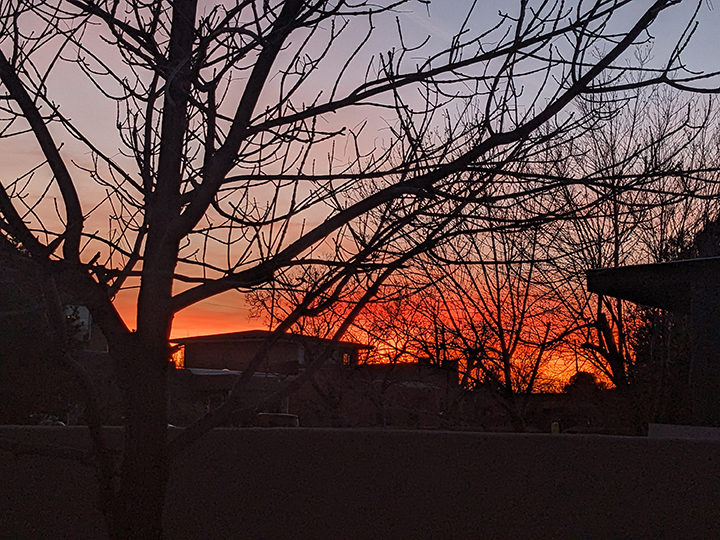
THE SKELETON TREE by Sara Wright

Moderator’s note: Our long time writer Sara Wright fell recently and broke her hip. I am writing this with her permission. Here is how she describes herself on our contributor’s page: Sara Wright  is a naturalist, ethologist (a person who studies animals in their natural habitats) (former) Jungian Pattern Analyst, and a writer. She publishes her work regularly in a number of different venues and is presently living in Maine.

Sara is always reminding us to listen deeply to the earth, the animals, the plants and all of nature. Her revelations are always poignant, instructional and helps, encourages, pleads with to the re-member that we are the natural world and we must cherish our “roots.”

To Sara, heal quickly and continue to write for us.

Here is what she wrote about her accident.

Continue reading “THE SKELETON TREE by Sara Wright”

Legacy of Carol P. Christ: Hidden Meanings in the Rituals of the Assumption

“[T]he Old European sacred images and symbols were never totally uprooted; these persistent features in human history were too deeply implanted in the psyche.  They could have disappeared only with the total extermination of the female population.” Marija Gimbutas, The Language of the Goddess, 318.

August 15 is known to Greek Christians as the date of the Koimisi, “Falling Asleep” or Dormition of the Panagia, She Who Is All Holy.  December 25 is a minor holiday in the Orthodox tradition, while Easter and August 15 are major festivals.  The mysteries of Easter and August 15 concern the relation of life and death.  In Orthodox theology, both Easter and August 15 teach that death is overcome:  Jesus dies and is resurrected; Mary falls asleep and is assumed into heaven.  These mysteries contain the promise that death is not the final end of human life.  Yet this may not be the meaning of the rituals for many of those who participate in them.

Continue reading “Legacy of Carol P. Christ: Hidden Meanings in the Rituals of the Assumption”

The Queen of Heaven Cakes: Asherah and Ishtar by Michelle Cameron

When one nation conquered another in antiquity, vanquished peoples typically switched allegiances to that country’s gods, since those deities were clearly stronger than their own. In my novel, Babylon: A Novel of Jewish Captivity, the prophet Daniel warns against this tendency, so the Judean exiles would remain faithful despite their captivity:

“You may be tempted to slip away from your Hebrew roots. Many of us struggle to remain steadfast to our faith. We are seduced by the lure of the gods of Ishtar and Marduk, Sin, Damkina, and Ea. Their temples overflow with riches and their ways are strange and compelling.

Continue reading “The Queen of Heaven Cakes: Asherah and Ishtar by Michelle Cameron”

Moon Worshippers by Beth Bartlett

You’d have thought it was the 4th of July the way people were gathering on the shore of the great lake, Gitchee Gumee – some with coolers and lawn chairs, kids and dogs in tow, each claiming their spot — waiting for the viewing as if waiting for the fireworks.  But what we awaited was far more spectacular – the “once in a very blue moon,”[i]  the second full moon in a calendar month, but also a “super moon” – so named because at this time when it is closest to the earth in its orbit it appears larger than usual. Super moons happen a few times a year and blue moons happen every two to three years, but super blue moons are rare. This one was probably the last in my lifetime since the next one will occur fourteen years from now in 2037.

My husband, dog, and our son’s dog, aptly named Luna, made our way to the lake, finding our spot on the ancient rocks, joining the other moon gazers. A feeling of community celebration arose with the moon as we strangers to each other together watched the first light of rising moon with shared anticipation and appreciation. The “blue moon” in fact appeared red as it came up through the hazy atmosphere, but as it rose higher in the sky, just as in the lyrics to the song, “Blue Moon,” the moon turned to gold, casting its golden glow across the waters.  As it rose, it seemed to grow even larger, rounder, brighter.

Continue reading “Moon Worshippers by Beth Bartlett”

Label or Be Labelled Part 2: Professional and spiritual identity

This post continues from Part 1, where I situated this essay as a reflection on Xochitl Alvizo’s article Human, Just HumanThere, I questioned the difference between the power of naming versus the pressure to label. I then described my search for a personal identifier as ‘participation ticket’ to life. This feels important nowadays to join the conversation and not be dismissed by default. However, I wondered whether looking for things that set us apart emphasises otherness rather than shared humanity.

Today, I question what can we learn from autoethnography about the many selves we bring to different professional situations and how they might hide more than they reveal. I also describe the challenges of naming nature-based practices in a geographical area where 2000 years of Christianity forced our pagan traditions underground.

Continue reading “Label or Be Labelled Part 2: Professional and spiritual identity”

GRANDMOTHER MOON by Iona Jenkins

Blue Supermoon at 9.30p.m. on 30th August 2023

This year, the full moon on 30th August, which was a Super Moon, is also called Blue Moon – the name given to a second full moon occurring in the same month. I stayed up meditating and reflecting, because the rising of this moon flooded both my front room and my awareness with a light of great beauty. Beginning gold, she changed into a robe of silver, and eventually pearl white, with a crown of pastel shades, in her vault of luminous blue flecked with white feathered clouds. The full moon is always an inspiration, a Goddess who lights up the psyche, revealing hidden shadows to be faced, firing intuition, or illuminating the soul with her timeless wisdom. She has become my good friend over the years, and in my life as an elder human being, she offers me inspiration, visions of creative wisdom and possibility on those gold and silver paths stretching between the shores of Wales and The County of Somerset in England.

Continue reading “GRANDMOTHER MOON by Iona Jenkins”

Monarch Magic, by Molly Remer

When my father was a boy in the 1950’s, he had a butterfly collection. His friends would bring him dead butterflies to add his collection and ask him what they were called. He got so many monarchs that his reply would be, “Thanks! That’s a ‘common sicker,’” secretly meaning they were so common he was sick of them. Now, my father is 70 and his grandchildren rarely see a monarch butterfly, the population of them having declined by 85% or even more in just two short decades. This rapid change is one of the most clear and alarming, observable indications of the massive changes wrought by both climate change and industrialized farming in our very own lifetimes.

Each year, I watch for monarchs from my Missouri home, during their migration season that carries them over our heads and on their way to Mexico. Each one I spot feels like a brush with magic on the wing, a testament to endurance and to hope. I watch them careen along in their delicate and determined way across highways and rooftops, across cars and parking lots, across my own house, and across open fields. I watch them alight on thistles, on goldenrod and oak trees, vine and bush. I see one above the Atlantic Ocean at Daytona Beach. I see two above the weeds in the Dollar General parking lot in Alabama. I see one above the sunflowers by the overpass in Kansas City. I see two coming over the Walmart roof and into the Staples parking lot in central Missouri.

Continue reading “Monarch Magic, by Molly Remer”

The Monarch That Didn’t Get Away –Butterfly Tagging, part 2 by Sara Wright

Part 1 was posted last week. You can read it here.

Today I learned that everyone is invited to witness butterfly tagging twice a week during the month of September. Efforts to publicize the value and ‘rightness’ of tagging are being stepped up.

Several people agreed with my assessment, namely that tagging creates trauma for the insect – and the idea that this practice may interfere with the butterfly’s ability to survive the 2000-mile journey, winter over successfully and then fly north to reproduce in the spring.

To my knowledge no one else had openly expressed their personal views to those in charge of the organization. However, some folks have come to talk with me. Most of us know that trauma weakens any organism’s immune system making it more vulnerable.

Continue reading “The Monarch That Didn’t Get Away –Butterfly Tagging, part 2 by Sara Wright”

Legacy of Carol P. Christ: Has the Vatican Discovered that Women Should Be Running the World?

This was originally posted on February 9, 2015

So it is a [female] generativity that .. is … giving life to social, cultural and economic structures that are inspired by values, ideas, principles and practices oriented to the common good …

carol p. christ photo michael bakas

The above statement from the Pontifical Council’s document on “Women’s Cultures: Equality and Difference” is a response to Pope Francis’s call for a discussion of “feminine genius” and its role in the Church. If in fact women are  “oriented to the common good,” then this is the best reason I can think of to elect a woman pope. And if a women are in fact hard-wired to think about the good of all, wouldn’t a woman pope’s first act be to dissolve the hierarchy that elected her? Is this why the Vatican is so afraid of the power of women?

Continue reading “Legacy of Carol P. Christ: Has the Vatican Discovered that Women Should Be Running the World?”

Lilith: Evil Demon or Feminist Role Model?

Today, we celebrate Simchat Torah (the Joy of the Torah) which marks the end of a cycle of Torah readings and the beginning of a new one.  Therefore, the Torah portion for October 14, 2023 is Bereshit (Genesis 1:1-6:8), the first parshah of the Torah.  This parshah is most known for its myths surrounding the beginning of the world, including, within it, two creation stories, the first one running from 1:1 to 2:3 and the second from 2:4 to 2:25.  These accounts of creation are followed by a story about Adam, Eve, a snake, and the Tree of the Knowledge of Good and Evil.  The parshah concludes with the happenings of Cain and Abel, the descendants of Adam and Eve, and Noah, a man who found divine favor.

I wrote briefly about this parshah in the midst of the pandemic.  The writing there mirrors the chaotic and often difficult nature of that time.  Thus, I want to revisit the parshah now.  Interestly, I am drawn to comment on the same topic: Lilith. 

Continue reading “Lilith: Evil Demon or Feminist Role Model?”