On Winter Solstice, I hosted a Return of the Sun event at the local healing arts center where I do my Circles. We had offerings and presentations all night long. It was the first time I have ever done anything that large or public, so it was a stretch for me.
At the end of the night, a friend said, ‘Oh my, I needed this. Let’s do it once a month.’
And I thought, ‘yea, right.’
And then I thought, ‘Yea. Right.’
I’ve already started thinking about ways we could do it better and things we could change.
I feel a bit like when I first started hosting Circles nine years ago. I’m tired and judging whether or not it was worth the stress and effort.
But this time around I know it’s worth the stress and effort.
Transcendentalism is a philosophical, literary, and spiritual movement begun in 19th century America whose founders centered being guided by your own inner voice, the immanence of divinity in all beings, the sacredness of nature, and the importance of social reform, among other aspects. Its influence is still felt today in the environmental movement, civil rights, literature, spirituality celebrating nature, and more. Ralph Waldo Emerson, Henry David Thoreau, Margaret Fuller and others are often considered to be its originators, but before them all was Mary Moody Emerson.
The Old Manse, Concord, Massachusetts, where Mary Moody Emerson was born and lived periodically, as did various minister ancestors and Ralph Waldo Emerson.
Mary Moody Emerson was born in 1774 in Concord, Massachusetts into a family of ministers and philosophers, including her nephew, Ralph Waldo Emerson. Her literary legacy includes a few published pieces, but is primarily the mountain of letters and journals which she called her “Almanacks.” She circulated these among friends and family, including many transcendentalists, especially Ralph Waldo Emerson. They featured many revolutionary ideas that made their way into his books and lectures, in particular, especially foreshadowing his book Nature, which launched transcendentalism. She also held influential conversations with Henry David Thoreau as he was writing Walden and with many other prominent thinkers over decades. Ralph Waldo Emerson praised her “Genius always new, subtle, frolicsome, musical, unpredictable” (Cole, 262). Almost entirely self-educated through books given or lent by family, friends, and local libraries, her sagacity was the well-spring of a movement that has been instrumental in making her world and ours.
This past summer, my family and I lovingly carried my brother’s ashes to a favorite spot of his, in the woods at our grandparents’ Catskill farm. My mind was on the simple, beautiful ritual, each of us stating memories and scattering some of the ashes around the tree, and singing a few songs. It had slipped my mind that this tree grew at the entrance of the very meadow where, at age 11, I felt urgently compelled to create a ritual for myself, just at puberty, where I connected with the Grandmothers of the four directions. No one had taught me this, and I am still in wonder at what we carry with us, undoubtedly from prior lives. I feel that this poem was my self initiating myself into the world of the Goddess, and preparing for my own future.
In this poem, the Grandmothers are speaking to me, with a bit of disdain and fond teasing.
The mad pre-Christmas rush of activity has passed and we find ourselves again in the quiet, dark and cold of winter. Winter Solstice, the longest night and shortest day of the year in the Northern Hemisphere, occurred last week. With a gain of only a few seconds of daylight each day in the ten days after Winter Solstice, we can take advantage of the stillness offered to seek within ourselves for the seeds laying dormant, waiting to be recognized and nurtured into fruition and manifestation.
Bright Solstice Night by Judith Shaw
Having just finished all the pre-press and pre-order fulfillment of the first of the Animal Wisdom Oracle decks, now is the perfect time for me to work on seeds of my own – another project that has long been in the works. This project has gotten back burnered every spring for the past couple of years as I seem to need the dark of winter to complete the art. It’s a folk tale inspired by the ancient stories of the Reindeer Goddess. It’s a tale that honors the Sacred Feminine. The story is written and now I have the illustrations to complete. Here’s a little taste of what’s to come:
Elena and the Reindeer Goddess
Just before dawn on a cold winter morning, Grandmother woke up with a smile on her wrinkled face and a feeling of hope in her heart. She had had a dream, one that had come from her ancestors, and from her own deep knowledge. It was a dream of prophecy.
“The Reindeer Goddess returns,” Grandmother whispered to herself.
She threw back her quilts and rose, shoving her cold feet into soft wool slippers, and hurried to wake her granddaughter, Elena.
She rushed into Elena’s cozy little room, then leaned over her and shook her gently, saying, “Elena, Elena, wake up. Quickly Elena, there’s no time to lose!”
Elena opened her eyes and yawned. “What’s wrong Grandmother? What’s happened?”
“It’s more about what will happen,” Grandmother said. “Come, let’s put on our coats and boots and while we walk I’ll explain everything. I need your pure heart, your quick wit, and your strength.”
Elena and Grandmother bundled up against the cold and stepped outside. They began to trudge through the snow lying thickly on the ground, past little puddles here and there, glinting hard as stone in the light from a million stars.
Grandmother gathered her coat more tightly around her as she began telling Elena the story, her breath puffing out like mist in front of her.
“Long, long ago in the northern lands of snow and ice – the Old World of our ancestors – the Reindeer Goddess was alive in the hearts of the people. It was she who took flight on the Winter Solstice bringing understanding of the power that lies in darkness and of the hope that spring would return.
“Our people knew her as Reinna. Sometimes she was seen as a woman who flew through the skies in a chariot pulled by reindeer. At other times she was seen as a flying reindeer herself.
Flight of the Reindeer Goddess by Judith Shaw
Look for more excerpts over the winter months and discover how Elena helps the Reindeer Goddess accomplish her very important mission of love. The book should be ready for the printers by the end of summer – early fall 2024.
Reindeer are the only deer species in which the females grow antlers. And the females’ antlers are larger and stronger than those of male reindeer. So who was Santa Claus really and who were his flying reindeer?
As our ancestors were well aware of the need for balance, Stag – the male red deer indigenous to the UK – is also celebrated at this time. Stag, who grows a massive rack, is symbolic of the masculine power of regeneration, a messenger from the spirit world and one who leads humans to spiritual enlightenment. Males are called bucks in other deer species.
The racks found on bucks from other deer species during the fall rut are also impressive. I was lucky to see many mule deer during my Thanksgiving stay in the Jemez Mountains of New Mexico. Deer who wander into town are protected and thus not afraid of humans. This allowed me to get very close to this magnificent buck and capture his photo. He was not at all interested in looking at me so it took awhile to get this shot from just a few feet away.
And finally I’ll share my painting of Stag with you all again.
May the Reindeer Goddess continue to nurture you with her love and gifts of abundance while Stag guides you to spiritual enlightenment.
Judith Shaw, a graduate of the San Francisco Art Institute, has been interested in myth, culture and mystical studies all her life. Not long after graduating from SFAI, while living in Greece, Judith began exploring the Goddess in her art. She continues to be inspired by the Goddess in all of her manifestations, which of course includes the flora and fauna of our beautiful Earth. Originally from New Orleans, Judith makes her home in New Mexico, The Land of Enchantment.
Judith’s illustrated fairytale: Elena and the Reindeer Goddess — A Magical Winter Solstice Mission — will be released by late January 2024. Sign up for Judith’s newsletter on her website for more info on the release.
Judith’s oracle decks are available on her website: Celtic Goddess Oracle — order your deck here. Animal Wisdom Oracle – order your deck here.
The winter solstice is almost upon us just as the first heavy snow buries the forest and house under 28 inches of snow. I never look forward to this shift into the cold, ice, and snow, although I do wrap myself in peaceful silence, sitting by the fire dreaming as twilight turns to night. My Norfolk Island pine and tipped balsam wreath shimmer with tiny stars. The scent of balsam soothes my senses and purifies the air. This month above all others is my time to honor the trees… I am keenly aware that Bone Woman and Old Man Winter are rising with the moon, whipped up by Northwest winds.
My scientist and naturalist friend, a member of one of the seven Indigenous Sioux tribes agrees with me that winter solstice is a dangerous time, one of the reasons in the old European way that everyone is masked while acting out winter solstice stories. These tales may vary in content but all have the same root. Shadow is on the move. Masks protect the people, the risk of exposure to danger is minimized in this way.
Though I have not been Christian for many years, I love to decorate my house for the holidays. I have many decorations that I have collected over the years, including a Hummel angel gazing at the Christ child that was my father’s mother’s and a small crocheted Christmas tree given to me by my mother. My Christmas tree is a living one in a pot, and I usually manage to keep it alive on the balcony or outside for several years. One of my hobbies is collecting ornaments for the tree. Among my favorites are glass icicles and snowflakes crocheted by my friend Alexis many decades ago. There are white doves and brown birds that land on the tree branches and glass balls that have come into the stores again in recent years.
Sitting around the tree watching the kids open presents. Attempting to enjoy a holiday meal with extended and immediate family that you may or may not have traveled thousands of miles to see. Trying with every fiber of your being to not talk about the elephant, or red hat, in the room.
I get it. It is hard to not go home for the holidays. It’s also hard to sit at home and watch every one of your friends post online about their dinners, get-togethers, and other joyous events while you sit at home. I also understand that many of us, as a result of our sexual and/or gender identity, or maybe our political preference, don’t feel comfortable going home or, can’t go home. This is not ok and that is why it is so important that we all have our chosen families to be with during these times of communal gathering or more importantly, ways to cope while we are at home in these uncomfortable situations to make sure we take care of ourselves and make it out the other end.
When I became a feminist, I realized that somebody had to write all about this women’s art that was out there being totally ignored, and it was going to be me. And of course the ideas and the discoveries about what women’s art was……. I look at it for the information it gives me about women’s imagery, women’s psyches, women’s lives, and women’s experience.”
I have been making art, masks, and theatre about “surfacing” for a very long time. As a child I was always digging at the roots of trees, fascinated by their interwoven strength, wondering how far down they went. That fascination never really left me. Sometimes it occurs to me that I and most of my colleagues are “spiritual archeologists”, sorting through artifacts and the mythic overlay of the past to re-discover and re-vitalize the present. I joined many of those colleagues for over 20 years: un-earthing, re-inventing, and animating stories of the Great Goddess throughout world culture with the Masks of the Goddess Project (1999-2019), among other collaborations. I am not religious, so much as I am a mythologist, following archetypal trails of myth back and back, seeking the sacred source they often reveal.
Once upon a time there was a person who only saw themselves in the mirror—even if someone else was passing by in the background, and they certainly never saw the shadows of all the people who had helped them in their life swimming in their eyes. That’s the way it is sometimes—we just don’t see what we don’t want to see.
And every day this person would look into the mirror, adjust their hair or their jewelry or their collar and then go off to work—never seeing anyone besides themselves.
Until one day they fell. The fell hard over a “stupid, goddamn tree trunk root that some goddam someone should have cut or shaved or done something with –goddamn it.” They said a version of this over and over on their way to the hospital.
And because of that they had to be fed by a nurse. And they had to have their bandages changed. And they had to have a cast put on—several. And they had to have a lot of things happen because it had been a nasty fall and they broke both wrists and their right leg.
Note: This is based on a podcast which can be heard here.
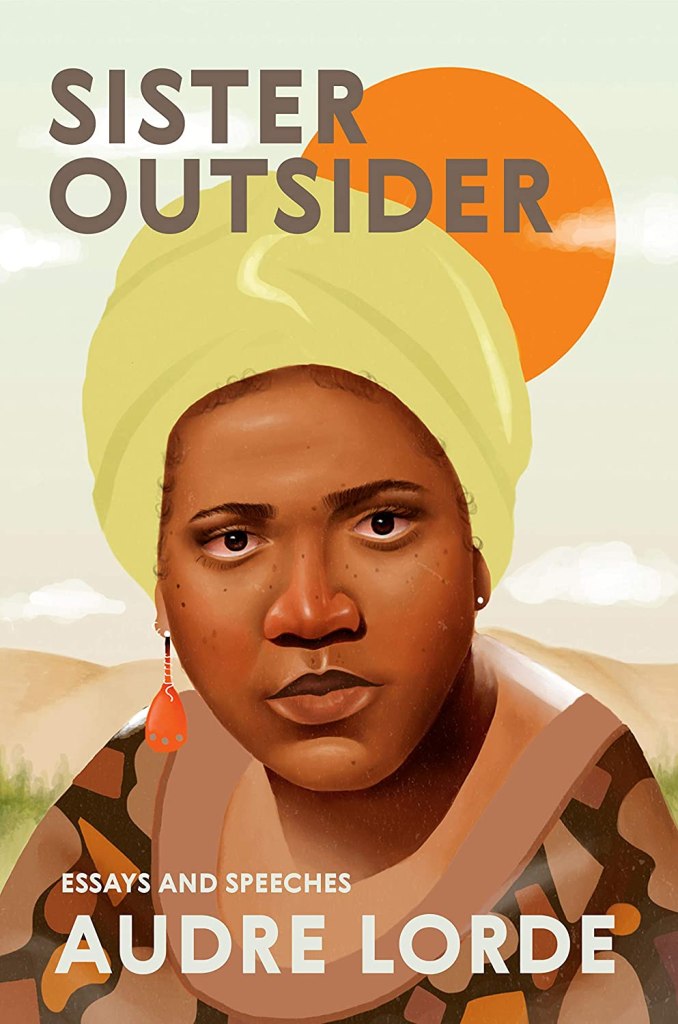
“Black love exists and Black women deserve love that does not require pain.”
What is love? What’s love got to do with pain and suffering? Are they related? Pain and love? Must one always be present with the other? In this blogpost I explore pain and suffering through a womanist perspective (centering the perspectives and lived experiences of Black women) and discuss how to live into wholeness and wellness. This is especially important because the Black community/women in particular’s experience in the US (and globally) has been and continues to be defined by pain and suffering. What are the theological implications?
How have Christian frameworks at associating love with sacrifice and pain justified the pain and suffering of Black women? How can we decolonize love so that liberated Black women are empowered to embrace a love that does not hurt first with false promises of rewards later in life or afterlife? Black women, pain does not equal love.