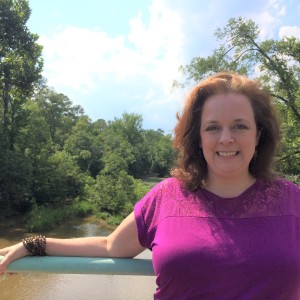
I’m tired in that way that happens when mind-overload, followed incautiously into concrete corners, limits the ability to conceive of solutions and dig up hope. I’m tired of reading commentary and I’m tired of thinking about the seeming impossibility of resolution, though I seem to be doing both compulsively. I read the news and it is overwhelming. I read theory and it is immobilizing: the more I learn, the more I realize how every possible choice of action is complicated by its impact on some person or power structure.
I’m tired in that way that happens to people who take in the world just as fully through their bodies – through touch, sound, breath, feeling, and movement – as they do through their minds. I’m tired in the way of those whose hearts well love and grief that flow up in gentle washes or powerful surges until they must escape in sighs and sometimes tears.
We live in tiring times.
We love in tiring times.
For several years, I was a leader in New Thought churches that held strict adherence to the “Law of Mind-Action” – that we change the blueprint of the universe to manifest according to our thoughts and beliefs – and the “Law of Attraction” – that we attract all experiences into our lives based on our thoughts and beliefs, whether conscious or unconscious. Under both of these principles, the material world, and thus the body, are subject to the will of the mind – subservient, docile, and reactive – just as women (traditionally associated in many cultures with the land and processes of the body) were considered inferior to and expected to remain subservient to men. Continue reading “Positive Presence in Tiring Times by Chris Ash”
We are all experiencing troubled times.Many are moaning and groaning, crying and screaming out.Both sides are bringing such huge negative energy to our world.
For just an hour – a day – if you can sustain it – practice gratitude and appreciation. If we can all turn our emotions to the good in our lives, to the love in our lives and take all that energy and place it there – well, no telling what can come of that!
We have had out Thanksgiving meals and are well into the leftovers – the turkey sandwiches and if you are lucky, you still have some dressing and gravy. That’s my favorite part!
Here is an exercise I do whenever I feel troubled by negativity around me.Take of some paper and pencil – or open a new document in your computer (which is what do). Begin to make a list of all the things you are grateful for.It shouldn’t be hard. Most of us did some of this a couple of days ago.As you think of things, they will prompt you to think of other things. Soon a good memory will come up followed by more. Feelings of loving appreciation will begin to flow toward those who participated in the good times with you. You may even find some forgiveness welling up for yourself and others for the bad times. Keep writing until you have it all out there in front of you.Most of us could easily have fifty things on that list.As you are writing these things out, if you are like me, you will feel your heart lighten and brighten with good feelings – loving feelings.This is gratitude. This swelling up of feeling inside us – this is our awareness of feeling blessed. This gratefulness feels lovely.
However, we need to do more. Appreciation.Appreciation is gratitude expressed!Look over your list.Where in that list is an opportunity to express appreciation?Are there events that included others – others who are still present in your life?Can you tell them how much they mean to you?What about family members, friends, co-workers, even your boss at work – are there feelings of gratitude there that can be expressed? Continue reading “Gratitude Expressed by Deanne Quarrie”
Every week, the women participating in my workshops easily share their experiences in the social, political or community world. However, it is difficult for them to talk about themselves. Several of them face complex situations: A divorce or a long layoff, illness of a relative whom they are caretakers, raising a disabled child. They are ashamed to speak up about how they feel; this should not be so. We women have the right and the duty to speak openly about what ails us in our private lives. The idea that the personal is political has to be a perfect circle.
Bisi Adeleye-Fayemi says that the lack of attention to physical, emotional and spiritual needs of women has become one of the weak points in the work of feminists. In our own social and institutional spheres where we work, the combined effects of the strong reactions against women’s movements, harassment on social networks, cultural and religious fundamentalisms, the pressures for leadership and the challenge of finding a balance between multiple spheres of life make it difficult to conserve energy.
While activisms mean resistance to the hegemonic system, some dynamics could reproduce patriarchal control’s devices on women’s emotions and impact us negatively: The expectation of renunciation and silent sacrifice as supreme feminine virtue. Sadness, illness or emotional distress are political issues and a way to control us with them is through the imposing or adopted silence about. Continue reading “Caring as Resistance and Sisterhood by Vanessa Rivera de la Fuente”
“Great art is not a matter of presenting one side or another,
but presenting a picture so full of the contradictions, tragedies, [and] insights of the period
that the impact is at once disturbing and satisfying.” – Pauli Murray
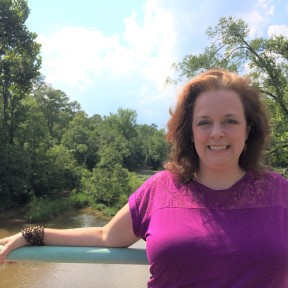
My spirituality is inherently creative. Deep in the creative process, I open more fully to awareness of what is flowing around and in and through me. When I can get there – to that place of fully giving myself over to Spirit as a channel, vessel, and embodiment – creation itself becomes an act of prayer, of devotion, of intense ecstatic ritual to honor, grieve with, or celebrate the Ground of Being behind all expression. I craft, dig, carve, build, dance, drum, and sing. Mostly, my art involves words – spoken and written – to create moments, spark feelings, paint pictures, or shape ideas. Words carry tremendous meaning, unconsciously as well as when we use them consciously, with intention.
My spirituality is inherently personal. While I’m a mystical thinker prone to the kind of abstraction that finds beauty in universal connections and layers of thought and cosmos, the questions that always draw me back into Self are these: How does this grow me? What am I learning that helps me be a better person for myself, my family, my community? How does this enhance my well-being, bring me contentment, or give me tools or strength to expand beyond the trauma, grief, and sadness of paying attention – really paying attention – to the world around me? Does this fill me with more to spill out into the world? More love, more beauty, more passion and fight and solidarity?
Canvassing against North Carolina’s Amendment One in 2011
At my first international retreat on Lesvos, Greece, women gathered with me from around the globe in the village of Molyvos to connect with their authentic creative spirit and bring their Mediterranean Muse to life on canvas. With permission from our wonderful Greek hosts, we built a Cretan style labyrinth in their olive grove, which we walked and danced daily as a metaphor for our journey within accessing our authentic creative voice. We painted, laughed, danced, swam, feasted, cooked, explored, sang, and dreamed. It was such a truly wonderful time.
I wanted to bring this program to Greece in part because of Carol Christ, who has called Lesvos home for over twenty years. In 2012, I participated in her ‘Goddess Pilgrimage to Crete’. To date, it’s one of the most transformational, life-affirming experiences of my life. I harvested so much creative inspiration and motivation from Greek village life, connecting to Goddess in this ancient landscape. I knew it was the perfect setting to gather women for an inspired creative retreat of my own. Carol took the time to come speak with our group, telling us about how she came to call Lesvos home. She spoke beautifully on Sappho, reading us some of her poetry. It was an honour to have her join us.
The simple, resourceful, sustainable way of traditional Greek village life and the generous nature of the Greek people is a humbling experience. On Lesvos, many people in the villages grow much of their own food, eating seasonally. In fact, food grows wild everywhere; wild thyme, oregano, dill, fennel, walnuts, figs, greens and much more. There are few large chain supermarkets. Trucks laden with fresh produce and fish make their way around the villages announcing their wares through a loudspeaker and the crowd gathers to shop.
There are over eleven million olive trees on Lesvos. Even the smallest plots of land often have them. Some villages own their own olive oil co-op. Cheese is usually homemade. Many people keep sheep and goats and the process has remained virtually unchanged since ancient times. Beehives are commonplace for honey and pollination, as too are grapes. Homemade wine is routine in many a household. Usually more than one job is held to make ends meet, many often supplementing their income through small-scale agriculture. One might be a café owner, a sheep farmer, olive grower and a fisherperson. Many traditional trades such as stone masonry and shoemaking are also still well and truly alive.
Life is not necessarily easy, but it is so much more sustainable, resourceful, and rich in tradition; offering a deeper connection to the land, food sources, community and family than we have in the modern Western world. We live in a disposable society based on convenience. It never ceases to amaze me to think that only a few decades ago, most households in Australia had a veggie plot, chickens, a rainwater tank and access to small family-owned corner shops for other necessities. Now that’s a rarity. It’s imperative for the sustainability of the planet to return to a grass-roots, village-based way of life. Greek village life inspires me and reminds me to hold tightly to these values.
To speak ones truth is oftentimes a difficult and nearly impossible act. However, to live one’s truth, on a day-to-day basis, is an aspect of life that has become so foreign to individuals who have become so comfortable in their own skin that I fear the activist and social justice roots that we all claim to hail from have fallen at the wayside and been replaced by complacency and reductionism.
I’m deeply troubled by some of the anti-trans and anti-queer commentary that has been taking place on some of the comments on this blog in recent months. I’ll never forget when this project first began—talking with the founders about its original purpose: to bring the “F” word back into the mainstream religious discourse and more importantly, to be a place where scholars, young and old, senior or junior, could write, collaborate and eventually converse with across cyberspace.
However, in recent months, I’ve found myself being more of a watchdog rather than a frequent commentator on issues pertaining to feminist religious discourse. I’ve found myself reading comments about issues I may not frankly identify or agree with just to make sure that the cisgendering or anti-trans narratives do not become symbolic of what this blog is now rather than what was supposed to be at the beginning.
When I sat down to write my very first post I was scared. I was terrified that feminists from all communities would see me only as I appeared and not for whom I actually was. I was afraid that all I had worked for throughout my life would be moot with the first bad comment on one of my posts. While all of those fears were real and valid they quickly faded away as I was embraced by this community and many others for my passion rather than my gender; my life’s work rather than my privilege; and more importantly, the personal mission to make the world a safer and better place for women and girls everywhere.
To speak ones truth is oftentimes a difficult and nearly impossible act. However, to live one’s truth, on a day-to-day basis, is an aspect of life that has become so foreign to individuals who have become so comfortable in their own skin that I fear the activist and social justice roots that we all claim to hail from have fallen at the wayside and been replaced by complacency and reductionism.
Caitlyn Jenner’s story is one that many individuals, often not highlighted on this blog, know all too well. Caitlyn Jenner’s story and personal experiences are valid and for members of the feminist community to refer to her as not “feminist” or merely as a man “masquerading” as a woman while still utilizing his privilege from being biologically born as a man is troubling and the root of the problem facing many trans individuals today when they’re negotiating coming out as their true selves.
Trans individuals face a cadre of other horrible social, physical and mental statistics that oftentimes lead them to be more likely to self-harm. However, as feminists, isn’t it our job to make sure that all groups have access to the same freedoms rather than working towards denying it for certain groups while trolling the comments sections of posts?
Shakespeare said: “To thine own self be true” and for those of us who identify with the Golden Rule, if we no longer treat others as we would like to treat ourselves, then we really have failed as feminists; and if the comments on recent blogs are any indication, we still have a long way to go before all voices can feel welcomed not only on FAR but also in the world at-large.
John Erickson is a Ph.D. Candidate in American Religious History at Claremont Graduate University. He holds a MA in Women’s Studies in Religion; an MA in Applied Women’s Studies; and a BA in Women’s Literature and Women’s Studies. He is a Permanent Contributor to the blog Feminism and Religion, a Non-Fiction Reviewer for Lambda Literary, the leader in LGBT reviews, author interviews, opinions and news since 1989 and the Co-Chair of the Queer Studies in Religion section of the American Academy of Religion’s Western Region, the only regional section of the American Academy of Religion that is dedicated to the exploration of queer studies in religion and other relevant fields in the nation and the President of the University of Wisconsin Oshkosh’s LGBTQA+ Alumni Association. When he is not working on his dissertation, he can be found at West Hollywood City Hall where he is the Community Events Technician and works on policies and special events relating to women, gender, sexuality, and human rights issues that are sponsored or co-sponsored by the City of West Hollywood. He is the author of the blog From Wisconsin, with Love and can be followed on Twitter @JErickson85
For those of you who have read my blogs before, you may have gathered that my approach to justice-making is not entirely non-violent. Researching and writing about the movement away from abusive community paradigms in my dissertation, I argue that we need to care for the kind of refractory violence or counter-violence that arises in our movements away from abuse.
The idea here is not that violence should be a goal, or even that violence is “good”—but rather, that we are in (close) relationship to violenceof all kinds. All violence, as I define the term, is destructive in some way; but as many religions of the world remind us, destruction, like creation, is an important part of life. Not all violence is “bad.”
Many of the young women I meet tell me that they think feminism is not what they are about, that they prefer to work for the good of all. I understand that and certainly we can all choose where we wish to place our focus. However, it does make me wonder how effective we can be with our focus placed on so broad a scope. Certainly, we want equal rights for all and some call that “feminism” these days but is it?
In my 73 years, I have lived through quite a few years of women working for equal rights. I have seen many successes as well as the failures. I am incredibly proud of those successes. When I was in the early stages of my career and had just entered management, I was able to implement leadership methods, which now have become models for employers such as team building and servant leadership. Then however, there were no names for them. I led my teams based simply on how I wished my employers to treat me. Continue reading “It is a Matter of Focus by Deanne Quarrie”
By now most, if not all, readers of FAR have read or watched the disturbing YouTube video of University of Oklahoma Sigma Alpha Epsilon (SAE) Fraternity sing their racist chant. The two male SAE members who led the “song” were swiftly expelled by President David Boren, with the National Chapter of SAE shutting down the OU chapter of SAE. Student outcry denouncing the racist behavior ranged from hurt and anger from white students to how are you surprised by black students. At the very minimum the incident was and is occasion for important race dialogue on all college campuses.
The level of comfort and familiarity with the lyrics sung by those on the bus horrified me. The students, both male and female, were dressed in formal attire on their way to an unspecified date function. I flipped between MSNBC and CNN commentaries as the video replayed and the subsequent fallouts unfolded. Yet what I missed was commentary on the complicit nature of acceptance by the other students on that bus; and for the purpose of this post, the young women who gleefully followed along.
I immediately reflected on the writings of Mary Daly and her seminal work, Gyn-Ecology: The MetaEthics of Radical Feminism in which Daly challenges the multiple manifestations of patriarchy’s far-reach on the lives of women as well as female complicity in patriarchy. Daly identifies the practice of Indian Suttee or female foot-binding as one of many examples of Sado-Ritual Syndrome in which she argues, “The history of the footbound women of China provides us with a vivid and accurate image of the way in which women have been coerced into ‘participating’ in the phallocratic processions. The footbound daughter was bound to repeat the same procedure of mutilation upon her own daughter, and the daughter upon her daughter” (41-42). While the literal practice of food-binding has been erased, Daly reminds us patriarchy continues with “insidious forms of mindbinding and spiritbinding in every nation of this colonized planet”(42).
The culpability of the young women (and men) and their Sin of Silence brought swift judgment from me. How I thought, could they so easily participate in something so wrong? Then the related YouTube surfaced of University of Oklahoma SAE House Mom rapping the N-word in the same unconscionable manner as the SAE fraternity’s use of the N-word. I basked in my indignation until I recalled a not-so-distant time when I remained silent in the face of what Daly might call the phallocratic mutilation of women.
The occasion was the appearance of comedian Bill Maher on the campus of Loyola Marymount University during the presidential campaign of the 2008 election. As a political pundit I expected Maher’s material to cover the upcoming election as well as the candidates, one of which was Hilary Clinton. From the start Maher used abusive verbiage associated with female genitalia as a means of contesting her politics. When speaking of the male candidates, his insults/jokes were framed around the substance of their platform and not their bodies. The distinction was not lost on me, or the roar of laughter from the predominately student body.
I recall turning to my female co-workers repeating, “This is wrong, this is not funny! We need to walk-out right now!” “What?” they responded, “Walk out on Maher, you know he’ll make a mockery of us and our bodies if we do such a thing.” They were right. I sat in complete fear trying to find the courage to match my moral outrage with the action of walking out. I recall imagining what horrible names related to the female anatomy he would hurl at me, affirming my deepest body-image sensitivities. So like so many other women when confronted with the repercussions of ugly misogyny I remained silent and in my seat, seething with shame and disappointment by my in-action.
At the time I did not have Daly’s language of female complicity in patriarchy, although this is exactly what occurred. While I self-identified as a feminist, I did not understand the repercussions and reach of a patriarchal system that so easily silences women to their own demise. The seductive nature of this complicity takes form whenever I/we remain silent to its deceptive and phallocratic ways. But speaking up is risky and dare I say, exhausting when you are the lone voice who objects to the tentacles of misogyny, especially when the pushback comes from other women. I have discovered once you leave the safety of your feminist tribe and speak out against misogyny or speak in favor of women from a feminist stance, you are open game for all kinds of insults–with many coming from other women. During these encounters I find my voice softening to a safe whisper. I know my silence can be complicity in and with patriarchy, but the alternative engagement outside of academia leaves me with battle fatigue.
While I continue to hold those on the University of Oklahoma SAE bus accountable for participating in the racist rant, I wonder how the binding of the daughters by the bound mothers facilitated the participation in the phallocratic processions.
Cynthia Garrity-Bond is a feminist theologian and social ethicist, is completing her doctorate at Claremont Graduate University in women studies in religion with a secondary focus in theology, ethics and culture. For the past six years Cynthia has been teaching in the department of theological studies at Loyola Marymount University where she completed both her BA and MA in Theology. Her research interests includes feminist sexual theology, historical theology with particular emphasis on religious movements of women, agency and resistance to ecclesial authority, embodiment, Mariology and transnational feminisms. Having recently returned from Southern Africa, Cynthia is researching the decriminalization of prostitution from a theological perspective.
We find our versions of home in these communities and it is within these spaces where our home not only begins to define who we are but we, as a reflection of that space, begin to outwardly redefine the spaces we exist in. If we slowly begin, through our experiences to shape our homes based on privilege and power without self-reflection and acknowledgment of others, then we are no better than those oppressive forces we say we’re against.
This post is a response to a recent blog entry titled “Who is Gender Queer?” on this site from Carol Christ. The post can be read by clicking here.I want to thank my friend, advocate, and upcoming scholar Martha Ovadia for reasons only she knows! Stay brave, speak up, be heard! _________________________________________
It is terrifying to know that something is wrong but not be able to speak truth to power.
It is even more terrifying to know something is wrong, be able to speak to it, and then silence those voices that do not have that same privilege, power, or position.
The struggle that many of us in positions of privilege and power face is not just that of being ostracizing and essentializing forces—it is that we, as allies, members of communities, or even those dedicated to a cause, can ourselves participate in the oppression we are fighting against and can do harm.
It’s taken me a long time to not only be comfortable with who I identify as, but also how I go about fighting and defining my life based on said identity and experience. However, the one thing that I have the ability to do is choose that identity more freely than others. Unlike Leelah Alcorn, Ash Haffner, Aniya Knee Parker, or Yaz’min Shancez pictured above, I did not have to face the types of oppressions they did, to which they sadly lost their lives, as a result of the fact that we exist in a society that can’t deal with the inability to leave things undefined or to allow people to define who they are on their own terms.
It is vital that although my lived experiences could never meet nor match the same types of oppression that these brave individuals had to face, I, as a white, cisgendered gay male, do not become part of their oppression through my own position and privilege.
As a man who exists in the world of feminism and within various women’s communities, I walk a daily tightrope of privilege and power to insure that I do not silence those that I consider allies, friends, mentors, or colleagues. As a man who exists in the world of the LGBTQ community, I walk an additional tightrope to additionally not take away from or diminish the experiences of those members of our community that do not have the same type of lived experiences as myself. Even within minority communities, there are positions of hierarchy and within these hierarchies of knowledge, identity, or power, comes a responsibility to insure that the oppressed do not become the oppressors.
We find our versions of home in these communities and it is within these spaces where our home not only begins to define who we are but we, as a reflection of that space, begin to outwardly redefine the spaces we exist in. If we slowly begin to shape our homes based on privilege and power without self-reflection and acknowledgment of others, then we are no better than those oppressive forces we say we’re against.
I can’t speak for what identity feels like –I can only speak for what essentializing does, and what it does is reflected in the deaths of Lelah, Ash, and the many others who die nameless. It is our responsibility, as allies, members of communities, and those fighting to end sexist, patriarchal, and, even now, homonormative oppression, to make sure that no more deaths occur on our watch or that truth is spoken to power even when power is masquerading around as truth.
John Erickson is a Ph.D. Candidate in American Religious History at Claremont Graduate University. He holds a MA in Women’s Studies in Religion; an MA in Applied Women’s Studies; and a BA in Women’s Literature and Women’s Studies. He is a Non-Fiction Reviewer for Lambda Literary, the leader in LGBT reviews, author interviews, opinions and news since 1989 and the Co-Chair of the Queer Studies in Religion section of the American Academy of Religion’s Western Region, the only regional section of the American Academy of Religion that is dedicated to the exploration of queer studies in religion and other relevant fields in the nation and the President of the University of Wisconsin Oshkosh’s LGBTQA+ Alumni Association. When he is not working on his dissertation, he can be found at West Hollywood City Hall where he is the Community Events Technician and works on policies and special events relating to women, gender, sexuality, and human rights issues that are sponsored or co-sponsored by the City of West Hollywood. He is the author of the blog From Wisconsin, with Love and can be followed on Twitter @JErickson85


 I am tired.
 We are all experiencing troubled times.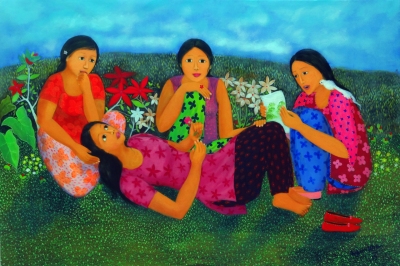
 My spirituality is inherently creative. Deep in the creative process, I open more fully to awareness of what is flowing around and in and through me. When I can get there – to that place of fully giving myself over to Spirit as a channel, vessel, and embodiment – creation itself becomes an act of prayer, of devotion, of intense ecstatic ritual to honor, grieve with, or celebrate the Ground of Being behind all expression. I craft, dig, carve, build, dance, drum, and sing. Mostly, my art involves words – spoken and written – to create moments, spark feelings, paint pictures, or shape ideas. Words carry tremendous meaning, unconsciously as well as when we use them consciously, with intention.

 For those of you who have read my blogs before, you may have gathered that
 By now most, if not all, readers of FAR have read or watched the disturbing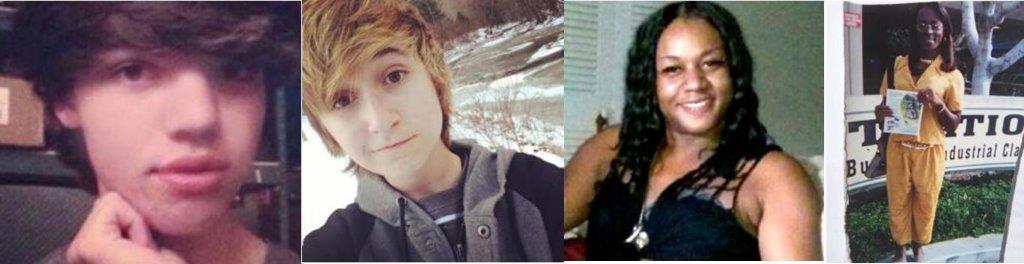
 Feminism and Religion