Legacy of Carol P. Christ: Thinking About Thanksgiving

This was originally posted on December 3, 2012

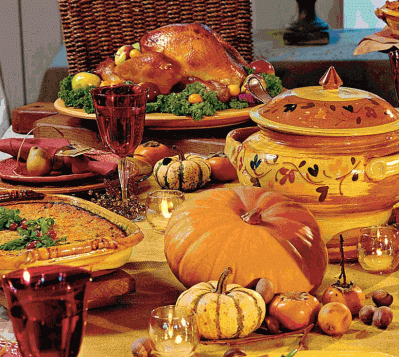
Thanksgiving evokes deep memory and raises questions about what we are celebrating, now that we know the stories we were told about the Pilgrims and the Indians are not the whole truth about America’s early history.  I thought about all of this as I prepared for Thanksgiving this year and cleaned up for days afterwards.

Although I do not live in America, I have celebrated Thanksgiving with a group of friends in my home in Greece many times during the past twenty years.

Continue reading “Legacy of Carol P. Christ: Thinking About Thanksgiving”

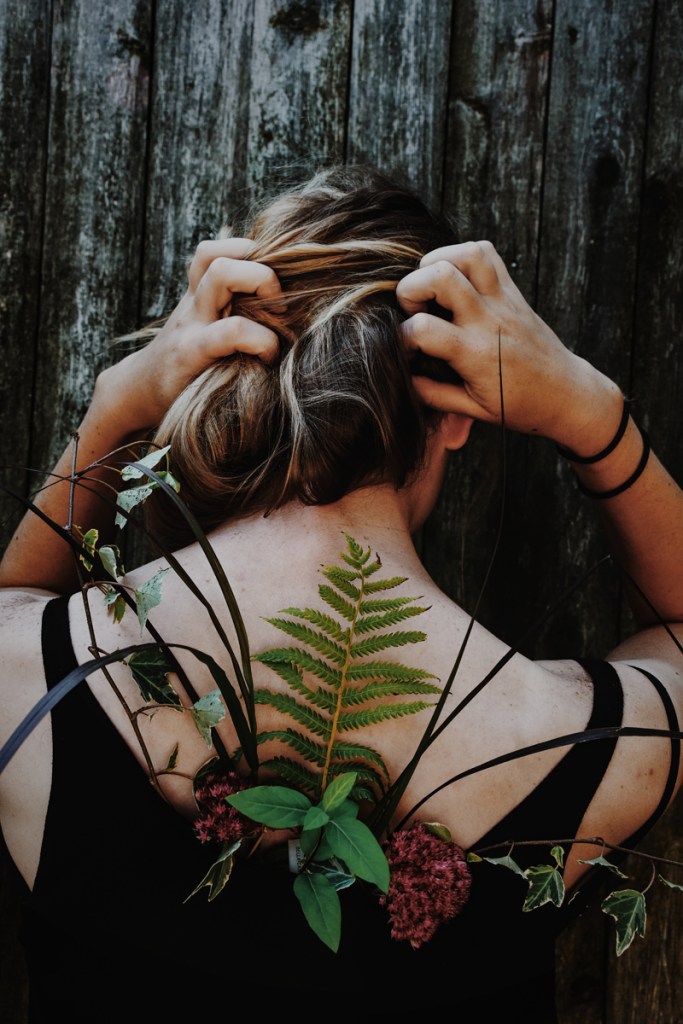
A Thealogy of Land and Roots by Kelle ban Dea

I am my Mothers
My Mothers are me
I am the Goddess
the Goddess is within me
As blood
as bone
as the spirals 
of nuclei
as ova
as tears
as breath
I carry my Mothers
as my Daughters will carry me

And the Goddess carries us all

Continue reading “A Thealogy of Land and Roots by Kelle ban Dea”

The Ancestor Story by Sara Wright

During the last few years I have spent hours listening to the haunting cries of Sandhill cranes, awaiting them at the river, stunned each time as I glimpsed a flock float to the ground, great gray wings extended to break their fall as talons touched earth, attended to enthusiastic family greetings and muted conversations, felt a sense of devastating loss when these birds circled overhead to say goodbye each year before heading north to breed (while I lived in New Mexico), and then discovering to my joy that they live and breed here in Maine. I still experience the same hunger to glimpse families in Fryeburg each October and lose time watching their loving family dynamics. I continue to feel intense grief and loss at crane leave-taking remaining baffled by the intensity of my own responses. In the last week I think I have finally uncovered the roots of the story behind the cranes and me…

 These birds are prehistoric in origin and have the strongest family ties. The families never break up and when separated greet each other joyously even after a few hours as small groups fly to different feeding areas. Incredibly poignant. There is always one that stands watch at night, a protector, so the others can sleep in peace, one leg extended, usually in water. I am in love with these birds but until a few days ago did not understand the powerful pull their presence exerts over me.

Continue reading “The Ancestor Story by Sara Wright”

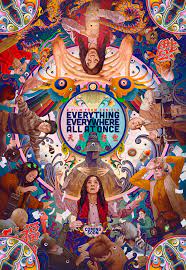
Considering “Everything Everywhere All at Once”

The multiverse as a metaphor for trauma is rather compelling to me. It speaks to the way in which different realities and experiences impose themselves on others as a matter of fact rather than malintent. These realities necessarily co-exist in interrelationship but may compound the weight and confusion of present experience.

Warning: Spoilers Ahead!

Everything.

Everywhere.

All at Once.

I remember thinking, this is kind of a weird name for a movie, even if it is about the multiverse and shifting realities. But I’m a big sci fi fan, so of course, I jumped at the chance to see it when my friend said she wanted to see the movie, again, with me specifically. Mom’s day out for both of us. Check. A… m.o.v.i.e. I remember movies from a time pre-pandemic: there’s a big screen, right? And food? I like food. Sign me up. (j/k). I seem to remember movie theaters being more crowded though—my friend and I had almost a private viewing. And sitting practically on top of my friend by the end of the film, after laughing so hard I cried, crying because I was so sad, gaping in shock, horror, and even disgust, and wondering what I just saw, I reflected: this movie was perfectly named.

Continue reading “Considering “Everything Everywhere All at Once””

Carol P. Christ’s Legacy: Does Belief Matter?

Moderator’s Note: Carol Christ died from cancer in July, 2021. Her work continues through her non-profit foundation, the Ariadne Institute for the Study of Myth and Ritual and the Goddess Pilgrimage to Crete. This blog was originally posted December 10, 2012. You can read it long with its original comments here.

In recent days I have been pondering the fact that some people and some feminists seem to see the issues of religious faith and belonging to be rooted in birth, family, and community, while for others the question of belonging to a religious community hinges on belief and judgments about the power exerted by religious institutions.  What accounts for this difference in the way we view religious belonging?

Recently I watched The Secret History of Sex, Choice and Catholics, a film featuring Roman Catholic feminists and ethicists who dissent from the Roman Catholic hierarchy’s views on contraception, abortion, and homosexuality.  At the beginning of the film those interviewed state almost univocally that for them being Catholic stems from having been born Catholic. These Catholic dissidents continue as Catholics, even though they disagree with major portions of Roman Catholic teaching.  It may have been because they were not asked, but most of them did not name reasons of belief for remaining Catholic.

Continue reading “Carol P. Christ’s Legacy: Does Belief Matter?”

Altars Everywhere, Part 2 by Carol P. Christ

This is a continuation of an earlier blog in which I discuss home altars as a way to bring beliefs about women’s spiritual power into the body and daily life.

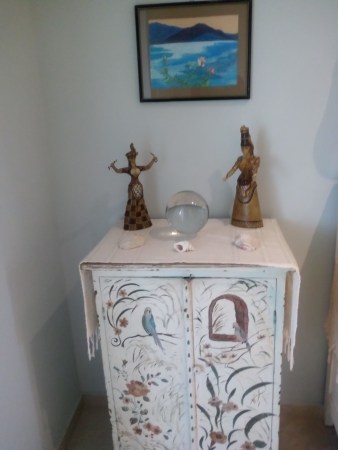
In my bedroom, images of the Snake Goddesses of Knossos sit on a cabinet painted by a Greek woman with images of birds and flowers. Between them is a crystal ball, while before them are three shells, the smaller of which was given to me by a Maori woman from New Zealand. Above them is an image of the sea in Molivos, Lesbos, painted by my friend Judith Shaw in the year we were both living in the village.

Continue reading “Altars Everywhere, Part 2 by Carol P. Christ”

Feminist Parenting Part 3—Les Misérable Mothers, why is this so %$@# haaaaard?! by Trelawney Grenfell-Muir

Life has been challenging lately – I’m sure you can relate. Normal emotional and financial stress are worsened by COVID-19 and the election— and I’ve often said that there’s nothing like motherhood for making us feel like failures…  It’s as though our brains are incapable of seeing anything but the things we have left undone or done badly. And it is often excruciatingly hard to be a calm, patient parent when the kids start getting wild, or someone breaks something, or the <expletive> online form won’t <expletive> work on my <expletive> phone.
…Why is it so hard to feel “good enough?” Could it be because patriarchy benefits from making the female class feel constantly insecure and unworthy? Continue reading “Feminist Parenting Part 3—Les Misérable Mothers, why is this so %$@# haaaaard?! by Trelawney Grenfell-Muir”

Forgive Me My Ancestor(s) by Elizabeth Cunningham

Elizabeth Cunningham

When I was a child in the 1950s we often played cowboys and Indians. There is a photograph of my brother and me in no doubt inauthentic costume complete with feathered headdress. In kindergarten I named myself Morning Star. (I just googled and see that I must have gotten the name from the 50s television series Brave Eagle, the first with an indigenous main character. Morning Star is the female lead.)

When I was a teenager, my aunt came across a privately printed book The Gentleman on the Plains about second sons of English aristocracy hunting buffalo in western Iowa. My great grandfather accompanied them as their clergyman. I wish I could find that book now to see how this enterprise was presented. In my adolescent mind these “gentlemen” looked like the local foxhunters in full regalia. On opening morning of foxhunt season an Episcopal clergyman (like my father) was on hand in ecclesiastical dress to bless the hunt and then invited to a boozy breakfast. Continue reading “Forgive Me My Ancestor(s) by Elizabeth Cunningham”

Old Men Get Away with It: Why? by Carol P. Christ

A few days ago, a friend told me she had just learned that she had a 2x great-aunt who was a beloved and honored single white teacher in the US south in the first half of the twentieth century. The beloved teacher had a school named after her. My friend never heard anything about her distinguished relative while growing up. As a woman without children herself and a teacher, she wished she had. “There are many of us,” she commented.

I offered to do a little research for my friend. Perhaps thinking of my 2x great-aunt who was a single businesswoman, I expected to find that the beloved teacher lived with her mother. What I found was so shocking that it kept me up at night. Continue reading “Old Men Get Away with It: Why? by Carol P. Christ”

What I Learn from Women in Southern Morocco by Laura Shannon

I feel deeply fortunate to be able to travel regularly to southern Morocco. In Taroudant in the Souss Valley, and further south in the Anti-Atlas Mountains, my groups of students have the chance to discover women’s cultural traditions including music and dance, weaving and embroidery, household and healing rituals. In the seven years I have been leading these tours, women have joined me from a dozen different countries and as many different faiths, and most of them end up feeling at home here just the way I do.
What makes southern Morocco so special? Many threads come together to create the extraordinary ambience which permeates this part of the country. First of all, there is the Berber influence: a large percentage of Moroccans in the South are Berbers, and many elements of ancient North African Berber culture, with roots in Neolithic times, remain percepible beneath the relatively recent overlays of Arabic culture and Islam.

Continue reading “What I Learn from Women in Southern Morocco by Laura Shannon”