2.24.2017
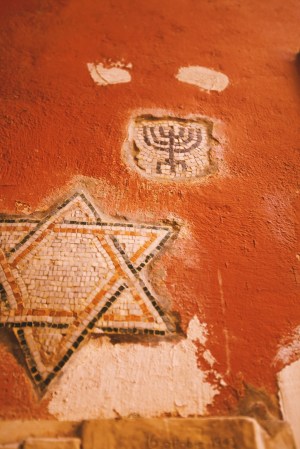
During a meditation before bed, I saw an image of a candelabra similar to what Jewish people use for Hanukkah. It was yellow/gold in color, engraved/etched onto a surface. All at once I saw the imagery of a star, a silhouette of a woman, and a beam of light move from the base of the candelabra through the top and beyond.
In these moments, I did not understand the significance of or the relationship between these images. What did a feminine figure have to do with the Jewish candelabra? What is the name of their candelabra? I could not even recall the name of it. It was something I grew up knowing the name of, as it was an image that I frequently saw beside the kinara of Kwanzaa in my school-aged years.
Because I was sheltered from the Abrahamic religions, my mother opted for participating in Kwanzaa as a means to shield me from any potential bullying from my classmates, and to celebrate a part of my diverse heritage. It was already a problem for my peers and the adult staff at school that I chose to identify as a Jamaican-American or a mixed person, as opposed to African-American. To tell a group of African-American Christians or those with an Afro-centric view that I didn’t celebrate Christmas or Kwanzaa, or that my mother taught me to listen to my dreams and intuition, would only serve as a means to further isolate myself; and by extension, my little sister. So celebrate Kwanzaa we did, until I began high school.
Continue reading “A Silhouette of a Woman, the Menorah, and a Pillar of Light: Discovering the Origins of the Goddess in Judaism by Alaya A. Dannu”


 This is the 4th in a series of blog posts about finding goddesses in the bible who had been hidden away through translation or denigration or other means.
  Feminism and Religion