Of Resistance and Risk, Community and Kin: A Thanksgiving Reflection by Beth Bartlett

Ricky DeFoe

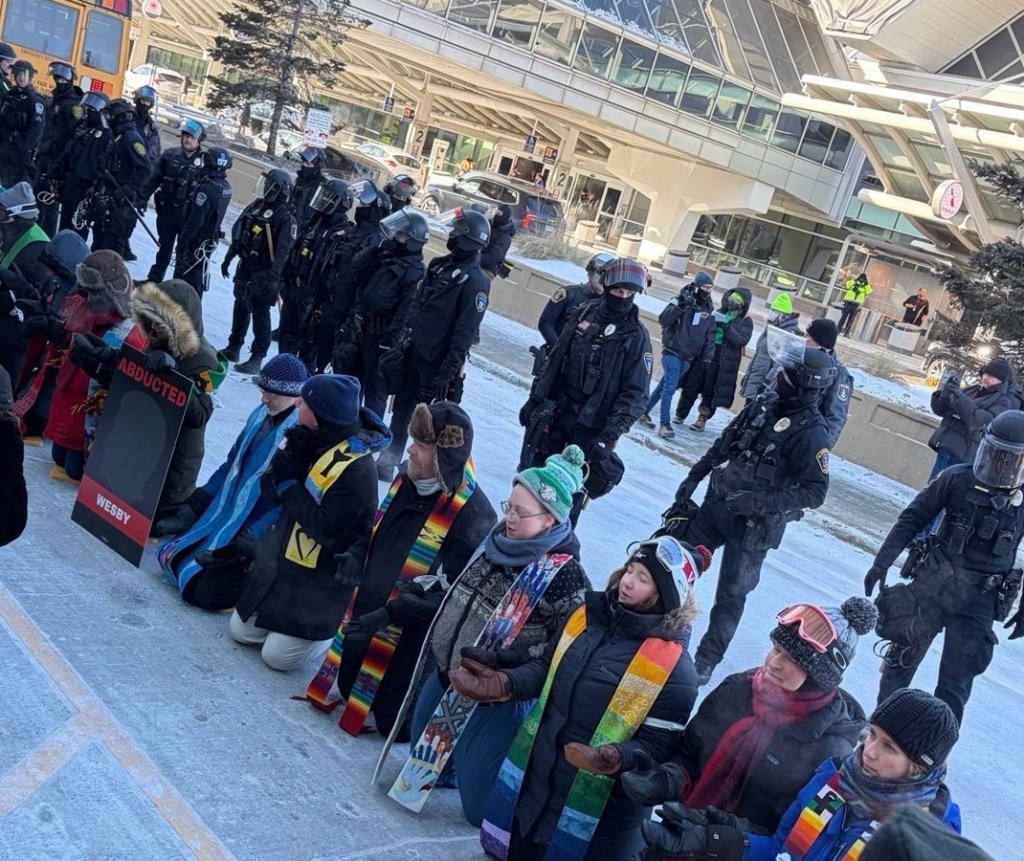
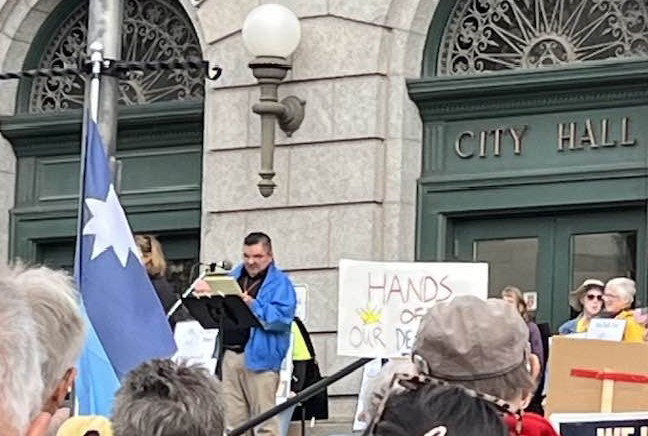
At the No Kings rally on October 18th, Anishinaabe elder Ricky DeFoe affirmed to the gathered crowd that “the natural response to oppression, ignorance, evil, and mystification is wide-awake resistance.” Such resistance, he claimed, calls for an “ethic of risk.”  I was immediately struck by his use of the term, paralleling feminist theologian Susan Welch’s A Feminist Ethic of Risk.[i]Returning home, I picked up my copy and found many of the same points DeFoe had articulated.[ii] Both asserted that an ethic of risk recognizes that “to stop resisting, even when success is unimaginable, is to die,” and by this they meant not only the threat of physical death, but also “the death of the imagination, the death of the ability to care.”[iii]

Continue reading “Of Resistance and Risk, Community and Kin: A Thanksgiving Reflection by Beth Bartlett”

Mother Blues II: Interfaith Womanist Reflections on Nurturing a Resilient Bloom, part 2 by Chaz J

You can read part 1 here.

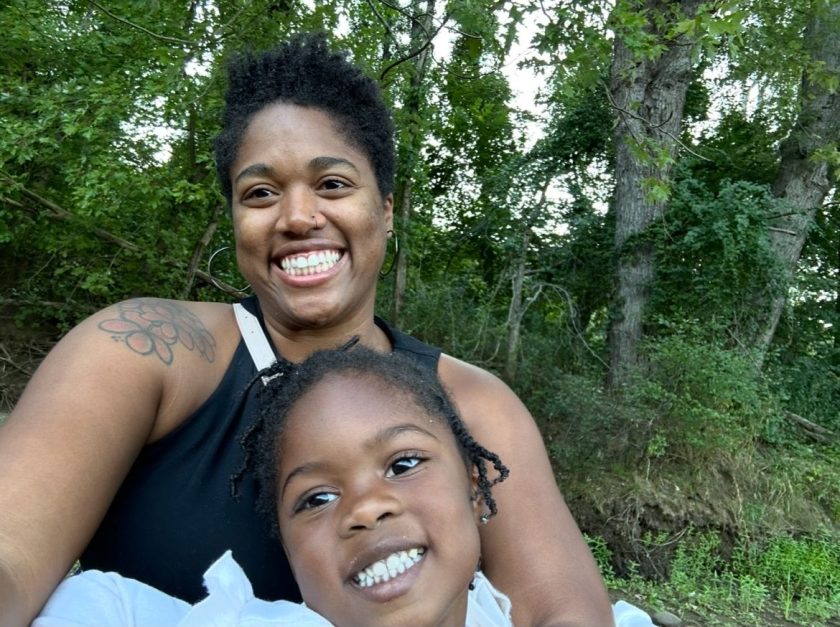
I remember confessing to a kindred spirit, also a therapist, heart heavy with a therapist’s sight: my daughter, a child of divorce. And I, who knew the long, shadowed roads— the substances, the destructive turns children take to bury unaddressed grief, hurt, and pain— this knowledge terrified me.

My friend, in turn, spoke of her own adopted daughter, of sudden, tearful storms for a birth family unseen. “This is her journey,” she said softly, “You cannot control the currents of her life. All you can do is stand with her, and teach her to navigate with a healthy heart.”

Until that moment, my fierce, unspoken goal was to shield my daughter from a therapist’s couch in twenty years’ time. But then, my friend’s truth cut through: “There is no perfect parent, and she will likely find her way to therapy no matter what you do. Just do your best and TRUST that she will be ok.”

This truth allowed me to soften, to release. Now, my purpose unfurls: to forge a bond with her, a healthy and vibrant connection that stretches through the wholeness of our days. I want her to know, beyond all shadow of doubt, that she can depend wholly on her mother, a steadfast harbor in every storm.

Continue reading “Mother Blues II: Interfaith Womanist Reflections on Nurturing a Resilient Bloom, part 2 by Chaz J”

Reflections On Bone Black: Memories Of GirlHood by Zoe Carlin

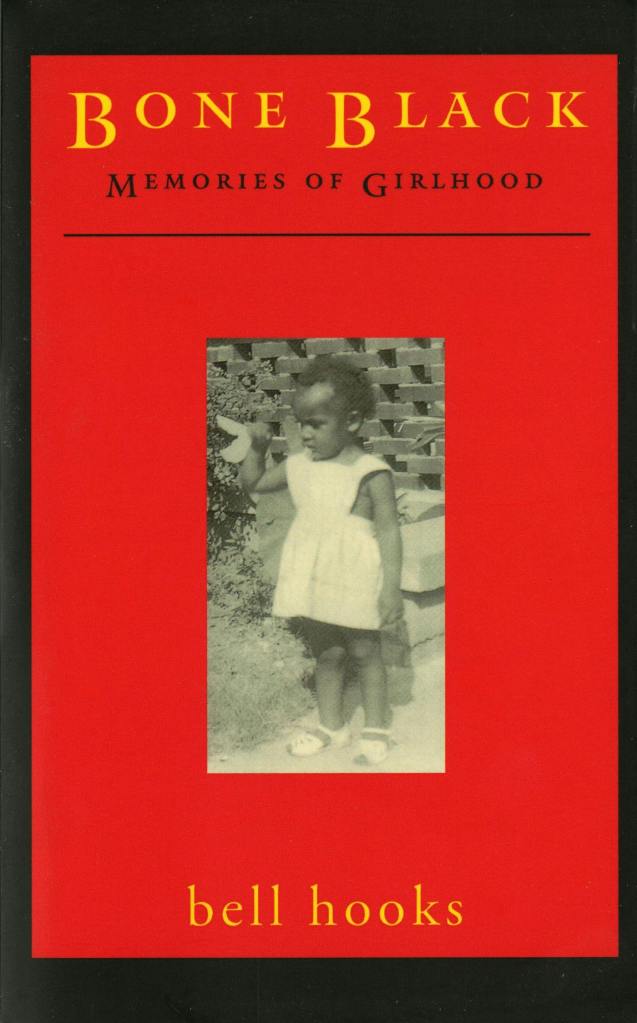
Bell Hooks explores in the memoir Bone Black: Memories of Girlhood the extreme effects of race, gender, and class on her identity and self esteem as a Black woman. Each chapter of Bone Black showcases stories of Bell Hooks’ childhood experiences growing up in a racially segregated environment. Through these experiences, she shares how the mainstream beauty standard, the racism towards Black people, and the limitations imposed by class and gender have shaped her perceptions of herself and her worth. Hooks also discusses how white supremacy, the patriarchy, and societal neglect intertwine.

What particularly stood out to me is how her story and the themes mentioned connect to spirituality and are offering further ideas on resistance and empowerment. It also touches on connections with identity formation and our sense of self. For example, the memoir shared insight of how the beauty standards at the time were typically associated with being white. As a Black woman, Hooks shared how she had felt undesirable due to not being included in these standards that were set in place. She does not just reflect on the pain of being marginalized but she also delves into the complexity of being a Black woman in a masculine dominated world. Hooks had to navigate both the oppression of racist behavior by others around her and the misogyny of a patriarchal system that was determined to define her worth based on her appearance.

Continue reading “Reflections On Bone Black: Memories Of GirlHood by Zoe Carlin”

Womanist Sapphic Reflections on Sex, Desire, and Power by Chaz J.

**This post is based on my personal experience, research, survivor of the purity movement, and professional experience as a therapist and spiritual advisor of 5 years.

**Sapphic = women loving women <3

Everything is sex, except sex- which is power. Now ask yourself who is screwing you. – Janelle Monae

Desire, a flame that flickers, not always fanned to embers of the flesh, but today, let’s speak of its carnal heat, its dance with power, its intimate embrace with sex. 

A tempest roils within, desire’s current a raging, untamed beast. A lifetime shrouded in the gloom of putrified dread, where yearning was condemned, branded a scarlet path to eternal fire, has left its indelible scar. The hollow pronouncements of warning, like the venomous whisper of James 1:14-15, still slither within, etched into the marrow of my bones: “Temptation comes from our own desires, which entice us and drag us away. These desires give birth to sinful actions. And when sin is allowed to grow, it gives birth to death.” These words, seared into my soul, a brand of shame, a constant, gnawing reminder of the perceived treachery of wanting, the supposed sin of simply feeling and wanting.

Continue reading “Womanist Sapphic Reflections on Sex, Desire, and Power by Chaz J.”

Death & Rebirth : Domestic Violence and Victimhood by Chaz J.

*Trigger warning

**When I refer to Black women, I am referring specifically to descendants of African peoples that were forced to experience the dehumanization of chattel slavery in the United States.

I am no different than most Black children. Physical, mental, emotional, and physical harm is a historic reality deeply rooted in the Black American experience. This experience is mirrored in collective parenting and relating to children. In this context, many parents believe preparing children for the harsh realities of the world and the United States, while living in Black bodies, necessitates acclimating them to mistreatment and aggression. This parenting approach, (a consequence of centuries of colonization, slavery, and the ongoing impact of white supremacy), prioritizes survival. This survival mechanism has indeed ensured that we live and therefore I deeply respect the survival mechanisms deployed to survive. I offer no harsh critiques, only lessons learned and a desire for us to do better collectively now that we know better.

Continue reading “Death & Rebirth : Domestic Violence and Victimhood by Chaz J.”

Women’s Spirituality in the Film Classroom by Freia Serafina

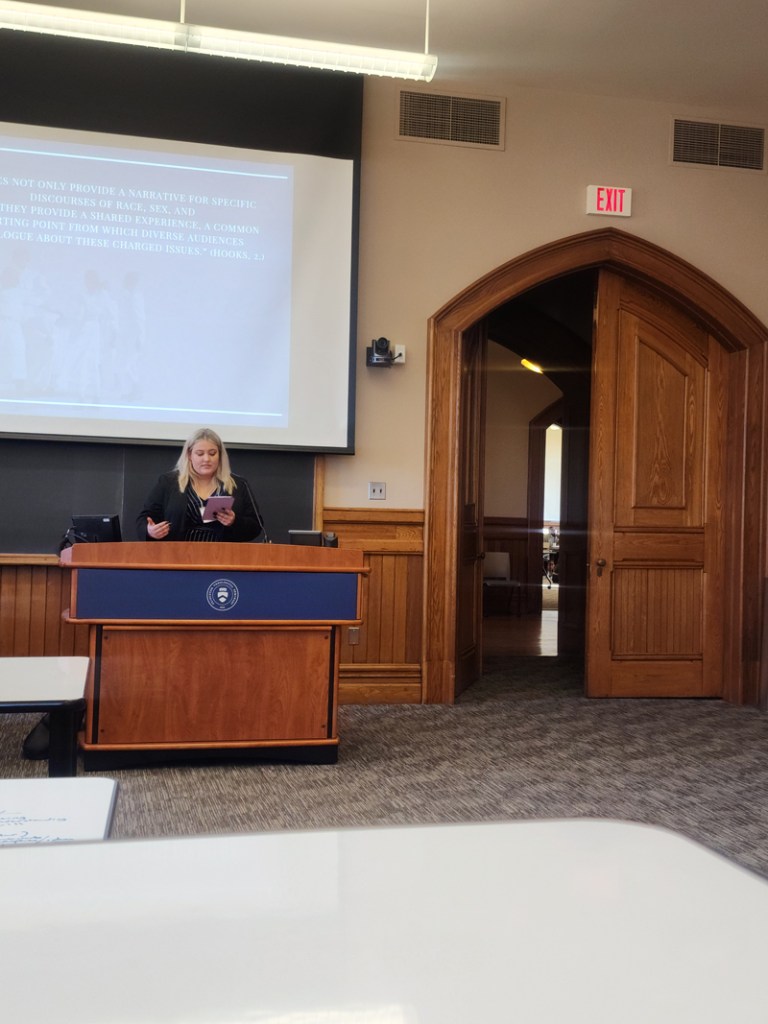
Freia presenting at Princeton Theological Seminary for the American Academy of Religion, Regional Conference

Recently tasked with the co-creation of a film ethics course, I thought extensively about what material would best serve film acting students in a New York City Conservatory. I wanted to include films that would focus on diversity, story inclusivity, and encourage them to wonder if what they saw on screen impacted or influenced their reality. In a course centered on ethics, religion and spirituality tend to enter the conversation. This entrance provided me with the opportunity to introduce a plethora of women’s visionary films that would be used to examine the spiritual lives of women and how religion and spirituality impact the film narrative. Women’s visionary films can be defined as films that are “written, directed, and/or produced primarily by women and share women’s vision of realities. The sacred themes of these films, in diverse cultural contexts, engage women’s self-reflective use of the arts to convey greater insight into the colors, shapes, emotions, and spirituality of women’s lives—women’s imagination, suffering, hopes, beliefs, and dreams.” (Mara Keller, 2018)

Continue reading “Women’s Spirituality in the Film Classroom by Freia Serafina”

From the Archives: Writing: Changing the World and Ourselves. By Ivy Helman

This was originally posted on October 12, 2014

20140903_180423

I still remember the first time I read Mary Daly’s Gyn/Ecology. It awoke something within me. Her use of language, the power of her writing and the ease with which she created new words taught me so much about the world around me and about the way the language, and subsequently its use in writing, shapes lives, choices, abilities and destinies. She also taught me about myself.

I was hooked, but not just on Mary Daly. Shortly after I finished her book, I moved onto other feminists writing about religion like Katie Cannon, Judith Plaskow, Alice Walker, Carol Christ, Rita Gross, Gloria Anzaldua, Audre Lorde, Adrienne Rich, Margaret Farley and Starhawk to name just a few. All of them, in fact every feminist I’ve ever read, has shown me the way in which words have power and how words speak truth to power. Ever since, I’ve wanted to be the kind of writer whose words carry a power that not only affects people but also inspires a more just, more equal, more compassionate and more humane world. In other words, I wanted to be a writer activist.

Continue reading “From the Archives: Writing: Changing the World and Ourselves. By Ivy Helman”

Embodying bell hooks’ theological vision by Liz Cooledge Jenkins

I was recently asked: Who is a theologian you admire? Since I’ve been deeply steeped in the Christian tradition, plenty of Christian theologians could come to mind—Christian theologians, that is, in the sense of humans educated in the Christian theological academy with the theology PhDs to prove it.

 But when I think of theology, these days, I find myself thinking more broadly. Like Kat Armas, who wrote Abuelita Faith as a way of reflecting on and honoring the theological contributions of marginalized women, rather than men who sit in the seats of academic power—and like Sarah Bessey, who writes that theology, at its best, is a field where “everyone gets to play”[1]—I am skeptical of the assumptions Christians often make about who is or isn’t a theologian. And so, when I thought of theologians I look to for wisdom, I thought outside the box. I thought of writer and activist bell hooks.

Continue reading “Embodying bell hooks’ theological vision by Liz Cooledge Jenkins”

The Pleasure of Education and New Beginnings

BUT GOD/DESS—it is also enjoyable, passionate, and fun. Learning and teaching is fun; and I love having fun with my students. Even when the topics are hard and when the lessons hurt, it is the pleasure of relatedness to them, to text, to new understanding that facilitates the process. And without that pleasure, the work is unsustainable.

In graduate school, I fell in love with the book Teaching to Transgress by bell hooks. My memory of what I specifically loved about that book has blurred over time, particularly as I read more and more of her work. But what remains is a sense of how challenging and how real the writing was—how inclusive of whole experiences and truths, comfortable and uncomfortable.

hooks doesn’t shy away from the pain or pleasure of education, indicating how learning and those we learn from can induce passion: Audre Lorde’s erotic, which is so hard to distinguish from the sexual because, as Lorde explains, we are taught to limit our sense of the erotic to the sexual or pornographic.

Continue reading “The Pleasure of Education and New Beginnings”

“A new heart I will give you . . . “: Part Two by Beth Bartlett

You can read part 1 here.

Hope: What is a heart transplant if not hope? In granting the possibility of new life out of death, it is the essence of hope. Yet, hopefulness is also knowing death is imminent and finding a way to live well into that knowledge. The impulse of hope encourages us to go on despite the odds. Hope indeed seems to spring eternal. In my darkest days, something would come along and lift me up. Hope is a testimony of the human spirit, lifting us up, refusing to refuse us. This new heart brought hope to me, and I believe that in our going on together, we carry the hopes of my donor’s loved ones as well. 

Continue reading ““A new heart I will give you . . . “: Part Two by Beth Bartlett”