

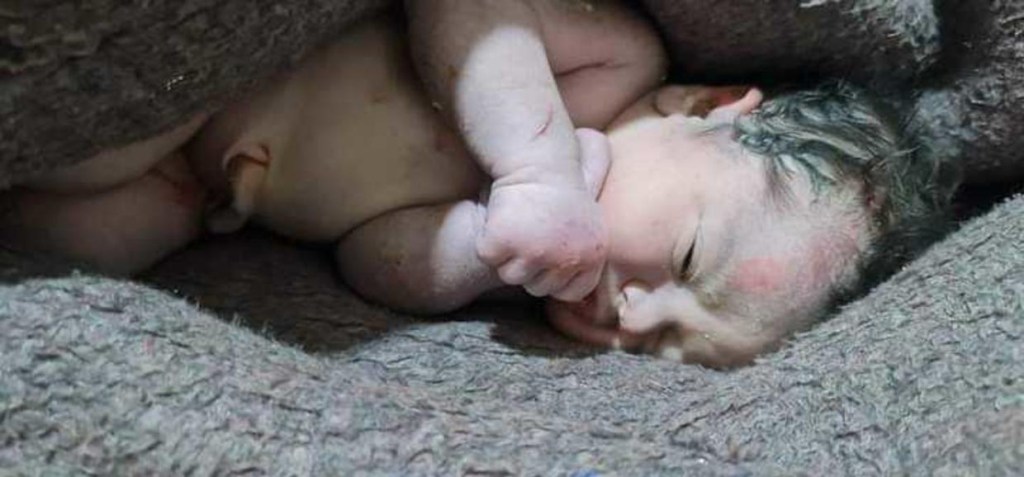
It was four in the morning in the north Georgia mountains. A woman labored quietly but powerfully in her home, with her partner at her side. Her watchful midwife hovered nearby. I was a nursing student and a zealous “birth junkie,” tickled pink by the invitation to observe childbirth. At just the right time, the mother delivered her child from her womb to the world. The sun rose with a new soul suddenly among us, and I knew I would never be the same.
Feminist theology has long-invoked the image of God as a laboring mother, and progressive theologian Marcus Borg suggested that humanity is God’s midwife. But less has been written about the opposite metaphor. Imagine that we are in labor, in pain, and God is our midwife.
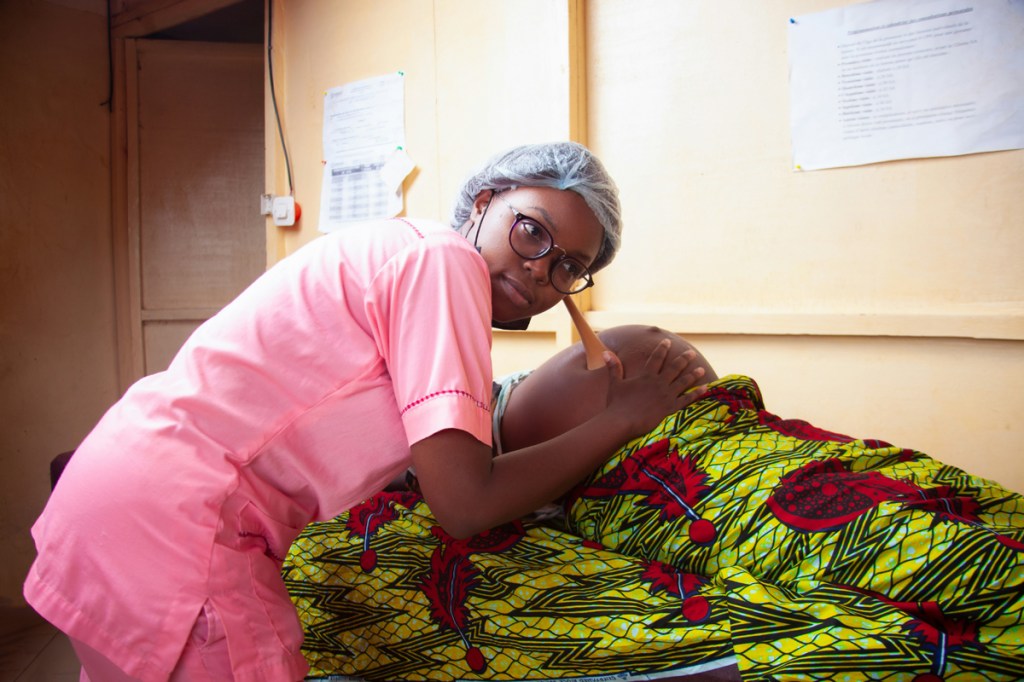
The word “midwife” means “with woman,” and that’s what midwives do: they are with birthing people through it all. They empower and guide, safeguard and witness, but they do not save. Midwives facilitate the birth process, but they don’t—they can’t—take the pain away. They don’t deliver babies; that honor belongs to their clients. Like physicians, they monitor the health of parent and baby, and can deftly manage a cord around a baby’s neck or stop a postpartum hemorrhage. But they mostly rely on the power of presence to bring babies earth-side.
Continue reading “God is a Midwife by Halley Kim”
 Prehistoric and indigenous religious traditions are often disparagingly mischaracterized as primitive fertility religions, concerned not with higher morality, but rather with the processes of reproduction of humans, animals, and plants. When these religions feature a Great Mother Goddess, it may be assumed that these religions are primarily focused on birthing human babies. Nothing could be farther from the truth.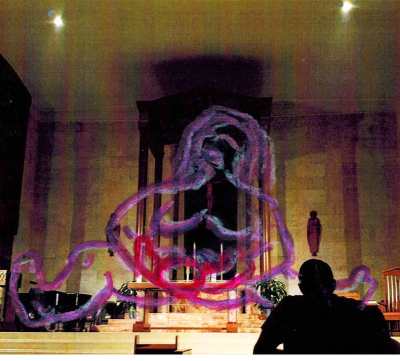
 Feminism and Religion