Householders’ Superstitions and the Higher Truth by Oxana Poberejnaia

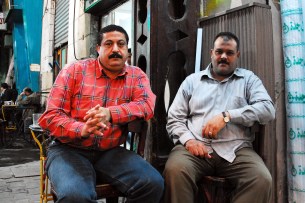
I watched this short video on facebook about Sisa, an Egyptian woman who spent forty years a man in order provide for her family. There is a longer version on YouTube. Sisa, a widow, decided to work to feed her children, and consequently grandchildren. In Egypt, a woman can only do unpaid jobs within a home. So Sisa had to pretend to be a man by wearing male clothing and head wear. She takes casual jobs, such as shoe shining or brick laying.

Then Sisa made the news and was honoured by governmental officials. There is footage in the report of Egyptian men watching that footage. Apparently, the men were impressed by Sisa’s efforts and they developed respect for her. One man, who knows Sisa personally, says for camera: “I treat her like a man, because she works like a man”.

The implication being, I assume, that Sisa is only worthy of respect because she acts like a man is expected to act. And another implication is that Sisa is an exception. He only prepared to treat her differently, as all the rest of the women in Egypt apparently cannot work as men.

Continue reading “Householders’ Superstitions and the Higher Truth by Oxana Poberejnaia”

Babies and Bathwater by Oxana Poberejnaia

Since patriarchy is atrocious, and capitalism is currently driving the earth to a very real catastrophe, we can get passionate about these issues. We can get angry. We can get self-righteous.

However, as one of the most famous verses of Dhammapada goes:

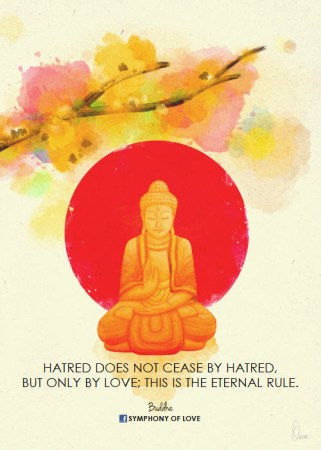
Hatred is never appeased by hatred in this world. By non-hatred alone is hatred appeased. This is a law eternal.

Dhp I:5, translated by Acharya Buddharakkhita

 We may ask: why should we be patient and kind while we are the ones who are being oppressed and wronged? I don’t have an answer for that, only that through history positive change has ever been affected only by people who made more effort than the ones who wanted to keep the status quo.

Abolitionists, Suffragettes, Socialists and Civil Rights activists all had to be more altruistic, better educated, and more open-minded than their contemporaries. Continue reading “Babies and Bathwater by Oxana Poberejnaia”

The Pull of Mara by Oxana Poberejnaia

Recently I need to take a deep breath every time I glance at the news headlines. There are terror attacks and military conflicts. People kill each other and cause each other immense suffering. The worst thing is that so many of these conflicts are between people who have lived side by side for centuries: between related ethnic groups or neighbouring people.

I have found that often, while reading news items about tragedies and injustices, I often take sides. I seem to “naturally” support one warring party. This would depend on ideology, ethnicity, or culture that I share with one of the rivals. This is nothing new. People have been joining their brethren in war for the history of humanity.

However, our time is interesting in that we have access to many opposing views. In my life, every time I take a side, eventually I manage to find information or discover a point of view, which supports the opposite side.

Continue reading “The Pull of Mara by Oxana Poberejnaia”

Internal Strife – External Conflict by Oxana Poberejnaia

As Po said in “Kung Fu Panda”: “I’m gonna get myself some Inner Peace… Inner piece of what?”

This basically lays out a path of spiritual work for most of us. We aim for peace, yet somehow we feel that we must do something in order to achieve it – rather than just be peaceful.

Another joke that captures this paradox perfectly is:

“My son started doing meditation. Well, that’s something. At least he’s not sitting around doing nothing.”

Sitting around doing nothing seems to be the worst sin in our society. Buddhism is quite radical in this regard. The path to Enlightenment leads through sitting around and doing nothing. Anything and everything else that we do to keep ourselves busy is determined by society, hence impermanent, hence not the truth. Continue reading “Internal Strife – External Conflict by Oxana Poberejnaia”

Ending Suffering for the Sake of Others by Oxana Poberejnaia

I have recently noticed an interesting thing: just like the Buddhist goal of ending suffering requires consideration of others, so often feminist change requires thinking about other women.

I often had conversations with people on both these subjects. I heard actual people say: “I do not want to end my suffering, the reason being…” And the reasons can differ. Some consider suffering to be part of genuine human experience, some find a spiritual advantage in having suffered. While some simply say that they are fine with their suffering; they are used to it; change would bring even more suffering. Continue reading “Ending Suffering for the Sake of Others by Oxana Poberejnaia”

The Burden of Shame by Oxana Poberejnaia

I know a man who says to his daughter: “You should be ashamed of yourself” when he wants to imbue some good habits in her. One example would be not putting her dirty socks in the laundry basket. It might seem trivial, but I don’t think it is. I feel that shame is a toxic element of our personalities. I believe shame results in negative consequences, such as sabotaging oneself and health problems.

Many spiritual traditions, including Buddhism, perceive guilt as a trigger for moral development. The rational is, when we feel bad about something we had done, we will change our behaviour for better. The question is: how bad exactly are we supposed to feel, both in terms of quality and quantity of that feeling? Continue reading “The Burden of Shame by Oxana Poberejnaia”

On Minimalism by Ivy Helman

untitledOne of the concerns of ecofeminism is the modern materialistic mindset of capitalism. Materialism in capitalism instills not just owning many possessions, but it also inculcates the “need” to own the newest innovation. In addition, materialism advocates a throw-it-away mentality. In other words, it is often cheaper to buy a new shirt or computer than to have them repaired. Similarly, it is not enough to have a cell phone. Rather, one must have the newest and best one! The environment pays the price.

One attempt to deny the hold of materialism is minimalism. The minimalist movement seems to run the spectrum. From the ideals of less is more, there seems to be some competition between mindful consumerism and extreme self-denial. Mindful consumerism suggests that minimalism is a journey of recycling, reusing and repairing combined with well-researched, well-considered, as-ethically-produced-as-possible purchases when necessary. Extreme self-denial advocates owning almost no material possessions. While I strive toward mindful consumerism, I have serious concerns about extreme minimalism. Continue reading “On Minimalism by Ivy Helman”

Viśākhā: Surrogate Mother of Buddhism by Oxana Poberejnaia

oxanaViśākhā is often called the greatest female lay follower of the Buddha. She prompted the Buddha to give numerous teachings. She also donated generously to the Sangha (monastic order). Her crowning contribution was building a monastery called Migāramātupāsāda.

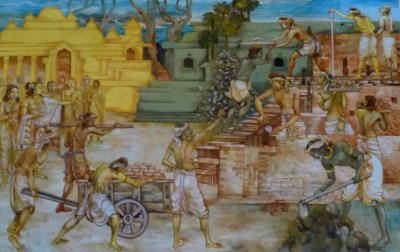
Visakha Directing the Construction of the Eastern Monastery in Savatthi, at the Nava Jetavana, Shravasti

She is said to either die as a “stream-enterer” (a person who will definitely become enlightened, no matter how many life times it will take). Another account about her afterlife says that she would live for eons in happiness in one of the divine realms before achieving the final Liberation there and then.

Viśākhā appears in numerous Suttas of Theravadin Canon. From the modern feminist point of view, the content of these discourses reinforces patriarchal gender stereotypes. In particular, Viśākhā is portrayed as a caring Mother for her relatives, Bhikkhus (Buddhist monks and nuns), and other people.

Continue reading “Viśākhā: Surrogate Mother of Buddhism by Oxana Poberejnaia”

The Elusive Patriarchy by Oxana Poberejnaia

oxanaThe sense of separate personal identity is elusive. It is difficult to observe, find and bring to the surface of consciousness where, according to Buddhist beliefs, it dissipates naturally, like a bubble of foam popping. In the same way patriarchy is entrenched in so many different ways and on so many different levels in society that it is as difficult to reach out to it and weed it.
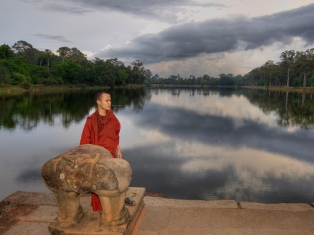
tharavadamonkThere is a Sutta in Theravadin Canon called “Khemaka Sutta” (About Khemaka). The main character in the Sutta, Buddhist monk Khemaka explains his understanding of the “lingering residual ‘I am’ conceit, an ‘I am’ desire, an ‘I am’ obsession.” Khemaka says that it is as difficult to capture and wash away as the remaining scents in clothes that have been washed over and over again.

In Western psychology, there is a notion of catharsis: allowing one self to experience previously repressed emotions. For instance, ancient Greek tragedies like Oedipus are seen as these psychological journeys for the audience. The spectators initially refuse to admit they have certain forbidden impulses. However, through empathising with the protagonist they unwittingly allow themselves to experience those. Healing happens as a result.

Continue reading “The Elusive Patriarchy by Oxana Poberejnaia”

Like Birds in the Sky by Oxana Poberejnaia

oxanaI once heard an educated non-feminist say that it would not matter if women came into positions of power. He gave examples of Margaret Thatcher, Indira Gandhi and other women and pointed out that once in power they started wars and engaged in other aggressive tactics, just like men politicians.


Firstly, the obvious logical mistake is that not every woman is a feminist, in the same way as not every man is an agent of patriarchy. Secondly, when talking about systems and key positions within these systems, one can see that these posts will play the role that is predetermined by the system.


systemIt would not matter if a head of a patriarchal organisation is a feminist or not. She or he will play a role of a head of a patriarchal system. That is, unless she changes the system altogether and it ceases to be patriarchal.


This reminded me of verses from The Dhammapada, a collection of ancient Buddhist verses, which speak about having no home and leaving no trace. By behaving thus, we remain independent of the dominant systems and give our opponents no opportunity to control us.

Continue reading “Like Birds in the Sky by Oxana Poberejnaia”