For 37 years, I have resided with awe and delight in the Appalachian Mountains near Asheville, North Carolina. With gratitude for the palpable strength and ageless beauty of the great mountains down to the tiniest ephemeral flowers, I have poured out poetry and music in honor of Her and my life here. In one day (or three, including the days of rain leading up,) Her pristine beauty and the homes and lives of thousands were destroyed by the violent winds and rain of Hurricane Helene. I was dropped into a deep well of grief, which I still experience to this day. But something very ancient, basic and fundamental pushed me to write poems, astounded as I was by the events and human interactions around me. I hope these poems give you some sense of the experience.
I have felt both a responsibility and a reluctance to write about the escalating conflict in the Middle East. The situation is so complex and such an unspeakable tragedy – acts of such terror and violence on the part of Hamas toward civilian populations met with even greater violence and repressive measures on the part of Israel toward the people of Gaza. It is a perplexity of the human condition that a people with such a deep history of being displaced and oppressed rather than refusing to oppress in turn, instead engage in the displacement and oppression of others that then erupts into more violence. Both are traumatized peoples acting out of deep pain and woundedness. Thousands have died, more are wounded and displaced, all will carry more trauma into generations to come. The very earth bears the scars of war. In the face of such unspeakable suffering, any kind of analysis feels distancing at a time when what we most need is to let the suffering move us to our depths.
Goddess Tara is one of the oldest goddesses who is still worshipped extensively in modern times. Tara originated as a Hindu goddess, a Great Goddess or Mother Creator, she who represents the eternal life force that fuels all life. In Sanskrit, the name Tara means Star, but she was also called The Great Compassionate Mother and The Great Protectress.
A version of the Goddess Tara exists in most cultures. It is believed that she will assume as many forms on earth as she is needed by the people.
Adopted by Buddhism in the third century BCE, Tara came to be the most widely revered deity in the Tibetan pantheon. Not only is she a Tibetan Goddess, but she is considered a female Buddha; an enlightened one was has attained the highest wisdom, capability and compassion. One who is able to take human form and remain at one with every living thing.
Grounded in an ancient theodicy, Ki Tavo (Deutoronomy 26:1-29:8), the Torah portion for September 17th, is an emotional rollercoaster. In it, the Israelites find their lot in life directly linked to their own behavior. Follow the commandments to gain blessing; ignore them at your own peril. While the commandments listed here are laudable from a feminist perspective, the deity’s response to non-concompliance is problematic. It is full of victim-blaming and empty of compassion. Furthermore, Ki Tavo’s portrayal of divine expectations leaves no room for human nature to actually be anything other than complete perfection. This is unacceptable.
As should sound familiar to the reader by now, Ki Tavo speaks to a specific historical context: the Babylonian exile. As we are aware, the typical theodicy of the Babylonian exile places blame for the Israelites’ lot in life on the Israelites themselves, specifically on how their behavior (or their ancestors’ behavior) has warranted divine punishment. In other words, the Isrealites have not observed the commandments and thus deserve what is happening to them. This justifies an understanding of the divine as vengeful, spiteful, jealous, and victim-blaming.
That being said, what exactly happens in Ki Tavo? Ki Tavo, also like many Torah portions, discusses commandment observance. From a feminist perspective, the portion rightly focuses its description of the commandments on justice and fairness within the community (27:16-25) as well as care for the widow, stranger, orphan, the poor, and the disenfranchised (26:12-13, 27:18-19). Its interpretation of the commandments seem to be truly about how, according to its time, a community, that puts the downtrodden and outcast first, should function. These are generally good principles.
Taken by author.
Ki Tavo then lists, in varying degrees of specificity, what happens to the Israelites when and if they observe the commandments. If they heed the commandments, they receive abundant blessings. These blessings focus on material, this-worldly rewards (28:3-13). Most offer abundant crops, flowing, deep rivers, good bread, fertility of human and animal, and rain, while, unfortunately, there are a few which mention blessings in terms of gaining power-over and, thus, influence. (Here it is impossible to give specific verse references as many verses have a combination of material blessings and less tangible, power-focused ones.)
When the Isrealites fail to heed the commandments, they incur divine wrath. This is depicted in Ki Tavo as curses or cursing. The curses are sometimes quite mundane and other times absolutely disturbing. There are the typical droughts (28:22, 24), plagues (28:22, 38-39, 42), diseases (28:22, 27-28, 35, 59-61), wars (28:49-53) and so on.
And, then, there are some not-so-common curses. One intriguing curse is exile, which forces the Israelites to practice idolatry (28:36). Interestingly, here idolatry is not a breaking of the commandments, but a punishment for doing so (28:36). Exile signifies the physical breakdown of the group, while idolatry distances that same group from their covenantal relationship with their chosen deity (28:64). They are not a people any longer as they live in foreign lands and worship different gods.
The uncommon curses go one step further and remove any semblance of the Israelites’ humanity through cannibalism. In Ki Tavo, this is a result of war. The deity wages a vicious war against the disobeying Israelites, using other humans (28:57). Their cities are so mercilessly besieged to the point that the people completely run out of food. With nowhere else to turn, they are forced to resort to cannibalism (28:53). Even the most gentle and well-behaved man and woman becomes, when this happens, cannibals (28:53-55), eating their own children to survive.
Yet, who is to blame for the death of their community and their own inhumanity? The deity who punishes? No. Ki Tavo makes it clear that it is the Isrealites themselves. By punishing the Israelites’ non-observance, the deity is only being faithful to the established covenant to which both parties freely agreed. This victim-blaming might have made sense of the Babylonian exile for those who were living through it, but it is also clearly a product of patriarchy. Back then victim-blaming justified war and disease. Now, it condones such practices as domestic violence, rape, and various manifestations of power-over. It is problematic because it does not acknowledge who is most often truly at fault: other, more powerful, humans.
Ki Tavo also paints a one-sided picture of divine understanding when it comes to good and evil. There is either goodness (in Ki Tavo, observance) and blessings or evil (non-observance) and curses. There is no middle ground, no explanation, and certainly no compassion.
This lack of divine compassion is what bothers me the most in Ki Tavo. Even though humans are divine creations, the writers of the Torah have depicted the Creator as so disconnected from creation that there is no compassion and no understanding of humanity, only sheer anger and divine wrath. According to Ki Tavo, our Creator is more than willing to shattered the community, our relationship with the divine, and even our own humanity than practice forgiveness and mercy.
Thank goodness that the Jewish tradition’s understanding of the divine does not stop at Ki Tavo. Rather, Jewish tradition teaches us that we, in the covenant, have partnered with the divine who understands us, showers us with compassion and mercy, and does indeed forgive us (when we don’t always behave as we should). We have a faithful deity who is abundant in goodness and rarely upset or disappointed. We can put our hope and our faith in the goodness of the Holy.
As we enter the High Holy Days, may Ki Tavo’s understanding of the divine as wrathful, angry, destructive, and vindictive stay in the past where it belongs. In this new year, may Compassion embrace us, gifting us with a sacred empathy for others and also for ourselves. May mercy and goodness be with us this year and all the days of our lives. And, may the world and our hearts be at peace.
L’shana tova umetukah! (For good and sweet year!)
Ivy Helman, Ph.D.:A feminist scholar and faculty member at Charles University in Prague, Czech Republic where she teaches a variety of Jewish Studies, Feminist and Ecofeminist courses.
Katey Zeh, an ordained Baptist minister, CEO of the Religious Coalition for Reproductive Choice, and a contributor to this Feminism and Religion (FAR) blog recently published her newest book, A Complicated Choice Making Space for Grief and Healing in the Pro-Choice Movement (Broadleaf Books, 2022). Not only does Zeh push back against those individuals who are dead-set against giving space to pregnant people to make their own decision about whether or not to carry a pregnancy to term, she dares to imagine a world where people are not just free to easily access an abortion procedure, but are also given the support to grieve (if need be) and heal without being bogged down with shame heaped on them by the larger society.
One of the strengths (given the current religious-political climate in the U.S.) of this slim volume is that Zeh uses Christian Scripture to illuminate the way for pregnant people to embrace their inner knowing, something that helps slough off the stories that our society (collectively) has given them that silences and shames them “from speaking up and speaking out” about their abortions. “There is a culture of silence around abortion, and that silence is shaming and isolating on both a personal and a collective level.” When we break the silence of isolation and give voice to our difficult and painful experiences, we are then free to find healing and wholeness.
I struggled with what to write about for my May post. Would I write about the ridiculous notion which has countless Americans buying into the idea that COVID19 is a hoax? I could write about how it is fool hearty for us to even consider lifting stay at home orders when the number of infected patients are still rising daily. The list goes on due to the rising pressures, frustrations, and anxieties that are surrounding each one of us.
Yet what I really want to talk about is a shining example of the goodness and compassion of humanity. During times of utter sadness, fear, and the unknown, we need to keep talking about things that warm our hearts, remind us there is beauty and happiness in life. So, for the next few monthly posts of mine, I am going to be highlighting specific communities, organizations, and peoples that are doing extraordinary things during these uncertain and challenging times. The first community that I want to talk about is the Sikh Community.
Brother Francesco, known to the world as Saint Francis of Assisi, left us many sweet and lovely poems and songs. In “The Canticle of the Sun,” he wrote about the gifts of nature. Brother Sun, his light and radiance.Sister Moon and Stars for their beauty.Brothers Wind and Air, through fair skies or storms. Sister Water for her humility, purity, and usefulness. Brother Fire, who lights the night, is playful and strong. And Sister Death, whom no one living can escape. And, of course, he included:
Praised be You my Lord through our Sister, Mother Earth who sustains and governs us, producing varied fruits with coloured flowers and herbs.
Mother Earth. We live on her, we eat what she provides, we use what wondrous supply she shares with us, and….
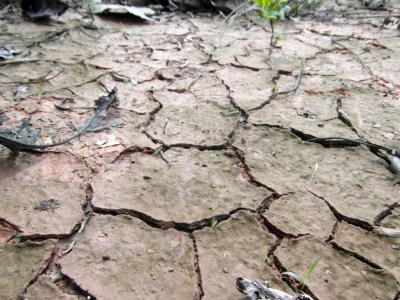
We are not the kindest of children. We are not always so Grateful for what our Mother so generously lends to us. Because it is a loan. Do not be mistaken. Mother Earth is not a bottomless well of giving. She is a Mother with expectations; a Mother who gives and then wants to see us give back.
Coronavirus is revealing many truths to this world – a world grounded in the patriarchal consciousness of domination and separation for millennia. Though still on the fringes of social awareness, the ancient wisdom of community and connection remains alive and growing.
I wish, desperately, that you were still here. I miss you everyday. My body aches with grief. Tears run down my face.
It was so hard to say goodbye. Sometimes, I feel like I should have done more. I always thought you’d live to be older even though you made it to (nearly) 16. I couldn’t imagine life without you. Some days I still can’t.
But, the vet said you’d broken your jaw, probably from cancer. You struggled to walk from the arthritis and now your balance was off. The medication we put you on to help the infection in your jaw caused you to not eat for two days. You were so skinny. I couldn’t even keep you comfortable anymore. You cried so much. I knew, even though I didn’t want for it to be time, it was.Continue reading “Goodbye…and Hello by Ivy Helman”
This is the first part of a series of reflections on the weekly Torah portions. For those of you unfamiliar with Judaism, we read the Torah in sections. There are 52 parshot (or portions), one parshah (portion) is read each week (most often during Shabbat morning services). It is common for rabbis, prayer leaders or someone of the congregation to offer reflections on the week’s parshah at Shabbat services.
The parshah for this week is Shofetim. It is Devarim/Deuteronomy 16:18 – 21:9 and will be read this Shabbat, 18 August. Shofetim discusses a range of topics: setting up of a system of judges to make important decisions for Israel; the entitlements of the Levites; the rules of warfare; the importance of justice and just governments; and the acknowledgment of G-d as the true and highest Judge. It also warns Israel against false prophets and practices of idolatry. Shofetim contains a number of well-known verses including ‘justice, justice you shall pursue…(16:18),’ and notorious punishments like “…a tooth for a tooth; an eye for an eye…(19:21)” Continue reading “Lessons from Shofetim by Ivy Helman.”









 I struggled with what to write about for my May post. Would I write about the ridiculous notion which has countless Americans buying into the idea that COVID19 is a hoax? I could write about how it is fool hearty for us to even consider lifting stay at home orders when the number of infected patients are still rising daily. The list goes on due to the rising pressures, frustrations, and anxieties that are surrounding each one of us.
 Brother Francesco, known to the world as Saint Francis of Assisi, left us many sweet and lovely poems and songs. In “The Canticle of the Sun,” he wrote about the gifts of nature. Brother Sun, his light and radiance.
 Dear Mini,
 This is the first part of a series of reflections on the weekly Torah portions. For those of you unfamiliar with Judaism, we read the Torah in sections. There are 52 parshot (or portions), one parshah (portion) is read each week (most often during Shabbat morning services). It is common for rabbis, prayer leaders or someone of the congregation to offer reflections on the week’s parshah at Shabbat services.
 Feminism and Religion