

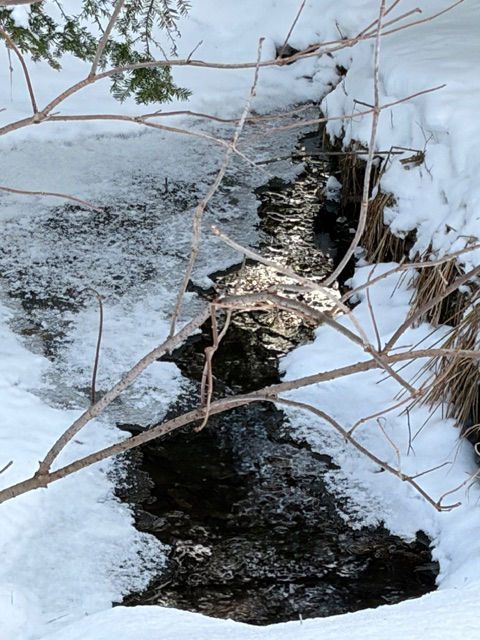
Yesterday’s welcome sun and warm temperatures had me out the door to lay down another round of ashes before the next storm. After packing down our woodland paths with snowshoes we were off to our favorite forest. I had planned to look for liverworts but as usual nature had other plans nudging me to note which trees might be photosynthesizing around these forest edges. At any given moment there are thousands of interactions between tree bark and ki’s environment that most of us take for granted. If you pay attention to bark you may, like me, develop a deep respect for the unparalleled beauty and for the protective skin of every tree. Especially during the winter months.
We know that bark protects the tree from insects and other damage, and the thick ridged bark of older pines or hemlocks also holds moisture in ki’s fissures as well as providing creaturely homes.
I feel compelled to stop to run my hands over these thick white pine trunks in gratitude and awe for their existence. I do the same thing at home in my modest sanctuary, but here the pines are older like the ones that once entirely covered the mountain behind me, all the way to the ledges…I remind myself that the waxy needles on conifers also photosynthesize on warm sunny days.
Continue reading “Reflections in a Winter Forest by Sara Wright”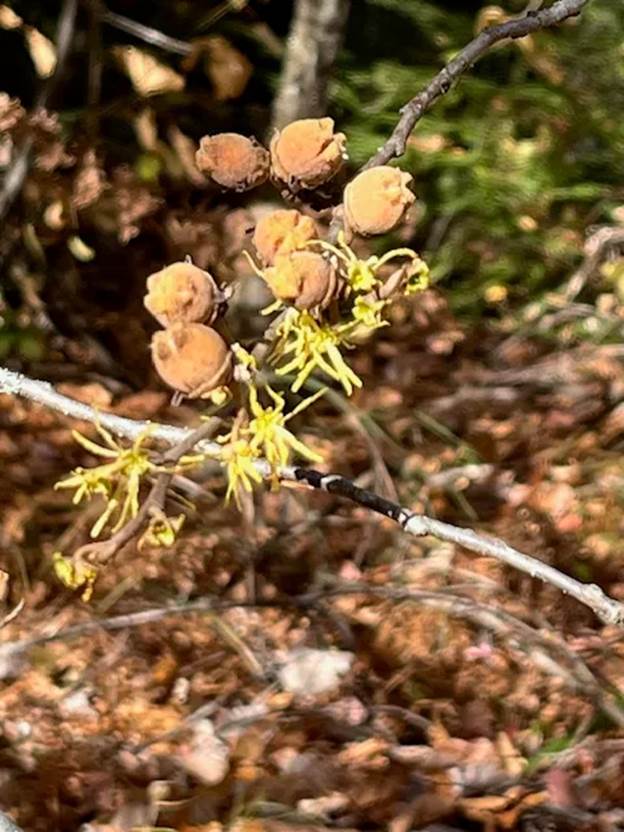
 In my last

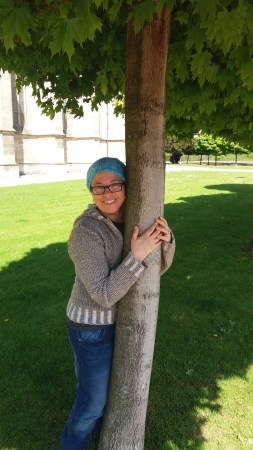 Embodiment is a feminist principle which has, as its basis, two fundamental criteria. First, humans require their bodies to live. We must acknowledge that our existence is tied to our bodies. This fact grounds us in this world. Here, and not in some other-worldly place, we live out our lives. We are dependent on our bodies and what the world provides for our survival. In other words, humans are inseparable and interconnected to this world. Humans are not above nature as the Western hierarchical dualist mindset would suggest.
 Feminism and Religion