And Then Everything Changed: Part Two: Joy by Beth Bartlett

(part one was posted yesterday)

Author’s Note: I wrote this post shortly after Pres. Biden stepped down as the Democratic candidate for the presidency and endorsed Kamala Harris, long before the Kamala-Harris ticket adopted “joy” as their watchword. The reference to the “joy” of this campaign has now become so ubiquitous that I fear it will become trivialized and merely a slogan. I hope instead that they meaningfully embrace a politics of joy and the capacity of joy to heal divides, not just in this country, but throughout the world. 

* * *

. . . and then everything changed. 

What is this feeling that has been filling me of late? Ah, yes, I remember — hope, enthusiasm, excitement, optimism!  It’s been so long since I’ve felt this — on the political scene, for our country, for the world. But lately I’ve felt buoyant – something I haven’t felt at least since 2016. Rather than avoiding the news, now I am eager for it, seek it out. 

The energy, vitality, and yes, laughter that Kamala Harris has brought to the presidential campaign has infused myself and many others I know with a sense of joy, a welcome contrast from the doom and gloom that has been surrounding the campaign for so long. Her ability to laugh, to smile, to find the positives in people, in life, that has brought new life to this campaign. Yet for some reason, the opposing side has chosen to focus on Harris’s easy laughter as a target for derision. 

Continue reading “And Then Everything Changed: Part Two: Joy by Beth Bartlett”

Reclaiming Our Birthright of Joy by Mary Gelfand

Part 2 was posted yesterday

In my earlier piece on joy I wrote about collective joy—the kind that can be experienced in larger groups of people engaging in a shared experience that brings them a sense of joy and connection, like dancing in the streets. Here I’m talking about a more personal kind of joy, shared perhaps with a few people.  

Speaking as a woman and a feminist, I have often been conflicted about joy.  Sure I want to experience joy, but I often feel guilty about it.  How can I allow myself to feel the simple joy that beauty and cosmic connection can bring when there is so much suffering in the world? When I was finally able to accept that denying myself joy did not reduce the suffering of others and was harmful to me, I was able to move past the guilt trip induced by my Christian upbringing. I began to look for ways to bring more joy into my life, and discovered a mother-lode of wisdom from multiple sources. 

Continue reading “Reclaiming Our Birthright of Joy by Mary Gelfand”

Collective Joy as Our Birthright by Mary Gelfand

One of two pieces on Joy, part 2 tomorrow.

Joy was not a conspicuous presence in my childhood home.  My parents were kind and loving, but both had been raised in the Protestant conservatism of rural Alabama during the Depression years.  Laughter, contemporary music, dancing, drinking—none of these were part of my growing up years.  Attending church was our primary social activity.   I started middle school in the mid-1960s having never heard of the Beatles, Chubby Checker, or the Twist. 

2000 year old cave art from Borneo

Instinctively, I felt that there must be more to religious experiences than the dull passivity of listening to an old white man lecture on details of an antiquated religious text.  Psalm 100 in the Hebrew Bible instructs us to “Make a joyful noise unto the Lord,” but I couldn’t find joy anywhere in my home church.  Even my relationship with Jesus, which felt sacred and special, was dimmed by the constant focus on Jesus’ suffering and death and my concurrent obligation to avoid sin at all costs.

Continue reading “Collective Joy as Our Birthright by Mary Gelfand”

Radical Joy by Beth Bartlett

On Christmas mornings my brother, sister, and I had to wait patiently upstairs until we heard the music playing. Then, at last, the trumpets and voices singing “Joy to the world!” beckoned us down to the living room, with presents piled high under the brightly lit Christmas tree and stockings filled to the brim hung by the roaring fire.  As a child, I experienced Christmas as a most magical and wonderful time of year, but it wasn’t just about getting presents. Strangers greeted each other with good cheer, wishing each other a “Merry Christmas.” Children visited the homes of the elderly and housebound, brought them cookies and sang carols.  People were different – kinder, friendlier, more open-hearted, more forgiving. These are the true gifts invoked by the Christmas season, and I often wondered why we couldn’t continue these all year. I still do. 

Continue reading “Radical Joy by Beth Bartlett”

Implausible, Impossible Hope by Natalie Weaver

With the single exception of a weak moment in my oldest son’s kindergarten year, during which time the grade school manipulated parents into fundraising schemes by dangling socially advantageous perks (such as a reward trip to a water park) for only those children whose parents participated at a high level in the initiatives, I have never subscribed to any magazines.  Nevertheless, I continue to believe, on some core level, that Ed McMahon is even now driving down the street toward me in the white Publisher’s Clearing House van with a check for one million dollars.  The fact that Ed is long deceased seems to have no bearing on my conviction that the great Miracle, complete with balloons and a camera crew, is blazing toward me and just around the corner.  I never play the lottery, and I actually managed to go to Las Vegas once without gambling a single dollar, yet I feel almost daily that some Jackpot Jeep Bonanza Giveaway has my name all over it.

Continue reading “Implausible, Impossible Hope by Natalie Weaver”

Saying Yes to Saying No by Katey Zeh

andy-tootell-59614

I was sitting in my then-therapist’s office one day, feeling exhausted and hopeless. Between mourning a break-up and constantly traveling for work, I felt like I’d been digging myself out of an ever-deepening hole of despair for months.

“When someone asks you to do something, how do you decide when to say ‘yes’?” she asked.

“If I’m not committed to something else at the same time, then I usually agree to do it,” I responded.

That was my only criterion: was I physically able to do it? If I was, I did it. 

I was living in Washington, D.C. at the time where I was surrounded by other ambitious, overachieving twenty-somethings who seemingly never turned down an opportunity that might help them succeed professionally.

Continue reading “Saying Yes to Saying No by Katey Zeh”

Happiness Habits by Katey Zeh

derek-thomson-406050Finding joy has never been a priority for me in terms of how I structure my life. A long-term goal? Certainly, yes. My path to getting there, however, has been misguided. I’ve held the common belief that if I can achieve and succeed enough, joy–or at the very least, contentment–will find its way to me.

Sometimes I wonder if I was drawn initially to the field of faith-based advocacy because the nature of the work is to resist complacency. The successes are few and far between, and they are never sufficient for achieving the ultimate goal of justice for all. My proclivity to be dissatisfied with progress and to keep on pushing aligns well with the vision of many social justice movements.  

My permanent state of dissatisfaction, which was for some time a motivational force, seeped into how I felt about nearly everything. Whenever feelings of joy or happiness would arise, particularly around work, I often attributed them to a false sense of pride that had caused me to lose focus on the long game. In short, I didn’t believe I deserved to feel joy. Continue reading “Happiness Habits by Katey Zeh”

Another Season of Reflection and Review by Elise M. Edwards

elise-edwardsI turn inward and become reflective at this time of year.  It’s the Advent season in the Christian liturgical year, which encourages practices of piety focused on preparation, examination, and hopeful longing.  It’s the end of a semester and a calendar year, which provokes review of the months before.  In the northern hemisphere, it’s a time of darker days and longer nights, which suggest a retreat indoors, in silence or in stillness.

During this time of year, I’m typically exhausted, and so I seem to enact annual rituals with a recurring sense of ambivalence.   I really love the celebration of Christmas, but preparing for it takes a lot of energy.  So I do some decorating, but not as much as I planned.  I attend some parties and celebrations, but end up missing or cancelling others.  I start a new devotional book, only to set it aside within a week or so.  I want this time of year to be both reflective and celebratory.  I want it to be spiritual and religious.  I want to be sociable with friends and family and also find time to rest and recover in solitude.  At some point, those goals seem too contradictory to be realizable and then I start practical negotiations:  How much decorating will I do? What kind of time will I set aside for solitude and self-care?  Will I have enough energy to be joyful and present with my family and friends?

“Some, but not enough” is the answer I seem to come to every year.

Some decorating, but not enough.  Some time for solitude and self-care, but not enough.  Some energy for social occasions, but not enough.  This year, I want to let go of that voice that says it’s not enough.  That voice that says I am not enough.

To help myself let go of the guilt and self-deprecation, while retaining the reflective focus of the season that may be life-affirming, I reviewed my previous years’ December writings on this blog.  What might I discern from this pattern of yearly reflection?

In 2012, I wrote about why women might be tempted to cancel Christmas.  I was in my final year of the Ph.D. program when I wrote that, and was prompted to do so when I heard that friends and colleagues were planning to skip Christmas preparations or scale them back dramatically.  That year, I sought to maintain “religious and social rituals associated with Christmas” so that I could be “spiritually grounded, emotionally provoked, mentally rested, and physically fed.” I don’t have a vivid memory of that year’s holidays, but as I read it again, I wonder if I was carrying a sense of religious obligation rather than release.  Did I feel free or beholden to social custom? I’ve learned that I will only be able to let that “not enough” voice go when I let go of the expectation that Advent and Christmas should look a certain way or I should be present to it in a certain way.  I’m more willing this year to let peace and joy ebb and flow  in celebrations and moments of sadness and mourning that accompany the season, too.

In 2014 and 2016, my Advent reflections were more focused on justice and peace at the societal level than in the household.  They were mournful.  In December 2014, I was trying to stave off despair after Michael Brown’s killer was not indicted by a grand jury.  The police officer would not stand trial for killing the black teen.  That year, I was mourning Michael Brown and Trayvon Martin and the loss of my own naivete as I became more conscientized about racial violence. I had a similar wake-up call last year when Hillary Rodham Clinton lost the US presidential election and I working through the anger and dread I felt at 45’s approaching presidency.  This year, the struggle continues as we anticipate changes to the tax code and DACA.  But at least Roy Moore lost.  We do continue to work for progress and systemic change, and sometimes, it works.

Feminists have long asserted that the personal is political and that the political is personal.  I’m acknowledging this holiday season that my perpetual weariness during Advent and Christmas is legitimate, as it emerges from personal and political struggle.  I am frustrated with the injustices and hardships I encounter at home, work, and the broader community.  I would not be weary if I was not awakened to the suffering.  This year, I accept that the exhaustion is part of the cost of my work and my calling.  The weariness will ebb and flow, as will joy and peace. Being able to teach and write is a blessing that allows me to help others become more aware of injustice and more involved in addressing it.  This year, I’m acknowledging that I’ve done what I can do.  I’m resisting the impulse to assess whether it was enough.  In previous years, I’ve been trying to hold on to hope; this year I’m resting in God’s grace.

As Christmas approaches, I’m embracing the Christian teaching that the divine meets humanity where we are.  The beauty of the Incarnation is that the eternal meets the temporal and that God unites with human to bring light to a suffering world.  That’s a gift for me this year, a comfort to be able to shift the focus from my own action and being to divine action and being.

I can see the sacred work and presence in this online community and other communities of faith.  Holiday blessings to you all.

Elise M. Edwards, PhD is a Lecturer in Christian Ethics at Baylor University and a graduate of Claremont Graduate University. She is also a registered architect in the State of Florida. Her interdisciplinary work examines issues of civic engagement and how beliefs and commitments are expressed publicly. As a black feminist, she primarily focuses on cultural expressions by, for, and about women and marginalized communities. Follow her on twitter, google+ or academia.edu.

Making Room for Joy this Advent by Katey Zeh

cwico_oeuis-nikola-jelenkovicDriving around my town in North Carolina, I have come across a handful of houses that had decorated their yards with an empty manger staged in front of an empty cross. This juxtaposition of Christian symbols struck me as peculiar, so I began asking some of my friends if they had ever come across a display like this.
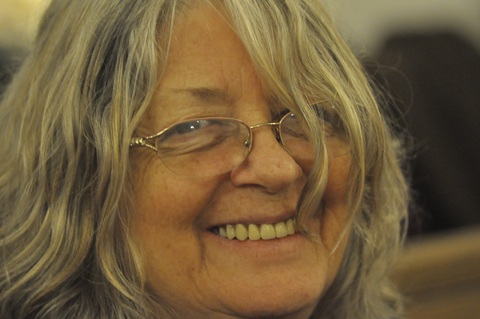

My Catholic friends were helpful in understanding the empty manger, which I could recall having seen previously. Traditionally Catholics wait until the Christmas midnight mass to place the baby Jesus in the manger. If Advent is a season of expectation of the Christ child, this liturgical practice makes sense. But what about the cross behind it?

I believe this stark manager and cross scene was intended to emphasize a theology centered around atonement: Jesus was born, so that he could die and save humanity. These combined symbols are somber reminders to all who drive by of our own sinfulness and need for salvation. I’m intimately familiar with this particular understanding of Christianity, so this wasn’t surprising.

But still, I find myself deeply saddened by this display of the empty and isolated symbols. Continue reading “Making Room for Joy this Advent by Katey Zeh”

Spring by Deanne Quarrie

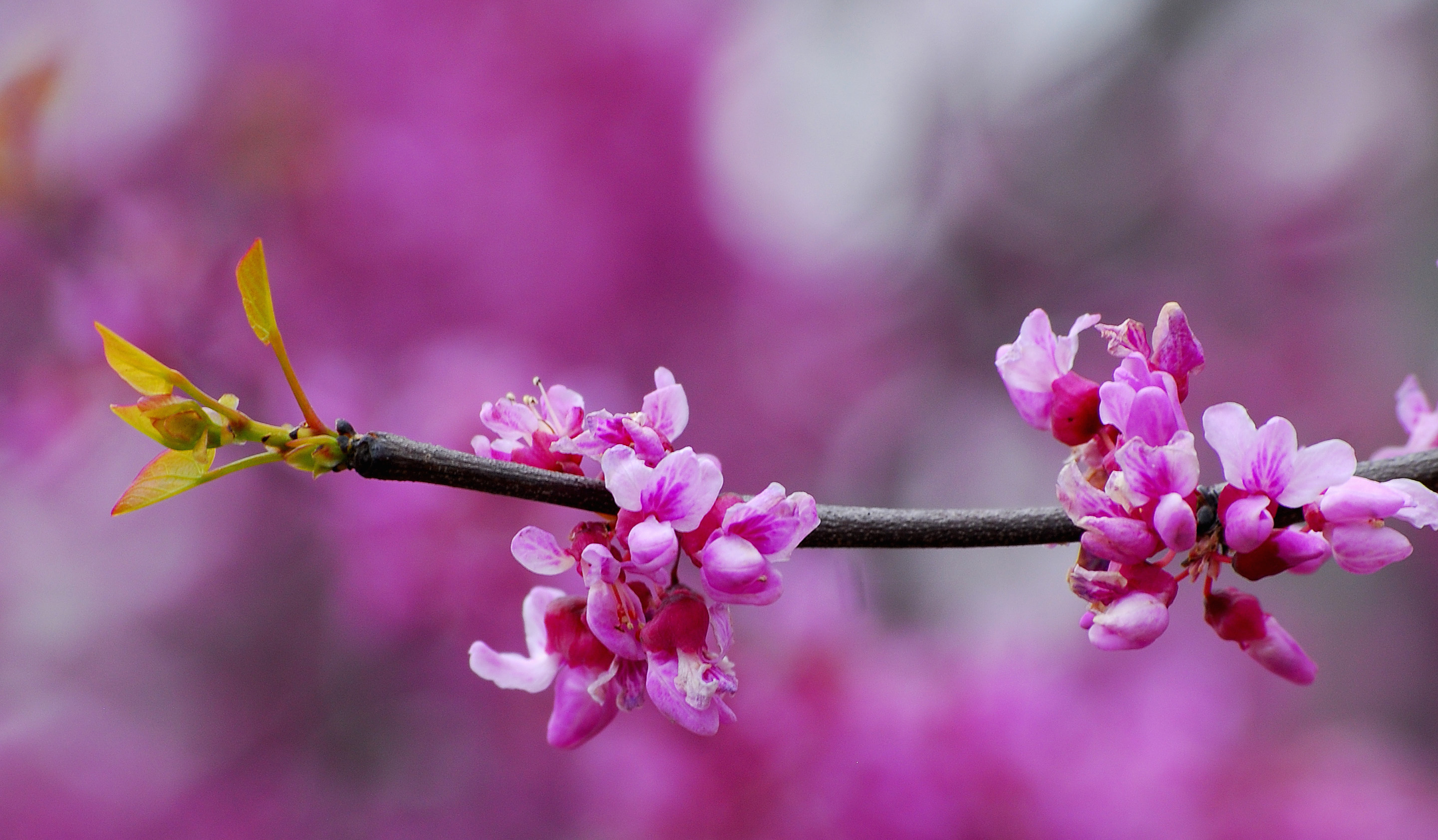
deanne_2011_B_smWe celebrate the Spring Equinox as a reflection of the birthing time of the year. We have made it through the winter’s cold and ice, experienced the warming of the Earth and the flood waters that prepared for the birth of all that is new. Seeds are germinating and beginning to sprout. We see that around us, depending on where we live. Here in Texas the red buds are in bloom and some of the trees have their fresh green leaves opening up at the tips. Just seeing these indicators, brings an internal feeling of birth. My heart expands in joy when I see my first red bud tree in bloom – the first buttercup opening to the sun!

Red BudThis is the time that the Goddess makes herself known by birthing all into existence. She first creates day and night and on this day they are equal, only to rise and fall as the year changes. Then She creates the stars, the heavens, the green things upon the earth, the animals and us – all Her children. All of us glistening in Her birth waters, ready to dance in Her rhythms.

I see the creation of day and night in equal portions coming first, as a lesson for all that follows; balance, a moment of equilibrium, manifesting everything else. We attempt to have that place of balance in our lives, but know from experience it never stays exactly in the center. All we can do is hope to bring it back as we move between states. It is like the pendulum, swinging back and forth from one side to the center then to the other side, but always seeking center.Balance Continue reading “Spring by Deanne Quarrie”