Part One of this post looked at connections between the cosmic dance and the Goddess Hera. To read it, click here.
Pythagoras was the first to call the universe by the Greek term kósmos, referring to the order, beauty and tranquility which are inherent in natural and universal geometric form and proportion. He described the cosmos as a single living being in which all things are related, including music, beauty, movement, and justice – much as the world was understood in the Neolithic Goddess cultures of Old Europe, of which more later.
The word kósmos (κόσμος) gives us the word kósmima (κόσμημα), jewellery – silver and gold like the moon and sun, with glinting gems like the stars and planets – as well as the word kosmitiká (κοσμητικά), cosmetics. These adornments were used by priestesses in classical Greece, not to emphasise their individual beauty, but rather to identify them in their public role as instruments of cosmic beauty, harmony, and order. This is the same role which dancers take on today when they don traditional costume to dance on ritual occasions such as Epiphany or Easter. Continue reading “The Cosmic Dance (Part Two) by Laura Shannon”
Summer is here, and even with the terrible troubles going on in our world, I hope that some of us are managing to take time out and enjoy pleasant evenings outside under the stars. Gazing up at the heavens, we see the same starscape our ancestors saw, thousands of years ago.
In the worldwide Sacred Circle Dance network of which I am part, many dances have been created or choreographed which work with the energies of the sun and the moon. The power these heavenly bodies have in the human world is obvious, but many people do not realise the importance which the stars and planets also had to ceremonial practice in the ancient world. The architecture of Greek temples in antiquity was oriented to the rising of specific constellations and other astronomical phenomena, which also alerted people in far-off locations that the time was drawing near for celebrations or ceremonies in particular places. Continue reading “The Cosmic Dance and the Goddess Hera (Part One) by Laura Shannon”
I have always loved to hear these kinds of stories from Carol and other friends, since I lost my own grandmothers before I felt I really knew them. My mother’s mother passed away when I was a young child. My father’s mother lived until I was in my twenties, but Alzheimer’s stripped her of her ability to recognise her family many years before her physical death. How I wish I had known them as an adult and had been able to talk to them, even once, woman to woman. And how I wish I had received the advice, support and unconditional love which Carol describes, and which I have seen other grandmothers offer their grandchildren. This absence has left an aching heart, a raw wound, for my entire adult life.
Today, April 24, is the worldwide day of remembrance for the Armenian genocide of 1915. On this day three years ago, marking the centenary of the genocide, I wrote about dance as an expression of solidarity with the Armenians people, and with all victims of genocide throughout history and throughout the world. You can find that piece here.
Now as then, I am encouraging my students to dance Armenian dances with their groups this week, or even simply to light a candle, listen to Armenian music (some recommendations are listed at the end of this post), with an open heart. How better to heal the wounds of history than with such tiny and intimate acts of compassion?
The root of the word ‘compassion’ essentially means ‘to suffer with’, and I think that one of the gifts of our own suffering might be that we can begin to have sympathy for those who have suffered like us.
Through compassion, our own heartbreak helps our hearts to be broken open. Although suffering can cause us to feel terribly isolated and utterly alone, at the same time, our pain opens our hearts in sympathy for the pain that others feel. To paraphrase Tibetan Buddhist teacher Chogyam Trungpa, this enables us to ‘reach out to help others… to discover a greater universe and a fuller and fuller broken heart. This is not something to feel bad about; it is a cause for rejoicing.’
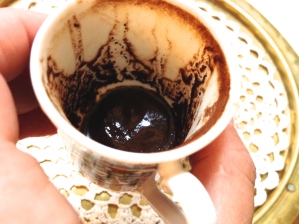
In my lifetime of researching women’s ritual dances in Greece and the Balkans, I have often come across related practices of divination or healing. One of these is the custom of coffee divination, the art of interpreting patterns in the fine grounds left in the cup after drinking Greek or Turkish coffee. The practice is found in Greece, the Balkans, Asia Minor, the Caucasus and the Middle East, and all over the world where people from these regions have emigrated. It is practiced mainly by women, particularly older women.[1]
Kafemanteía is related to much older techniques of divination and ritual, including the libations or liquid offerings which were an integral part of prayer in ancient Greece.[2] Sometimes, after the libation was poured, ‘the empty cup was examined for signs of oracle.’[3] The Old Testament mentions Joseph’s skill in divination by use of a cup,[4] while Istustaya and Papaya, the spinning and weaving pre-Hittite goddesses of destiny, divined using bowls of liquid akin to vessels used for scrying in many cultures.[5] The humble coffee cup can thus be seen as belonging to a long tradition of ceremonial vessels used in divination.[6]
Female figure in stance of invocation, with miniature votive shrines, pillars and cups or bowls for offerings. 5000 BCE, Netafim spring, Eilat, Israel.
In antiquity, Joan Breton Connelly makes clear, ‘religious office presented the one arena in which Greek women assumed roles equal and comparable to those of men,’ a fact which despite abundant evidence ‘has, until recently, been ignored by modern commentators or, worse yet, denied’.[7] In ancient Germanic, Celtic, Canaanite, Mesopotamian, and Anatolian cultures, ‘it was primarily women who were regarded as able to interpret signs and omens and to foretell the future’.[8]
Women who read cups today tend to view their ability either as a divine gift or as a talent learned or inherited from their mother, grandmother or aunt. The concept of inherited oracular or shamanic talent is an ancient one, according to Barbara Tedlock, who suggests that intuition as an ‘unconscious cognitive process’ may be ‘genetically determined in its structure and function.’[9]
In her 2005 book The Woman in the Shaman’s Body, Tedlock describes what she calls ‘the primacy of women in shamanism’, stating that ‘women’s bodies and minds are particularly suited to tap into the power of the transcendental.’[10] Her assertions have important implications for the discussion of kafemanteía as a women’s art, but also reignite feminist controversy about biological ‘essentialism’ and ways that theories about differences between the sexes have been used to justify oppression based on gender.
As an in-depth discussion of essentialism is not possible here, I highly recommend Carol P. Christ’s excellent posts on the topic for those who wish to think more deeply about these questions. As Christ shows, the assumption that ‘if there are sex differences they must inevitably determine behaviour’ is a flawed syllogism. Christ invites us to discuss these issues in a more open-minded way: ‘I think our feminist conversations would be richer if we could find ways to talk about sex differences without immediately jumping to the conclusion that it is regressive or anti-feminist to do so.’[11] In our discussion of kafemanteía, I suggest we remain open to the possibility that neurological and biological differences may have significance, though not in a deterministic way. Men can also be readers of coffee grounds and tea leaves, but the fact remains that most readers of cups are women. Why might this be?
The social component of kafemanteía is very important, offering comfort and company to both reader and querent. According to neurologist Louann Brizendine, women have both a greater need and greater capacity for the positive emotional interaction of this social relationship. Neurologically, the female brain contains more mirror neurons than the male brain, giving women an advantage in establishing emotional connection and triggering production of the anti-stress hormone oxytocin.[12] Rather than ‘fight or flight,’ female stress responses follow a behavioural pattern known as ‘tend and befriend,’ based on the maintenance of social networks that increase bonding and decrease stress.
Reading the patterns
The intuitive response when reading the patterns in a cup often comes from what we call ‘gut feelings,’ which, as neuroscientific research reveals, ‘are not just free-floating emotional states but actual physical sensations that convey meaning to certain areas in the brain.’‘ [13] As Brizendine shows, areas of the brain that track gut feelings are larger, more sensitive, and more active in women’s brains; thus ‘the relationship between a woman’s gut feelings and her intuitive hunches is grounded in biology.’ [14] A further element to consider is the fact that neurological activity in most men is left-brain dominant, while women’s brain function tends towards a more even balance between left- and right-hemisphere activity.
Finally, Barbara Tedlock presents fascinating information on protein and collagen matrices embedded in connective tissues in the human body, ‘composed of liquid crystals and biopolymers that behave as electronic conductors, storing large amounts of cognitive information.’ [15] Given that these matrices can be seen as the biological structure in which ‘somatic consciousness’ resides, I would venture to ask whether the greater proportion of fat cells in women’s bodies may enable greater cellular conductivity for storing and transmitting intuitive and cognitive information. I would love to see further research in connection with the biological tendency of women to accumulate more fat cells post-menopause, and the image of the older wise woman or crone considered in many cultures to have oracular or divinatory powers.
I have had my cup read many times on my travels, and have often been astonished by the accuracy of information offered by the reader, including precise personal details which she could not have possibly known. This remains a mystery. Although I support further study into kafemanteía, I acknowledge that in essence it appears to defy conclusive rational explanation and therefore may remain permanently impenetrable to the scholarly mind. Perhaps all we can do is to simply increase our awareness of, and respect for, this living divinatory art, and the older women who keep it alive worldwide. I would be interested to hear from others about their experiences!
This post is drawn from a much longer article I have recently written, ‘Kafemanteía: coffee divination as women’s prophetic art in ancient and modern times.’ It appears in the current issue of Walking the Worlds 3:2 (2017): 52-68, available from www.walkingtheworlds.com
Laura Shannon has been researching and teaching traditional women’s ritual dances since 1987. She is considered one of the ‘grandmothers’ of the worldwide Sacred / Circle Dance movement and gives workshops regularly in over twenty countries worldwide. Laura holds an honours degree in Intercultural Studies (1986) and a diploma in Dance Movement Therapy (1990). She has also dedicated much time to primary research in Balkan and Greek villages, learning songs, dances, rituals and textile patterns which have been passed down for many generations, and which embody an age-old worldview of sustainability, community, and reverence for the earth. Laura’s essay ‘Women’s Ritual Dances: An Ancient Source of Healing in Our Times’, was published in Dancing on the Earth. Laura lives partly in Greece and partly in the Findhorn ecological community in Scotland
References:
Barber, Elizabeth Wayland. The Dancing Goddesses. New York: Norton, 2013.
Brizendine, Louann. The Female Brain. New York: Morgan Road Books, 2006.
Christ, Carol P. ‘What If There Are Sex Differences But Biology Is Not Destiny?’ FAR February 16, 2015.
Christ, Carol P. ‘Has the Vatican Discovered that Women Should Be Running the World?’ FAR February 9, 2015.
Connelly, Joan Breton. Portrait of a Priestess. Princeton: Princeton University Press, 2007.
Green, Marian. “Wise Women Counsellors: Popular Methods of Divination.” In World Atlas of Divination, edited by John Matthews, 81-87. Boston: Little, Brown, 1992.
Karcher, Stephen. The Illustrated Encyclopedia of Divination. Shaftesbury, Dorset: Element, 1997.
Miller, Guldjin. The Secret Art of Coffee Reading. Australia: Guldjin Miller, 2015.
Seremetakis, C. Nadia. The Last Word. Chicago: The University of Chicago Press, 1991.
Shannon, L. ‘Kafemanteía: coffee divination as women’s prophetic art in ancient and modern times.’ Walking the Worlds 3:2 (2017): 52-68
Stone, Merlin. “Inner Voice: Intuition.” In Merlin Stone Remembered, edited by David B. Axelrod, Carol F. Thomas, and Lenny Schneir. Woodbury, MN: Llewellyn Books, 2014.
Tedlock, Barbara. The Woman in the Shaman’s Body. New York: Bantam Dell, 2005.
Tedlock, Barbara. “Toward a Theory of Divinatory Practice.” Anthropology of Consciousness 17:2 (2006): 62-77.
Walker, Charles. The Encyclopedia of the Occult. New York: Crescent Books, 1995.
Winkelman, Michael. Shamanism: A Neural Ecology of Consciousness and Healing. Westport, Conn.: Bergin and Garvey, 2000: 243-44. Quoted in Tedlock (2006):70.
‘Rather than being a bleeding image of female disempowerment, Medusa may be read as…one of the most ancient European symbols of women’s spiritual abilities… [and] an empowering image of feminine potential.’
–Patricia Monaghan, O Mother Sun! (1994:244)
The name Medusa means ‘sovereign female wisdom,’ ‘guardian / protrectress,’ ‘the one who knows’ or ‘the one who rules.’ It derives from the same Indo-European root as the Sanskrit Medha and the Greek Metis, meaning ‘wisdom’ and ‘intelligence.’ (1) Metis, ‘the clever one’, is Athena’s mother. Corretti identifies Athena, Metis, and Medusa as aspects of an ancient triple Goddess corresponding respectively to the new, full, and dark phases of the moon. (2) All three are Goddesses of wisdom, protection, and healing.
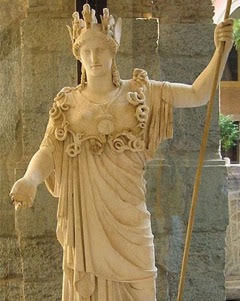
Athena with Gorgoneion in her heart. 5th C BCE.
Athena and Medusa are particularly linked: indeed, one may have been an aspect of the other, ‘two indissociable aspects of the same sacred power.’ (3) Their many common elements include snakes, wings, a formidable appearance, fierce eyes and powerful gaze. The serpent, like the Goddess, has been cast as an embodiment of evil in patriarchal retellings; yet as Merlin Stone points out, serpents were ‘generally linked to wisdom and prophetic counsel’, associated with ‘the female deity’ and ‘entwined about accounts of oracular revelation…throughout the Near and Middle East.’ (4) According to Ovid, the poisonous vipers of the Sahara ‘arose from spilt drops of Medusa’s blood.’ (5) Although this is presented as a further sign of Medusa’s horrifying character, the original Berber inhabitants of North Africa – where Herodotus reports that the Medusa myth began – viewed snakes as bringers of luck and portents of joy. (6)
Despite Medusa’s fearsome appearance, she herself does not personify evil or demonic forces. According to Miriam Robbins Dexter, Medusa is a manifestation of the Neolithic serpent/bird Goddess of life, death, and regeneration. (7) Jane Harrison explains that the ancient Goddess wore the Gorgon mask to warn the uninitiated away from her rites (8), most likely mysteries of the great cosmic cycles of heaven and earth. Patricia Monaghan sees the snakelike rays streaming out from Medusa’s countenance as a sign of a solar Goddess (9), while Joan Marler, citing her connection with Hecate, identifies Medusa more with the moon than the sun (10); either way, Medusa is a heavenly deity ruling over the powers of the cosmos and the rhythms of time. Continue reading “Medusa and Athena: Ancient Allies in Healing Women’s Trauma by Laura Shannon”
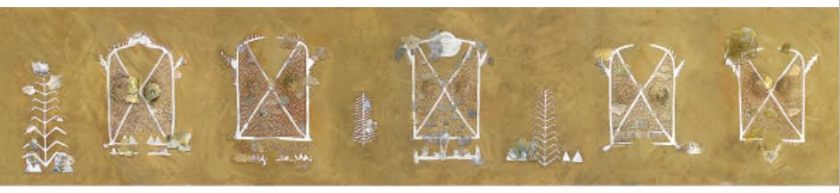
Tree and Goddess motifs on the ‘Wall of the Foremothers’ (Ahninnenwand), Bodensee, Germany, 4th Millenium BCE
Yes, times are tough. But a better understanding of our interconnectedness can help us move beyond the cynicism, frustration, and despair we may be feeling in the modern world. A closer look at trees, and at women’s traditional circle dances, can offer valuable lessons about friendship, community, and the interconnectedness of all life.
The sacred Tree is found in virtually all cultures, often identified with the life-giving figure of the Goddess. Both motifs appear abundantly in archaeological finds dating back to the early Neolithic era. Dance archaeologist Yosef Garfinkel affirms that humans have been dancing in circles since then and probably for far longer.
The Tree of Life is central to the women’s traditional circle dances of the Balkans and the Near East, which I have been researching for over thirty years. The pattern of the Tree of Life is encoded in the steps of dances, many dance songs refer to women as sacred or magical trees, people often dance around or under sacred trees, and Tree and Goddess motifs are featured on the textiles worn while dancing. Furthermore, each dancer resembles a tree, with her ‘trunk’ upright and centred, arms symmetrically extended like branches, and hands joined so that we support each other in the circle. Continue reading “The Tree of Life and the Forest of Friendship: Circle Dance to Restore our Hope by Laura Shannon”
Banner at JFK Protests Photo by Andrew Kelly/Reuters
Last Saturday morning I boarded a plane at London’s Heathrow Airport. During the ten-hour flight to Miami, I got up several times to ease my back and stretch my legs, observing my fellow passengers with interest and curiosity. I chatted with a Brazilian woman who has lived for 20 years in Switzerland, on her way back to Manaus for a few weeks to help her mother through an operation. I observed the tender care with which a well-dressed woman my age assisted an elegant older lady I took to be her mother, both in neatly pinned headscarves. I enjoyed the mixture of different accents and language I overheard as I strolled around the cabin, flowing like the gentle murmuring of a brook. Here were passengers from India, from Asia, from Africa, from numerous European countries, of all ethnicities, nationalities, religions and colours. This is the melting-pot planet I love to live on.
That flight left at 9 am. If it had departed a few hours later, very likely some of those travellers would have been prevented from boarding or removed from the plane, as happened all over the world after Trump signed his executive order banning travellers from seven Muslim-majority countries – Iran, Iraq, Libya, Somalia, Sudan, Yemen and Syria – from entering the United States. The ban applies even to valid visa holders, workers with green cards, dual nationals and legal residents as well as refugees who had gone through the arduous 2-year vetting process and had already been approved.Continue reading “Feminists of Faith, It Is Time to Light Our Lamps by Laura Shannon”
Greek women dancing, attributed to a vase in the Museo Borbonico, Naples. From The dance: Historic Illustrations of Dancing from 3300 B.C. to 1911 A.D. London, 1911
Traditional women’s dances of Greece, the Balkans and the Near East come from cultures which have survived countless periods of upheaval, and teach skills which can help us through difficult times. I see their gifts as a precious inheritance from the ancestors, passed down through many generations. One particularly valuable skill which the dances emphasizes is that of mutual support and shared leadership among women.
Leadership in traditional dance is not limited to a few who have garnered social rank and power. Dance leadership is shared according to the occasion, and everyone must be prepared to lead dances at important events in their lifetime.
On Greek islands such as Lesvos, a small parea or group of women will typically dance the Syrtós together in a short line or open circle. The first dancer may express herself through turns and graceful flourishes of her free hand, varying her handhold and body position to dynamically interact with the other dancers. The women continually change places in the circle, encouraging one another to take the first position so that everyone eventually has a chance to lead. Continue reading “Shared Leadership: The Hidden Treasure of Women’s Ritual Dance by Laura Shannon”
My life’s work with traditional women’s circle dances of Eastern Europe and the Near East has been a natural interweaving of feminism, activism and Goddess spirituality. I would like to share how I came to discover these dances and their potential as tools for healing and transformation.
Circles of women dancing with joined hands appear in rock art, pottery shards, vases and frescoes going back thousands of years1, showing that ritual dance was a primary means of women’s worship. I believe that existing women’s circle dance traditions of the Balkans are direct descendants of these rituals. In their expression of values of partnership, sustainability, and peace, they are living links to the matrifocal Goddess culture of Old Europe as articulated by Marija Gimbutas.2
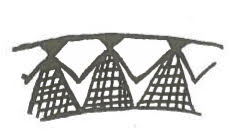
Tell Halaf, Iraq, ca, 5000-4000 BCE (Garfinkel)
Incorporating symbols of the Goddess in her many guises, these women’s ritual dances are deeply spiritual. They are feminist in the way they provide women with a place of power, not ‘power-over’ but ‘power-from-within.’3 They are an activist practice because the qualities they embody – connection, inclusiveness, balance, empathy, and mutuality – are the principles of a Partnership society, as proposed by Riane Eisler;4 or in Carol Lee Flinders’ term, a society of Belonging.5 Each dance circle is an opportunity to practice being in community in a respectful and cooperative way, which can offer a profound source of healing.6
How did I come to these women’s dances? As a child I was convinced of certain truths: that nature is holy, that God is also female, and that instead of hurting one another, people should celebrate together with music and dance. These longings led me to the rich folk dance traditions of the American melting pot, women’s Middle Eastern Dance circles, and the women’s spirituality network. Around the same time, in the early 1980s, I encountered the meditative communal dance practice known as Sacred Dance. Together with my university training in Intercultural Studies and Dance Movement Therapy, these different streams helped shape the path of my life. Continue reading “Women’s Ritual Dances: Secret Language of the Goddess by Laura Shannon”


 Part One of this post looked at connections between the cosmic dance and the Goddess Hera. To read it, click here.
 Summer is here, and even with the terrible troubles going on in our world, I hope that some of us are managing to take time out and enjoy pleasant evenings outside under the stars. Gazing up at the heavens, we see the same starscape our ancestors saw, thousands of years ago.






 Feminism and Religion