Life’s a Garden by Jassy Watson

jassyGardening is one of my greatest loves. The rhythm of the earth revealed in this little piece of Eden in sunny Queensland Australia, pulses in the cells of my being. Through close observation of the natural cycle of all life in my garden and atuning into the greater cosmological ebbs and flows, waxes and wanes I have come to know intimately not only this ‘outer’ space, but the inner as well.

Imagery and metaphor are effective tools for personal growth and transformation and the metaphor of gardening is a powerful way of looking at and experiencing the process of inner growth. I only need to look to my garden to see what needs tending, weeding, pruning, tilling, feeding, harvesting and composting in my life. Continue reading “Life’s a Garden by Jassy Watson”

‘Anjea’ – A Prayer in Paint for the the Protection of this Ancient Sacred Land by Jassy Watson

JassyANJEA is an Australian Aboriginal fertility Goddess. She is an animistic spirit known to the tribesman of the Pennefather River, Queensland, Australia that is located on the Western Cape York Peninsula.

 Not much is known about this Goddess or spirit. I happened to come across her when researching Australian Aboriginal Mother Earth Goddesses. I followed up with numerous inquiries including a member of our local indigenous community and spoke to a curator at an Aboriginal art gallery, and no one had heard of her. Continue reading “‘Anjea’ – A Prayer in Paint for the the Protection of this Ancient Sacred Land by Jassy Watson”

Restored in Beauty by Carol P. Christ

Carol Christ in LesbosThe path leading to the Klapados Waterfall begins at the edge of an open meadow in the pine and oak woodlands of a mountain in the island of Lesbos. After driving several miles on a very rutted dirt track, we parked under an oak tree, crossed the meadow and scrambled down a winding path. After about 20 minutes, it ended at a stream surrounded by plane trees. From there, we climbed over rocks to reach a pool created by the seasonal waterfall.
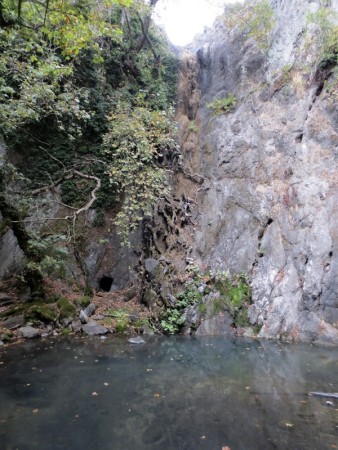
waterfall at klapados 1On the day we visited it, the waterfall was only a trickle of cascading drops that moistened its moss-covered path to the pool. The roots of a plane tree growing at the top of cliff followed the path of the water, weaving a web over the rockface all the way down to the pool.

Sitting on a rock at the edge of the pool I realized that the cliffs that embraced it on three sides were the remains of a crater formed twenty million (or so) years ago when a finger of molten lava pushed its way through the earth, exploding in clouds of dust and projectile rocks.

In Lesbos the volcanic activity came not from a single source–for example, from the highest mountain. Rather, like the plane trees in whose shade we rested, the volcano’s trunk with roots in the molten lava of the earth’s core, had many branches from which it erupted at different times. Huge boulders thrown out in the explosions can be seen in the meadows, while the trees in the forest curve their roots around them to reach the soil. The mountain was also shaped by the settling of volcanic dust that crumbles again into tiny fragments when exposed.

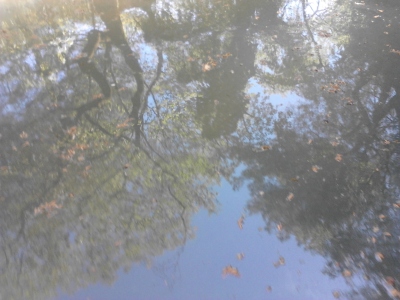
As I was thinking of all of this my friend Cristina climbed over the roots of the plane trees that surrounded the pool, removed her clothes, and slipped into the water. Soon I followed her. We sensed that we were in a sacred place, and as we have done rituals together many times before, our ritual emerged spontaneously: it almost seemed as if our minds and bodies were moving as one.

We renewed ourselves in beauty, submerging our bodies under the water three times, while floating in the embrace of the pool, gazing up at the rock formations, admiring trees that looked like dancing women, moss that looked like pubic hair, and blue black damselflies that all together had created a most beautiful place that called to something deep within us on that day.

Later we would sing the English version of the song of the Navajo Beautyway:
klapados waterfall 056


I walk with beauty before me.
I walk with beauty behind me.
I walk with beauty all around me.
As I walk the beauty way.
I walk with beauty above me.
I walk with beauty below me.
I walk with beauty inside me.
As I walk the beauty way.

We are the creative process of life.

We are restored in beauty.

Blessed be!


Carol leads the life-transforming Goddess Pilgrimage to Crete (facebook and twitter).  Carol’s books include She Who Changes and and Rebirth of the Goddess; with Judith Plaskow, the widely-used anthologies Womanspirit Rising and Weaving the Visions and forthcoming next year, Goddess and God in the World: Conversations in Embodied Theology. Explore Carol’s writing.

The Wages of Greed and Hubris by Barbara Ardinger

Barbara ArdingerHistorical note: I took the name Formosus (r. 891-896) from one of the popes of the Dark Ages. After his death, his body was exhumed, dressed in papal vestments, and put on trial for political crimes. The corpse was found guilty, and the vestments were torn off it. Then it was thrown into the Tiber. A monk pulled it out, and it is said that the corpse was then burned.
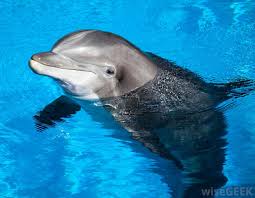
Of course, if the fisherman in this story resembles anyone in modern politics….

Near the bend of the great blue river where it empties into dark sea, there once lived a fisherman and his wife. Although they were so poor they lived in a rickety hovel on the bluff above of the river, the fisherman’s wife was smart and thrifty and the fisherman himself was unusually devout. He always managed to save a brass coin to drop into the basket at the church of the new religion in the town. Of course, the fisherman also found time to pay frequent visits to the public house in the town, where he had many friends with whom he often sang long into the night. He had also gained a bosom companion at the new church. This was a dwarf named Formosus, who held an ambiguous ecclesiastical office. The fisherman visited Formosus whenever he had a new thought, and the pair often retired to the public house to continue thinking together.

Every morning the fisherman climbed down the path to the riverbank to catch fish for his wife to sell. One morning, when he cast his line into the sparkling blue water, he felt something heavy on the hook. He pulled and pulled, and eventually a great, shiny dolphin rose out of the water. Now everyone knows that dolphins almost never leave the dark sea or swim in inland rivers.dolphin

“This is a great miracle!” said the fisherman. “I’ll have to tell my friend Formosus about this and get his interpretation of this miracle.” He took great care to pull the hook out of the dolphin’s lip without tearing it. After apologizing to the fish for hooking it, he released it back into the river. During that afternoon, he caught only a few small fish. “Oh, well, At least we can eat them for supper.”

When he stopped at the church to see Formosus on his way home, the dwarf was not there. The fisherman soon found his friend at the public house. When he told him about the dolphin, the first words the dwarf said were, “Fool! It must have been a magical fish. When you released it, why didn’t you ask it for a favor?” Continue reading “The Wages of Greed and Hubris by Barbara Ardinger”

A Love Poem for My Mother, On Earth Day by Candice Rose Valenzuela

Candice Rose Valenzuela teaches English Literature at Castlemont High School in East Oakland, California, and she has been teaching and organizing inner-city youth for the past eight years. She is currently pursuing a Masters in East-West Psychology at the California Institute for Integral Studies, and desires to bring indigenous healing methodologies into teaching and learning in the inner-city.

I wrote this poem in observance of Earth Day, April 22nd 2014, and it was inspired by the work of Audre Lorde, Starhawk and Christine Hoff Kraemer in their discussion of the powerful erotic pulse underpinning our connection with ourselves and with all beings on Earth. 

as a child, i spent a lot of time wondering what love is.
and this was because

expressions of it around me were unclear, inconsistent, fleeting or unnamed

but mostly because no one

could teach me to see

what they themselves were blind to.

this is for my Mother. To let her know I see.

Continue reading “A Love Poem for My Mother, On Earth Day by Candice Rose Valenzuela”

A Sojourn in Antartica by Marcia Mount Shoop

Marcia headshotOk, so it’s not Antarctica, it’s Indiana, but it sure feels like Antarctica lately.

At least it’s what I figure Antarctica must feel like: bone chilling wind that can cause hypothermia and frost bite in a matter of minutes; everything as far as the eye can see white—sometimes no horizon, or blue sky, or any distinction between the celestial world and ours. Continue reading “A Sojourn in Antartica by Marcia Mount Shoop”

IS IT ESSENTIALIST TO SPEAK OF EARTH AS OUR MOTHER? by Carol P. Christ

carol-christThe charge of “essentialism” has become equivalent to the “kiss of death” in recent feminist discussions. In this context it is taboo to speak of Mother Earth.  Yet, I would argue there are good reasons for speaking of Mother Earth that do not add up to essentialism. What if the values associated with motherhood are viewed as the highest values? What if the image of Mother Earth encourages all of us to recognize the gift of life and to share the gifts we have been given with others?

For those not familiar with the “essentialism” debate in feminist theory, it might be useful to define “essentialism.”  In philosophy, essentialism is the idea that every “thing” has an “essence” which defines it.  In its pure form, essentialism is a by-product of Platonic “idealism” which states, for example, that the “idea” of table is prior to every actual table and that every actual table is an embodiment of the idea of table.

Aristotle disagreed with the Platonic view “way back then,” arguing that the idea of what a table is can be inferred from actual tables, and so on for every “thing.”  There is no need for an idea to exist prior to the existence of anything. Rather ideas help us to name and categorize existing things.  In the 20th century “existentialism” again challenged “essentialism,” asserting that “existence precedes essence.”  Existentialism argued that free individuals are defined by what they do, not by what they “are” prior to or apart from their actions.

When Whitehead said that all western philosophy can be understood as a footnote to Plato, he was referring in part to disagreements among philosophers about the relationship of ideas to things and existence to essence.

In the context of feminist theory, the charge of “essentialism” is used to criticize theories which speak of woman as opposed to man or feminine as opposed to masculine. Continue reading “IS IT ESSENTIALIST TO SPEAK OF EARTH AS OUR MOTHER? by Carol P. Christ”

September: Holy Month by Barbara Ardinger

The Venerable Bede (673–735), a Christian scholar and historian of Anglo-Saxon England who lived 200 years before Beowulf was written, describes the heathen beliefs and customs of his time. Because his interest is in converting the pagans, however, he says that Haligmonath is called “holy month” because that’s when “the heathens pay tribute to their devil.” The real reason the month is holy probably lies in the harvest and the thanksgiving feasts celebrated in honor of the gods and goddesses of the earth. Harvest Home (the final harvest) was celebrated in September in England and other lands.

Goddess Ceres-Demeter PlaqThe Angles, Saxons, and Jutes were pre-Christian tribes who lived in northern Germany and the Baltic lands. The most famous leaders of the Jutes were Hengist and Horsa, whose names roughly translate as “horse” and “mare.” These Germanic tribes were invading and settling in Britain about the time King Arthur (or whoever the tribal chief was who was amalgamated into the medieval legends of Arthur) might have lived. This was during the fifth and sixth centuries, about the same time as the Merovingians (of Holy Blood Holy Grail fame) were ruling the Franks of Germany and France and St. Brigit (also the goddess Brigid) was founding her abbey in Cill Dara (known today as Kildare) in Ireland. Starting with Edward Gibbon’s History of the Decline and Fall of the Roman Empire (published ca. 1776), historians have been calling the centuries following the fall of the Rome the Dark Ages. This is when civilization somehow came to a halt, they say, and barbarian tribes galloped around looting and pillaging and destroying cities. Peter S. Wells disagrees. Continue reading “September: Holy Month by Barbara Ardinger”

Creiddylad, Welsh Goddess of Flowers and Love by Judith Shaw

judith Shaw photo

May Day/Beltane (Calan Mai to the ancient Celts) is almost here and our hearts turn to thoughts of love, flowers and the bounty of our Mother Earth. Both Beltane and Halloween/Samhain (Calan Gaeaf) were liminal or threshold days, considered to be outside of normal time. These sacred, mystic days were more important than the solstices in the Celtic world view.

Creiddylad painting by Judith Shaw

Creiddylad, Welsh Goddess of Flowers and Love, is celebrated at this time. (Her name is pronounced cree-THIL-ahd)  She is the eternal May Queen, always seeking peace and stability.  She remains eternally constant in the face of all change.  She is the promise of love, golden glowing moon-flowing love, enduring through all hardship and despair.  Creiddylad also shows us the necessity of self-love. Only by truly loving ourselves can we love another.

Creiddylad is mentioned only briefly in The Mabinogion but her symbolism reveals that she is surely an ancient and important Goddess, whose original stories have been lost to the mists of time.

Creiddylad, the daughter of Lludd Silver-hand, was promised in marriage to her heart’s desire, Gwythyr ap Greidawl. But before the marriage could be consummated she was abducted by Gwyn ap Nudd, who possessed many dark aspects akin to the Lord of the Underworld.

Gwythyr gathered together his warriors and set out to rescue his love, Creiddylad, from Gwyn.  A fierce battle ensued, during which Gwyn, who emerged as the victor, committed horrendous acts of brutality and butchery.

Continue reading “Creiddylad, Welsh Goddess of Flowers and Love by Judith Shaw”

Bird Watching and Geology in the Body of Goddess by Carol P. Christ

carol p. christ 2002 color

The notion of the earth as the body of Goddess has taken on deeper meaning for me in recent years.  I have felt connected to nature all of my life.  Yet often, though not always, I have related to nature in general rather than in specific ways. Some years ago, after reading Hartshorne’s essay “Do Birds Love Singing?” I stopped for the first time in the wetlands of Kalloni, Lesbos, to see the flamingoes that live in the salt pans there.

Flamingo's-Kalloni3-Saltpan

One thing led to another, and I met someone with whom I spent the next six weeks visiting every pool and puddle where birds were stopping in Lesbos that spring.  Continue reading “Bird Watching and Geology in the Body of Goddess by Carol P. Christ”