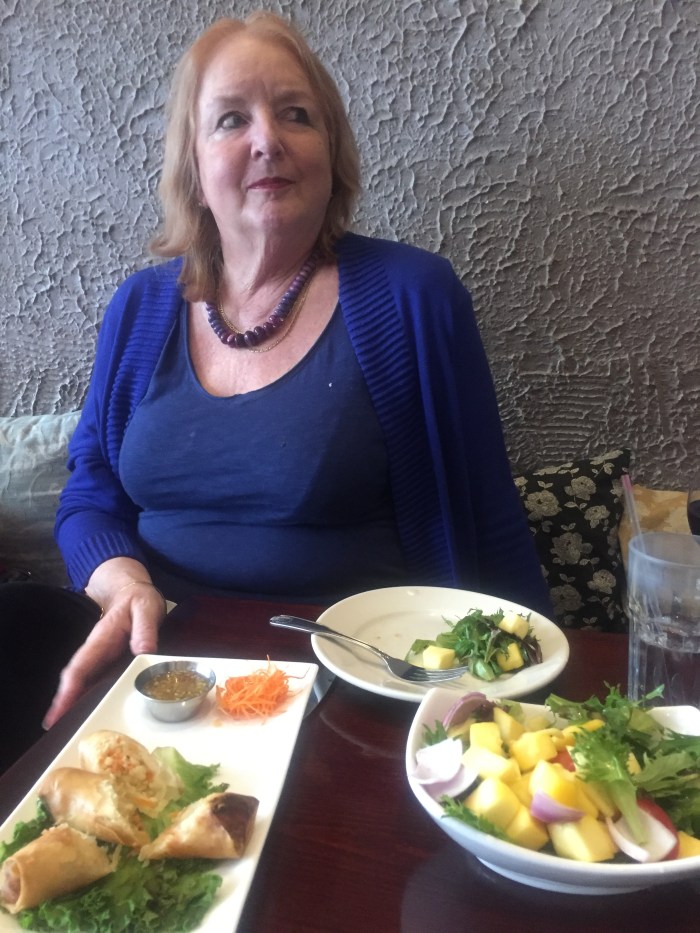
Carol P. Christ’s Legacy: Patriarchy as a System of Male Dominance Created at the Intersection of the Control of Women, Private Property, and War, Part 1 by Carol P. Christ

Moderator’s Note: We here at FAR have been so fortunate to work along side Carol Christ for many years. She died from cancer in July, 2021. Her work continues through her non-profit foundation, the Ariadne Institute for the Study of Myth and Ritual and the Goddess Pilgrimage to Crete. To honor her legacy, as well as allow as many people as possible to read her thought-provoking and important blogs, we are pleased to offer this new column to highlight her work. We will be picking out special blogs for reposting. This blog was originally posted February 18, 2013. You can read it long with its original comments here. It was the first in an important 3 part series. We will be posting the next 2 parts in subsequent weeks (or you can read it earlier by going to the original post).

Recently feminist scholar Vicki Noble commented that this is the best definition of patriarchy she has read–but she hadn’t read it earlier. I am reposting it now in the hopes that all of you will share it with your social media so that it will be more widely known.

Patriarchy is often defined as a system of male dominance. This definition does not illuminate, but rather obscures, the complex set of factors that function together in the patriarchal system.  We need more complex definition if we are to understand and challenge the the patriarchal system in all of its aspects.

Patriarchy is a system of male dominance, rooted in the ethos of war which legitimates violence, sanctified by religious symbols, in which men dominate women through the control of female sexuality, with the intent of passing property to male heirs, and in which men who are heroes of war are told to kill men, and are permitted to rape women, to seize land and treasures, to exploit resources, and to own or otherwise dominate conquered people.*

Continue reading “Carol P. Christ’s Legacy: Patriarchy as a System of Male Dominance Created at the Intersection of the Control of Women, Private Property, and War, Part 1 by Carol P. Christ”

Transitions by Esther Nelson

It’s been a rough couple of years.  Even though thousands of miles distanced us from the first-discovered Covid-19 outbreak (late 2019) in China, the virus soon traveled the world, doing what viruses do best—infect us, spread, morph, and then infect us, spread, morph all over again.  More than five million people worldwide, including close to one million Americans, have died as a result.  Shutdowns affected us economically and socially, making it difficult (sometimes impossible) to stay connected with family and friends.  

An effective vaccine arrived on the scene in early 2021, yet many Americans (half?) eligible for vaccination have refused the life-saving injections, citing a variety of reasons:  distrust of the vaccine—“It was developed too quickly;” invincibility—“I never get sick, never even had the flu;” and individualism—“Nobody gets to tell me what to do with my body.”  (Many of those “hands off my body” people, though, have no problem telling those of us who have a uterus what we can and cannot do with its contents.)

Continue reading “Transitions by Esther Nelson”

Carol P. Christ’s Legacy: “LOVE PATRIARCHALISM”—ITS UNDERSIDE IS HATE

Moderator’s Note: We here at FAR have been so fortunate to work along side Carol Christ for many years. She died in July this year from cancer. To honor her legacy as well as allow as many people as possible to read her thought-provoking and important blogs we are pleased to offer this new column to highlight her work. We will be picking out special blogs for reposting. This blog was originally posted September 3, 2012. It is surprisingly current.You can read it along with its original comments here

Where patriarchalism trumps love, when push comes, shove often follows. The underside of love patriarchalism is hatred of the independence of women. 

We are told that it is the duty of a loving father and husband to protect his wife and children.  In exchange, good wives support their husbands and good children obey their fathers.  The bottom line of patriarchy is control.  The fight over abortion is a fight about men’s right to control women.

I have spent much of the past few weeks wondering why so many Republican men hate women.  Why do they want to deny the right to an abortion to a 12 year-old girl raped by her father, to a 21 year-old college student gang raped at a fraternity party, to a 33 year-old woman who submitted to a violent boyfriend she did not know had poked a hole in his condom, or a to a 41 year-old woman who offered a cup of coffee to the man who came to her house to fix the electricity, but who said “no” when he assaulted her.

Continue reading “Carol P. Christ’s Legacy: “LOVE PATRIARCHALISM”—ITS UNDERSIDE IS HATE”

Last Tuesday Night by Marcia Mount Shoop

It’s been just over a week. Last Tuesday night to be exact. That’s the night the four of us huddled around our beloved companion of sixteen and a half years and said goodbye. 

Buck became a part of our family when he was three months old. We were living in Oakland, California at the time. My son was five and my daughter had just turned one. My husband was coaching for the Raiders and he was gone all the time. It wasn’t a great time to get a puppy on paper—but our hearts said otherwise, so we did. 

Just a little over a year earlier I had said goodbye to Tino. He’s the Blue Heeler that found me in a dream when I was living in Santa Fe, New Mexico. That morning I woke up and just had to get a puppy. It was a visceral pull. And I went to the Santa Fe Human Society and there was the puppy from my dream. He didn’t look like any dog I had ever seen until my dream the night before. 

Continue reading “Last Tuesday Night by Marcia Mount Shoop”

Vigil by Sara Wright

The third day
dawns under a cloud.
 Mourning doves
spread their wings
across leaden skies.
I am walking on air.
Two restless
nights – a huge
truck in the yard –
Blocked,
my stomach lurches.
I read Tributes
 in a daze.
Fierce Little Flower
Warrior Woman
fights
 a torrent of waves.
She is bridging
 raging waters
forging a New Story.

“Weaving the Visions.”
Oh, now I remember
where it all
began.

She hugged a tree.
 I plant a seed.
Listening to rounds of
 “light and darkness”
 I let my body lead.

 A serpentine path
guides me
 back to
Her Garden.
Cradled by Ancestors
Rooted in Body
I shed another
  patriarchal skin.

Continue reading “Vigil by Sara Wright”

Looking for Home by Esther Nelson

For as long as I can remember, I’ve been looking for home—home being both a beautiful, comfortable, geographic space as well as a peaceful state of mind/being.  For most of my life, I’ve “made do,” settling for wherever or whatever appeared before me.  I thought that was “good” and selfless behavior—shrinking my desires and wants to a size that made other people happy.  For women in our patriarchal society, shrinkage is a highly-prized quality, useful not just as a survival skill, but as a way of being in the world that allows things to run smoothly for somebody other than yourself. 

Recently, I’ve been trying to find some kind of balance while slogging through several major changes in my life that include loss of family, friends, and job.  Part of that balancing act involves looking for an esthetically-pleasing shelter/home in a place surrounded with natural beauty.  In addition, I would like to live in community with people who are adventurous, open to new ideas, and kind.

Continue reading “Looking for Home by Esther Nelson”

Patriarchy – For Love of Predators by Sara Wright


I live just down the road from one of our many lakes and ponds here in western Maine. Almost every morning I hear the haunting call of the loons as they fly over the house. Although I cherish the symphony I have never figured out why some of these birds making this early morning flight from one lake to another. I have never seen any research that supports my experience – but obviously, for unknown reasons some loons  move routinely from pond to pond. Why remains a mystery.

I used to have a woodsman friend who once commented that he didn’t understand why everyone loved loons so much because they were fierce predators who speared their hapless fish, duck, or goslings to death before devouring them. At the time I found Don’s statement ironic (and irritating!) because this man was an excellent brook trout fisherman and deer hunter. In his defense I must add that I had to acknowledge that he also loved all animals; after deer hunting season ended he fed his deer all winter.

Continue reading “Patriarchy – For Love of Predators by Sara Wright”

On Devarim: From a Feminist Perspective Problematic, but not Irredeemable by Ivy Helman

This week’s Torah portion is Devarim (Deuteronomy 1:1-3:22).  In it, the Isrealites are preparing to enter the Promised Land, as the last of the sinful generation have died.  Most of the parshah consists of Moses recalling the divinely sanctioned wars they undertook and the mass murder they committed in order to possess the land.   

Needless to say, this emphasis on war is difficult from a feminist perspective. Starhawk argues, in “Why We Need Women’s Actions and Feminist Voices for Peace,” that, “Patriarchy finds its ultimate expression in war.” In other words, a parshah ripe with war is ripe with patriarchy.

Yet, it is more problematic than that. The deity is understood to be a warrior as are the Israelites. Verses 1:30 reads, “The L-rd, your G-d, Who goes before you… will fight for you, just as G-d did for you in Egypt before your very eyes.” In addition, this warrior mentality requires the Israelites to fight as well. G-d hardens the hearts of Sihon which requires the Israelites to fight (1:27). Thus, war and mass murder become divinely sanctioned methods which G-d and the Israelites use to further the sacred promise of the Land.

Continue reading “On Devarim: From a Feminist Perspective Problematic, but not Irredeemable by Ivy Helman”

Bamidbar: Our Role in the In-Dwelling by Ivy Helman.

This week’s Torah portion is Bamidbar (Numbers 1:1-4:20).  Mostly, it concerns itself with: a census; the organization of the Isrealites in camp as well as while traveling; who is responsible for which parts of the Tabernacle; and the redemption of the firstborn males.  The parshah contains only two allusions to the existence of women. As Jewish feminists, what are we to make of it?

Before we get to answering that, let us look at where women are in the parshah.  The first indirect reference to women (and children) is hidden within the census.  In 2:34, the text describes how the camp should be organized according to the tribes of male descendants.  The verse also explains, that even though the camp is organized around men, their families should live with them.  The other indication of the very existence of women can be found in verse 3:12.  Here, the firstborns are described as the ones “who open the womb.”  It is disheartening that, here, women appear only as a body part.  Likewise, there is no acknowledgement that firstborns may be female.

Continue reading “Bamidbar: Our Role in the In-Dwelling by Ivy Helman.”

Patriarchy as a System of Male Dominance Created at the Intersection of the Control of Women, Private Property, and War by Carol P. Christ


Recently feminist scholar Vicki Noble said this is the best definition of patriarchy she has read–but she hadn’t known of it earlier! I am am republishing it now in hopes that all of you will share it on your social media so that it becomes more widely known. Thanks!

Patriarchy is often defined as a system of male dominance. This definition does not illuminate, but rather obscures, the complex set of factors that function together in the patriarchal system.  We need more complex definition if we are to understand and challenge the the patriarchal system in all of its aspects.

Patriarchy is a system of male dominance, rooted in the ethos of war which legitimates violence, sanctified by religious symbols, in which men dominate women through the control of female sexuality, with the intent of passing property to male heirs, and in which men who are heroes of war are told to kill men, and are permitted to rape women, to seize land and treasures, to exploit resources, and to own or otherwise dominate conquered people.* Continue reading “Patriarchy as a System of Male Dominance Created at the Intersection of the Control of Women, Private Property, and War by Carol P. Christ”