On Persephone and the Racetrack: My Experience at Lake Pergusa.

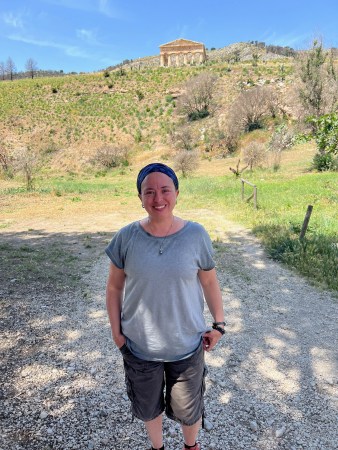
At the Segesta temple.

This May, I visited Sicily to present at the European Academy of Religion’s Annual Meeting. There I saw various historic, religious sites: parts of the city of Siracusa; the Valley of the Temples in Agrigento; mikvot in Palermo; various churches including the Cathedral in Palermo and the Church of St. Cataldo; the Segesta temple; and lake Pergusa where Hades emerges from the land to abduct Persephone. In this blog, I will focus on this lake. As an ecofeminist focusing on religion, this place gave me mixed feelings.

Continue reading “On Persephone and the Racetrack: My Experience at Lake Pergusa.”

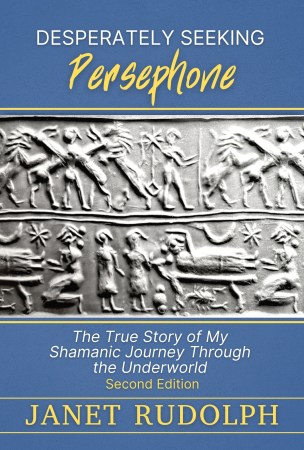
Desperately Seeking Persephone by Janet Rudolph, Book Review by Carolyn Lee Boyd, Part One

The myths of the descents of the Sumerian Inanna and the Greek Persephone to the underworld have fascinated and inspired women for millennia with their violence and betrayal, leaving behind all you love and that hold you up, and facing your deepest fears, even death. We recognize our own traumas in their struggles and seek guidance as to how to navigate our ascents back to wholeness and well being in their stories.

After her own experience of childhood abuse and stranger rape as a young woman, Janet Rudolph, one of FAR’s co-weavers, also pored over the myths in hopes of finding a helpful account of their journey home. “Once I had tumbled metaphorically, literally and mythically into the thorny quagmire of the underworld, it was devilishly hard to escape. I felt lost. I needed a guide, a role model to find my path outward”(xii). The problem is, Janet says, “The stories of their return are glossed over. There is no detailed story called From the Great Below Back to the Great Above” (15). Until now in Janet’s recently re-published book, Desperately Seeking Persephone.

Continue reading “Desperately Seeking Persephone by Janet Rudolph, Book Review by Carolyn Lee Boyd, Part One”

The Eleusinian Mysteries:  Alchemical Grain, Part I by Sally Mansfield Abbott

This post is dedicated to the memory of Mara Lynn Keller, who passed away on 12/23/23. Mara was an expert on the Eleusinian Mysteries, and much of this post is based on her scholarship. Mara was a life-long friend and ally of Carol Christ’s, going back to their days in the Ph.D. program at Yale. She co-founded the Women’s Spirituality program at the California Institute of Integral Studies (CIIS) with Eleanor Gadon (The Once and Future Goddess). Mara was an unusually warm, welcoming, and generous presence, and must have been a fabulous teacher.

The Eleusinian Mystery Rites were practiced in Athens and Eleusis from 1450 BCE to 329 CE, a period of almost 2,000 years, before they were expressly forbidden by the newly Christian Roman Empire, and years later the temple was destroyed. The Rites had originated on Crete, and continued to be practiced in Knossos and in the caves there for many centuries. It is likely no coincidence that the origin of the Mysteries in Eleusis in 1450 BCE is the same date as the fall of Knossos.

Continue reading “The Eleusinian Mysteries:  Alchemical Grain, Part I by Sally Mansfield Abbott”

Emerging from the Underworld: a book review by Eline Kieft

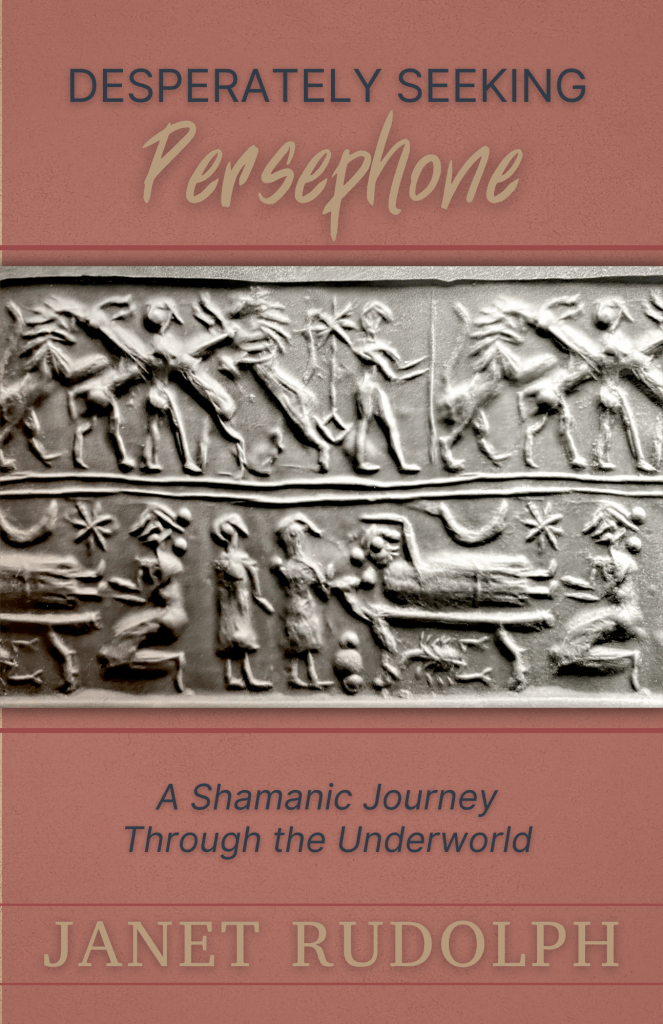
Desperately Seeking Persephone: A Shamanic Journey Through the Underworld by Janet Rudolph weaves together a healing journey from abuse and rape, a deep personal connection with the goddesses Inanna and Persephone, and the ups and downs of a long-term shamanic apprenticeship. These strands could have easily filled three separate books, but Janet masterfully crafts an integrated tapestry of personal and mythical strands. She integrates everyday life experiences, liminal space and the archetypal realms until something new emerges that is more than personal story, more than myth, and more than a description of discovering a shamanic path.

Continue reading “Emerging from the Underworld: a book review by Eline Kieft”

In Memoriam, Rachel Pollack  JIA (8/17/45 – 4/7/23) by Janet Maika’i Rudolph

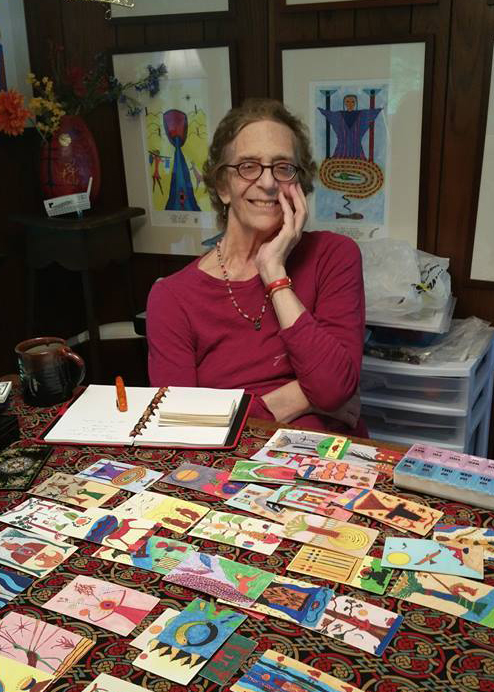
How do you speak about someone who not only rocked your own world, but those of countless others? Whose fertile imagination and generous nature inspired and transformed so many lives? My friend, teacher, and mentor Rachel Pollack died in April. It’s hard to wrap my head around what a huge loss this is, not only for me, but for the world. She had an encyclopedic knowledge at her fingertips of mythology, tarot, historical trends, cultural trends, ancient civilizations. She was a storyteller at heart, using personal stories, universal stories to teach. She encouraged and guided each of us to discover and tell our own stories. Her stories won both the Arthur C. Clarke and the World Fantasy Awards. I call her the Grandmother of the Tarot because her work in that area has been so ground-breaking, far-reaching and depthful.

I write JIA, instead of RIP, special for Rachel. JIA means Journey In Adventure.  Rachel was adventurous to her core.  Rather than resting in peace I see her continuing her immensely adventurous journey just now on the other side of the veil. I see it as a continuing wondrous, magical ride that she has earned.

Continue reading “In Memoriam, Rachel Pollack  JIA (8/17/45 – 4/7/23) by Janet Maika’i Rudolph”

To Stand in the Presence of the Ancients! – Enheduanna, Part 2 by Janet Maika’i Rudolph

Yesterday I wrote about the priestess/scribe Enheduanna and her warrior/king father Sargon. I posited their connection to the codification of patriarchy. They did not invent it, as war and the diminution of women had been happening in some circles. I do wonder, however, if they furthered it along to a point of no return.

Another king of the time, Urukagina from circa 2350 bce[1] codified laws under the guise of reformation.  Some of his reforms were progressive in that they sought to protect the poorer classes against aristocracy and the priesthood.  But they also were clear to let women “know their place.” Here are the translated words from his laws:

“If a woman to a male has spoken . . .[bad] words(?) which exceed (her rank?), onto the teeth of that woman a baked brick shall be smashed, and that brick will be hung at the main gate.”

Continue reading “To Stand in the Presence of the Ancients! – Enheduanna, Part 2 by Janet Maika’i Rudolph”

Starflower by Sara Wright

Bloodroot before opening

Snow tide

recedes,

 shrinking waves 

expose papery

oak leaves,

thick tree roots,

pine needles,

fallen lichens,

rich humus

in the making…

Mycelial networks

  curl tips and tendrils

embrace decay.

Continue reading “Starflower by Sara Wright”

Persephone Rising, Part 2 by Sara Wright

Part 1, from last week, can be read here.

For those folks in the southern hemisphere who are entering fall as we the northern climates enter spring I offer this next personal narrative.

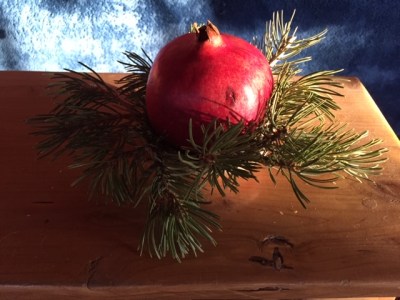
Every Autumn I buy a smooth skinned crimson pomegranate to celebrate the Fall Equinox. But until this fall I have never intentionally bought a pomegranate to acknowledge the Persephone in me although her cyclic journeys to the underworld have also been my own. I have resisted my alignment with Persephone because I have come to fear my own descents. In the last few years these periods of depression have become more severe.

The September I turned 70 on the last day of the ancient celebration of Persephone’s Eleusinian Mysteries. I spoke out loud as I set my birthday intention. I am aligning myself with Persephone. I held a pomegranate in the open palm of my hand, thinking of the fruit as a symbol of my willingness to take this step. I also saw the beautiful round fruit as the Earth, imagining the ruby –like seeds imbedded in the soft white flesh as Earth’s possibilities. As I surrendered and finally accepted my mythic identity/alignment with Persephone, I experienced a subtle energy shift. I thought about the maiden goddess who becomes Queen of the Dead, and the one who makes predictable cyclic descents into the Underworld. As I breathed through my body I experienced a palpable sense of relief… I recalled the recent dream that informed me that the “Way of the Goddess” was my way, and that I had to choose her again. Not surprisingly within a few days I once again entered a state of profound depression during which time I suddenly remembered my first encounter with a pomegranate…

Continue reading “Persephone Rising, Part 2 by Sara Wright”

Persephone Rises, Part 1 by Sara Wright

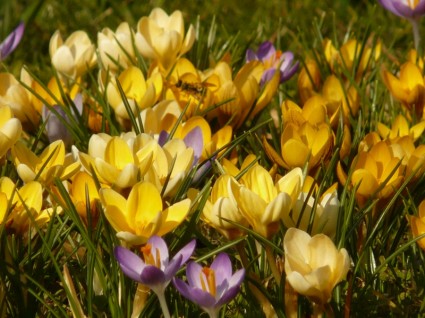
While researching Minoan Crete I learned that each autumn young girls once gathered blue violet saffron crocus to leave as an offering for the Wild Crocus Goddess as they prepared for adolescent female initiation rites. I was intrigued by the reference to autumn because I associate flowers more with spring than any other season. From other sources I discovered that in Minoan Crete young girls also gathered bright yellow crocus to celebrate the Great Goddess and the return of the growing season and that yellow was the color associated with the Great Goddess because of the golden color of the dye made from the precious saffron crocus. Later in Greece during the Lesser Mysteries, flowers, especially yellow crocus were also picked to celebrate Persephone’s return from the Underworld. I was particularly delighted by the reference to Persephone picking bright yellow crocus because my relationship with this goddess has been a somber one; I have always associated her with death. And yellow is a joyous color that I associate with early spring.

I felt a wild sense of hope as a volcanic fire erupted inside me when I first imagined Persephone picking spring flowers because of my uncomfortable relationship with this mythical figure and also because I love flowers.

Continue reading “Persephone Rises, Part 1 by Sara Wright”

The Pomegranate by Sara Wright

It is mid November and shiny crimson Pomegranates catch the discerning eye in food markets; even Walmart carries them!

Why do these beautiful and very ancient fruits appear during this dark time of the year?

One answer to this question is that in the northern hemisphere the fruit of this deciduous shrub ripens anywhere from September to February. The reverse is true in the southern hemisphere when the fruits ripen during March, April and May. It is important to remember that in the southern hemisphere the seasons are reversed, so in both northern and southern parts of the globe these fruits appear in the fall, during the darkest months of the year.

Pomegranates are native from Iran to northern India and have been cultivated throughout the Middle East, Asia and the Mediterranean region for millennia. (Today they are also grown in California and Arizona, so they no longer need to be imported). The shrub was domesticated as early as the 5th millennium BC. Pomegranates were the first trees to be domesticated in the Mediterranean.

Continue reading “The Pomegranate by Sara Wright”