Christmas morning. I don’t usually have Sundays free and our family holiday celebrations lean nontraditional, so I’d come to a special ecstatic dance celebration and brought my 9-year-old daughter with me. As the music started and people all around us began to flow and move, I reached out to touch her hand. As if she’d been doing it for years, she shifted into a beautiful contact improv flow with me, rolling her arm down and across mine as she beamed love and radiance right into my heart.
This child brings up so many feelings in me as I watch her grow.
On many occasions at ecstatic dance, I’ve looked around the room and been overwhelmed by the beauty of the dancers and their joyful embodiment. When delight, peace, and ease are conditioned out of many of our bodily relationships through past traumas, body issues, or simply living in a disembodied or misembodied culture, feeling comfortable in our own skins is simultaneously an intentional act of cultural resistance and a profound act of self-care and self-love. Being present in the ecstatic dance space with lovely people moving confidently in fluid, sensual, emphatic, and silly ways fills my heart to overflowing on any given dance day.
Photo by Flickr user dannysoar
Being present in that space with my daughter, looking around the room and imagining what it must look like through the eyes of a 9-year-old girl, gave it a whole new hue of meaning. People danced alone or with partners, men danced with men and women with women, all without shame over their bodies or feelings. The occasional dancer who slipped off to sit on the periphery, nursing tears that flow in the way holidays bring for some, was joined, held, hugged, cried with. My little girl danced with joyful abandon surrounded by men and women of all ages and shapes, present in their bodies and feelings, moving in ways that felt good, glowing with presence and the freedom of acceptance. Continue reading “Present in Our Bodies: Sensuality, Movement, Feelings, and Joy by Chris Ash”
While I am joining the conversation a bit late, I find it necessary to comment on the significance of the “upgrading” of the celebration of St. Mary of Magdala to a feast – on par with the male apostles. While such a day that honors her is quite overdue, I am grateful to Pope Francis for acknowledging this incredible woman and her leadership in the Christian movement.
As we know from the Gospels, it was Mary Magdalene who stood at the foot of the cross with Mary the mother of Jesus, during his crucifixion. When the male apostles ran in fear – and rightfully so – Mary of Magdala stood with Jesus refusing to disavow him and was a face of love for him to see during his darkest moment.
It was Mary of Magdala who was the first witness of Christ’s resurrection. The very first Easter began with her and she was commissioned by Jesus to go and share the good news – to tell the other apostles – and that is why she is known as the apostle to the apostles. Continue reading “Honoring St. Mary of Magdala by Gina Messina”
We find our versions of home in these communities and it is within these spaces where our home not only begins to define who we are but we, as a reflection of that space, begin to outwardly redefine the spaces we exist in. If we slowly begin, through our experiences to shape our homes based on privilege and power without self-reflection and acknowledgment of others, then we are no better than those oppressive forces we say we’re against.
This post is a response to a recent blog entry titled “Who is Gender Queer?” on this site from Carol Christ. The post can be read by clicking here.I want to thank my friend, advocate, and upcoming scholar Martha Ovadia for reasons only she knows! Stay brave, speak up, be heard! _________________________________________
It is terrifying to know that something is wrong but not be able to speak truth to power.
It is even more terrifying to know something is wrong, be able to speak to it, and then silence those voices that do not have that same privilege, power, or position.
The struggle that many of us in positions of privilege and power face is not just that of being ostracizing and essentializing forces—it is that we, as allies, members of communities, or even those dedicated to a cause, can ourselves participate in the oppression we are fighting against and can do harm.
It’s taken me a long time to not only be comfortable with who I identify as, but also how I go about fighting and defining my life based on said identity and experience. However, the one thing that I have the ability to do is choose that identity more freely than others. Unlike Leelah Alcorn, Ash Haffner, Aniya Knee Parker, or Yaz’min Shancez pictured above, I did not have to face the types of oppressions they did, to which they sadly lost their lives, as a result of the fact that we exist in a society that can’t deal with the inability to leave things undefined or to allow people to define who they are on their own terms.
It is vital that although my lived experiences could never meet nor match the same types of oppression that these brave individuals had to face, I, as a white, cisgendered gay male, do not become part of their oppression through my own position and privilege.
As a man who exists in the world of feminism and within various women’s communities, I walk a daily tightrope of privilege and power to insure that I do not silence those that I consider allies, friends, mentors, or colleagues. As a man who exists in the world of the LGBTQ community, I walk an additional tightrope to additionally not take away from or diminish the experiences of those members of our community that do not have the same type of lived experiences as myself. Even within minority communities, there are positions of hierarchy and within these hierarchies of knowledge, identity, or power, comes a responsibility to insure that the oppressed do not become the oppressors.
We find our versions of home in these communities and it is within these spaces where our home not only begins to define who we are but we, as a reflection of that space, begin to outwardly redefine the spaces we exist in. If we slowly begin to shape our homes based on privilege and power without self-reflection and acknowledgment of others, then we are no better than those oppressive forces we say we’re against.
I can’t speak for what identity feels like –I can only speak for what essentializing does, and what it does is reflected in the deaths of Lelah, Ash, and the many others who die nameless. It is our responsibility, as allies, members of communities, and those fighting to end sexist, patriarchal, and, even now, homonormative oppression, to make sure that no more deaths occur on our watch or that truth is spoken to power even when power is masquerading around as truth.
John Erickson is a Ph.D. Candidate in American Religious History at Claremont Graduate University. He holds a MA in Women’s Studies in Religion; an MA in Applied Women’s Studies; and a BA in Women’s Literature and Women’s Studies. He is a Non-Fiction Reviewer for Lambda Literary, the leader in LGBT reviews, author interviews, opinions and news since 1989 and the Co-Chair of the Queer Studies in Religion section of the American Academy of Religion’s Western Region, the only regional section of the American Academy of Religion that is dedicated to the exploration of queer studies in religion and other relevant fields in the nation and the President of the University of Wisconsin Oshkosh’s LGBTQA+ Alumni Association. When he is not working on his dissertation, he can be found at West Hollywood City Hall where he is the Community Events Technician and works on policies and special events relating to women, gender, sexuality, and human rights issues that are sponsored or co-sponsored by the City of West Hollywood. He is the author of the blog From Wisconsin, with Love and can be followed on Twitter @JErickson85
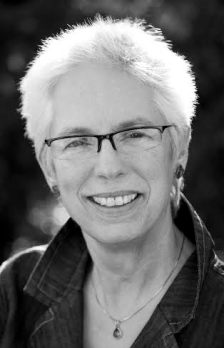
I decided to take the fall semester off from teaching. I wanted to volunteer my abilities somewhere in the world. With guidance from a friend and Volunteers in Global Service, I exchanged emails with Visthar: an Academy for Justice and Peace in Bengaluru, South India. “Visthar” means open space. What I discovered right away was that the work of Visthar dovetailed with my own: gender, sexuality, religion, education and theatre.
Visthar presents workshops on the intersection of gender, sexuality and religion to lgbtq activists, social workers, students, women pastors and inter-faith leaders. Within the trainings, Visthar asked me to offer a theatre workshop that allowed participants to creatively embody and strategize these issues. Continue reading “An Advent Journey by Victoria Rue”
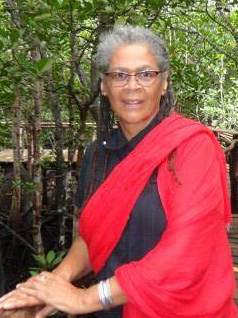
This was the title of a two day conference recently held at Columbia University. At one point on the first day, one presenter asked if there was anyone who is not Christian. Two hands went up, sitting side by side: mine and a film maker friend who had been instrumental in getting me invited to present. She is Buddhist and was showing a trailer from her documentary on rape in the Black community.
One problem with my participation was how to introduce another conception of “God” while still engaging the intersection of race and sexuality with only 15 minutes. So I had to talk really fast.
While the easy answer is, “No,” the God in Islam is not afraid of Black sexuality, I still had a lot of ground to cover about the sex-affirming history and spirit of Islamic thought and practice. Because the preference is to marry, which is a contract and not a sacrament. Marriage is not for the purpose of procreation but for the pleasure of sex. Marriage is preferred over celibacy such that no spiritual virtue is applied to the latter. Marriage is the normative example (sunnah) of the Prophet. Continue reading “Are the Gods Afraid of Black Sexuality? by amina wadud”
My joy is rebellion, and so is my passion,
my excitement, and even my sexuality,
but only here where truth is kept secret.
Where joy exploding in my vocal cords
and coursing through my limbs is
silenced or censored looked upon as foreign
in this house haunted by sad spirits.
Where my passion rising above the lull
of everyday existence, more in tune with
childlike exuberance is drowned out by
the endless buzz of television noise.
Where my excitement for learning is
relegated to four walls of my blue bedroom,
and conversation and connection propels
me from our first floor to my sister’s
basement apartment.
Where my sexuality is cloistered inciting
fear that even its refined expression would
lead to some mythical disaster in which
men would prey on my delicate femininity.
Where my mind has constricted from being,
asked why I can’t force myself to be satisfied
with a linear spiritual existence or someone’s else
fears and expectations for my life.
My joy is rebellion, and so is my passion,
my excitement, and even my sexuality,
but with love as my fuel, I will be
a rebel with a cause and that cause
will be enlivened truth.
Postlude: As an American Muslim women of African Caribbean, Native American, and European decent, this poem is a reflection on the remnants of both historical trauma and being partially raised in an ultra-conservative community . An experience I am still continuing to heal from. In essence, this is a deeply personal and poetic reflection on my own experience of how intergenerational trauma is often compounded by the practice of literalist interpretations of religion, particularly in my case, Islam. I am continuing a ten year journey in rediscovering my true cultural and spiritual heritage that had been partly denied me. In writing this piece, I hoped to gain clarity on my path to heal and becoming a healer through a more fluid engagement with my own faith, while learning and benefiting from other faith traditions. Through a full engagement with Sufism, an integral part of Islam’s sacred tradition, also known as the science of purification (Ihsan), I hope to continue on my journey of spiritual renewal and healing and to aid the world in healing from the fear and numbness that plagues us as moderns.
Safa N. Plenty is an educator and mental health counselor, who will be pursuing a Ph.D at Claremont Lincoln School of Theology with a focus in spiritual formation and peacebuilding. She holds a Masters of Social Work from Columbia University and an undergraduate degree in interdisciplinary studies with a minor in Africana Studies. For the past two years, she has worked as a K-12 educational contractor and assistant counselor at a local community college. Her research interest include Sufism, Attachment to God, indigenous cosmology, particularly Native American and Somatic psychology. She is also interested in religious mysticism, mindfulness practice in Buddhism and the role of feminism and religion in cultivating a peacebuilding capacity among young Muslim women. She is currently working to develop a faith based healthy relationships program for Mothers and daughters. She enjoys writing poetry, research, and contemplative practice in art.
The word Yoni is a Sanskrit word. Translated, it means womb, origin, source, and vulva. It is also known as the divine passage or sacred temple. The Yoni consists of the entire female genital system. Many of us have chosen to use the word Yoni in preference to vagina as it offers us the opportunity to reclaim the sacredness and power of our sexuality as women, as goddesses. The Yoni is where we find Shakti, the universal creative energy.
A woman’s yoni has been worshipped all over the world. In India the yoni is worshipped as the sacred symbol of the Divine Feminine, referred to as the Devi, the Great Goddess, the source of life, the Universal Womb. Continue reading “Honoring the Sacred Yoni by Deanne Quarrie”
Lori Gottlieb’s article in the February 9 New York Times magazine, “The Egalitarian-Marriage Conundrum,” was yet another tired entry in the New York Times’s annual clickbait misogyny Olympics. Who doesn’t remember the supposed opt-out revolution, and the sadness of the decade-later follow-up demonstrating every single consequence that any feminist could have predicted? Or the weekly gender terrorism spewed by Maureen Dowd, who somehow gets people to believe that constant belittling and feminizing male Democratic politicians counts as incisive, progressive political commentary? To name just a few of the most memorable, and most infuriating, examples.
Gottlieb’s article rehashed the studies – I’ve lost count of how many times I’ve read about them in one version or another – that suggest that equality in household labor leads to decreased frequency of intercourse among married heterosexual couples. The most revolting lines in the article – among many contenders – start with a quote from Julie Brines, the author of the study in question: ‘”The less gender differentiation, the less sexual desire.’ In other words, in an attempt to be gender-neutral, we may have become gender-neutered.” It is possible that Brines may be quoted out of context, or that what she intended to say was something quite different, but as the quotation stands, it implicitly suggests that so-called “traditional” gender differentiation is necessary for sexually satisfying heterosexual relationships. (For, of course, there are plenty of other ways in which gender differentiation might be present in heterosexual relationships. Gender differentiation is here being equated with a very particular set of decisions about ‘housework’, a notion that arguably exists only to render some parts of women’s work invisible.) That’s before getting into the implications of the word “neutered” used in the second sentence. Why would egalitarian distribution of household labor be considered “gender-neutral” to begin with? Continue reading “Anti-sex feminism? by Linn Marie Tonstad”
A former evangelical Christian friend of mine sent me information on the intriguing documentary God Loves Uganda. The newly released documentary addresses how the American evangelical movement has prompted a political and social shockwave in the country of Uganda. While missionaries are typically associated with delivering aid and improving the conditions of third world countries, the spreading of Christian values and ideals has inflicted suffering upon ethnic communities through evangelical indoctrination.
The intent of the film is to raise awareness of the political and social brutality that the evangelical missionaries are instigating; specifically through their teaching that homosexuality is a sin and should be dealt with accordingly. In Uganda this means death. Given the rise of globalization, transnational religious actors have been more enabled to engender other nations with their respective religious beliefs, often with minimal regard for the cultural and political landscape of the nation they wish to transform. Continue reading “Evangelical Missionaries Preach Death in Uganda by Andreea Nica”
In my first blog for Feminism and Religion, I discussed the cognitive and embodied dissonance that some Muslims experience as a result of historically (not eternally) gendered ritual forms. I ended with a promise to share with readers the ways in which el-Tawhid Juma Circle mosques try to create space to break free of those forms. Our mosques affirm all human beings as spiritually, socially, and ritually equal and try to break down the social hierarchy of ritual and theological leadership by opening up a space for all bodies, minds, and hearts to lead and follow as equals among each other.


 Christmas morning. I don’t usually have Sundays free and our family holiday celebrations lean nontraditional, so I’d come to a special ecstatic dance celebration and brought my 9-year-old daughter with me. As the music started and people all around us began to flow and move, I reached out to touch her hand. As if she’d been doing it for years, she shifted into a beautiful contact improv flow with me, rolling her arm down and across mine as she beamed love and radiance right into my heart.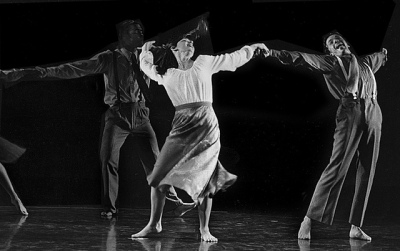
 While I am joining the conversation a bit late, I find it necessary to comment on the significance of the “upgrading” of the celebration of St. Mary of Magdala to a feast – on par with the male apostles. While such a day that honors her is quite overdue, I am grateful to Pope Francis for acknowledging this incredible woman and her leadership in the Christian movement.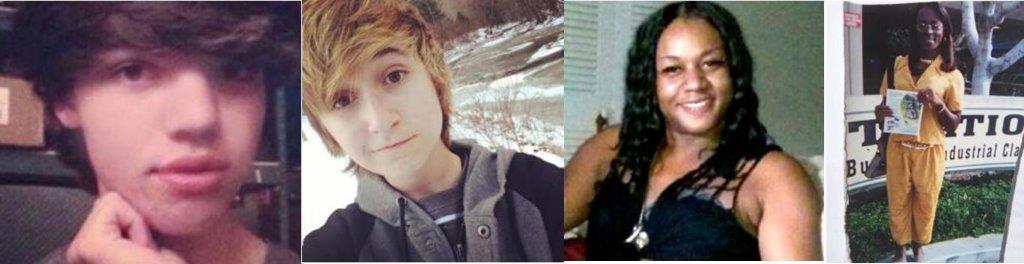
 I decided to take the fall semester off from teaching. I wanted to volunteer my abilities somewhere in the world. With guidance from a friend and Volunteers in Global Service, I exchanged emails with Visthar: an Academy for Justice and Peace in Bengaluru, South India. “Visthar” means open space. What I discovered right away was that the work of Visthar dovetailed with my own: gender, sexuality, religion, education and theatre.
 This was the title of a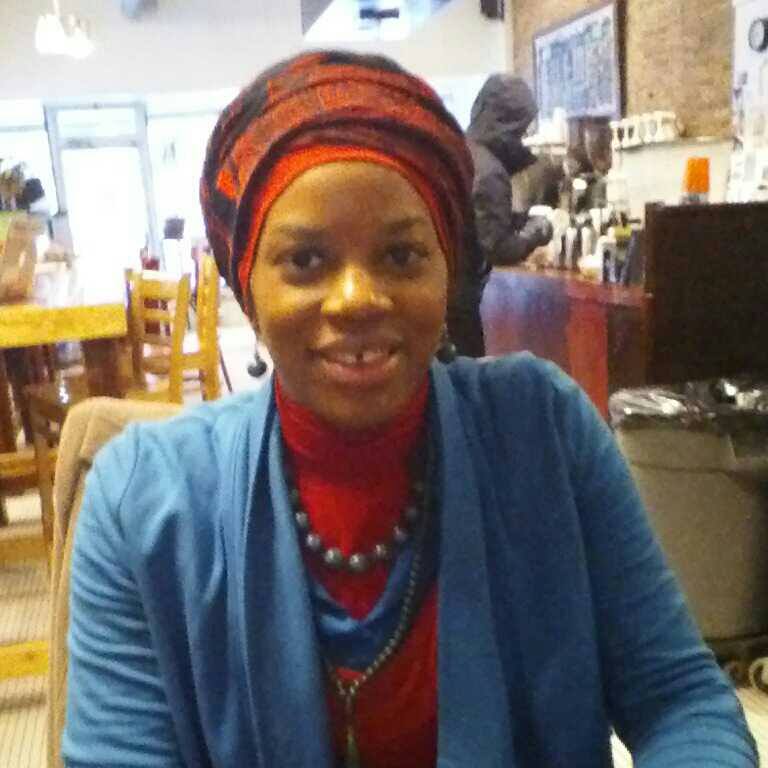


 Feminism and Religion